

Colorado law lifts restrictions on unrelated people living in a dwelling — sparking concerns and celebration
A new Colorado law has lifted restrictions on how many unrelated people can live in one dwelling, causing concern and celebration among some Pikes Peak region officials and residents.
House Bill 1007 went into effect July 1 and prohibits local governments from having restrictions on the number of people who can occupy a single dwelling, regardless of their connection to each other. The law allows for exceptions based on health and safety concerns.
Pikes Peak Housing Network Executive Director Jill Gaebler said the bill would remove unnecessary restrictions, which in some Colorado municipalities have limited the number of unrelated people living together to as low as three.
“It should not just have to be family members, it should be anyone regardless of whether they’re related or not,” she said.
Dutch Schulz, president of the Old North End Neighborhood Association, said that he was concerned that the new legislation would allow density that would cause parking pressure on residential streets.
“Where do they think these cars are going to go?” he said.
Schultz said that 38% of the historic neighborhood was zoned R2, allowing duplexes as well as short-term rentals. Schultz himself has multiple separate units on his Old North End lot, but says that unregulated density encourages owners of investment properties to pack in renters.
He said that prices have swiftly gone up in recent years for the sprawling Victorian and Craftsman style homes near downtown, with few on the market for less than $1 million.
Some in local government are also unhappy about the state mandate, which voids local zoning definitions and requirements.
“Like many in our community, we are frustrated by the state’s continued disregard for local control,” said the El Paso County Board of County Commissioners in a statement on the bill.
The county’s existing zoning for single dwellings will need to omit a clause on the definition of family:
“An individual, or 2 or more persons related by blood, marriage, adoption, or as guardian and ward, or a group of not more than 5 persons, excluding servants, who are not so related, living together in a dwelling unit.”
Colorado Springs occupancy limits are currently set according to square foot available per person. For example, a dwelling of 125 square feet can have one person, 740 square feet can house 10. A dwelling over 840 feet can house more if all residents are part of one family.
The city has a similar definition of “family” that limits unrelated people living together to five. The new state law would void that requirement. In a statement, a spokesperson said the city “recognizes that our definition of family conflicts with statute, and staff are reviewing what would be needed to modify our code to bring it into compliance in the future.”
Before modifications, the spokesperson said the city would not be enforcing current occupancy code.
The county commissioners said that the law would allow uses previously zoned as nonresidential in residential areas. In the statement, they said that the law “may result in large numbers of unrelated individuals living next door in your neighborhood for a variety of purposes, including group homes, sober living facilities, halfway houses, multifamily rentals, etc.”
El Paso County had no recorded instances of code enforcement actions when it came to occupancy, according to the statement.
Gaebler said that code infractions in Colorado Springs, where she served on City Council until 2021, are usually brought to the city’s attention through neighbor complaints. She said that municipalities retain the right to enforce code that restricts the types of uses for dwellings, regardless of occupancy.
Colorado Springs has also not had any recent occupancy code enforcement actions, said the spokesperson.
Gaebler said that the new law reflects changing patterns in how people attain housing in the area. She said that with a shortage of starter homes and condos, people are choosing to split the cost between roommates.
“Generally, for the state of Colorado. I think it is a good thing,” she said.


Kwame Spearman warrants plenty of criticism, not cancellation | SONDERMANN
By Eric Sondermann
by-eric-sondermann@coloradopolitics.com
Updated 2 days ago
All of us are flawed humans, some more so than others. This is the tale of Kwame Spearman who burst onto Denver’s business and political scene a handful of years back. His ride has taken a downhill trajectory. Within the...

Colorado Politics Calendar Mar. 30-Apr. 5
Rachael Wright, Special to Colorado Politics
rachael.wright@coloradopolitics.com
Updated 22 hours ago
CoPo’s weekly political calendar will help you find political and public-policy events throughout Colorado. It includes candidate and issue campaign events, public policy meetings, court hearings, state and local party conventions, assemblies, debates, rallies, parades, speaking engagements, traveling dignitary appearances,...
Federal judge upholds constitutionality of Colorado campaign contribution limits
Michael Karlik
michael.karlik@coloradopolitics.com
Updated 10 hours ago
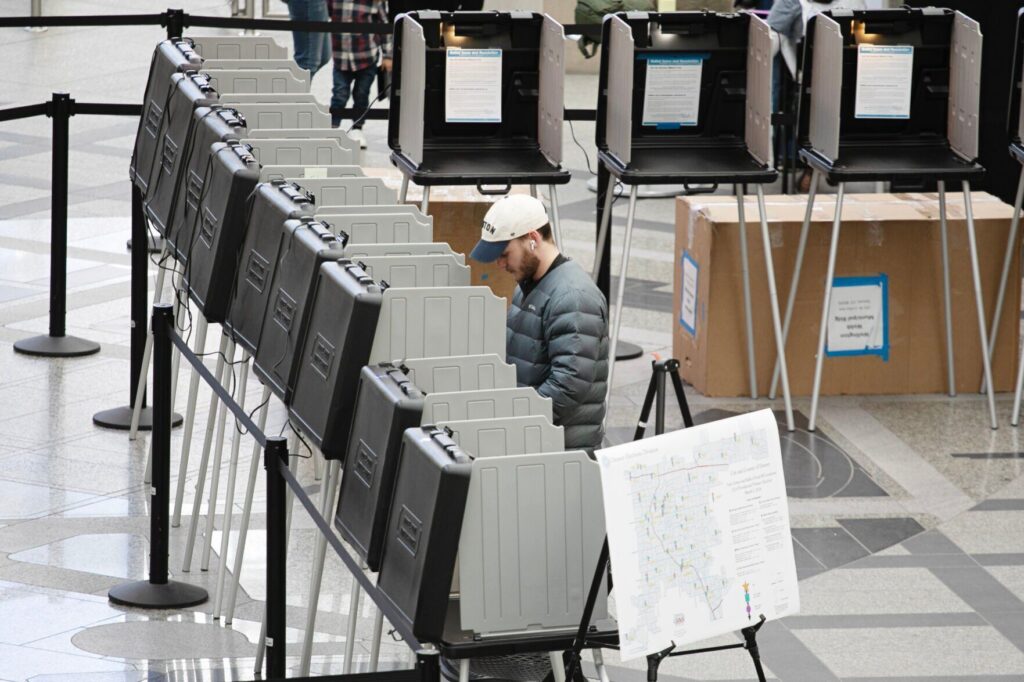
A federal judge upheld Colorado’s individual campaign contribution limits as constitutional on Thursday, finding that three Republican plaintiffs failed to prove the campaign finance framework violates their First Amendment rights. U.S. District Court Senior Judge John L. Kane recognized that...

Appeals court rejects theory that existing tax revenue undermines need for new fees
Michael Karlik
michael.karlik@coloradopolitics.com
Updated 15 hours ago
Colorado’s second-highest court rejected a plaintiff’s claim on Thursday that the tax revenue generated by an existing activity should prevent local governments from imposing new fees aimed at regulating the activity. The question stemmed from Colorado’s unique constraints on taxation...
Colorado ski resorts announce early closures amid historic snowpack lows, high temperatures
Kyla Pearce
kyla.pearce@gazette.com
Updated 15 hours ago
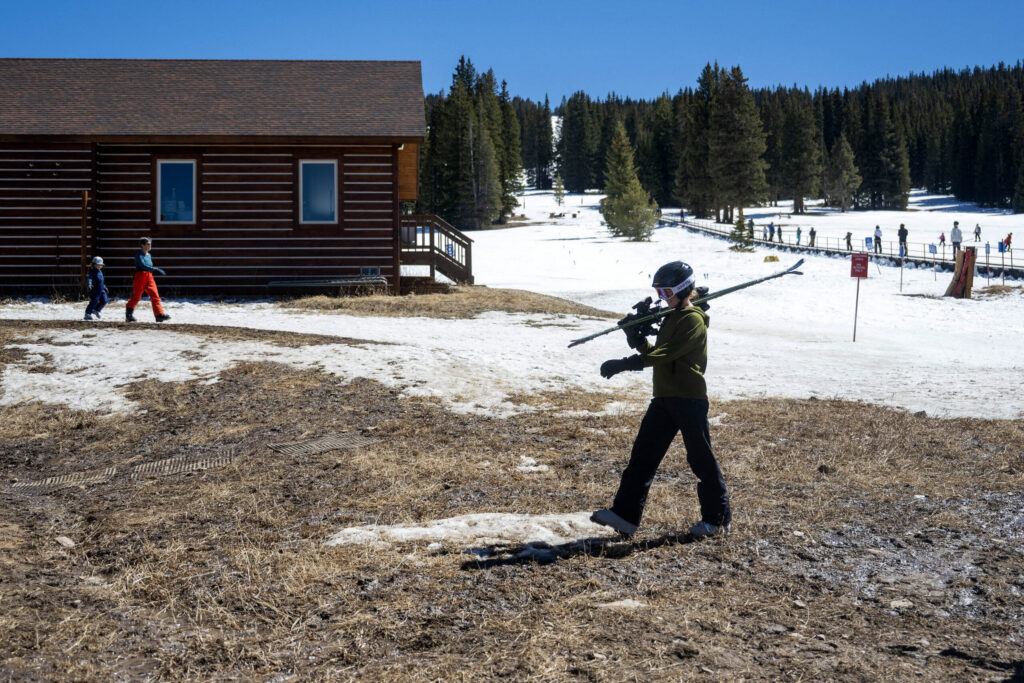
As Colorado’s historically low snowpack year comes to a close and spring conditions take over the mountains, the state’s major ski resorts are announcing closing dates — some of which are weeks before historic closing dates. Most of Colorado’s ski...

Marco Rubio’s star power rises at CPAC 2026
Mabinty Quarshie and Samantha-Jo Roth, Washington Examiner
mabinty.quarshie.and.samantha-jo.roth.washington.examiner@gazetteedit.wpenginepowered.com
Updated 17 hours ago
GRAPEVINE, Texas — Secretary of State Marco Rubio’s popularity is growing and could possibly boost him to one of the top two spots in the 2028 GOP presidential race, if attendees at the Conservative Political Action Conference are to be believed. ...

Boulder police investigate sexual assault, ‘drugging’ at bar near CU
Matt Kyle
matt.kyle@denvergazette.com
Updated 19 hours ago
The Boulder Police Department is investigating reports of sexual assault and “suspected drugging” involving underage girls at a bar. There may be additional victims who have not yet come forward, the department said in a news release. The bar, Scrooge...
Appeals court finds no illegal sentence when defendants forfeit time-served credit
Michael Karlik
michael.karlik@coloradopolitics.com
Updated 20 hours ago
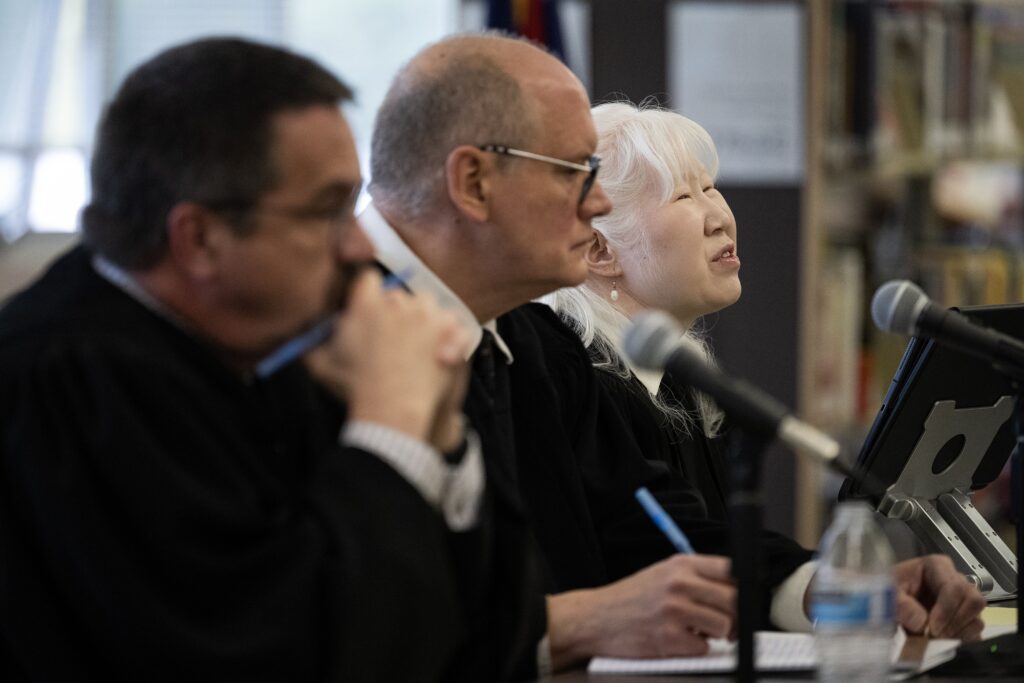
Colorado’s second-highest court ruled on Thursday that criminal defendants may agree to relinquish the credits they earned while incarcerated pending trial, despite a state law guaranteeing that such time “shall be deducted” from a person’s sentence. Kerry Ellis Endsley pleaded...

Appeals court reinstates Garfield County arson charge
Michael Karlik
michael.karlik@coloradopolitics.com
Updated 2 days ago
Colorado’s second-highest court reinstated a Garfield County defendant’s arson charge on Thursday, concluding a trial judge improperly credited a witness’s claim that she alone was responsible for starting the fire. A sheriff’s deputy responded to a brush fire near Parachute...

Democratic US Sen. John Hickenlooper qualifies for Colorado primary by petition, will skip assembly
Ernest Luning
ernest.luning@coloradopolitics.com
Updated 2 days ago
U.S. Sen. John Hickenlooper has qualified for Colorado’s Democratic primary after the first-term incumbent submitted enough valid petition signatures to make the ballot, state officials said. Hickenlooper is facing primary challenges from state Sen. Julie Gonzales, D-Denver, and university professor...