

Unexpected consequences might make record review harder? | BIDLACK

Hal Bidlack
We are all familiar with the idea of unintended and unexpected consequences of actions. Laws passed with the very best of intentions can end up having unanticipated and remarkable consequences. History is littered with examples.
Prohibition, for example, was supposed to stop people from drinking alcohol, but it mostly is remembered for creating a new and profitable market for criminals to secretly make booze and sell it in speakeasies. There are many more.
In my own doctoral research, I learned the creation, during the Cold War, of lots of large military bases with restricted access inadvertently also created huge nature reserves. Vandenberg Air Force Base (sorry, “Space Force Base,” I’m never going to get used to that) found by sealing off non-military access, no fewer than seven different endangered species ended up thriving on those restricted California lands and streams, including my all-time favorite animal’s name, the unarmored three-spined stickleback fish, which only lives on Vandenberg.
Stay up to speed: Sign up for daily opinion in your inbox Monday-Friday
The wartime sinking of ships in shallow waters led to the discovery such sunken ships can become artificial reefs with thriving flora and fauna. We now deliberately sink old ships in critical waters to take advantage of that reef-making ability. This is especially vital given the effect of climate change on natural reefs worldwide. Oh, and when a medicine named Viagra, designed to lower blood pressure, was tested, it was discovered it had, well, a side effect.
But not all unintended consequences are good things. Back in the mid 1990s, AOL, a gateway to the nascent internet for millions, myself included, tried to install a profanity filter because, you know, people. Unfortunately, AOL had to tell the software what words and phrases the filter should look out for, only to discover the good people of Scunthorpe, North Lincolnshire, England, were automatically banned from the AOL platform. Oops.
As reported in Colorado Politics, we have our own new law with unintended consequences ruffling feathers. Now, I do believe all new laws are well-intended, if only to the legislator who wrote it. We can have honest policy differences, but short of so-called “poison pill” amendments (when a legislator adds an amendment to a bill he or she doesn’t like that is quite radical and unacceptable, in hopes the entire bill will be voted down in order to stop the poison pill amendment from also becoming law), legislative proposals are designed to do good.
A 2021 law here in Colorado was intended to make it easier for people with vision or hearing issues to keep up with the actions of various levels of state government turned out to have a very significant unintended consequence. The Colorado Laws for Persons With Disabilities act was signed into law by GovePolis. Jared on June 30, 2021 (at 6:45 p.m., the document is quite specific). It basically requires government agencies, to include city and county governments, to provide, on their websites, information about their actions in formats appropriate for individuals with hearing or vision impairments. So, big-type or spoken-word documents, and other impairment mitigators must be included on the website, along with “regular” text on what the agency or government entity is doing. And any agency that fails to comply with the new law faces fines or potentially court cases to compel their cooperation.
This is, at least on the surface, a really good idea. Your ability to interact with a government agency to get a service or even just to keep track of what is going on should not be limited by vision or hearing loss. I think we can all agree on this, right?
Well, yes. But unfortunately, compliance with the new law has been spotty and has resulted in at least some Colorado counties opting to simply purge their websites of certain public records because the cost of installing and using visual and hearing impairment solutions is too high. These documents appear to include such things as meeting minutes and budgets.
Clearly those are important items available to everyone, but some counties — seeing the new law as an unfunded mandate — have elected to just take down documents rather than shoulder the cost of also having the same documents in formats visual and hearing-impaired people can use.
There is a way for residents to get ahold of documents removed from websites, by filing a Colorado Open Records Act request, but that service is not free and can cost up to $40 per hour for a researcher to pull up a requested document.
So, instead of making essentially all documents available to everyone, regardless of impairment, some places are making potentially all these public documents unavailable to everyone, unless a large fee is paid.
This legislation was clearly very well intended. And I’d hope those objecting are sincere and are not just balking at the new law just on some anti-state government agenda. But of course, those the law intended to help are as bad off as before, and the general public will find documents that used to be available now gone, absent paying that aforementioned fee.
And that’s wrong.
The law did provide the Governor’s Office of Information Technology $300,000 to help with implementation, but none of those funds went to the actual agencies. Clearly, in the next legislative session, we need to see a supplemental law passed to provide needed funding to the counties and other agencies involved to cover the costs of converting documents and creating the necessary framework to help those with visual and hearing impairments.
Well-intended actions, heck pretty much all actions, will have unintended consequences. Some are good and some are not. It’s not reasonable to expect a legislature to anticipate every possible consequence of a new law, but it is reasonable to expect the legislature to keep a keen eye out for such unexpected results and to be quick to respond and to mitigate the negative outcomes. Will that happen next session?
Stay tuned.
Hal Bidlack is a retired professor of political science and a retired Air Force lieutenant colonel who taught more than 17 years at the U.S. Air Force Academy in Colorado Springs.


Colorado is shrinking — time for our elected officials to take notice | Jon Caldara
Jon Caldara
jon-caldara@coloradopolitics.com
Updated 2 days ago
By Jon Caldara Something strange is happening in Colorado — strange enough that the political class should notice. People are leaving Colorado. After years of being one of the fastest-growing states in the nation, net in-migration has stopped and may...
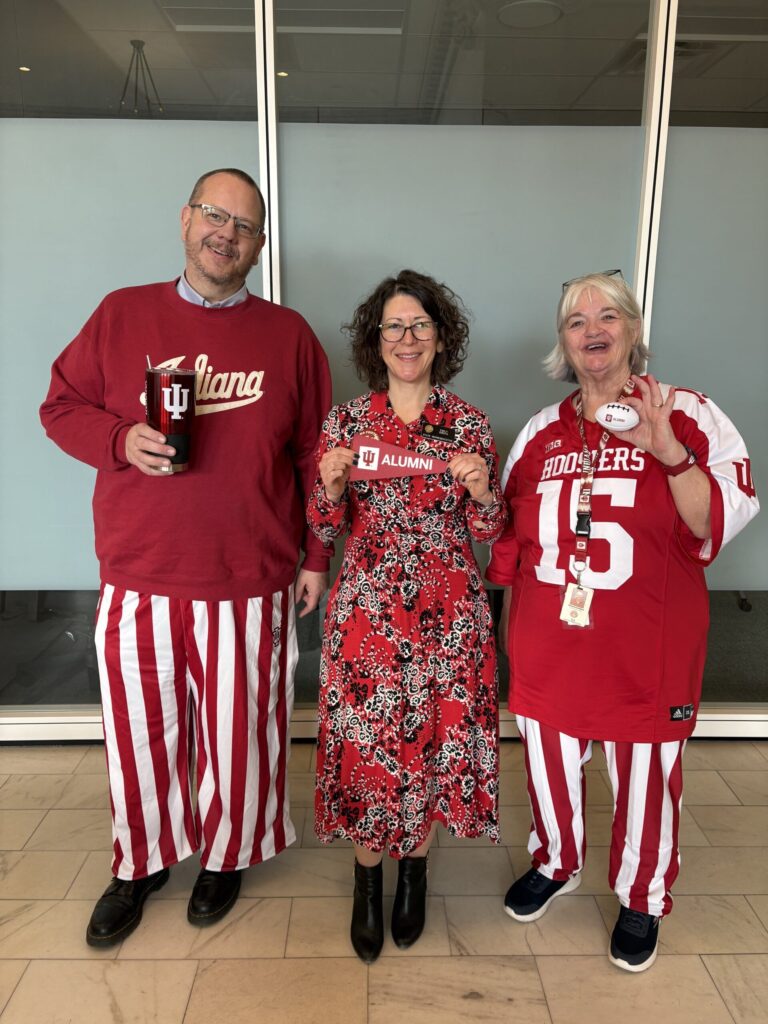
Capitol M: Return to Gold Dome High, 2026 edition, and a salute to old IU
Marianne Goodland
marianne.goodland@coloradopolitics.com
Updated 3 days ago
Welcome back, campers! The 2026 legislative session is upon the good citizens of Colorado, and for a few, the first Monday of the session, Jan. 19, was pretty special. There are at least four folks in the Capitol who are...

The biggest accelerant of our political tribalism | SONDERMANN
Eric Sondermann
eric-sondermann@coloradopolitics.com
Updated 4 days ago
In years past, my go-to word in describing our political condition was “polarization.” I used it endlessly and still do on occasion. But as time has moved on, and the divide has only grown in depth and toxicity, polarization no...

The ramifications of President Trump’s pursuit of Greenland | Kelly Sloan
Kelly Sloan
kelly-sloan@coloradopolitics.com
Updated 2 days ago
President Donald Trump has evidently stepped back from his threatened fantasy of invading Greenland — the sovereign territory of a U.S. ally — to which many a sigh of relief has been expressed, including by the markets. There was next...
Let’s find out who’s up to the gubernatorial task post Polis | Paula Noonan
Paula Noonan
paula-noonan@coloradopolitics.com
Updated 3 days ago
Gov. Jared Polis is bold and his policies are bolder than bold. That’s the paraphrase of his State of the State speech to open the 2026 General Assembly and start off his last year in office. His sweeping review of...

We dream, we dare, we decouple — how Colorado turns values into policy | OPINION
Colorado Politics
colorado-politics@coloradopolitics.com
Updated 3 days ago
By Kathy White Gov. Jared Polis’ final State of the State address was a clear victory lap. After eight years as governor, he used the moment to highlight accomplishments, reflect on progress and remind Coloradans what his administration has delivered....
Volunteer homeowners’ associations to be hit with new lot-splitting law | Bob Loevy
Bob Loevy
bob-loevy@coloradopolitics.com
Updated 3 days ago
Volunteer homeowners’ associations in Colorado Springs, particularly those close to the downtown area, are preparing for another attack on single-family zoning from Gov. Jared Polis and the state legislature during the just underway 2026 legislative session. The new proposal is...

Comprehensive energy permitting reform benefits Colorado, the mountain west | PODIUM
Colorado Politics
colorado-politics@coloradopolitics.com
Updated 4 days ago
By Ron Dickson Thank you, U.S. Reps. Gabe Evans and Jeff Hurd, for your participation in the Congressional Problem Solvers Caucus and your support of comprehensive energy permitting reform. We also appreciate U.S. Sen. John Hickenlooper’s continued efforts to enhance...

Colorado kids will die with CDC’s recent changes to vaccine schedule | OPINION
Colorado Politics
colorado-politics@coloradopolitics.com
Updated 4 days ago
By Connie Ingram and Lesley Thompson No parent or grandparent should ever face the terror of watching a child fight for their life against a disease that could have been prevented. Yet more families could be put in exactly this...

Solutions right in front of us to solve political extremism crisis | OPINION
Colorado Politics
colorado-politics@coloradopolitics.com
Updated 4 days ago
By Landon Mascareñaz Everywhere I went these past two weeks, the sentiment was the same: “What are we going to do about political extremism and the conflict in this country?” I heard it from folks on the left, right and...