

Don’t forget the mental health of Colorado’s cattlemen, women | GABEL
Rachel Gabel

Rachel Gabel
Fall is a particularly busy time for agriculture producers in the state. Potatoes are being dug in the San Luis Valley following the Coors barley harvest. You’re welcome.
Corn silage harvest is right around the corner in my part of the state. It’s fast and furious and the piles of chopped corn pile up at impressive rates. The entire corn plant is chopped and loaded on the fly in the field into a trailer in a process that looks a bit like a giant, diesel-powered salad shooter. From there, it’s hauled to the feedyard or dairy where it will eventually be fed. It’s chopped while the plant is still green and contains moisture but is mature enough to have the added nutritional benefit of corn kernels. Huge tractors with blades on the front push and pack the silage into piles. This packing process removes the oxygen and stops or slows the yeast production, resulting in a fermented product. It is later mixed with ration ingredients like chopped hay, steam-flaked corn, dry distillers’ grains, or even bakery waste to provide a complete ration used to either fatten cattle bound for slaughter or to power milk cows. It’s premium cow chow, and we produce piles and piles of it.
Fall is also annual paycheck time for many beef cattle producers. The market stayed quite strong but seemed to dip a bit like a plane shot out of the actual sky by enemy fire when presidential candidate Kamala Harris forgot the lessons of Nixon and vowed to create price caps on groceries. I prefer capitalism myself.
Stay up to speed: Sign up for daily opinion in your inbox Monday-Friday
In the coming weeks, calves will be weaned and readied for sale or to be in a retained ownership situation where the producer feeds them to harvest. Some producers sell them by the pot load — 40 or more, typically steers or heifers, and sometimes mixed steers and heifers. Some producers sell the whole lot of them at their local sale barn, taking advantage of the purest form of price discovery. Cattle buyers representing feeders are looking for specific loads to purchase and begin feeding. Sometimes called order buyers, they’re purchasing cattle that have a specific history of vaccination protocol or genetics or management or even coming from a ranch whose cattle have performed well on feed in the past. Those loads typically head to the feedyard and begin eating a ration loaded with that cow chow.
A number of tasks are wrapped up on farms and ranches in the fall, be it weaning and shipping calves or harvesting crops and putting fields to bed for the winter. That is also why it seems to be a season that brings with it a high rate of farmer and rancher suicides.
I wrote a column that appeared here in 2022 titled “It’s Not Just the Heifer.” In the fall of 2022, we were exceptionally dry, grass was poor, and input costs were high. Of course, had we known the increases coming down the pike, it would have been even more difficult. Only bred cows and heifers would be kept and that day, I stood chuteside as several heifers, including a few favorites, were called open and culled.
Then, as now, I wished I could describe fall on farms and ranches and the madness of the fall run and the satisfaction of a job well done. All I could muster that day, as today, were thoughts of a man I knew who put his papers in order, shipped his cows, and shot himself. I still also think about the man who received a call from his banker, drove part way home, and did the same.
The discussion surrounding rural mental health is still churning, but this fall, I have nearly a year under my belt of tangible effort. Jason Santomaso, manager and auctioneer at Sterling Livestock Commission, and I launched the ProAg Podcast nearly a year ago. We’ve been frank on air about our own mental health and stress struggles.
I knew we were reaching people when Santomaso was summoned to a man’s ranch to tell him he heard him speaking about depression and anxiety and decided to seek help. I knew we were reaching people when a man stopped me at the Colorado Farm Show and produced a folded piece of newsprint I recognized as what is known as the Heifer Column. He read it sitting in his pickup truck at his mailbox and, as he held it out to me, he said after reading it he chose to talk to his wife about his despair rather than allowing her to find his body in the shop the following morning.
He folded the column back on worn fold lines and returned it to his wallet and I’ve never thought the same about saying votes cast with wallets are meaningful.
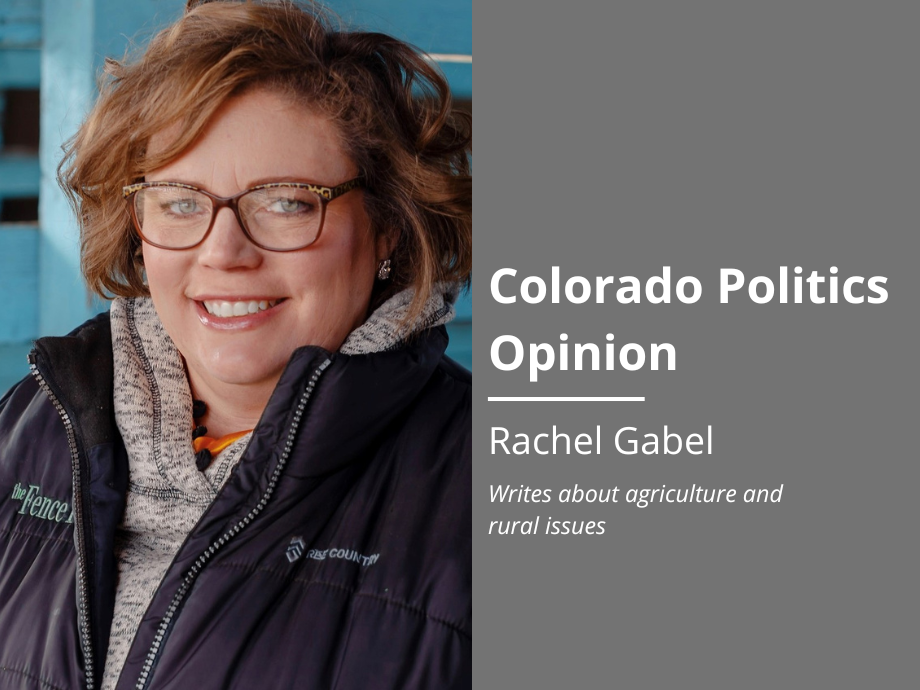
Rachel Gabel writes about agriculture and rural issues. She is assistant editor of The Fence Post Magazine, the region’s preeminent agriculture publication. Gabel is a daughter of the state’s oil and gas industry and a member of one of the state’s 12,000 cattle-raising families, and she has authored children’s books used in hundreds of classrooms to teach students about agriculture.

Will one unqualified AG replace another? | George Brauchler
George Brauchler
george-brauchler@gazette.com
Updated 18 hours ago
Colorado Democrats are poised to nominate another attorney general candidate with de minimis relevant credentials or experience. Far from disqualifying, Colorado’s recent voting history mirrors that of America in favoring biography over experience, partisanship over policy, and emphasizing what divides...
Pueblo’s mayor keeps stirring the pot | Dennis Maes
Dennis Maes
dennis-maes@coloradopolitics.com
Updated 17 hours ago
Pueblo Mayor, Heather Graham, has clearly proven to be a disciple of the Donald Trump school of governance. And, like her mentor, she is experiencing the same catastrophic results. The format is to ignore what the electorate approved and expects...
The perils of Colorado’s unregulated abortions | GUEST COLUMN
Colorado Politics
colorado-politics@coloradopolitics.com
Updated 17 hours ago
By Tom Perille How did the movement which grew out of a genuine concern for the health and safety of women become the same movement that undermines women’s health and safety today? Despite good intentions, it was a long route...
Sans seniors, what does Colorado’s uninterested early turnout say about our disengaged electorate? | Paula Noonan
Paula Noonan
paula-noonan@coloradopolitics.com
Updated 2 days ago
This primary election is poorly attended. Evidence is in the numbers. About 10% of active registered voters are deciding this year’s primaries with seven days to go. If that number triples by June 30, only 30% of voters will decide...
Who gets to decide Colorado’s economic future? | GUEST COLUMN
Colorado Politics
colorado-politics@coloradopolitics.com
Updated 2 days ago
By Sarah Blackhurst Colorado’s prosperity depends on industries that grow our food, build our future and power our homes. But today, these sectors face an invisible threat from 5,000 miles away: the European Union’s Corporate Sustainability Due Diligence Directive (CS3D)....
We have the chance to change Colorado’s cancer outcomes | PODIUM
Colorado Politics
colorado-politics@coloradopolitics.com
Updated 2 days ago
By Erika Hanson Brown Colorado ranks among the healthiest states in the nation by nearly every measure. Yet even here — amid the Rocky Mountains and our deeply rooted culture of health and activity — cancer casts a long and...
Colorado has a playbook for youth mental health — our next governor must use it | GUEST COLUMN
Colorado Politics
colorado-politics@coloradopolitics.com
Updated 3 days ago
By Karen Ron-Li Liaw From the rural communities on the western slope to the eastern plains, to the major urban regions on the Front Range, Colorado families are navigating an all-too-familiar crisis: kids are struggling, and Colorado’s mental health system...

Pigs engineered to fight alpha-gal syndrome | Rachel Gabel
Rachel Gabel
rachel-gabel@coloradopolitics.com
Updated 4 days ago
If I were an evil genius trying to hamstring animal agriculture, I would create a fly that eats livestock alive and a tick whose bite and spit causes some people to have an allergic reaction to meat. (Insert evil laugh...
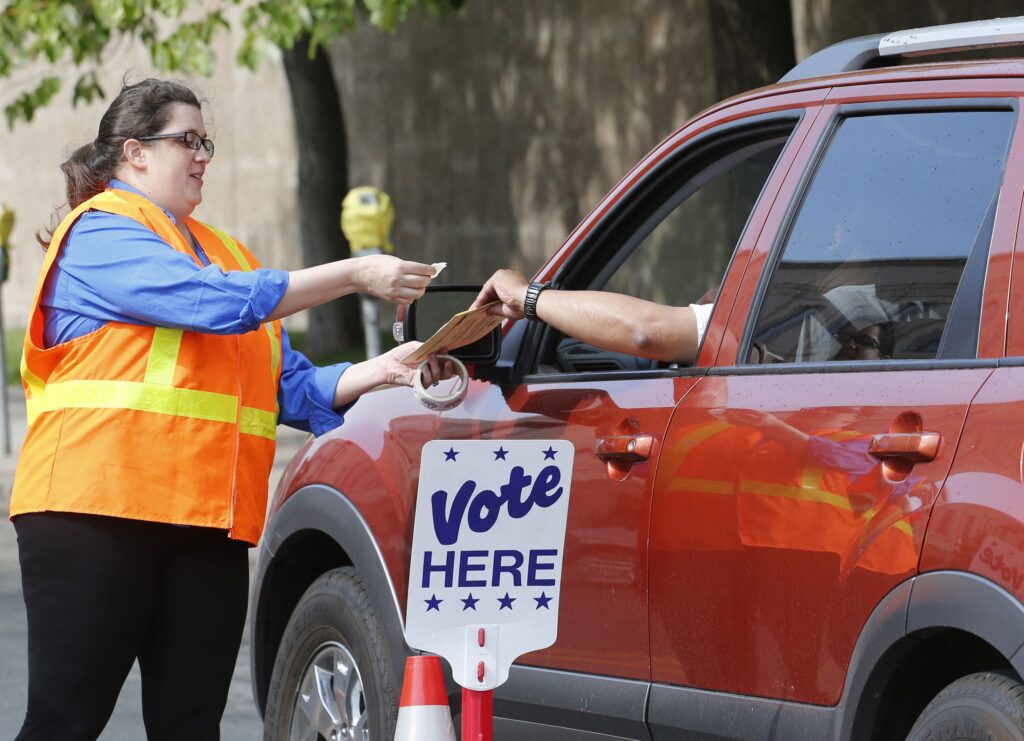
Registered voters on the eve of the 2026 primaries | Cronin & Loevy
Tom Cronin Bob Loevy
tom-cronin-bob-loevy@coloradopolitics.com
Updated 6 days ago
The Colorado Secretary of State’s Office has published the latest voter registration figures for the state and its counties as of June. Colorado ranks among the highest states for independent, or unaffiliated, voters. Only Alaska and Massachusetts have more. New Hampshire, New Jersey, Maine and Oregon also rank highly. So here...

A room for Sundance, a reality check for big-government Boulder | Jon Caldara
Jon Caldara
jon-caldara@coloradopolitics.com
Updated 1 week ago
There are few things more satisfying to watch than socialists getting mugged by reality. The Sundance Film Festival is invading my hometown of Boulder early next year. Sundance drew 85,000 attendees last year in Park City, Utah. Boulder’s hotel room...