

Power parties accountable to unaffiliateds with ranked-choice vote | NOONAN

Paula Noonan
The most recent voter registration numbers as of July show a one-month decline of 39,375 voters from June. These lower numbers may be a result of purging registrations and/or disgusted citizens. Regardless, new registrations did not exceed lost voters.
Here’s a fact that can spin your eyeballs: voter registrations between June and July of individuals 18-to-34 dropped by 24,196 citizens. Here’s an even bigger eye spin: in July Democrats represent 24% of active voters 18-to-34, Republicans represent 14.5%, and Unaffiliateds (UAF) comprise 64%.
Compare the 18-to-34 cohort to 55-to-74 cohort in July. Of the latter, 28.5% are Democrats, 31.6% are Republicans and 40% are UAFs. The trend is fast-moving toward UAFs as the largest majority by far, with Democrats in a distant second and Republicans bringing up a dismal third.
Of the two cohorts, the 55-to-74 group lost 6,574 voters compared to the younger crew’s 24,196. Young voters make up 1,076,941 of total active registrations. Older voters comprise 1,085,472. That’s pretty close in numbers but very different in registration losses, probably because young people move around more. But the inevitable trend is older voters will die off replaced by the emerging majority of UAFs.
Stay up to speed: Sign up for daily opinion in your inbox Monday-Friday
The point of reviewing these numbers is to see into the future. As today’s 55-to-74 year old voters, more conservative and party-oriented than today’s young voters, leave the scene, and the large majority of UAF voters expand across age groups, how will our democracy function?
That question is partly addressed by Initiative 310 on ranked-choice voting. In a nutshell, the ranked-choice voting initiative addresses primaries and general elections for federal, statewide and General Assembly offices, also known as “covered offices.” The initiative does not change how other offices such as county commissioners, school boards, etc., are elected.
A principal feature of ranked-choice voting is anyone can become a primary-election candidate without going through a caucus or a party nomination process. UAF candidates can enter by signature gathering in the same manner as a Democrat- or Republican-affiliated candidate. Individuals who are registered as UAF can vote for any candidate without regard to party affiliation. Their primary ballot will list all candidates for an office.
Once the primary is completed, a maximum of four top candidate vote-getters will appear on the general election ballot. Citizens will rank these candidates from 1 (most preferred) to 4 (least preferred) if no candidate receives a majority primary vote. If there is no majority winner, then a countdown occurs with the votes of the last-placed candidate distributed most-preferred to least, to the remaining candidates. If that count doesn’t produce a majority winner, the process is repeated until a candidate receives a majority of votes.
In Alaska, ranked-choice voting produced a conservative Republican governor, a moderate Democratic Congresswoman, and a moderate Republican senator. In this instance, the result leaned toward political moderation.
In the Virginia Republican primary, the ranked-choice result of roughly 30,000 voters in a hybrid primary election produced a win for Glenn Youngkin, the “moderate” Republican candidate over more conservative contenders. Ranked-choice gave Youngkin the shot to defeat Democrat Terry McAuliffe in the general election. In this case, the ranked-choice advantage went to Republicans.
In single-party districts, ranked-choice can enable voters to choose between a “moderate” and “less moderate” person within the same party. If four candidates are on the general election ballot in a single-party district, ranked voting will give voters the most choice as to how moderate to progressive or moderate to conservative the winner will be. Minority Republican voters can influence the outcome of a Democratically controlled seat by putting the more moderate Democrat as their leading choice in the second spot. Democrats can play that hand to select the most moderate Republican.
Civility may reassert its value. Candidates of the same party in primaries may be less likely to diss their same-party opponents if they must also try to come in second or third place among voters. Unaffiliated candidates may slip to the top if party candidates split their votes.
Initiative 310 will not cure all that ails our political system, for sure. Money will continue to slosh around, affecting how voters experience candidates. But ranked-choice voting may force the parties to become more inclusive and act with more consideration toward voters’ yearning for policy arguments rather than personal attacks.
Alaska will vote this year on an initiative to withdraw ranked-choice voting as its methodology. The outcome of that election may tell us whether ranked-choice will be well-received or a non-starter for Colorado.
Paula Noonan owns Colorado Capitol Watch, the state’s premier legislature tracking platform.

What exactly makes you a public figure? | Hal Bidlack
Hal Bidlack
hal-bidlack@coloradopolitics.com
Updated 19 hours ago
Well, once again, this non-lawyer columnist is going to jump in the deep end of legal scholarship and will explore a recent Colorado Court of Appeals decision. Buckle up. In yet another terrific Colorado Politics Court Crawl article, we learned...
Modernizing Pinnacol is about its members, not politics | IN RESPONSE
Colorado Politics
colorado-politics@coloradopolitics.com
Updated 9 hours ago
By Akasha Absher While we share the passion for protecting Colorado’s workers expressed in a recent op-ed from the perspective of trial attorneys and union representatives, the piece paints a picture of Pinnacol Assurance that is more rooted in 1915...

Mum on his own replacement, Bennet disrespects voters | Dick Wadhams
Dick Wadhams
dick-wadhams@coloradopolitics.com
Updated 3 days ago
U.S. Sen. Michael Bennet is playing an arrogant game of hide-and-seek with Colorado voters as he seeks to abandon his Senate seat to become governor. Bennet insists that if he is elected governor in November, he will wait until he...
What kind of energy independence did we pay for? | Miller Hudson
Miller Hudson
miller-hudson@coloradopolitics.com
Updated 3 days ago
It was during the summer of 1972 AT&T published an internal solicitation for installation and repair supervisors with “inner-city” experience to transfer to Mountain Bell. The catch was an applicant’s readiness to work 10 hours a day, six days a...

Those who cannot live without wild things | Rachel Gabel
Rachel Gabel
rachel-gabel@coloradopolitics.com
Updated 3 days ago
Aldo Leopold wrote in his Sand County Almanac, “There are some who can live without wild things and some who cannot.” The collection of essays first published in 1949 was accepted by a publishing house after a steady stream of...

Thank God for Wyoming — the un-Colorado | Jon Caldara
Jon Caldara
jon-caldara@coloradopolitics.com
Updated 3 days ago
Years ago, I interviewed a Canadian health-care broker whose job was helping his countrymen escape their own failing system. When their “free” health care turned into “free to wait until you die,” he’d save his clients by routing them to...
It’s time to let unaffiliated voters caucus | Vince Bzdek
Vince Bzdek
vince.bzdek@gazette.com
Updated 1 day ago
There’s no getting around it: Colorado’s 3,000 county caucuses, which just wrapped up recently, left half the electorate out in the cold. Since unaffiliated voters now make up 51% of all Colorado voters, a majority of Colorado electors are barred...
A Mile High, again: Capitol M | Week of March 21, 2026
Marianne Goodland
marianne.goodland@coloradopolitics.com
Updated 6 days ago
The lighter side of the Capitol, usually…. Local Journalism Day, except they forgot their very own local journalists. The state Senate on Thursday, March 19, passed a resolution recognizing Local Journalism Day. Everyone voted for it, which is good, because...
The insular bubble of caucuses and assemblies | SONDERMANN
Eric Sondermann
eric-sondermann@coloradopolitics.com
Updated 5 days ago
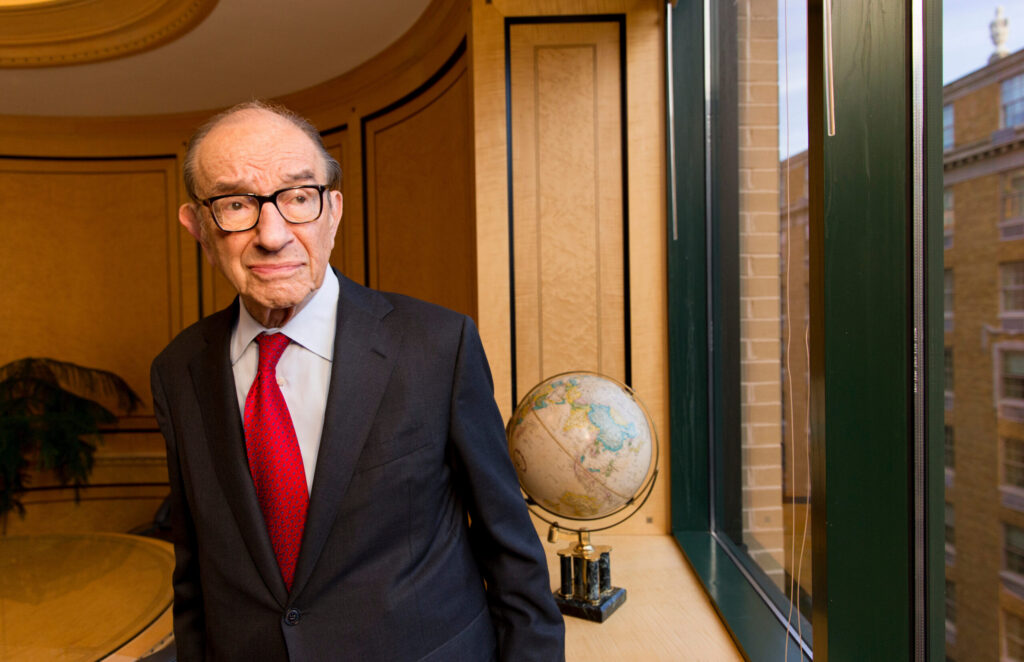
Nearly 30 years ago, then-Federal Reserve Chairman Alan Greenspan coined the term “irrational exuberance” to describe the overheated stock market. That descriptive phrase could also apply to much of the political realm. The hype in politics often grossly exceeds the...
Set appropriate state guidelines for critical surveillance technology | OPINION
Colorado Politics
colorado-politics@coloradopolitics.com
Updated 5 days ago
I admit it: I’m worried. I’m hearing a lot about surveillance in the public arena. I hear cameras are capturing my car’s license plate wherever I drive, my face as I go in and out of stores and health facilities,...