

El Paso County sex assault conviction overturned after judge misapplied law
Colorado’s second-highest court reversed a man’s sexual assault conviction last month after finding an El Paso County judge applied the wrong legal standard when assessing whether the defendant was competent to stand trial.
Prosecutors charged Micheal Cochran with numerous sex-related offenses, but his defense attorney became concerned that Cochran was struggling to understand the charges, possible penalties and the procedures more broadly.
Ultimately, Cochran underwent a court-ordered competency evaluation and a psychologist found him capable of moving forward. However, the defense requested a second evaluation after Cochran fell and suffered a head injury requiring surgery. A second psychologist met with Cochran and found him to have a mental or developmental disability with signs of possible dementia.
District Court Judge Eric Bentley then ordered the state to provide Cochran with competency restoration services. Before the services even began, however, a third psychologist evaluated Cochran and found him competent, with no signs of serious impairment.
Bentley held a hearing on the question of Cochran’s ability to proceed to trial. Although the district attorney’s office acknowledged it had the responsibility to prove Cochran was now competent, Cochran’s defense attorney opened by mistakenly stating it was his burden to prove Cochran lacked competency.
Bentley heard from the psychologists about their competing evaluations of Cochran and deemed it a “close call.” But Bentley, echoing the defense’s incorrect understanding of the law, concluded Cochran had not proven he remained incompetent. Subsequently, Cochran pleaded guilty to one count of sexual assault and he received a sentence of three years to life in prison.
A three-judge panel for the Court of Appeals concluded Bentley and the defense attorney had confused two provisions of state law, one of which correctly required the prosecution to prove competency and the other required the defense to prove incompetency. Although the Colorado Attorney General’s Office painted the defense attorney’s mistake as deliberate, the panel was not convinced.
“On this record, we can’t conclude that if the court had properly placed the burden on the prosecution to prove that Cochran was competent, the outcome would have been the same,” wrote Judge Janice B. Davidson in the July 11 opinion.
The panel returned the case to Bentley to determine if it was feasible to assess whether Cochran was competent at the time of his 2022 guilty plea. If so, Cochran could be re-sentenced for the sex assault charge. If not, Bentley would need to resume the process under Colorado’s competency laws.
The case is People v. Cochran.

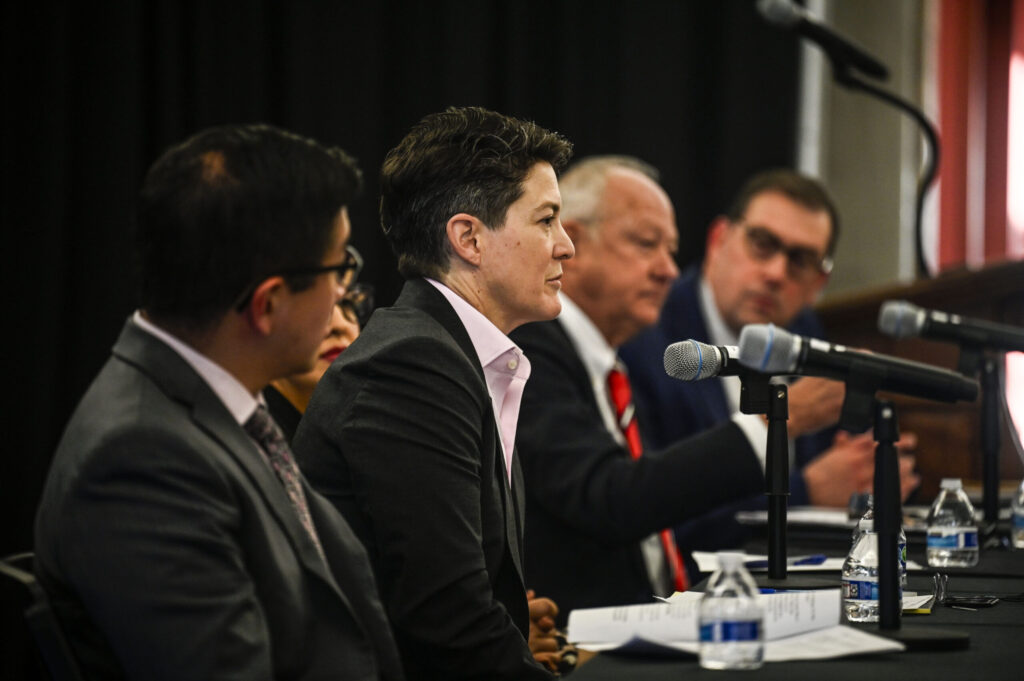
Colorado Supreme Court blocks ballot initiative defining ‘fees’
Michael Karlik
michael.karlik@coloradopolitics.com
Updated 7 hours ago
The Colorado Supreme Court blocked a proposed ballot initiative on Monday that would have required voter approval for new fees above a certain threshold, while also enshrining a definition of “fee” into the state constitution for the first time. Chief...

Colorado justices, by 5-2, say Longmont detective did not violate suspect’s Miranda rights
Michael Karlik
michael.karlik@coloradopolitics.com
Updated 9 hours ago
The Colorado Supreme Court’s majority ruled on Monday that a Longmont detective did not coerce a suspect into talking by making references to how a judge would look at his character, and by suggesting he may get out of prison...
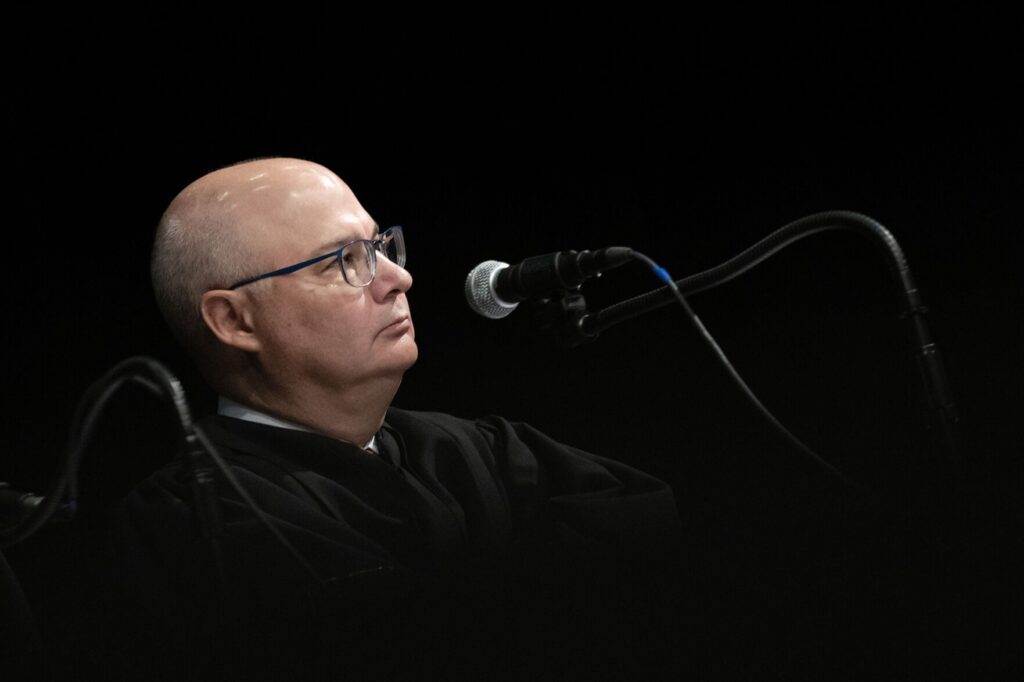
Colorado justices find Fort Collins police lacked probable cause to arrest suspect in park
Michael Karlik
michael.karlik@coloradopolitics.com
Updated 11 hours ago
The Colorado Supreme Court agreed on Monday that Fort Collins police lacked probable cause to arrest a man for a child sex offense based on his presence in a public park around the time they intended to meet with their...

Supreme Court to hold oral arguments, discipline commission releases report | COURT CRAWL
Michael Karlik
michael.karlik@coloradopolitics.com
Updated 13 hours ago
Welcome to Court Crawl, Colorado Politics’ roundup of news from the third branch of government. The state Supreme Court is holding oral arguments this week, plus Colorado’s judicial discipline commission released its annual report. Colorado Supreme Court news • The Supreme...

Federal judge dismisses developer’s challenge to Denver affordable housing ordinances
Michael Karlik
michael.karlik@coloradopolitics.com
Updated 3 days ago
A federal judge dismissed a homebuilder’s constitutional challenge on Tuesday to a pair of Denver ordinances that impose obligations on developers related to the affordable housing demands created by new construction. Two related companies, redT Homes and redT Capital Partners,...
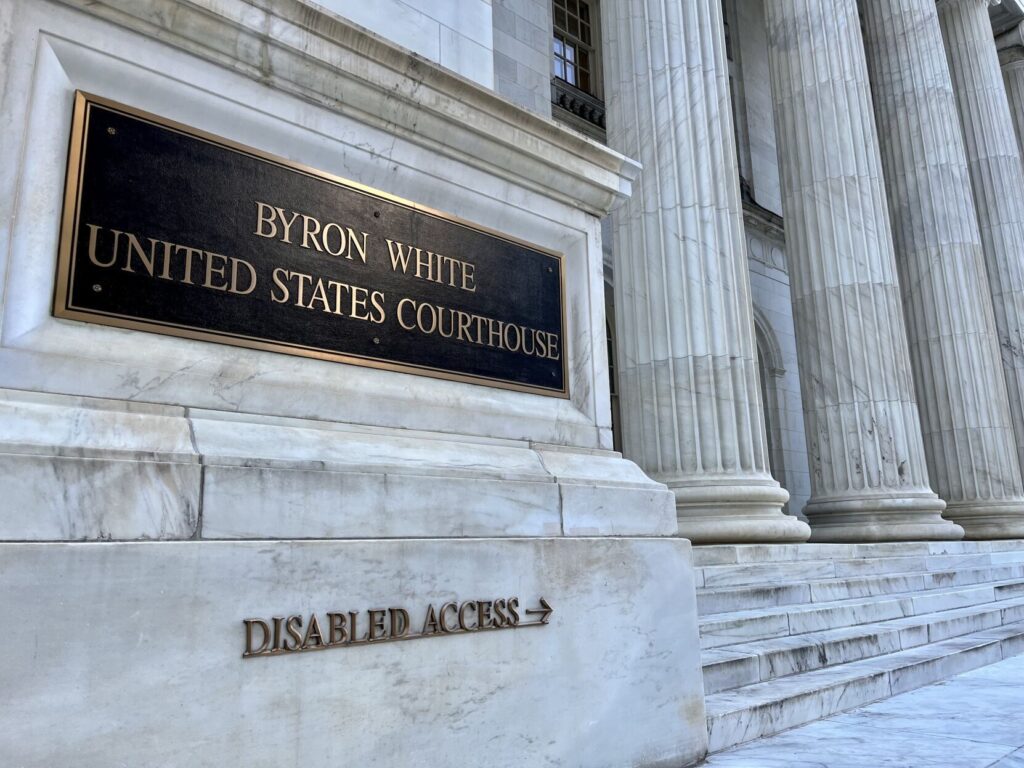
10th Circuit distances itself from prior decision making it easier to toss prisoner lawsuits
Michael Karlik
michael.karlik@coloradopolitics.com
Updated 3 days ago
The Denver-based federal appeals court distanced itself on Wednesday from its own recent decision that made it easier for prison officials to end civil lawsuits by transferring incarcerated plaintiffs between facilities. A three-judge panel of the U.S. Court of Appeals...

Appeals court overturns Douglas County vehicular homicide conviction due to faulty jury instructions
Michael Karlik
michael.karlik@coloradopolitics.com
Updated 1 day ago
Colorado’s second-highest court overturned a defendant’s vehicular homicide conviction and 12-year prison sentence on Thursday after determining a Douglas County judge omitted key language from the jury instructions that could have resulted in a different outcome. James Paul McDonald was...
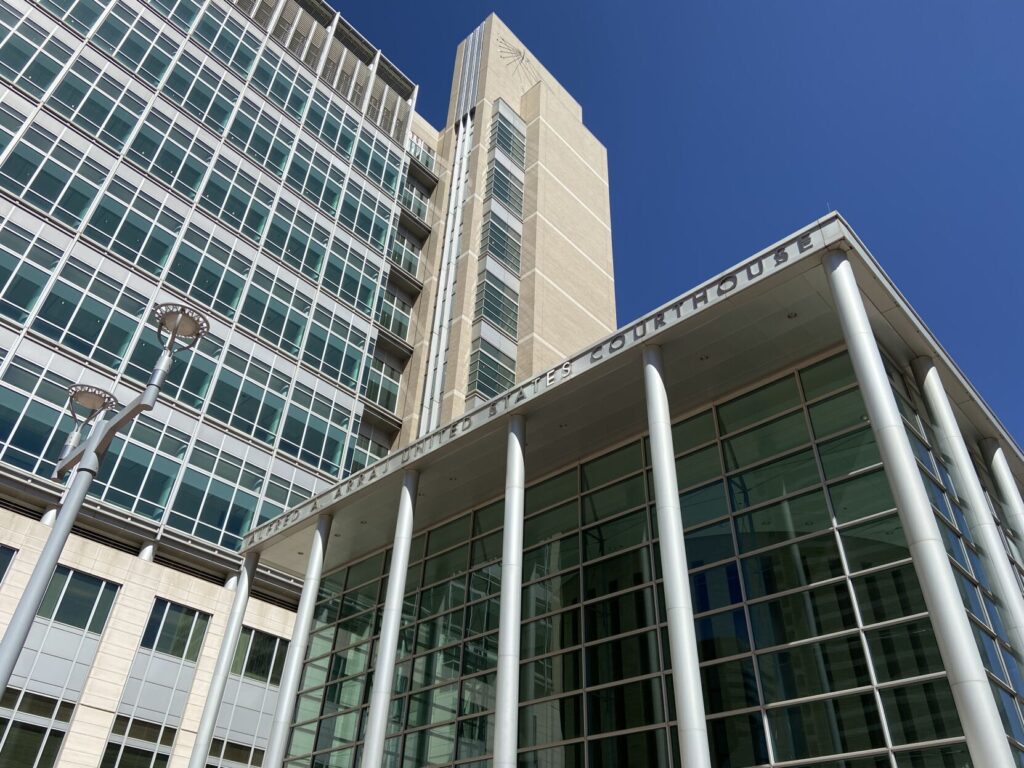
Federal judge dismisses malicious prosecution claim against former Denver prosecutor
Michael Karlik
michael.karlik@coloradopolitics.com
Updated 3 days ago
A federal judge concluded on Monday that a former Denver prosecutor could not be sued for allegedly causing the arrests of two plaintiffs after they failed to appear for trial on the scheduled date, even though the trial had been...
Judicial discipline commission reports increased transparency, increased submissions
Michael Karlik
michael.karlik@coloradopolitics.com
Updated 2 days ago
The Colorado Commission on Judicial Discipline received 473 misconduct complaints about judges in 2025, which was nearly 29% higher than in 2024 and substantially greater than any time in the past decade. However, only 31 complaints were referred to the commission...
Colorado Gov. Jared Polis ignites fierce debate after raising clemency questions in Tina Peters case
Marianne Goodland
marianne.goodland@coloradopolitics.com
Updated 5 days ago
Gov. Jared Polis ignited a political firestorm Tuesday night after weighing in on the prison sentences of two former Colorado officials — a Democrat and a Republican — convicted of attempting to influence a public servant. The comments quickly fueled...