

Colorado lawmakers briefed on framework for potential property tax compromise
Colorado lawmakers on Monday began to digest the framework for a potential compromise that could lead to deeper property tax relief and halt two initiatives that, if approved, would significantly decrease local governments’ revenue.
The threat of significantly more tax cuts than what lawmakers enacted earlier in the year — and the corresponding loss in government revenue — has compelled the parties to try to negotiate and head off Propositions 50 and 108.
The parties must act quickly, as the deadline to remove measures from the ballot is Sept. 6.
The meeting by the Commission on Property Tax suggested that a compromise remains on the table and that lawmakers might be on track to hold a special session to tackle the deal.
Analysts briefed members of the Commission on Property Tax on what the current tax regime looks like under Senate Bill 24-233, which Republicans and Democrats passed, the fiscal effects if voters approved Propositions 108 and 50, and the parameters of the potential compromise that, assuming a deal is reached, lawmakers would then approve in the special session.
The compromise borrows from familiar points. It would cut both residential and commercial property tax rates. The cuts won’t be as deep for property taxes collected for the purposes of funding school operations.
It would decrease the commercial assessment rate over three years.
It would cap revenue growth.

Fiscal analysts briefed members of the Commission on Property Tax on what the current tax regime looks like under Senate Bill 24-233; the fiscal effects if voters approved Propositions 108 and 50; and, the parameters of the potential compromise that lawmakers would then approve in the special session. (COURTESTY: Legislative Council Staff)
All told, the compromise would reduce property taxes by $255 million in tax year 2025, and by $295 million by 2025 — compared to the base as modified by SB 233.
Analysts said the fiscal impact would be greater in the out years.
Finally, the plan would require a smaller increase in state aid — $83 million more in fiscal year 2025-26 and $105 million the year after — compared to the figures under the tax initiatives.
Just before the special meeting, more than 40 bipartisan organizations and the mayors of Aurora, Denver, and Colorado Springs — Mike Coffman, Mike Johnston, and Yemi Mobolade, respectively — submitted letters to the commission, expressing concerns about the potential impact of Propositions 108 and 50.
Most of the 19-member committee seemed agreeable to the framework’s core elements, which include changes to residential assessment rates, non-residential assessment rates, and a revenue cap for both schools and local government rates.
-
The residential assessment rate for local governments would drop from 6.7% to 6.25% for the 2025 tax year.
-
Assessment rates for commercial and agricultural properties would decrease to 25% in the 2027 tax year. The change won’t apply to the oil and gas industry.
-
Local government revenue growth would be capped at 5.25% annually, and school districts will see a new limit of 6%.

Fiscal analysts briefed members of the Commission on Property Tax on a compromise that would would require a smaller increase in state aid — $83 million in fiscal year 2025-26 and $105 million the year after — compared to the figures under the tax initiatives. (COURTESTY: Legislative Council Staff)

Fiscal analysts briefed members of the Commission on Property Tax on the parameters of the potential compromise, under which local government revenue growth would be capped at 5.25% annually, and school districts will see a new limit of 6%. (COURTESTY: Legislative Council Staff)
Many remained skeptical that the deal would prevent future ballot initiatives seeking further tax cuts.
“Most of us don’t don’t object to the policy, most of us don’t even object to a special session,” Summit County Commissioner Tamara Pogue said. “But I think what a lot of us do object to is being here over and over again and having no assurances whatsoever that we won’t be back here next June having the same conversation.”
Mark Ferrandino, director of the governor’s Office of State Planning and Budgeting, hailed the framework as a “good path forward” to end the property tax battle and “de-risk” the budget.
The committee members discussed several issues, but at the conclusion of the three-and-a-half-hour meeting, they seemed amenable to the compromise framework, although no formal decision or vote was made.
The Colorado Constitution grants the governor authority to convene a special session, though the General Assembly may call one if two-thirds of each chamber requests it in writing.
This means that at least 44 of the 65 representatives and 24 of 35 senators must agree on the subject to be addressed and notify the House Speaker and Senate president.
Any deal likely needs the governor’s blessing.
Sources close to the negotiation said the compromise stems from fears that passing the ballot initiatives would be “devastating” to the state and even more so to local government.
Proponents of the two initiatives have argued that the solutions adopted by lawmakers and the governor offer insufficient relief to residents and that a more meaningful fix is warranted.
Also backed by Colorado Concern, Proposition 108 seeks to reduce assessment rates to 5.7% for residential properties and 24% for commercial properties. Proposition 50, a constitutional amendment, would cap tax revenue growth at 4% and require voter approval for local government to retain dollars above the limit.
In Colorado, there is no state property tax. Only local governments — such as counties, school districts, cities, towns, and special districts — may impose and collect property taxes. The revenue funds school operations and local services, such as road maintenance, police departments, fire protection, water and sewer infrastructure, parks and libraries.
“In the last days of the legislative session that ended in May, we had the unprecedented passage of SB24-233, which was a bipartisan agreement to lower property taxes while at the same time, protect the state budget,” Sen. Barbara Kirkmeyer, R-Larimer, earlier said. “Over the last several weeks, we have managed to find a way to expand on that historic compromise and further lower property taxes for both homeowners and businesses, while preserving local government services and ensuring services we care about at the state level will continue.”


Trump plans to move Forest Service headquarters to Utah, shutter research sites | OUT WEST ROUNDUP
The Associated Press
the-associated-press@coloradopolitics.com
Updated 3 days ago
UTAH Forest Service bound for Salt Lake City SALT LAKE CITY — President Donald Trump’s administration will move the U.S. Forest Service headquarters out of the nation’s capital to Salt Lake City as part of an organizational overhaul that involves...
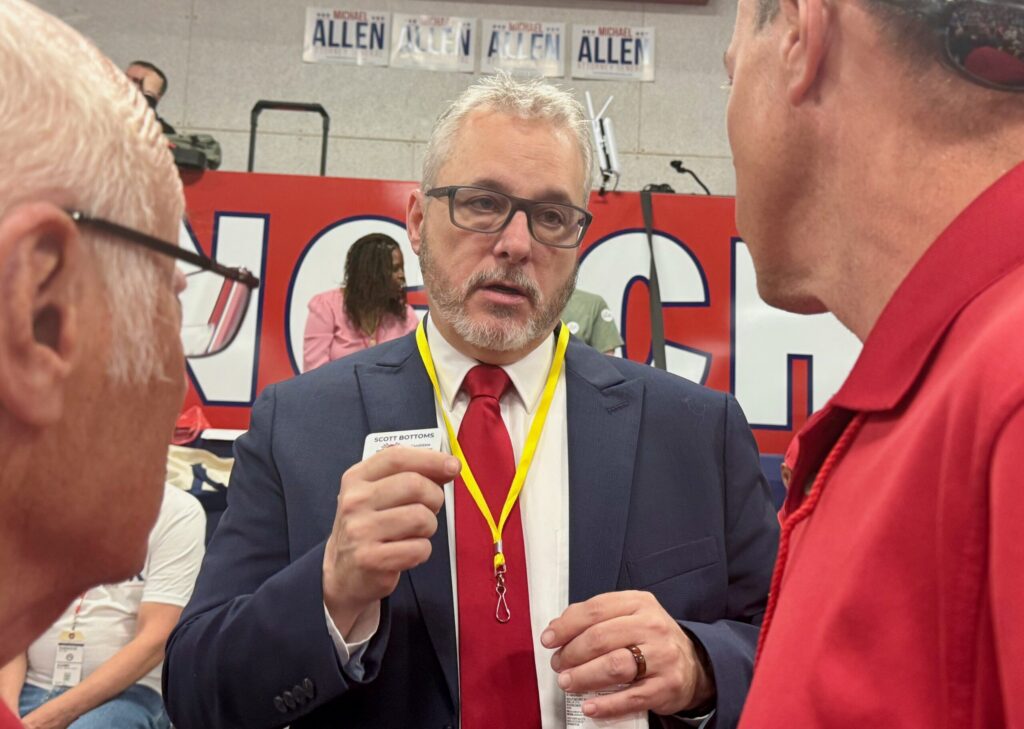
Pastors Scott Bottoms, Victor Marx win spots in Colorado GOP’s gubernatorial primary at party assembly
Ernest Luning
ernest.luning@coloradopolitics.com
Updated 8 hours ago
Two pastors from Colorado Springs qualified Saturday for the Republican gubernatorial primary ballot at the Colorado GOP’s state assembly in Pueblo in a party meeting that dragged late into the night. State Rep. Scott Bottoms, who is known as one...
Colorado House finishes work on 2026-27 state budget, finally
Marianne Goodland
marianne.goodland@coloradopolitics.com
Updated 14 hours ago
The House on Saturday, after four days of work – it usually takes two – finished up their work and voted on the $46.8 billion 2026-27 state budget, as contained in House Bill 1410 and 64 accompanying measures designed to...
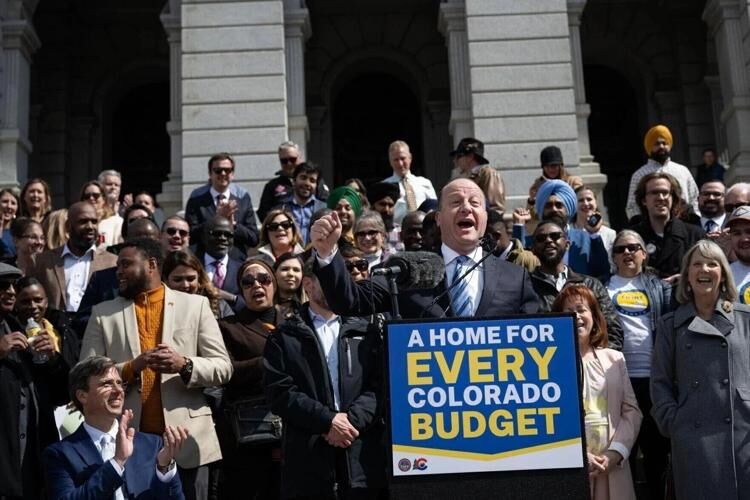
Home rule has protected Colorado cities for over 125 years | Cronin and Loevy
Tom Cronin Bob Loevy
tom-cronin-bob-loevy@coloradopolitics.com
Updated 15 hours ago
Colorado is currently gripped by a political struggle between the governor plus the legislature in Denver and populous home-rule city governments, mainly on the Front Range, such as Colorado Springs. In the past few years, the legislature has been passing bills that applied to city government policies, which...
Colorado Politics calendar Apr. 13-19
Rachael Wright, Special to Colorado Politics
rachael.wright@coloradopolitics.com
Updated 4 days ago
CoPo’s weekly political calendar will help you find political and public-policy events throughout Colorado. It includes candidate and issue campaign events, public policy meetings, court hearings, state and local party conventions, assemblies, debates, rallies, parades, speaking engagements, traveling dignitary appearances,...
Minority Leader Peña argues against oil and gas bill | A LOOK BACK
Rachael Wright, Special to Colorado Politics
rachael.wright@coloradopolitics.com
Updated 4 days ago
Forty-Five Years Ago This Week: “The Colorado House of Representatives had just given its final approval to House Bill 81-1152, which created $9 million in tax relief to oil and gas companies. But this came “at the expense of local...
A longshot, upset bid and a few quick takes | SONDERMANN
By Eric Sondermann
by-eric-sondermann@coloradopolitics.com
Updated 3 days ago
It is hard to keep up these days. The flow of news often seems overwhelming. Let’s focus today on an unusual congressional race before moving on to a few quick, supplementary observations. Since its creation 54 years ago, Congressional District...
An “-“ends tribute in a week full of “odds” | Capitol M | Week of April 11, 2026
Marianne Goodland
marianne.goodland@coloradopolitics.com
Updated 3 days ago
The lighter side of the Capitol, usually… The decision to read the budget bill — the long bill, which spans 661 pages this year — put a damper on the House’s already less‑than‑festive mood. So Capitol M decided to catch...
What you need to know about the Colorado legislature reading a 661-page bill aloud
Marianne Goodland
marianne.goodland@coloradopolitics.com
Updated 14 hours ago
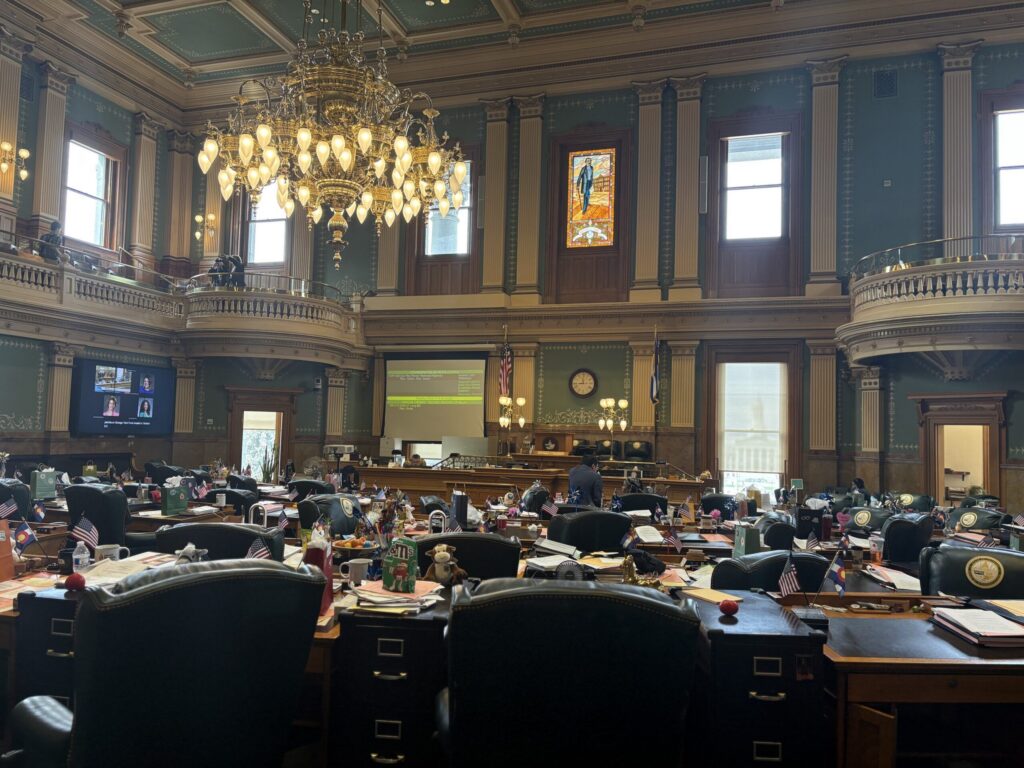
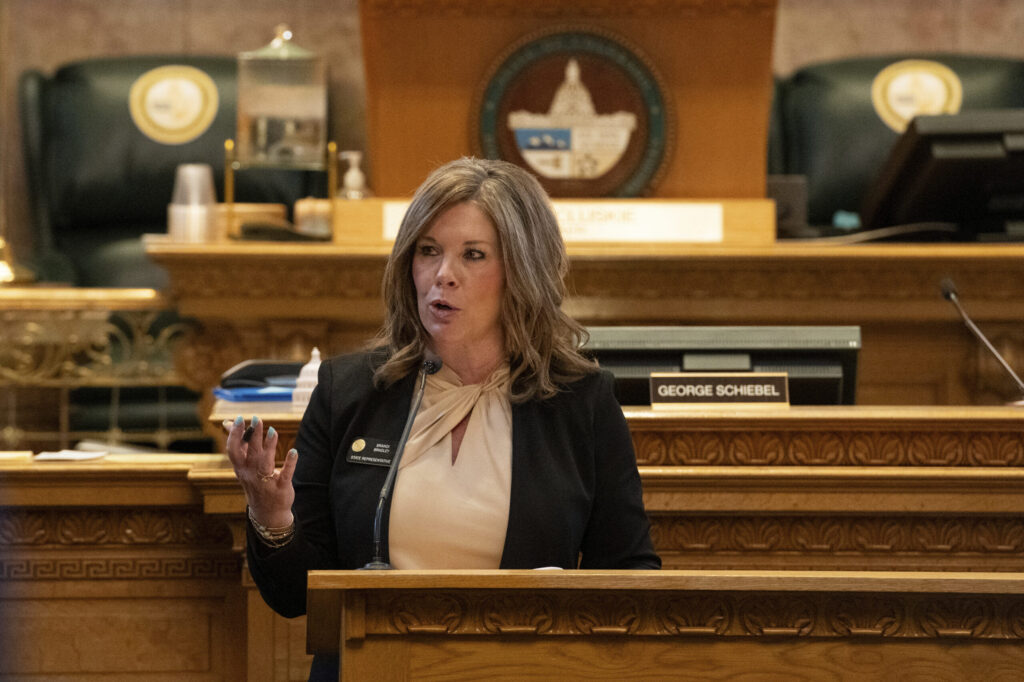
A rarely used procedural move by a Republican legislator threw the Colorado House into an extended slowdown, after she invoked her right to have a nearly 700-page state budget bill read aloud in full. Once Rep. Brandi Bradley, R‑Roxborough Park,...
Literal reading of budget bill complicates Colorado legislators’ plans for GOP assembly
Marianne Goodland
marianne.goodland@coloradopolitics.com
Updated 20 hours ago
Republican Rep. Brandi Bradley’s decision to force the full reading of the state budget — called the “long bill” for its obvious length — has not only slowed House business to a crawl but also disrupted her colleagues’ plans for...