

10th Circuit says prisoner shot at courthouse cannot sue without complaining to prison first
The federal appeals court based in Denver ruled on Tuesday that an incarcerated man shot by a corrections officer during his courthouse appearance was required to first file an internal prison grievance before suing for excessive force, even though he was outside the prison at the time.
In reaching its conclusion, a three-judge panel of the U.S. Court of Appeals for the 10th Circuit concluded there was no “geographic test” that automatically excuses prisoners from lodging grievances when their rights are violated beyond prison walls. Civil rights advocates, however, criticized the panel’s suggestion that the mandatory grievance process should be applied broadly because of the alleged benefits it confers on prisoners.
Brian Estrada was incarcerated in the Colorado Department of Corrections when he was transported to the Logan County courthouse in May 2018 for a court appearance. Although he was shackled and handcuffed, Estrada tried to escape in the courtroom. Corrections Officer Jacob Smart shot Estrada multiple times, injuring him.
Estrada subsequently filed suit alleging excessive force. However, a trial judge terminated the case in favor of Smart because Estrada, prior to suing, had not gone through the corrections department’s three-step grievance process first. That requirement, known as “administrative exhaustion,” is mandated by the Prison Litigation Reform Act (PLRA) in cases “brought with respect to prison conditions.”

The 10th Circuit panel agreed Estrada was a prisoner shot by a prison employee, which required him to file the grievances even though both men were outside the prison walls.
The purpose of the PLRA, explained Judge Richard E.N. Federico, is to improve prison conditions by quickly bringing mistreatment to the attention of the warden without years-long litigation.
“For example, in this case, if Estrada had timely pursued the three-step grievance process regarding the courthouse shooting, he would have alerted prison officials that CDOC officers perhaps need additional training on the appropriate tactics,” he wrote in the July 16 opinion. “Or, at the very least, his grievances would have drawn CDOC’s attention to Smart, who shot a fully restrained prisoner three times without any attempt to use a taser or other lesser force.”
However, civil rights attorney Mari Newman disputed the notion that a grievance by Estrada would have done anything to improve prison conditions.
“The PLRA is being used as a barrier to inmates’ ability to seek justice in the courts, not to improve conditions,” she said. “If CDOC officials failed to take notice when their guard shot an unarmed, shackled inmate three times in violation of clearly established law, that is because they have buried their heads deep in the ground. The only thing that will force CDOC to improve inmate conditions is being held accountable in a court of law.”
A strict requirement
Before filing a federal lawsuit, incarcerated plaintiffs must exhaust their administrative remedies, otherwise their claims are barred. Lawmakers of both parties originally supported the 1995 legislation to cut down on frivolous litigation, which then-Senate Majority Leader Bob Dole referred to as “fun-and-games.”
U.S. District Court Senior Judge William J. Martínez initially declined to dismiss Estrada’s lawsuit, concluding Smart’s actions would have violated Estrada’s clearly established rights if proven. However, Smart then pointed out Estrada had never filed a grievance about the shooting, meaning the excessive force claim was barred.
Martínez agreed, noting the corrections department’s policy about prisoner grievances did not limit the process to only violations that occur inside a prison.

The U.S. House of Representatives and the U.S. Capitol Dome are seen on Capitol Hill in Washington in this 2023 photo.
On appeal to the 10th Circuit, Estrada insisted that requiring a grievance for mistreatment outside of prison would unreasonably stretch the scope of the PLRA. A tenant, for example, would not expect their apartment complex’s rules to apply outside of the premises, he argued.
“If a prison employee shooting an inmate at a courthouse is a ‘prison condition,’ it is hard to imagine any suit against a prison employee that would not qualify,” wrote Estrada’s attorneys. “If a prison guard made defamatory statements about an inmate in (a) hypothetical newspaper article, according to Officer Smart the inmate would need to exhaust before filing suit.”
‘Not a technicality’
During oral arguments to the 10th Circuit, the appellate judges quizzed the Colorado Attorney General’s Office how broadly the grievance requirement should apply.
“What if Estrada had escaped and two days later, Mr. Smart encounters him at the grocery store, knowing he’s an escaped prisoner,” said Federico. “Confrontation ensues and he shoots him there in the grocery store. Would Mr. Estrada have to exhaust that?”
“Yes,” answered Senior Assistant Attorney General Abigail L. Smith, representing Smart. “It doesn’t matter that the employee conduct occurred in a prison facility or somewhere that isn’t a prison facility.”

In this screen grab from C-SPAN, Richard E.N. Federico testifies at his confirmation hearing to the U.S. Court of Appeals for the 10th Circuit on Sept. 6, 2023.
The 10th Circuit concluded the facts of Estrada’s case fell under the category of a prison conditions lawsuit for which he had to file a grievance. No other federal appeals court, Federico noted, adopted a “geographic limitation” to prison buildings alone.
“Requiring a prisoner to file a grievance is not a technicality; instead, it is mandatory to ensure prison ‘efficiency,'” he wrote, “by allowing prison officials to promptly review incidents and gather evidence, as well as maintain control over the flow of prison life.”
Emma McLean-Riggs, staff attorney for the ACLU of Colorado, countered that Estrada’s inability to seek damages for being shot represented “another injustice” under the PLRA’s restrictions.
“The opinion’s suggestion that the PLRA is a valuable tool to improve the circumstances of incarcerated people further defies reality,” she said. “Instead, these processes and this opinion will have the effect of further burying incarcerated people’s pleas for help in a Byzantine bureaucracy and denying access to the courts on technicalities.”
The case is Estrada v. Smart.


Colorado Supreme Court to address child’s CCTV testimony
Michael Karlik
michael.karlik@coloradopolitics.com
Updated 15 hours ago
The Colorado Supreme Court announced on Monday that it will review the impact of a victim’s closed-circuit testimony on the prosecution of a juvenile defendant. At least three of the court’s seven members must agree to hear an appeal. There...

10th Circuit to hold all-judges hearing, judicial committee turns down ‘civility code’ | COURT CRAWL
Michael Karlik
michael.karlik@coloradopolitics.com
Updated 1 day ago
Welcome to Court Crawl, Colorado Politics’ roundup of news from the third branch of government. The Denver-based federal appeals court agreed to hold a rare all-judges hearing in a criminal case, plus a state Supreme Court committee overwhelmingly rejected a...
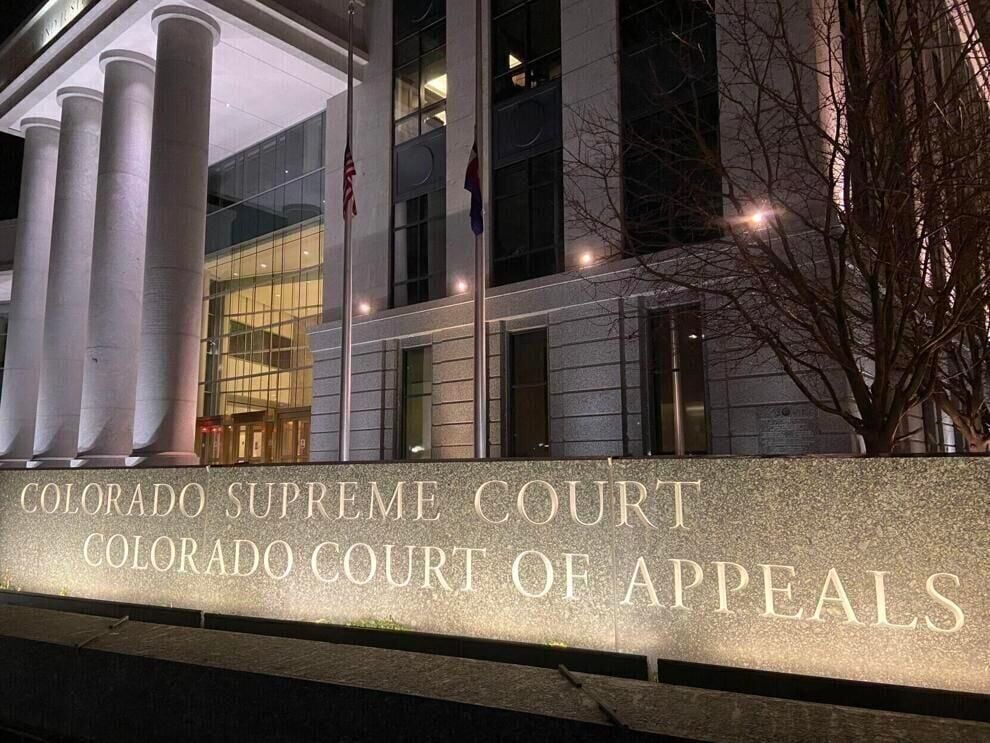
Divided Colorado Supreme Court curtails use of laced-substances defense
Michael Karlik
michael.karlik@coloradopolitics.com
Updated 1 day ago
The Colorado Supreme Court on Monday walked back the ability of criminal defendants to claim their conduct was the result of consuming an intoxicating substance that secretly contained another behavior-altering substance. Under state law, “involuntary intoxication” is an affirmative defense,...
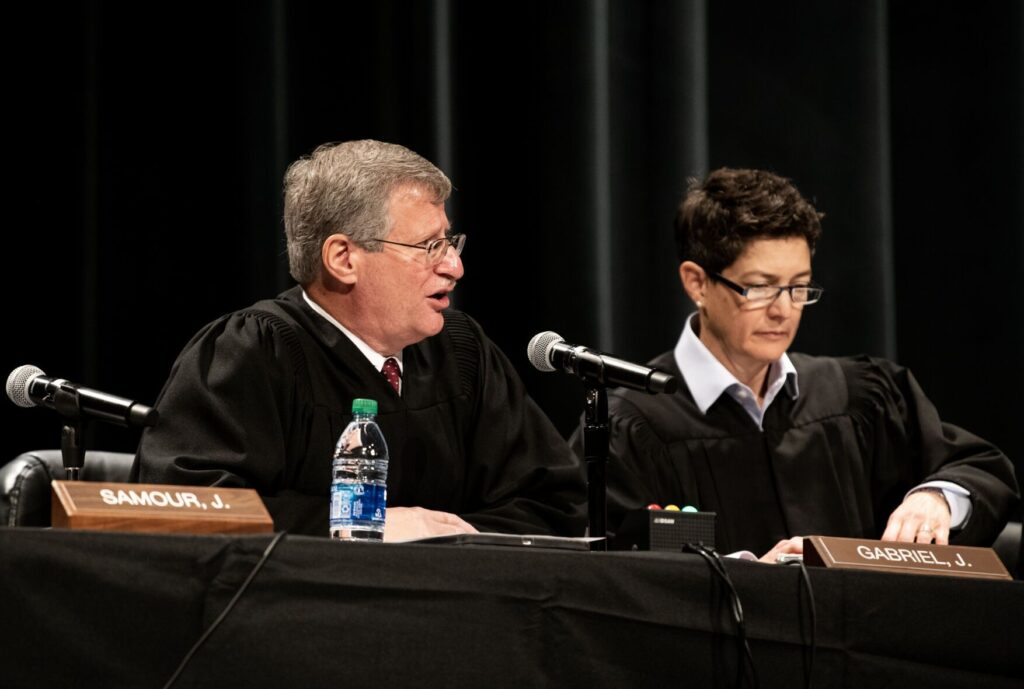
Colorado justices say utilities commission overreached by immunizing Xcel in rate document
Michael Karlik
michael.karlik@coloradopolitics.com
Updated 2 days ago
Xcel Energy cannot rely upon a rate-setting document to broadly immunize itself from liability against electrocutions, the Colorado Supreme Court ruled on Monday. The justices originally heard the electrocution-related lawsuit from Francisco Cuevas to decide whether Xcel’s tariff, which sets...
Colorado Supreme Court committee rejects civility proposal amid fears of weaponization by judges, ‘jerks’
Michael Karlik
michael.karlik@coloradopolitics.com
Updated 2 days ago
The Colorado Supreme Court’s Civil Rules Committee overwhelmingly rejected a proposal last week to create an enforceable “civility code” for lawyers and legal paraprofessionals, which would allow judges to quickly impose corrective action without a formal complaint and investigation by...
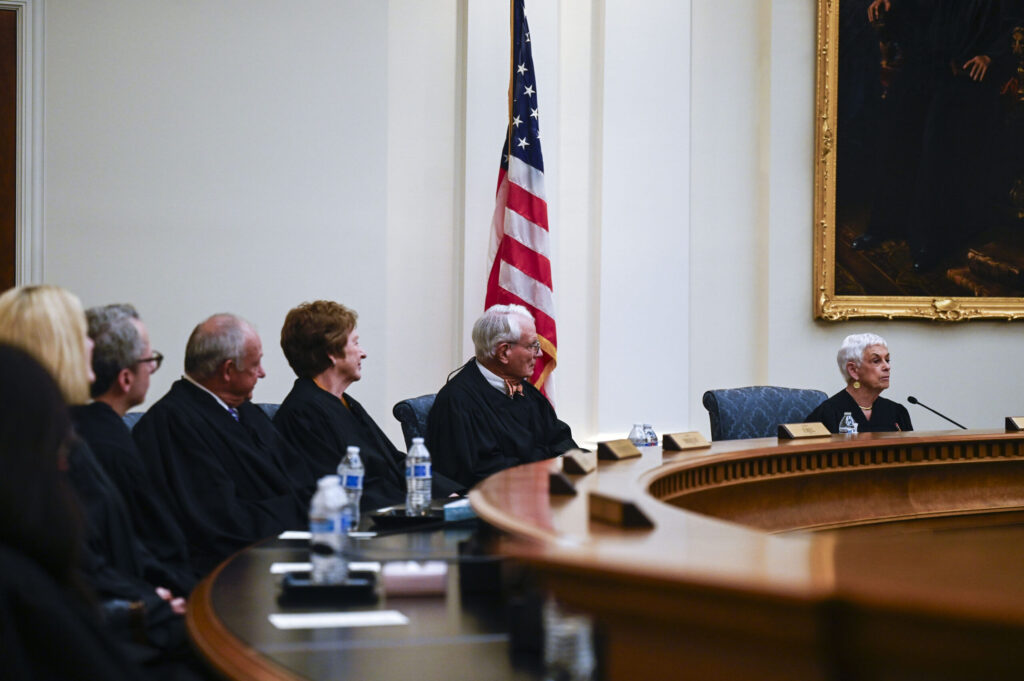
10th Circuit to address resentencing of probation violators in rare all-judges hearing
Michael Karlik
michael.karlik@coloradopolitics.com
Updated 3 days ago
The Denver-based federal appeals court agreed on Thursday to hold a rare all-judges hearing to determine the proper procedure for resentencing a criminal defendant who has violated the terms of his probation. In the federal appellate courts, the vast majority...
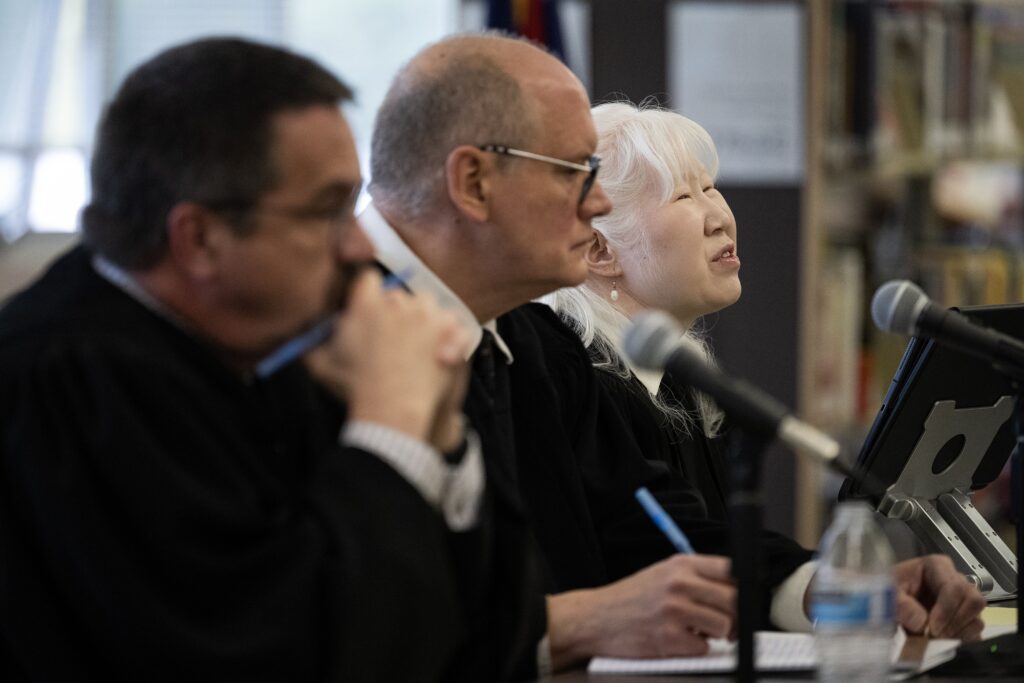
Appeals court overturns Adams County sex offense convictions due to prosecutor’s misconduct
Michael Karlik
michael.karlik@coloradopolitics.com
Updated 3 days ago
Colorado’s second-highest court reversed multiple child sex assault convictions on Thursday after concluding an Adams County prosecutor committed misconduct while cross-examining the defendant. A three-judge Court of Appeals panel observed the charges against Daniel Michael Boerner depended on the jury...

Fort Carson soldier’s wife could be deported
Carol McKinley
carol-mckinley@coloradopolitics.com
Updated 5 days ago
As the country’s largest immigration enforcement crackdown continues in Minnesota’s Twin Cities, a Fort Carson sergeant is fighting a personal immigration crisis — one that may implode his family. Sgt. Tyler Garza’s wife, Jennifer Maradiaga Baca, is not a legal...

Elizabeth School District dismisses challenge to book-ban injunction on eve of appellate arguments
Michael Karlik
michael.karlik@coloradopolitics.com
Updated 5 days ago
An Elbert County school district has dismissed its challenge to a judge’s injunction ordering it to return banned books to library shelves, days before the Denver-based federal appeals court was set to hear oral arguments this week. Although a three-judge...

Colorado Supreme Court to hear cases on insurance coverage for COVID, witness credibility
Michael Karlik
michael.karlik@coloradopolitics.com
Updated 6 days ago
The Colorado Supreme Court announced on Tuesday that it will decide the degree to which a virus or other hazard must affect a commercial property before it can trigger loss-or-damage coverage under an insurance policy. At least three of the...