

Colorado justices overrule appeals court’s incorrect standard for mid-case appeals
The Colorado Supreme Court on Monday overruled a 7-year-old decision of the state’s second-highest court after a plaintiff, the defendants and even one of the judges who participated in the decision called it incorrect.
Typically, appellate courts can only review final judgments that address all of the claims in a civil case. However, Colorado’s procedural rules permit trial judges to designate a ruling as “final,” even when it only addresses some of the claims, if the judge believes there is “no just reason” for delaying an appeal.
In 2019, Daniel Wolf brought suit against Michael J. Brenneman and Jeffrey B. Selby, alleging they lied to a grand jury and defamed him to the media about a real estate development project that led to him being criminally charged. A Denver jury ultimately acquitted Wolf.
The following year, then-District Court Judge Michael J. Vallejos found the defendants had immunity for testifying as grand jury witnesses, even if their testimony was false. At the same time, he declined to dismiss the defamation claim.

Wolf subsequently asked Vallejos to deem his decision final so Wolf could immediately appeal the immunity question to the Court of Appeals. Vallejos agreed, reasoning the dismissed claims were not only the “more substantial” ones, but if the Court of Appeals disagreed with him and reinstated the claims, everything should be tried together at once.
In July 2022, 23 months after Vallejos’ original order, a three-judge panel for the Court of Appeals dismissed Wolf’s appeal. By 2-1, the panel believed Vallejos’ reasons for authorizing the mid-case appeal were not compelling enough.
Vallejos “did not otherwise explain why a party would suffer some hardship or injustice that can be alleviated only by an immediate appeal,” wrote then-Judge John Daniel Dailey for himself and Judge Ted C. Tow III.

Judge John Daniel Dailey speaks to attorneys appearing before the Colorado Court of Appeals in the Ralph L. Carr Colorado Judicial Center on Oct. 26, 2021, in Denver.
The majority relied on a 2017 precedent-setting decision of the Court of Appeals, Allison v. Engel, that determined a trial judge’s desire to avoid multiple trials at the conclusion of the appeals process is an insufficient reason to allow an immediate appeal in the first place.
Two of the judges who decided the Allison case — Dailey and Judge Michael H. Berger — also heard Wolf’s appeal. But Berger now dissented, saying he had changed his mind about the “overly broad and draconian” statement that a trial judge’s concern about multiple trials was insufficient.
“The district court is in a far better position than we to determine the risks associated with duplicative proceedings,” he argued. “The parties and the district court are now required to proceed with an entire trial at great expense on only one defamation claim. Meanwhile, the remaining claims will languish under the specter of reversal.”

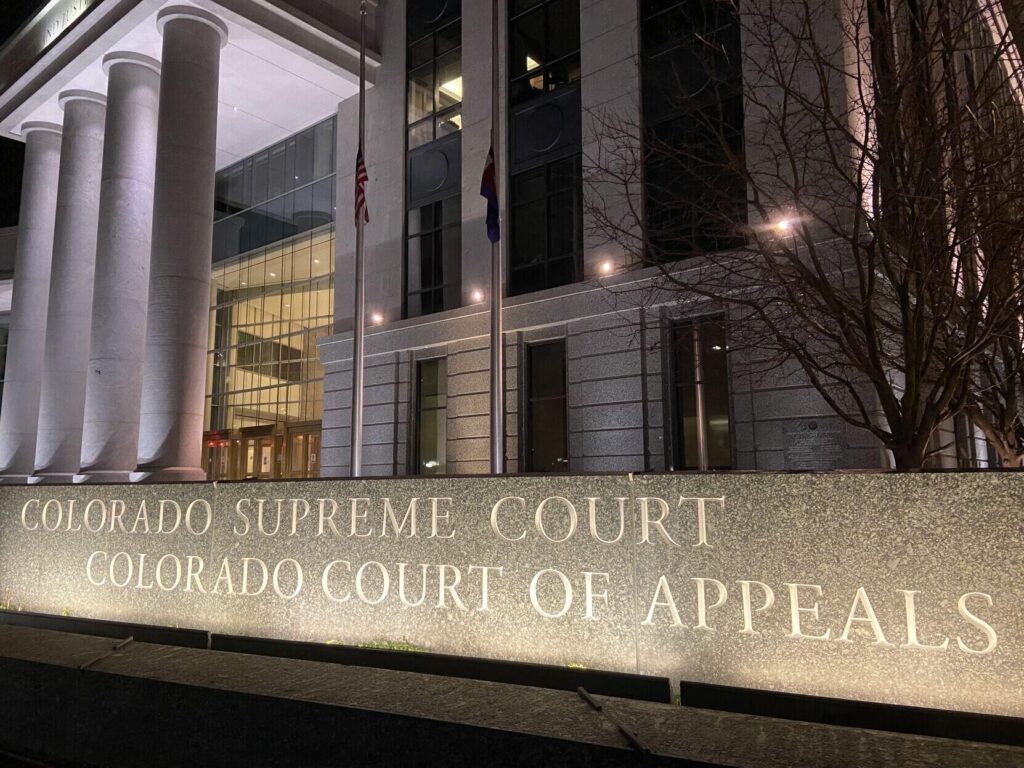
The Ralph L. Carr Colorado Judicial Center in downtown Denver houses the Colorado Supreme Court and Court of Appeals. (Michael Karlik/Colorado Politics)
Wolf turned to the Supreme Court, arguing it should discard Allison as wrongly decided. The defendants agreed with him, noting the lawsuit was more than four years old, still had not gone to trial and they had received no decision from the Court of Appeals about whether they were entitled to immunity.
“Brenneman and Selby have had to engage in another three years of appellate proceedings that have thus far failed to provide any finality,” their lawyers wrote. “In circumstances such as these, Allison should yield to immediate appeal or the protections of absolute immunity become illusory.”
The Supreme Court concluded the Court of Appeals went too far in restricting trial judges’ ability to facilitate immediate appeals.
“We therefore emphasize what we explained many years ago,” wrote Justice Melissa Hart in the May 20 opinion. “Appellate courts reviewing a district court’s finding that there is ‘no just reason for delay’ … do so only to determine whether the court abused its discretion and may overturn those decisions only if they are ‘manifestly arbitrary, unreasonable, or unfair.'”
She declined to say whether the Court of Appeals should accept Vallejos’ reasons for authorizing the appeal when viewed through the correct lens. But Hart noted a “general skepticism” of absolute rules that tie trial judges’ hands when making such decisions.
The case is Wolf v. Brenneman et al.

Divided appeals court reverses murder convictions due to faulty self-defense instruction
Michael Karlik
michael.karlik@coloradopolitics.com
Updated 1 hour ago
Colorado’s second-highest court concluded last week that an incomplete self-defense instruction required the reversal of an El Paso County defendant’s murder convictions. Demetrius Montez Martin was among those present late at night at a club in Colorado Springs. An argument...

New Supreme Court member announced, justices hear oral arguments | COURT CRAWL
Michael Karlik
michael.karlik@coloradopolitics.com
Updated 5 hours ago
Welcome to Court Crawl, Colorado Politics’ roundup of news from the third branch of government. The governor announced his pick to fill a vacancy on the state Supreme Court, and the justices heard oral arguments in multiple criminal and civil...
Colorado’s federal judges maintain approach to immigration detentions while escalating warnings
Michael Karlik
michael.karlik@coloradopolitics.com
Updated 2 days ago
Colorado’s federal judges are maintaining their view that the government’s assertion of broad immigration detention authority is unlawful, casting aside a recent appellate decision to the contrary as “unpersuasive” and out of step with the predominant interpretation by the judiciary....
U.S. Supreme Court strikes down Trump’s tariffs, upending central plank of economic agenda
Lindsay Whitehurst
lindsay.whitehurst@associatedpress.com
Updated 3 days ago
WASHINGTON • The Supreme Court struck down President Donald Trump’s global tariffs on Friday, handing him a major loss on an issue crucial to his economic agenda. The 6-3 decision centers on tariffs imposed under an emergency powers law, including...

Federal judge partially allows challenge to proceed against Colorado unclaimed property program
Michael Karlik
michael.karlik@coloradopolitics.com
Updated 3 days ago
A federal judge allowed some claims to proceed last week against Colorado’s treasurer, based upon alleged constitutional violations flowing from the state’s process for reuniting people with their unclaimed property. Previously, U.S. District Court Judge Charlotte N. Sweeney dismissed the...
GoFundMe donations for victim do not lessen defendant’s restitution obligation, appeals court rules
Michael Karlik
michael.karlik@coloradopolitics.com
Updated 1 day ago
Donations made to a victim’s crowdfunding page do not necessarily reduce the defendant’s obligation to pay crime victim restitution, Colorado’s second-highest court concluded on Thursday. Under state law, crime victim compensation boards reimburse victims for certain monetary losses, including funeral...
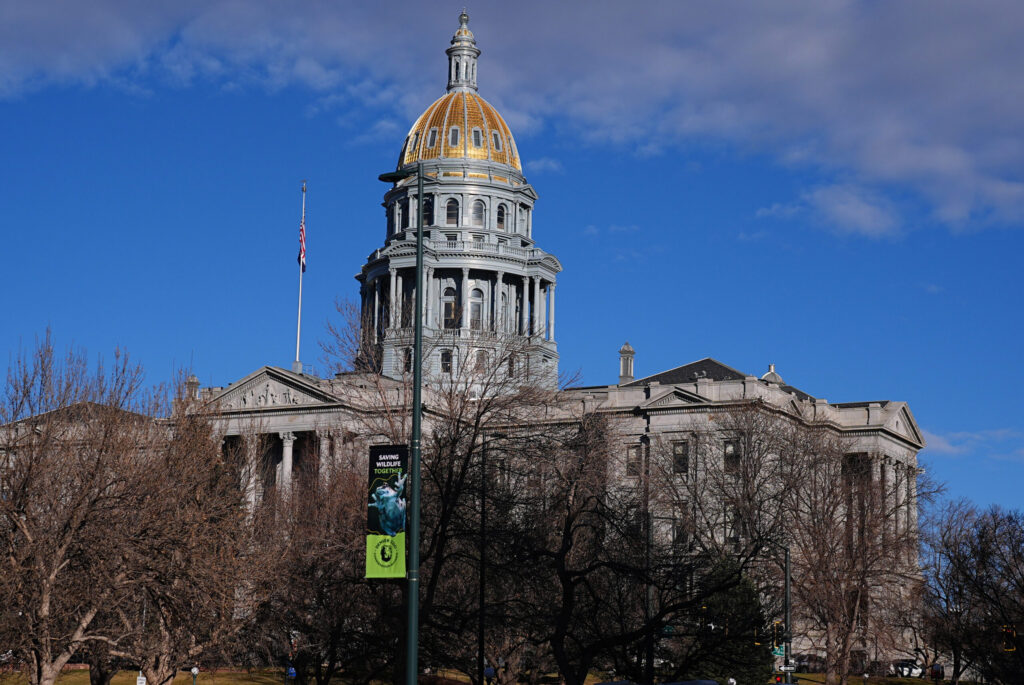
Colorado senators initially push for — then drop ‘identity’ factor in parenting time decisions
Marissa Ventrelli
marissa.ventrelli@coloradopolitics.com
Updated 3 days ago
The sponsors of a proposal that would require suppression of records in name-change petitions for minors removed a provision that would have mandated the courts to factor in the issue of “identity” when allocating parenting time. In its original form,...
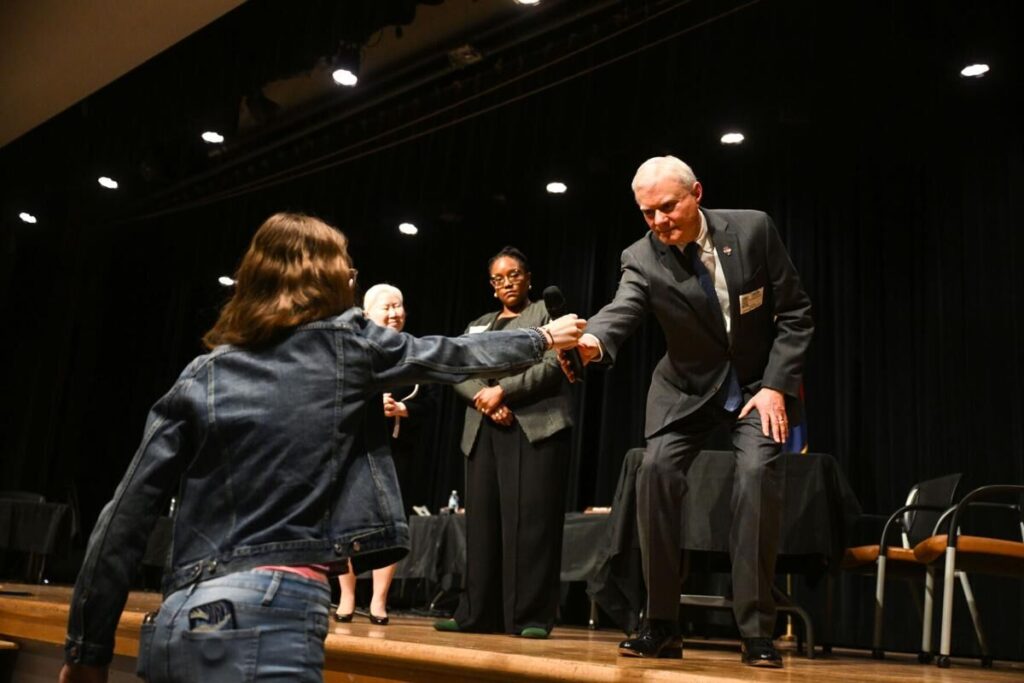
Appeals court divided over effect of retroactive sentence on parole calculation
Michael Karlik
michael.karlik@coloradopolitics.com
Updated 1 day ago
Colorado’s second-highest court grappled last week with the framework for calculating a defendant’s earliest possible parole date in light of two intersecting legal principles — a judge’s ability to make an order retroactive, and the requirement that separate, simultaneous sentences...
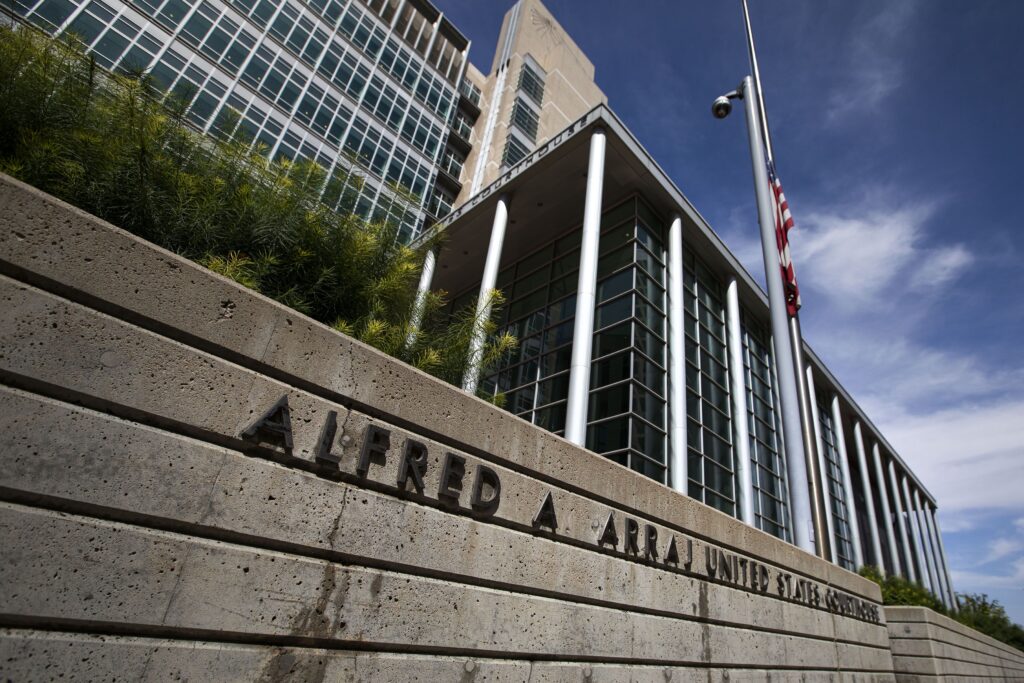
Federal judge allows some claims to proceed over denial of cancer meds in El Paso County jail
Michael Karlik
michael.karlik@coloradopolitics.com
Updated 2 days ago
A federal judge allowed claims to proceed last week against some medical and sheriff’s office employees at the El Paso County jail over their alleged failure to ensure a detainee received his cancer medication during four months of incarceration. Stuart...
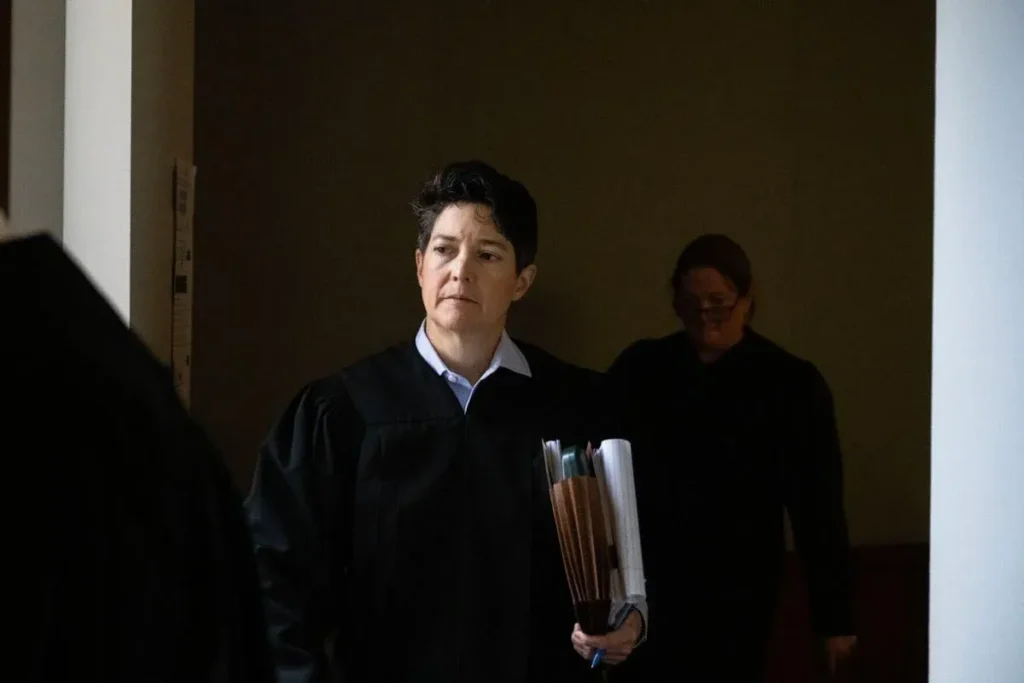
Colorado’s chief justice exceeds average number of dissents with 4-plus months left in term
Michael Karlik
michael.karlik@coloradopolitics.com
Updated 5 days ago
Since the start of the Colorado Supreme Court’s 2025-2026 term in September, Chief Justice Monica M. Márquez has now exceeded her average number of dissenting opinions, with more than four months remaining before the court breaks for the summer. The...