

Colorado’s leadership on methane emissions survives another challenge | OPINION

Morgan Bazilian

Greg Clough

Simon Lomax
To paraphrase Mark Twain, history doesn’t repeat itself — but it often rhymes. For proof, look no further than the debate regarding energy policy in the Colorado state legislature.
For those who don’t follow the issue closely, Colorado is both a national and global leader on many areas of energy and climate policy, and especially when it comes to the regulation of emissions from oil and natural gas production.
A decade ago, we became the first state to directly regulate methane emissions from oil and natural gas facilities. This was a big deal because methane traps much more heat on a pound-for-pound basis than carbon dioxide, the better-known greenhouse gas.
Stay up to speed: Sign up for daily opinion in your inbox Monday-Friday
The lessons learned here in Colorado have been followed by the U.S. Environmental Protection Agency. Those same lessons have also influenced international efforts to monitor and measure methane emissions with much greater precision, using ground-level sensors, aircraft and drone flights, satellite surveys and complex data-science solutions.
The climate stakes are huge: Eliminating methane emissions from global oil and natural gas supply chains would be roughly equal to converting every car and truck in the world to run on electricity from wind, solar, nuclear, geothermal and other zero-carbon sources, according to the Energy Emissions Modeling and Data Lab.
But unlike full electrification of the world’s transportation sector, which will likely take decades, reducing methane emissions from the oil and gas sector to near-zero may be possible within a matter of years. And right now, the world’s leading source of innovative solutions for regulating and reducing methane emissions is Colorado.
But for the past two years in a row, Colorado’s leadership on methane and its ability to accelerate global reductions of this powerful greenhouse gas have come under threat.
In 2023, for example, environmental groups demanded a massive overhaul of the state’s system for regulating air quality. The overhaul took the form of a legislative proposal, House Bill 23-1294.
According to analysis from nonpartisan legislative staff, the 2023 bill would have derailed the state’s air permitting system by creating huge increases in day-to-day workload — enough to require the addition of between 110 and 120 new air quality regulators at a cost of more than $11 million per year.
The Polis administration sounded the alarm and then worked with legislators to dramatically dial back the proposal. But it was only a temporary reprieve.
During the 2024 legislative session, the same pressures re-emerged in a different form.
It started with a bill to end all oil and gas permitting in Colorado by 2030, Senate Bill 24-159. The high-profile bill spent weeks in limbo before Democrats joined Republicans to defeat the measure in its first committee hearing.
But the focus quickly shifted to a trio of proposals — House Bill 24-1330 and Senate Bills 24-165 and 24-166 — that once again called for major overhauls of air quality permitting.
When examined together, it was found the three bills would trigger a permitting shutdown on a much grander scale.
Officials in the Polis administration provided estimates to the legislature showing an increase in workload equivalent to the hiring of 750 new staff. The full cost to the state budget would be more than $100 million per year, including $25 million on legal expenses alone.
Gov. Jared Polis and legislative leaders then convened talks between environmental groups and energy industry representatives to find a way forward, and by late April, the negotiations produced a constructive compromise.
The parties agreed legislative proposals and ballot measures that could throw the state’s regulatory framework into disarray would be abandoned for a period of three years.
In their place, the parties agreed to support two bills to codify the Polis administration’s program for reducing smog-forming emissions and create a new fee on oil and gas production expected to raise $138 million per year for public transit and land conservation projects.
Within days of the compromise being announced, state air quality regulators finalized a new protocol on the use of advanced measurement technologies to track and reduce the emissions intensity of oil and gas produced in Colorado.
The Environmental Defense Fund hailed the “first-of-its-kind” protocol as internationally significant.
“Global gas markets are demanding lower methane intensity from natural gas, and as gas importers and exporters work through the challenges of (measurement, reporting and verification) to prove up claims of low intensity, eyes will once again turn to Colorado,” Nini Gu, EDF’s regulatory and legislative manager for the western U.S., wrote in reaction to the news.
It took more than a decade of painstaking work for Colorado to become a global leader on the critical issue of reducing methane emissions. That is a role worth defending.
Perhaps even more important, however, is the ability of Colorado’s policymakers and stakeholders to work through their differences and reach political agreements. That is a model desperately needed in the current divisive political environment.
Morgan Bazilian is the director of the Payne Institute for Public Policy at the Colorado School of Mines and a former lead energy specialist at the World Bank. Greg Clough is the institute’s deputy director. Simon Lomax is a policy and outreach advisor to the institute.


Home rule has protected Colorado cities for more than 125 years | Cronin & Loevy
Tom Cronin Bob Loevy
tom-cronin-bob-loevy@coloradopolitics.com
Updated 1 day ago
Colorado is currently gripped by a political struggle. It’s one between the governor and state legislature in Denver on one side and populous “home rule” city governments, mainly on the Front Range — such as Colorado Springs. The state legislature...
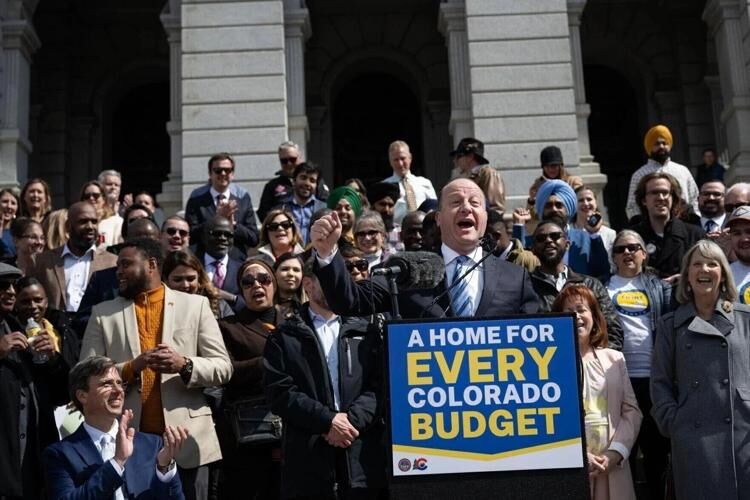
Home rule has protected Colorado cities for over 125 years | Cronin and Loevy
Tom Cronin Bob Loevy
tom-cronin-bob-loevy@coloradopolitics.com
Updated 14 hours ago
Colorado is currently gripped by a political struggle between the governor plus the legislature in Denver and populous home-rule city governments, mainly on the Front Range, such as Colorado Springs. In the past few years, the legislature has been passing bills that applied to city government policies, which...
An “-“ends tribute in a week full of “odds” | Capitol M | Week of April 11, 2026
Marianne Goodland
marianne.goodland@coloradopolitics.com
Updated 2 days ago
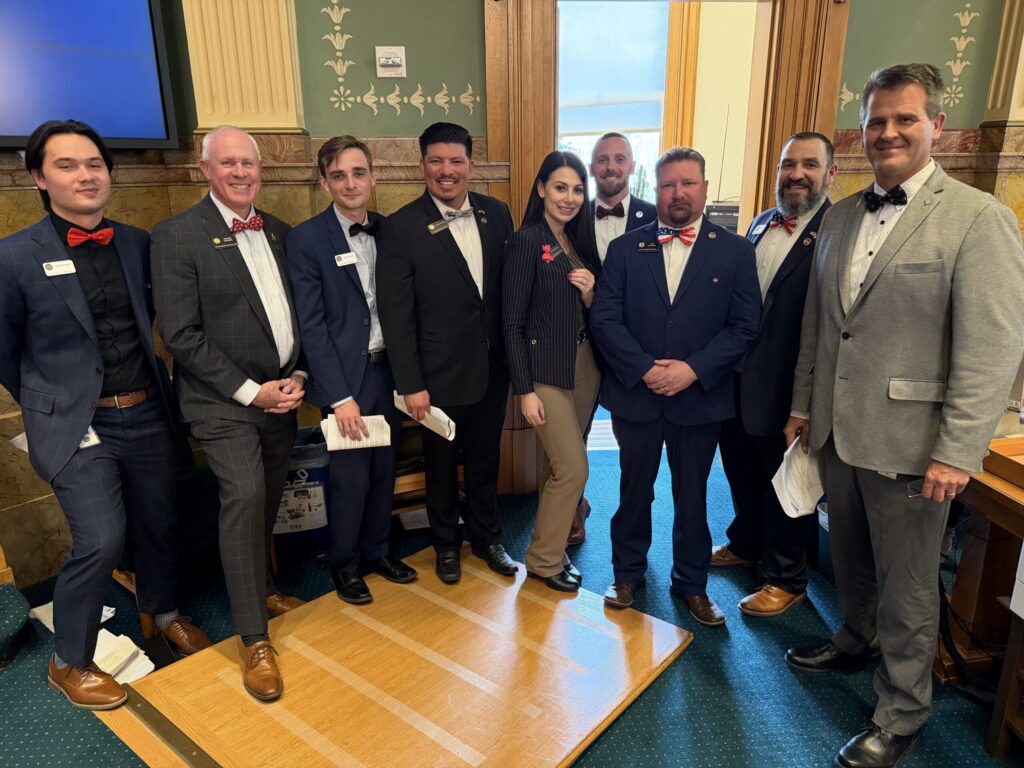
The lighter side of the Capitol, usually… The decision to read the budget bill — the long bill, which spans 661 pages this year — put a damper on the House’s already less‑than‑festive mood. So Capitol M decided to catch...
A longshot, upset bid and a few quick takes | SONDERMANN
By Eric Sondermann
by-eric-sondermann@coloradopolitics.com
Updated 3 days ago
It is hard to keep up these days. The flow of news often seems overwhelming. Let’s focus today on an unusual congressional race before moving on to a few quick, supplementary observations. Since its creation 54 years ago, Congressional District...
Colorado Medicaid director’s resignation long-overdue inflection point for our families, kids | OPINION
Colorado Politics
colorado-politics@coloradopolitics.com
Updated 2 days ago
By Heidi Baskfield For years, the consequences of a strained and fragmented Medicaid system have fallen on those least able to navigate it — the children with complex needs and the families fighting to care for them. Though policy debates...
Note to Colorado lawmakers — parents protecting kids isn’t abuse, it’s their job | OPINION
Colorado Politics
colorado-politics@coloradopolitics.com
Updated 2 days ago
By Matt Sharp and Sharon Supp During the last few years, the U.S. Supreme Court has made at least one thing clear: Colorado is consistently overreaching to apply its laws in unconstitutional ways. Colorado treated a cake artist with hostility...

H.R. 1 underscores unfairness in Colorado tax code | OPINION
Colorado Politics
colorado-politics@coloradopolitics.com
Updated 2 days ago
By Caroline Nutter On July 4, 2025, Colorado’s budget was overturned with the stroke of a pen. When President Donald Trump signed into law H.R. 1, or the One Big Beautiful Bill Act, he didn’t only cut federal funding by...
The danger of when government goes rogue | Paula Noonan
Paula Noonan
paula-noonan@coloradopolitics.com
Updated 2 days ago
It’s dangerous, even fatal, when government goes rogue whether in a democracy or autocracy. Government officials who ignore or taunt laws that constrain bad acts should be given the heave ho. We’re witnessing these egregious scenarios now at the federal...

The future of Colorado condo development | OPINION
Colorado Politics
colorado-politics@coloradopolitics.com
Updated 3 days ago
By Peter LiFari For nearly two decades, the story of condominium construction in Colorado has been mistold, misunderstood and misrepresented. This outcome reflects the cumulative effect of more than two decades of Colorado policy, beginning with the Construction Defect Action Reform...

George Brauchler on Colorado’s ‘Jailbreak’ | The OpEdge Podcast
Tony Olivero
tony.olivero@gazette.com
Updated 4 days ago
We are pleased to introduce the inaugural episode of The OpEdge — The Gazette’s new opinion podcast. District Attorney and law enforcement hawk George Brauchler tells host and investigative columnist Jimmy Sengenberger what lawbreakers can expect in the 23rd Judicial District. Brauchler recaps...