

Gov. Jared Polis signs $40.6 billion state budget containing $2 billion more in spending
Gov. Jared Polis on Monday signed the state’s $40.6 billion budget for the next fiscal year, which includes $2 billion more in spending.
“This bipartisan budget builds a stronger, brighter, and safe future for Colorado where we invest in students, have housing people can afford near work and transportation options, and live in safer communities,” the governor said in a statement.
There was less money available for this budget than in previous years, noted Joint Budget Committee Chair Rep. Shannon Bird, D-Westminster.
“But the hallmark of a good budget, is that no matter how much you have, you’re listening to your constituents … prioritizing the funds you have to meet the moment,” Bird said.
This is also the fifth and final state budget for JBC Vice-Chair Sen. Rachel Zenzinger, D-Arvada, who is term-limited at the end of the year.
Like her JBC colleagues, Zenzinger said she is most proud of the state’s investment in K-12 education.
“I’ve been here during bad times, when we had to cut $3 billion from the budget (2020), and good times, when we had $5 billion from the federal government (2021 and 2022), and in okay times. This year is one of those okay times,” she said.
Zenzinger said what tops her list is the commitment to K-12 education, which includes $737 more per pupil and the payoff of the state’s “debt” to K-12. She also saluted prior members of the Joint Budget Committee who managed to pay down the obligation from a high of over $1 billion just four years ago to a zero balance in the 2024-25 year.
The other is a renewed commitment to higher education, she said. Colorado was not long ago almost dead last in its funding for higher education, she said. It’s now 43rd and moving in the right direction.
The final touches on House Bill 1430 were made by the Joint Budget Committee, acting as a conference committee tasked with resolving differences between House and Senate versions. The House and Senate approved those changes on April 14.
In the House, JBC member Rep. Rick Taggart of Grand Junction was the only Republican to vote in favor, joining 43 Democrats in the 44-16 vote. In the Senate, the committee’s two Republicans joined 21 Democrats in voting in favor of the final result.
The panel, which functioned as a conference committee, stripped out most of the amendments put on the bill by the House and Senate, although adding back $16.1 million in general funds that hadn’t been previously appropriated to cover some of those priorities.
In order to balance the budget, the conference committee tapped a “shared housing priorities” pot of funding set aside in the budget of $42.5 million. According to Bird, those funds are not yet attached to specific bills, but they will reflect shared priorities on housing between the legislature and the governor.
Another $16.1 million is set aside for workforce priorities. And $10 million is also set aside for “other shared priorities” that have not yet been identified.
Decisions on how to spend those three pots of money, plus the $21.5 million set-aside for bills not yet all the way through the legislative process, could be reflected in the new system Democrats devised for indicating which measures they would support to fund in the final weeks of the 2024 session.
The votes are in and here's what Colorado lawmakers want to spend money on
The conference committee reduced $6.1 million approved by both the House and Senate during the amendment phase for area agencies on aging, which provide senior services and routed through the Department of Human Services. The new amount is $2 million.
They added $1.5 million for the Tony Grampsas Youth Services program in the Department of Human Services. The House rejected additional funding; the Senate approved $2 million.
So what’s in the budget?
The 2024-25 budget is $2 billion more than the current’s year spending allocation. Those increases are driven by bigger allocations for health care, a significant expansion in the state’s workforce and more money for schools seeing increased enrollment of immigrant students whose families illegally crossed America’s southern border and traveled to Colorado.
Lawmakers marked a major milestone with this year’s budget — paying off the budget stabilization factor, the 14-year “debt” to K-12 education that twice topped more than $1 billion, including as recently as just four years ago. This year’s school finance act, which is on its way to the governor, contains that last payment of about $140 million.
Meanwhile, general fund spending is up by $1.1 billion. That’s revenue from corporate and individual income taxes and sales and use taxes and what lawmakers rely on for new spending, including to cover higher caseloads in prisons and Medicaid, and inflation.
The largest increase went to the Department of Health Care Policy and Financing, which got a bump of $511 million in general funds over its 2023-24 budget, an 11.5% increase.
Most of that increase is tied to higher medical and long-term services provided through Medicaid. It also includes more funding for Child Health Plan Plus, the low-income children’s health insurance.
The Department of Human Services got $240 million more in general fund dollars than the current year, an increase of 19%.
An additional funding of $68.2 million will pay for contract staffing and private hospital contracts to maintain or increase resources for inpatient competency services. Another $18.6 million will cover increases in community provider rates in five division departments.
The largest percentage increase, at almost 49%, goes to the state Treasury, which received a $152 million in general fund increase over 2023-24. About $583,000 is dedicated to the Unclaimed Property Division for updating its technology system. But most of that increase is tied to adjustments for out-year impacts from previous year’s legislation, most notably payments to address the unfunded liability for the Public Employees’ Retirement Association.
Public college and university students will see 3% and 4% increases in tuition, for resident and non-resident students, respectively. Higher education is also in line for a $139.4 million increase in general fund support, which includes $13 million more for financial aid, mostly in need-based grants.

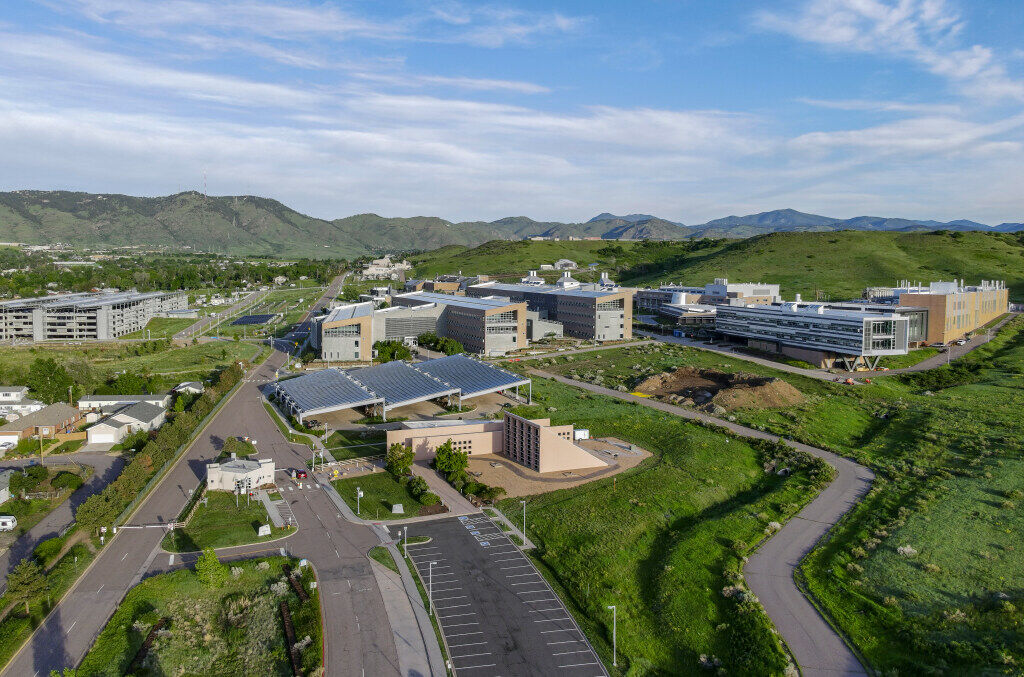
National Renewable Energy Laboratory renamed to fit Trump’s energy policy
Bernadette Berdychowski
bernadette.berdychowski@denvergazette.com
Updated 2 hours ago
The National Renewable Energy Laboratory based in Golden has a new name to match the shift in U.S. energy policy under President Donald Trump. The Department of Energy announced it renamed the National Renewable Energy Laboratory to the “National Laboratory...
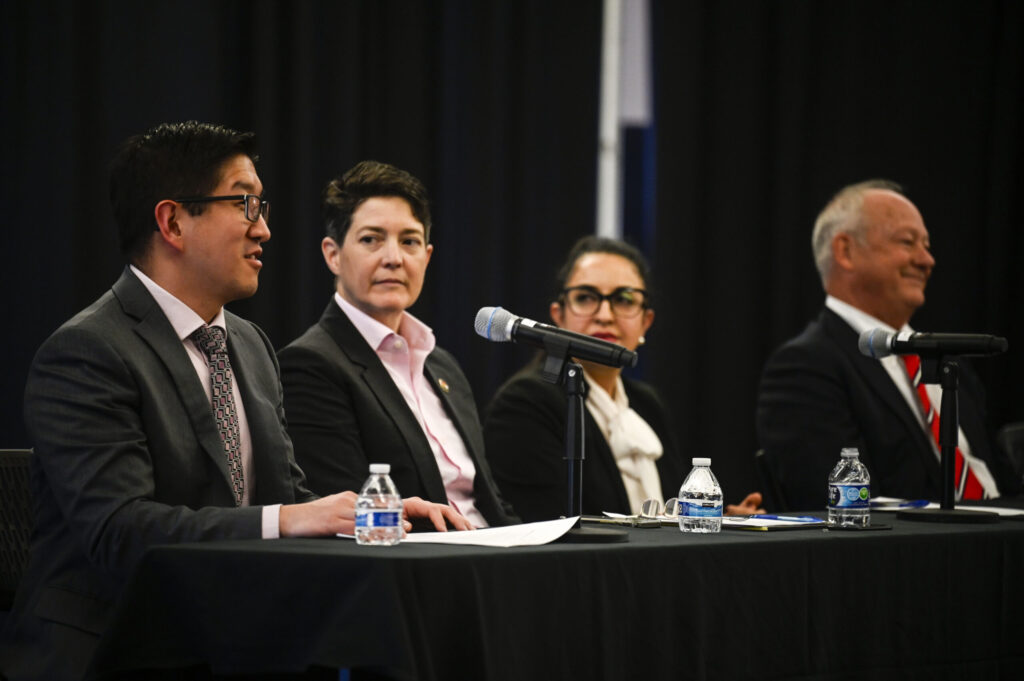
Federal judge lifts public access restriction on Children’s Hospital Colorado’s challenge to DOJ subpoena
Michael Karlik
michael.karlik@coloradopolitics.com
Updated 3 hours ago
A federal judge ordered last month that the public be able to access the filings in Children’s Hospital Colorado’s legal challenge to a U.S. Department of Justice subpoena seeking a broad range of documents about patients, employees and communications. Children’s...

Colorado Gives Foundation turns 50 during giving season
Kyla Pearce
kyla.pearce@gazette.com
Updated 5 hours ago
The Colorado Gives Foundation, which started as a small hospital fundraising group and has grown into a statewide nonprofit, is celebrating its 50th anniversary shortly after Giving Tuesday. Colorado Gives Day, which was created by the foundation in 2010, predates...

Colorado Higher Education Director Angie Paccione to step down
Marianne Goodland
marianne.goodland@coloradopolitics.com
Updated 7 hours ago
Angie Paccione, who has led the Colorado Department of Higher Education since 2019, is returning to the private sector, Gov. Jared Polis said. Paccione’s last day is Jan. 9. The governor’s office said Gov. Jared Polis would decide on the...

Survey reveals widespread dissatisfaction with Colorado’s public education system
Marissa Ventrelli
marissa.ventrelli@coloradopolitics.com
Updated 8 hours ago
Most Coloradans believe the state’s public education system is in serious need of improvement, according to a recent Magellan Strategies survey . The survey collected responses from more than 1,000 Colorado voters across the political, economic, and demographic spectrum. Participants...
Colorado title board to review graduated income tax proposal for 2026 election
Marianne Goodland
marianne.goodland@coloradopolitics.com
Updated 5 hours ago
The Secretary of State’s title board on Wednesday will review another attempt at a graduated income tax ballot measure for the 2026 general election. In October, the title board had rejected two proposals submitted by the Bell Policy Center because...
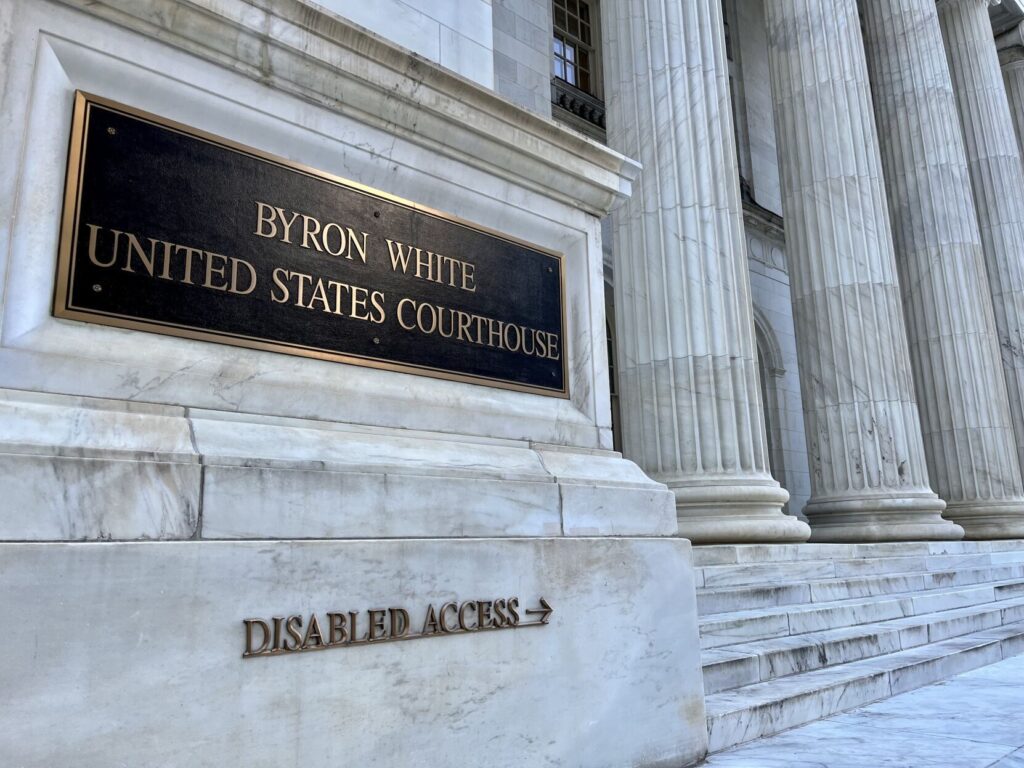
10th Circuit rules 20-year-old DUI convictions may be factor in deportation proceedings
Michael Karlik
michael.karlik@coloradopolitics.com
Updated 11 hours ago
The Denver-based federal appeals court concluded last month that it was appropriate for immigration authorities to consider a man’s 20-year-old impaired driving convictions when determining if he recently exhibited “good moral character.” Under federal law, an immigrant seeking to remain...
Mesa County judge wrong to conclude hatchet not a ‘knife,’ says appeals court
Michael Karlik
michael.karlik@coloradopolitics.com
Updated 13 hours ago
Colorado’s second-highest court determined last week that a Mesa County judge incorrectly reduced a defendant’s menacing charge from a felony to a misdemeanor after finding his hatchet did not meet the definition of “knife.” A person commits menacing as a...

Heading into holidays, shoplifting on the rise in Colorado, study says
Mark Samuelson Special to The Denver Gazette
mark.samuelson@denvergazette.com
Updated 1 day ago
Shoplifting and other forms of retail crime are seeing a sharp rise as Colorado heads into the holidays, according to a study. After falling from a recent-record 24,975 thefts reported in 2015 to around 18,000 in 2021, Colorado Bureau of...
Funeral for Sen. Faith Winter will be held Friday at the Colorado Capitol
Marianne Goodland
marianne.goodland@coloradopolitics.com
Updated 1 day ago
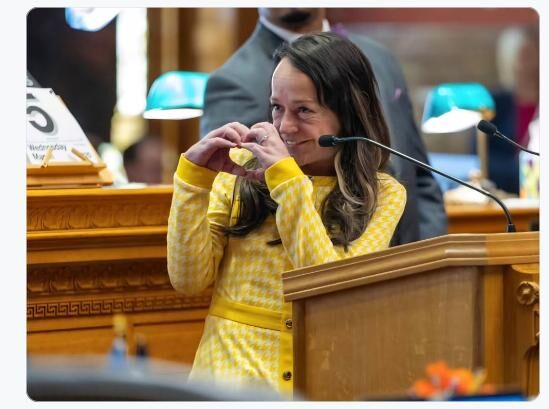
Colorado Sen. Faith Winter will be remembered on Dec. 5 at 2 p.m. in a funeral service on the state Capitol’s west steps. A celebration of life reception will follow. Winter died on Wednesday, Nov. 26, in a three-vehicle accident...