

Wolf makes first kill in Grand County, Colorado lawmakers seek to limit use of ‘prone restraint’ by police, senators acquiesce to compromise in human trafficking legislation | WHAT YOU NEED TO KNOW
Today is April 4, 2024, and here’s what you need to know:
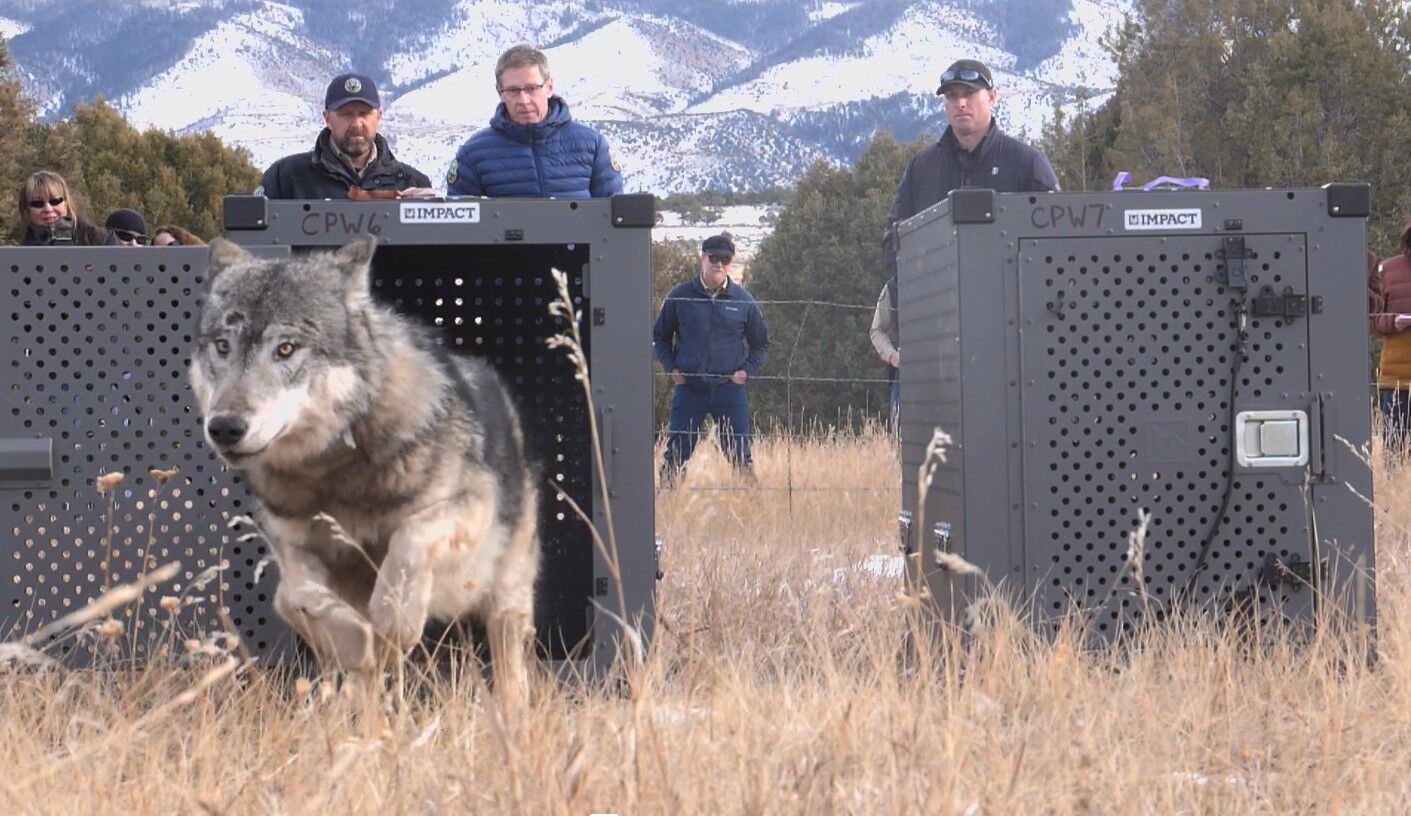
The wolves officially reintroduced in Colorado last December – or one of them – killed a calf in Grand County, Colorado Parks and Wildlife confirmed Wednesday.
The report of the kill was made on April 2.
A livestock producer contacted the state agency, which conducted a field investigation and confirmed the calf had been killed by a wolf, based on “multiple tooth rake marks on the calf’s hindquarters and neck, and hemorrhaging under the hide,” all consistent with an attack by the apex predator.
The Colorado Parks and Wildlife report said wolf tracks were found nearby. The agency’s statement did not identify the wolf. The agency also did not say how many wolves were involved.
This is the first report of a wolf killing livestock in Grand County since the state released the wolves in December.
Human trafficking, particularly of children, has been a hot and divisive topic at the state Capitol this year.
But a bipartisan group of lawmakers has found a way of putting more teeth into the state’s laws by agreeing to a compromise that meant giving up a major provision but ultimately securing a proposal’s passage.
On Tuesday, the Senate decided to withdraw their objections to changes the House made to Senate Bill 35 and send it on to the governor for signing, despite misgivings from some over changes made by the House to the measure.
But that vote came with strong words directed at the Colorado Criminal Defense Bar, including a claim that the organization is hurting victims in Colorado.
Denver officials have – for “several months” – implored arriving immigrants who illegally crossed the southern border to leave Colorado’s most populous city for more “opportunities” elsewhere in the country.
Their transportation to other destinations would be paid at taxpayers’ expense.
Jordan Fuja, a spokesperson for Mayor Mike Johnston, declined, though, to say exactly when officials began strongly encouraging the immigrants to consider resettling anywhere else in the United States.
“As has been our practice for several months, encouraging onward travel to destinations where newcomers may have support networks or better opportunities will continue to be a critical part of our long-term strategy to ensure the greatest opportunity for success for both newcomers and the City of Denver,” Fuja said in an email to The Denver Gazette.
A bill introduced in the Colorado House seeks to include “prone” restraint in the state’s legal definition of excessive physical force. If passed, it would require officers who employ the technique to promptly transition the individual to a “recovery position” to facilitate normal breathing.
Critics of the technique say it should be abolished due to elevated risk of asphyxiation and death, while proponents say it is the safest way for law enforcement to handcuff noncompliant individuals.
House Bill 1372 also would require law enforcement agencies to implement, post, and train officers on protocols regarding prone restraint and what to do if an individual is injured. The state’s Peace Office Standards and Training (POST) Board will be tasked with developing a training program and disseminating it to law enforcement agencies.
As the city of Aurora takes strides forward with its regional homeless navigation campus, officials held two meetings in March to gather feedback from community members and business owners in the surrounding areas.
Once established, the navigation campus will consolidate services for homeless people in one location – a model similar to that of the Colorado Springs Rescue Mission. The center will be the culmination of a year-long exploration by city officials who also traveled to Texas, where they researched strategies to reduce homelessness.
Aurora Mayor Mike Coffman said he expects the campus to be fully operational by early 2025.


Grand Canyon flooding threatens economy that’s still recovering from a fire | OUT WEST ROUNDUP
Ernest Luning
ernest.luning@coloradopolitics.com
Updated 3 days ago
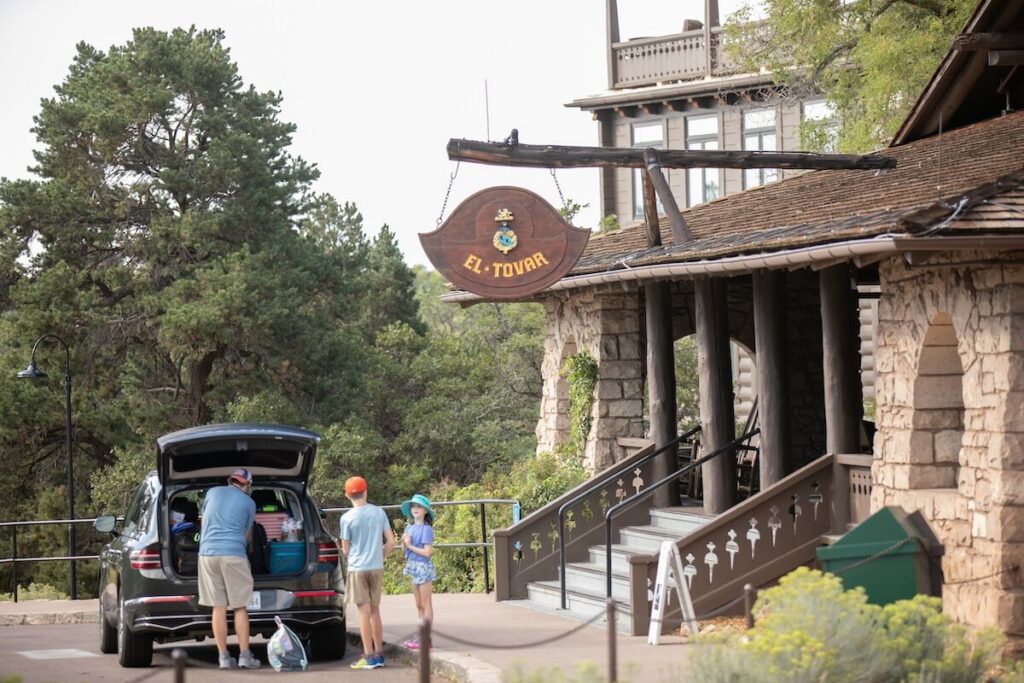
ARIZONA Flooding slams park’s economy Deadly flooding at the Grand Canyon is damaging the area’s economy, with a washed-out pipeline severing the South Rim’s water supply and shutting down lodging at the popular tourist vista for an indefinite period. The...

Immigration reporting measure fuels debate over Colorado’s role with ICE
Marissa Ventrelli
marissa.ventrelli@coloradopolitics.com
Updated 14 hours ago
A coalition of advocacy groups and several district attorneys rallied outside the Colorado Capitol on Thursday to oppose a ballot measure that, if approved by voters in November, would require state and local law enforcement to cooperate with federal immigration...

Colorado Politics Calendar Sept. 14-20
Rachael Wright, Special to Colorado Politics
rachael.wright@coloradopolitics.com
Updated 4 days ago
CoPo’s weekly political calendar will help you find political and public-policy events throughout Colorado. It includes candidate and issue campaign events, public policy meetings, court hearings, state and local party conventions, assemblies, debates, rallies, parades, speaking engagements, traveling dignitary appearances,...
The African roots of three Colorado leaders | SONDERMANN
Eric Sondermann
eric-sondermann@coloradopolitics.com
Updated 3 days ago
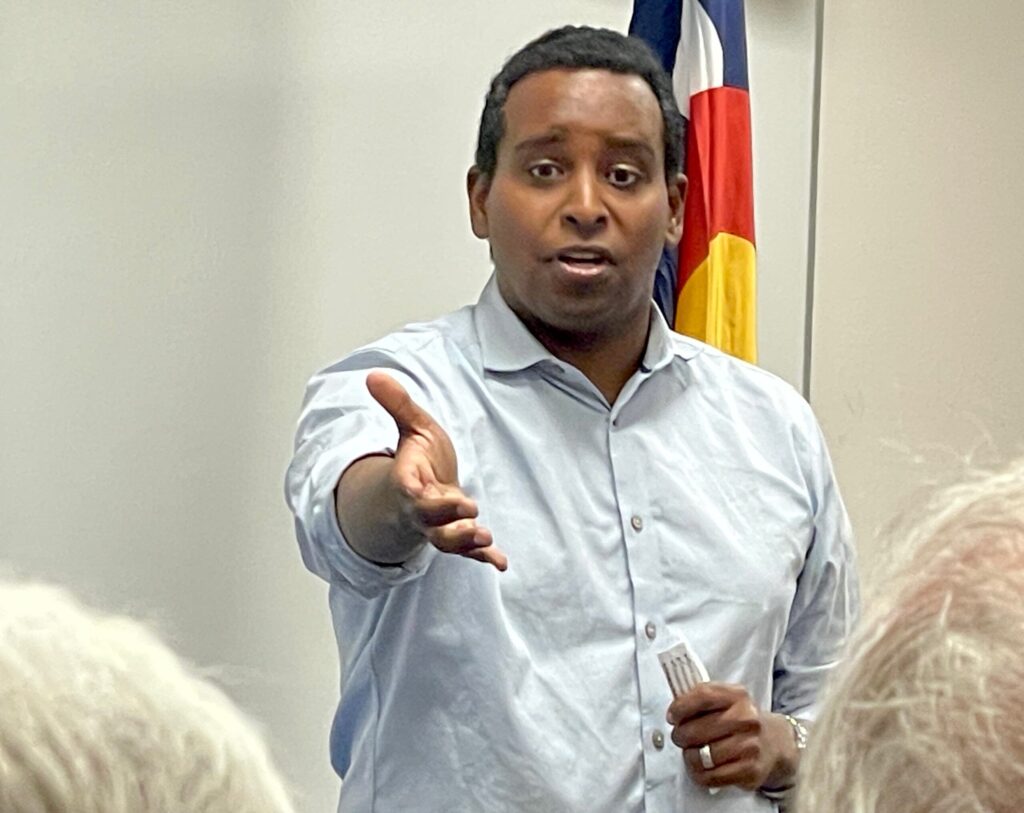
Colorado’s political transformation is measured in many ways. A once reliably red state (with asterisks) became purple and is now a rather deep blue. For better or worse, probably the latter, power is ever more consolidated along the Front Range...
Federal judge green-lights civil trial against ex-Fort Collins DUI officer
Michael Karlik
michael.karlik@coloradopolitics.com
Updated 2 days ago
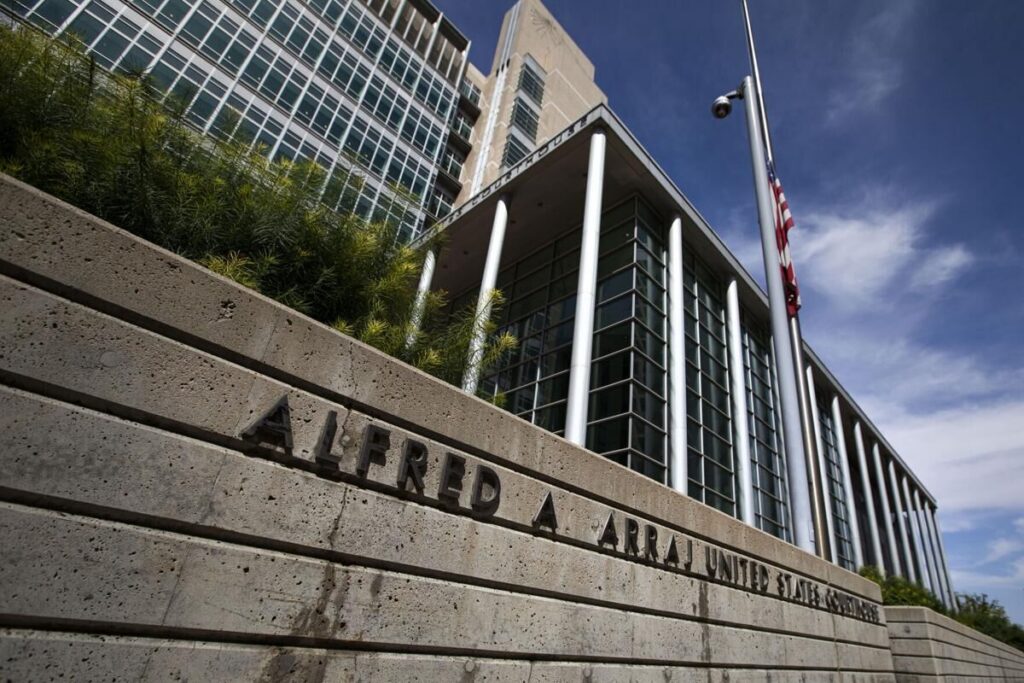
A federal judge ruled on Thursday that Fort Collins’ former “DUI officer” will face a civil trial for allegedly investigating a motorist for impaired driving without any reasonable suspicion to do so. In recent years, several people arrested by Officer...

Denver police reopen 13 sex assault cases after retesting Missy Woods’ CBI work
Jenny Deam
jenny.deam@gazette.com
Updated 2 days ago
Thirteen previously closed Denver sexual assault cases have been reopened after the city’s crime lab retested DNA evidence once analyzed by former Colorado Bureau of Investigation forensic analyst Yvonne Woods. A police spokesperson told The Denver Gazette the once-closed cases...

Ballot measure aims to shift Colorado sporting goods tax revenue to land, water and wildfire projects
Marissa Ventrelli
marissa.ventrelli@coloradopolitics.com
Updated 14 hours ago
Colorado voters this November will decide whether to direct a share of sales tax revenue from sporting goods — including bicycles and skiing equipment — toward land and water conservation, wildfire prevention and expanding outdoor recreation. Supporters say the measure...

Colorado Supreme Court suspends Mesa County judge pending misconduct investigation
Michael Karlik
michael.karlik@coloradopolitics.com
Updated 16 hours ago
The Colorado Supreme Court suspended Mesa County Court Judge Michael J. Grattan on Thursday amid a misconduct investigation. The court’s Sept. 10 order gave Grattan 21 days to explain why his paid suspension should not continue through the end of...

Trump honors the fallen of the 9/11 terrorist attacks during Pentagon speech
Mabinty Quarshie
mabinty-quarshie@coloradopolitics.com
Updated 2 days ago
President Donald Trump and first lady Melania Trump honored the roughly 3,000 Americans killed during the Sept. 11, 2001, terrorist attacks during a ceremony at the Pentagon. The event marking the 25th anniversary of the deadliest attack on American soil...
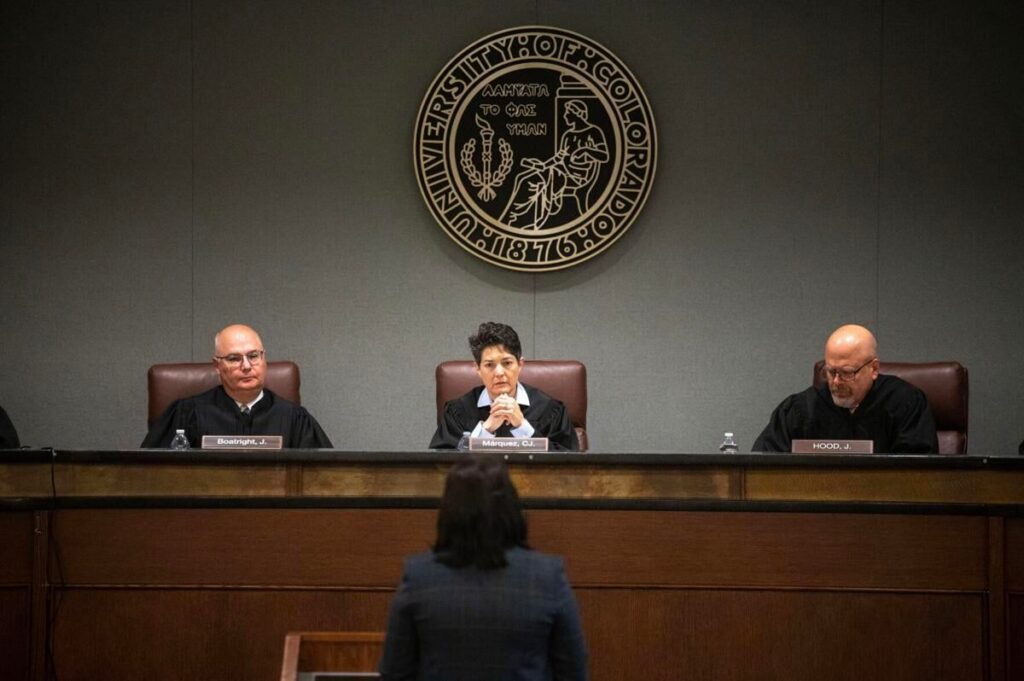
Colorado Supreme Court changes course, dismisses case about special district bonds
Michael Karlik
michael.karlik@coloradopolitics.com
Updated 17 hours ago
The Colorado Supreme Court declined on Friday to decide a dispute between a large-scale Commerce City development and the various districts financing it, after initially showing interest in the ongoing case. Colorado has roughly 2,800 special districts, which are local...
PREV
PREVIOUS
Colorado Senate tackles $40.6 billion state budget
The Colorado Senate on Thursday reviewed the state’s $40.6 billion budget that will fund the state’s operations in the next fiscal year. It started off with a “clean,” un-amended bill — the work of the Senate Appropriations Committee on Wednesday — and delved into dozens of proposed changes, ranging from funding for rural schools to […]

Colorado wolf kills calf in Grand County, first report since wolf reintroduction
The wolves officially reintroduced in Colorado last December – or one of them – killed a calf in Grand County, Colorado Parks and Wildlife confirmed Wednesday. The report of the kill was made on April 2. A livestock producer contacted the state agency, which conducted a field investigation and confirmed the calf had been killed by a wolf, […]