

Denver’s long-term strategy — in place for ‘several months’ now — includes pleading for immigrants to leave

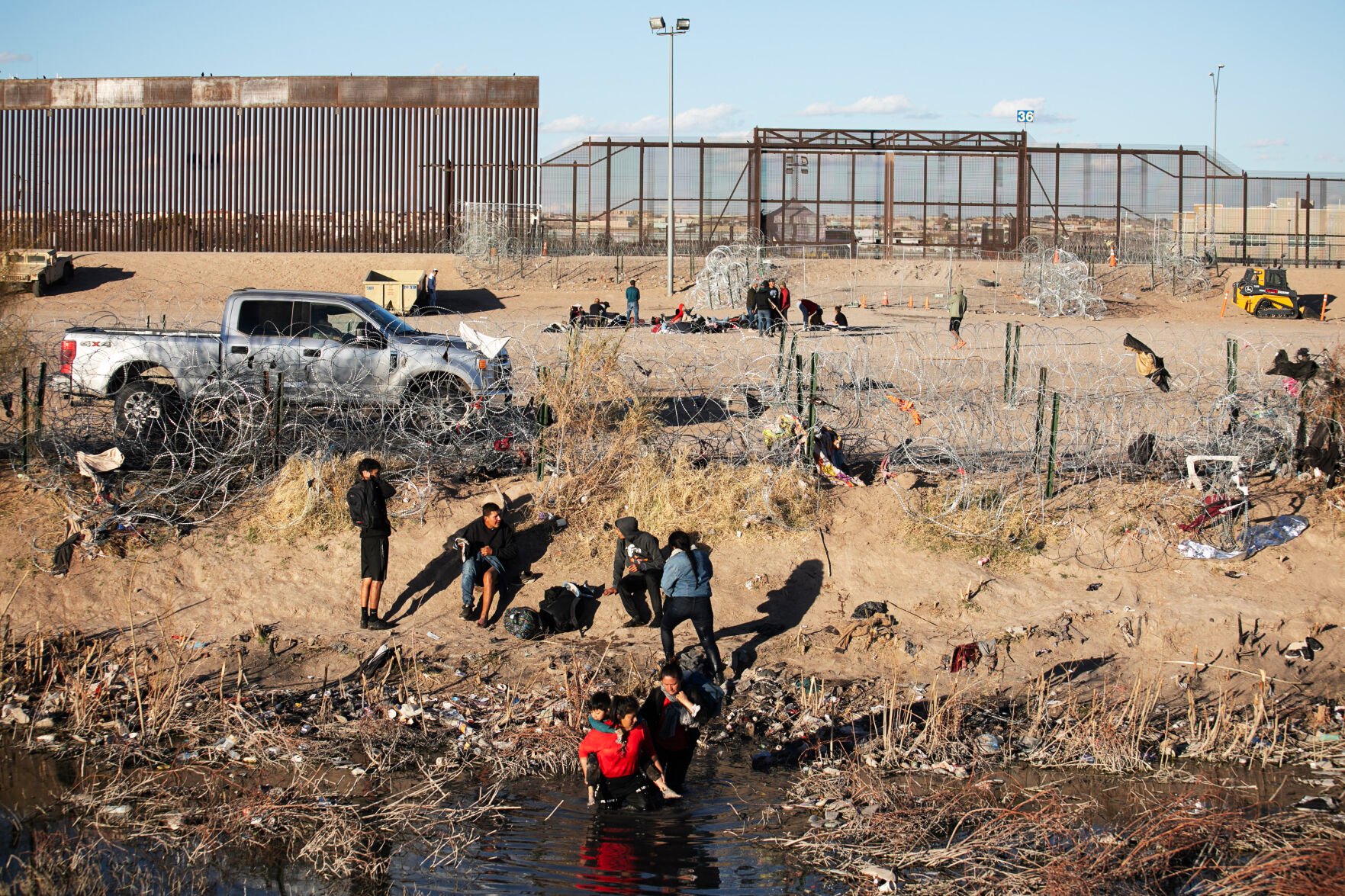
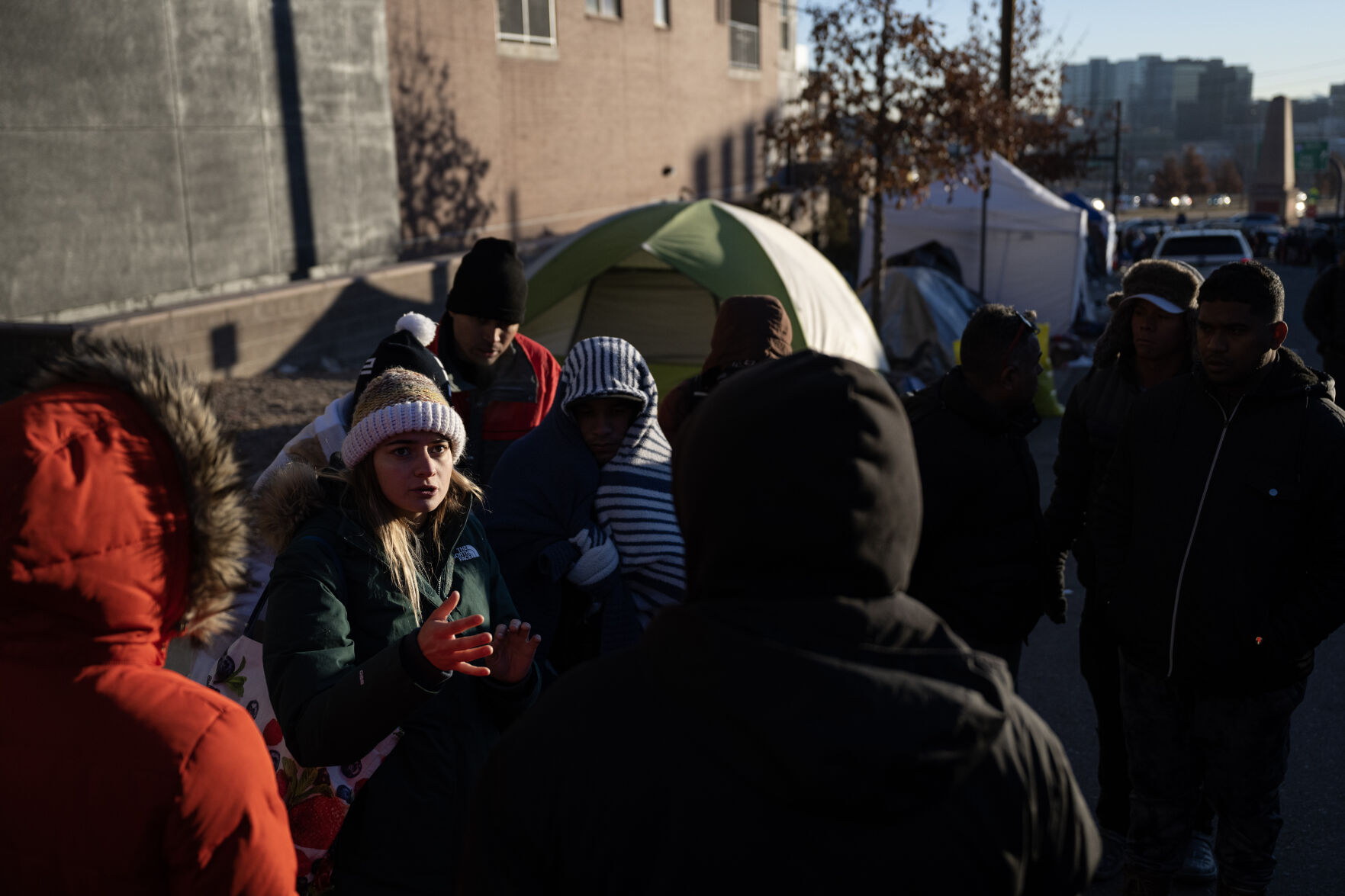
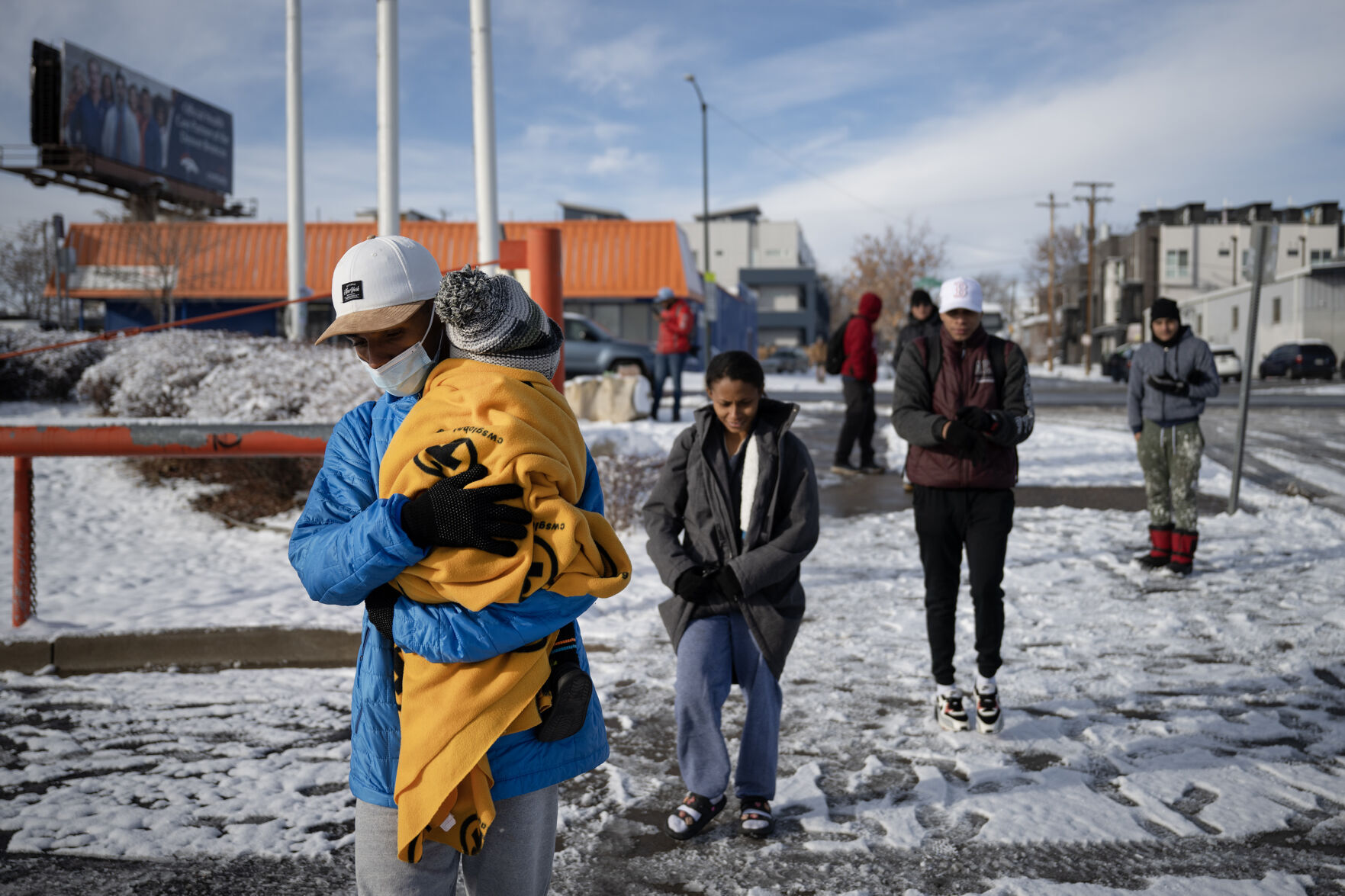
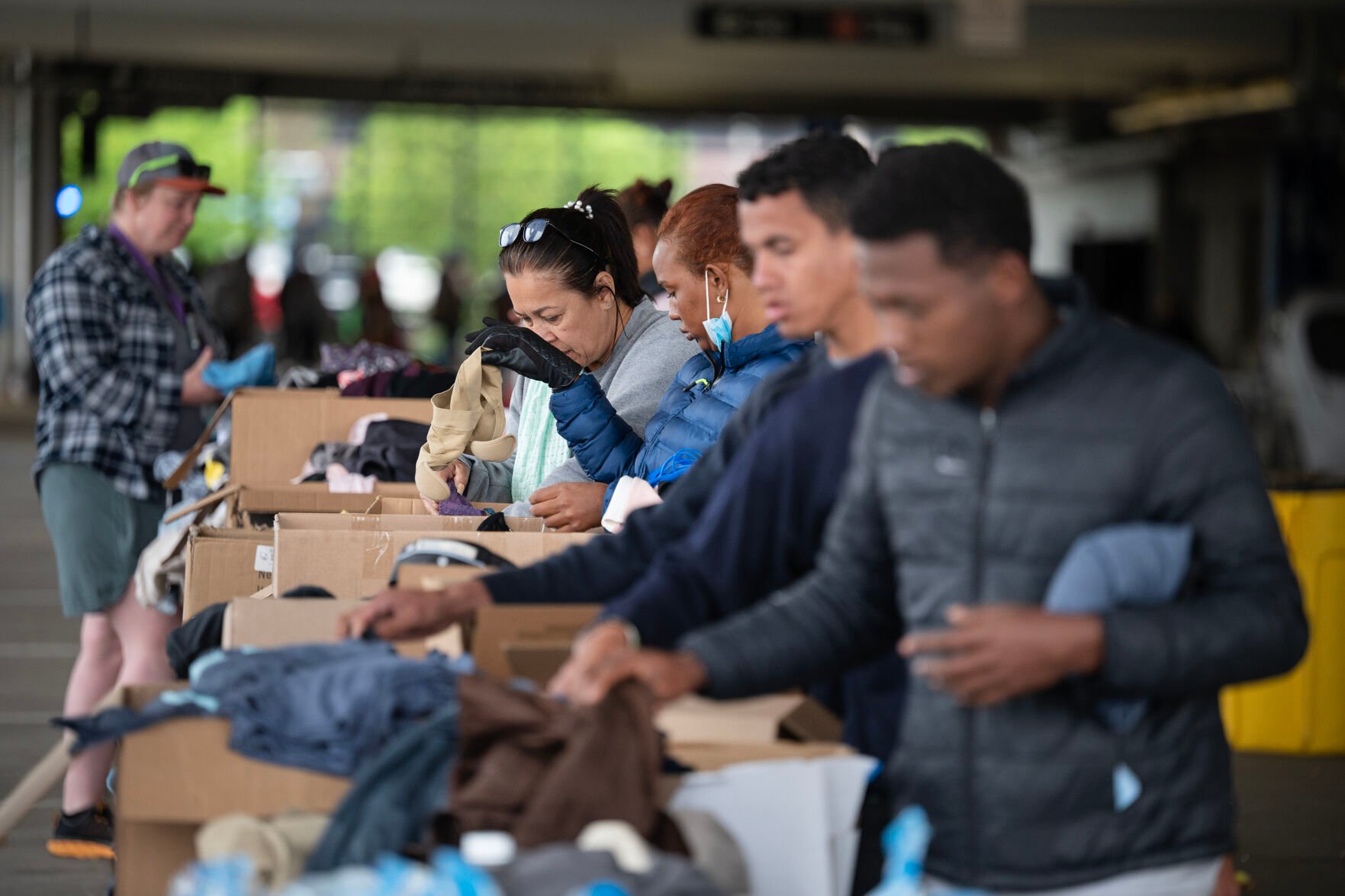
Denver officials have – for “several months” – implored arriving immigrants who illegally crossed the southern border to leave Colorado’s most populous city for more “opportunities” elsewhere in the country.
Their transportation to other destinations would be paid at taxpayers’ expense.
Jordan Fuja, a spokesperson for Mayor Mike Johnston, declined, though, to say exactly when officials began strongly encouraging the immigrants to consider resettling anywhere else in the United States.
“As has been our practice for several months, encouraging onward travel to destinations where newcomers may have support networks or better opportunities will continue to be a critical part of our long-term strategy to ensure the greatest opportunity for success for both newcomers and the City of Denver,” Fuja said in an email to The Denver Gazette.
As of Tuesday morning, Denver had received 40,321 immigrants, primarily from South and Central America.
While the city has tracked the number of people who have arrived here since 90 immigrants were dropped off at Union Station 15 months ago, officials do not know how many have left Denver at the city’s encouragement.
It is also unknown how many of the more than 40,000 new immigrants have resettled in Denver.
But tickets for immigrants to travel to their final U.S. destinations suggest about half of these new arrivals – or roughly 20,000 – have stayed in Denver. With roughly 713,000 people living in Denver, that represents about 3% of the city’s population.
An unrelenting influx of immigrants to Denver – Fuja and others have said – is not sustainable.
“Staying in Denver could mean that newcomers have more difficulty gaining self-sustainability due to the lack of resources and opportunities,” Fuja said.
Another way to look at the crisis and the vast numbers of people Denver has subsequently absorbed, consider that in just 15 months Denver gained nearly 20,200 people, which is nearly the population of the city of Golden.
Even with the strategy of aggressively asking people to leave Denver and the stern warning that opportunities here are scarce, Denver’s official stance is that is a “welcoming city for all migrants.”
‘Opportunities only continue to shrink’
To put those roughly 20,200 new people in 15 months into perspective, consider this: Since 1880, Denver has added – on average – only slightly twice that, or 48,500 new residents, every 10 years, U.S. Census data shows.
“We’re proud of the support we’ve been able to offer so far, but without federal support, Denver does not have the resources or capacity to maintain this outsized share of the load,” Fuja said.
“Given the number of people who have arrived in Denver, there are very few opportunities for work and housing, and those opportunities only continue to shrink.”
Early in the crisis, Denver officials decided the city would assume the responsibility to temporarily house, feed and transport arriving immigrants.
That decision has cost the city more than $63 million – and counting.
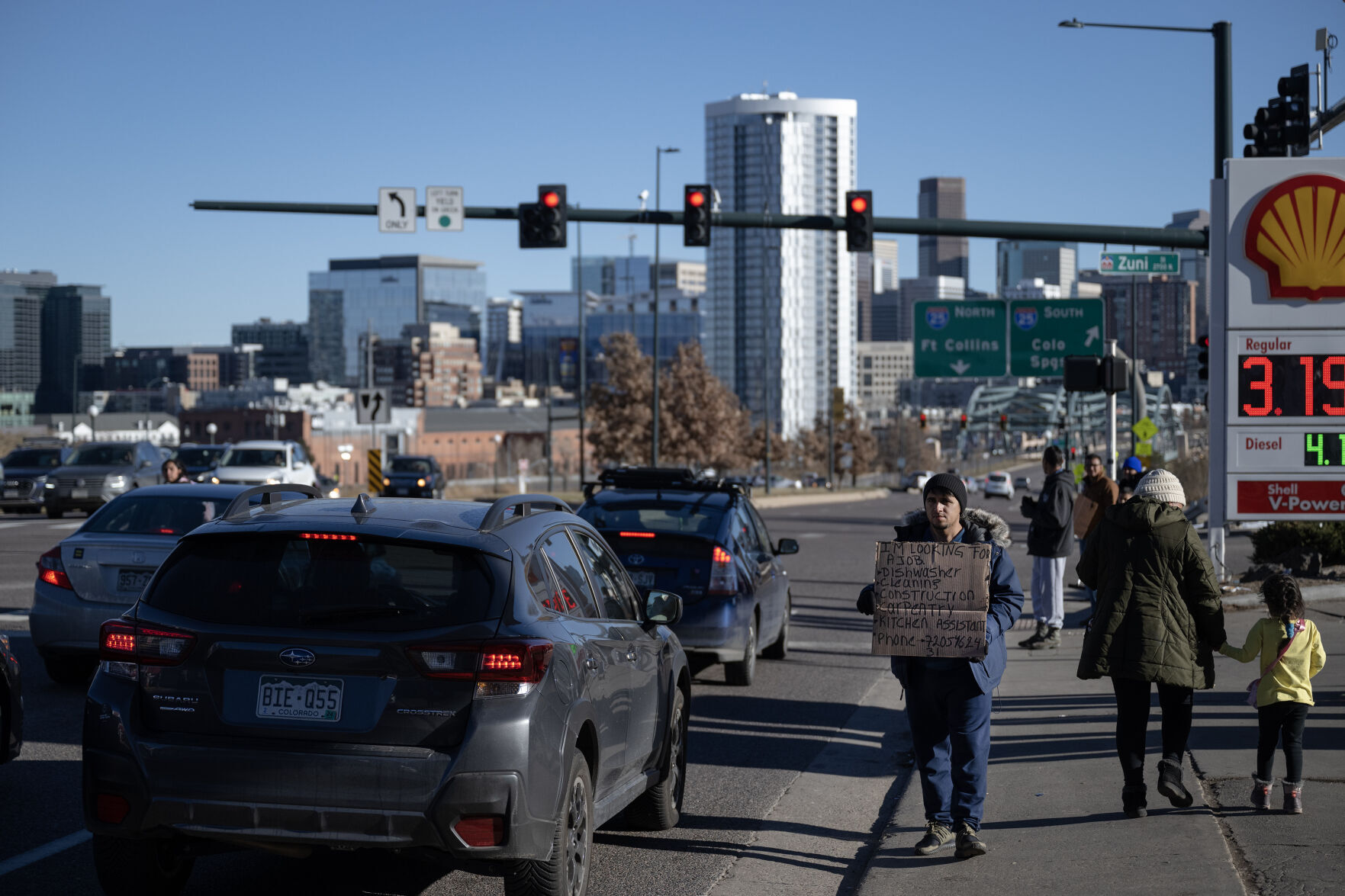
The biggest hurdle for the city is that many, if not most, of the immigrants lack the authorization to legally work in the U.S.
Since February, Denver officials have helped nearly 1,400 people obtain work authorization through a sped-up process. It’s unclear, though, how many of the roughly 20,000 living in Denver are adults looking for work.
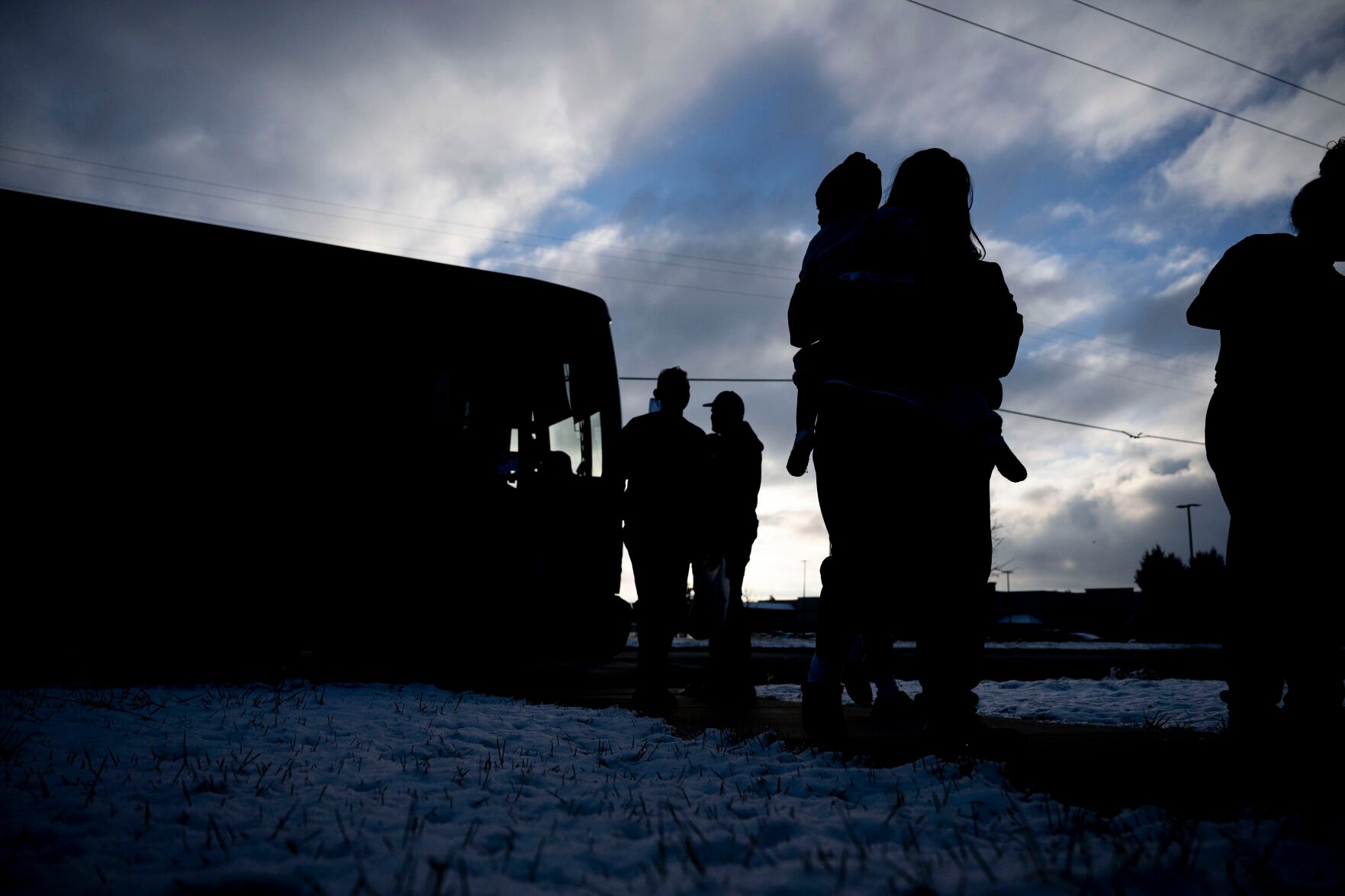
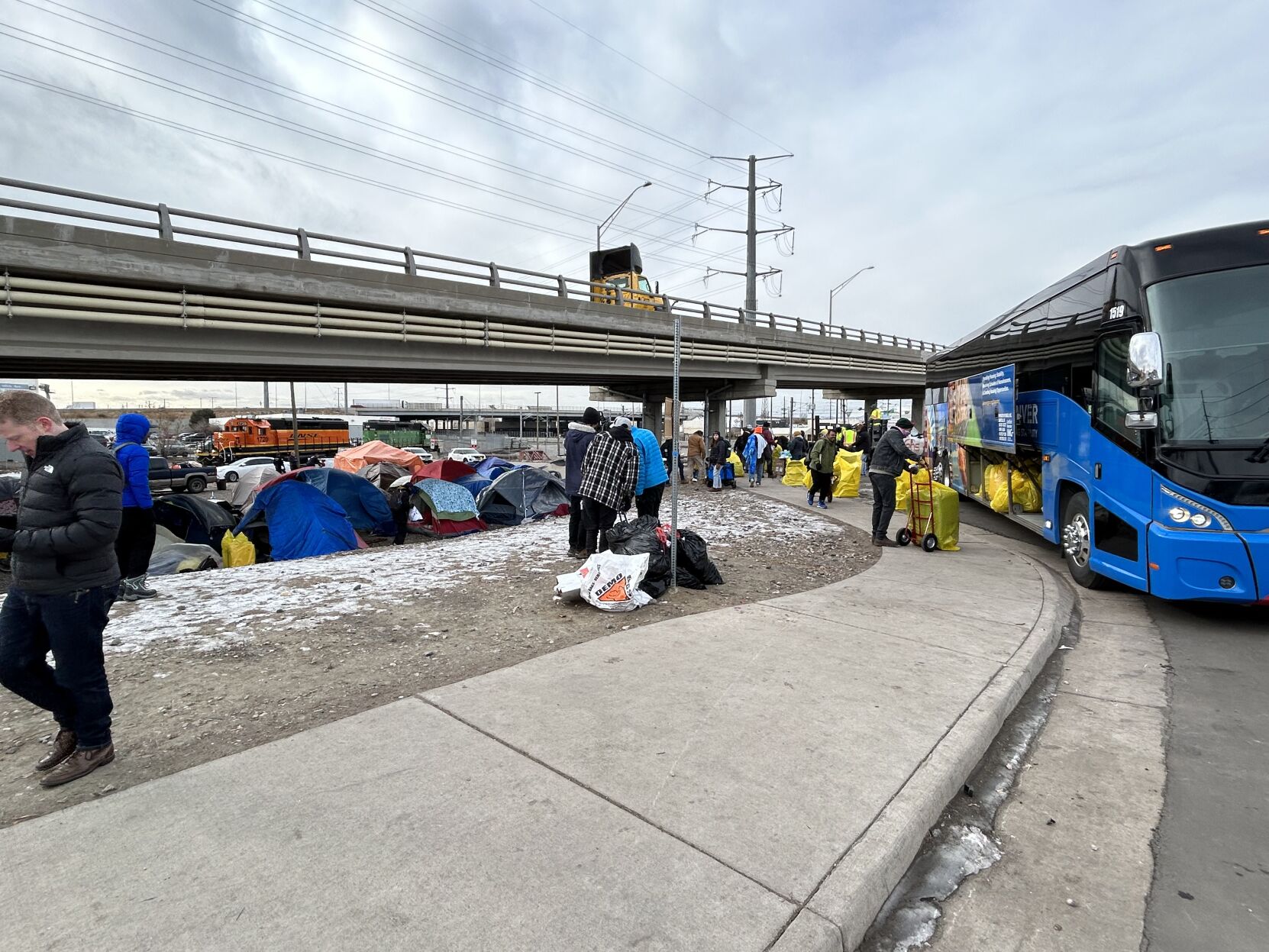
In a video obtained by The Denver Gazette’s news partner 9News, Johnston’s political director, Andrés Carrera, was caught on tape telling immigrants who had arrived by bus on March 26 that Denver could not support them.
‘You are going to suffer’
“The opportunities are over,” Carrera told them in Spanish. “New York gives you more. Chicago gives you more. So, I suggest you go there where there is longer-term shelter. There are also more job opportunities there.”
Four months ago, day laborers were already grumbling about the influx of immigrants and how their presence – and competition for under-the-table work – had eroded their earnings.
In his impassioned plea, Carrera asked new immigrant arrivals to consider alternate destinations like New York City or Chicago.
“We are not going to block you if you want to say here,” Carrera said. “If you stay here, you are going to suffer even more and I don’t want to see this.”
Denver officials have long insisted that services would remain available. Last month, the dwindling number of new arrivals prompted Denver to close four immigrant shelters.
Earlier this week, officials announced that they intended to close three of the remaining four shelters.
‘Overburdening other cities is not the solution’
It was a year ago that Gov. Jared Polis endured withering criticism from New York City and Chicago leaders who had called for the busing to their cities to end.
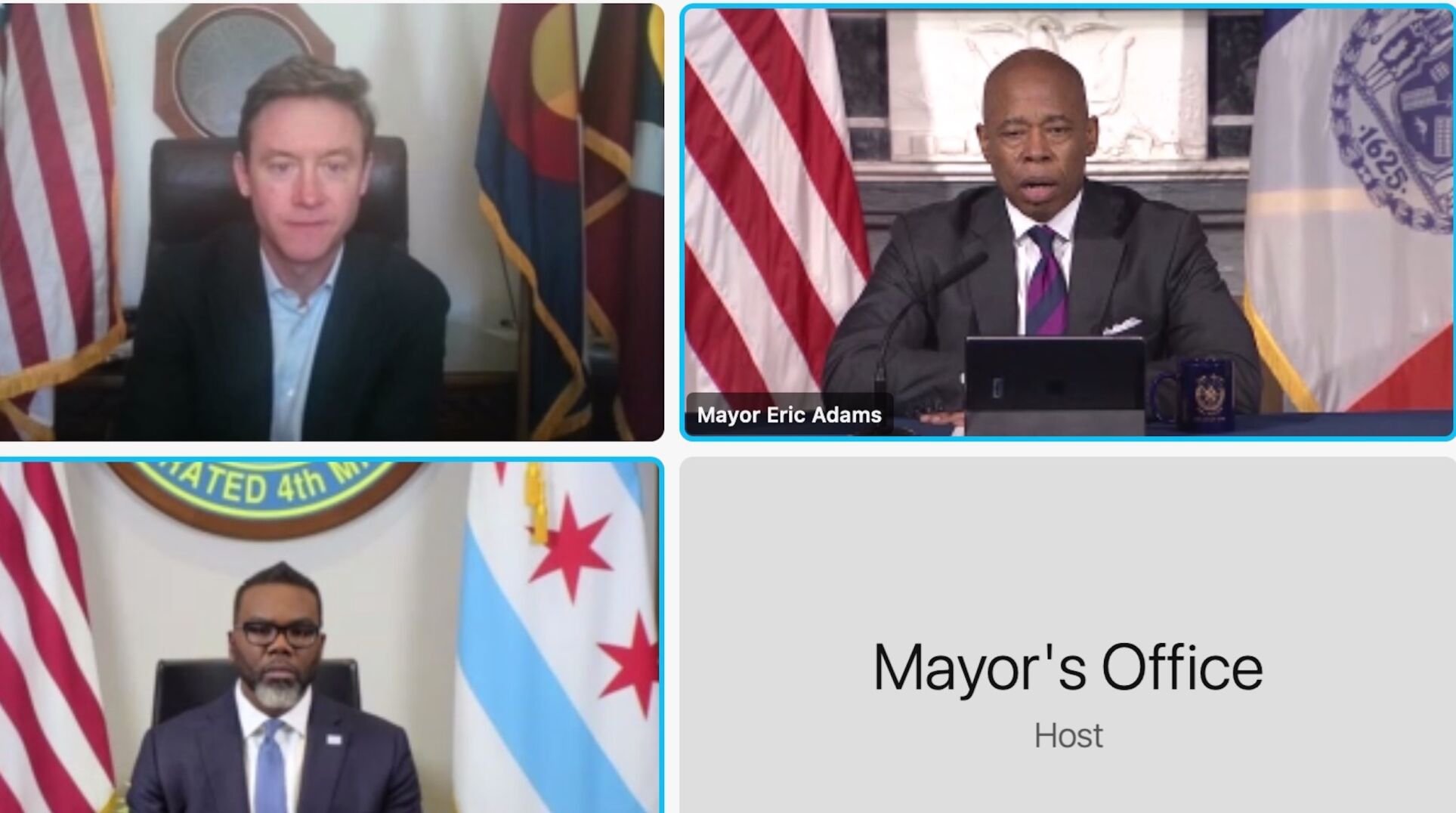
“It is apparent that the influx of asylum seekers has provoked consternation amongst states,” then Chicago Mayor Lori Lightfoot and New York City Eric Adams wrote Polis on Jan. 7, 2023. “Although we share the concerns of accommodating the flood of asylum seekers, overburdening other cities is not the solution.”
Polis ended the state’s participation, but Denver officials continued busing immigrants to other U.S. cities.
Fuja insisted that officials are in regular contact with New York City and Chicago, noting that both of these cities “frequently purchase tickets for migrants to travel to Denver.”
Neither Ronnie Reese, a spokesperson for Chicago Mayor Brandon Johnson, nor Fabien Levy, an Adams spokesperson, returned a phone call and email seeking comment.
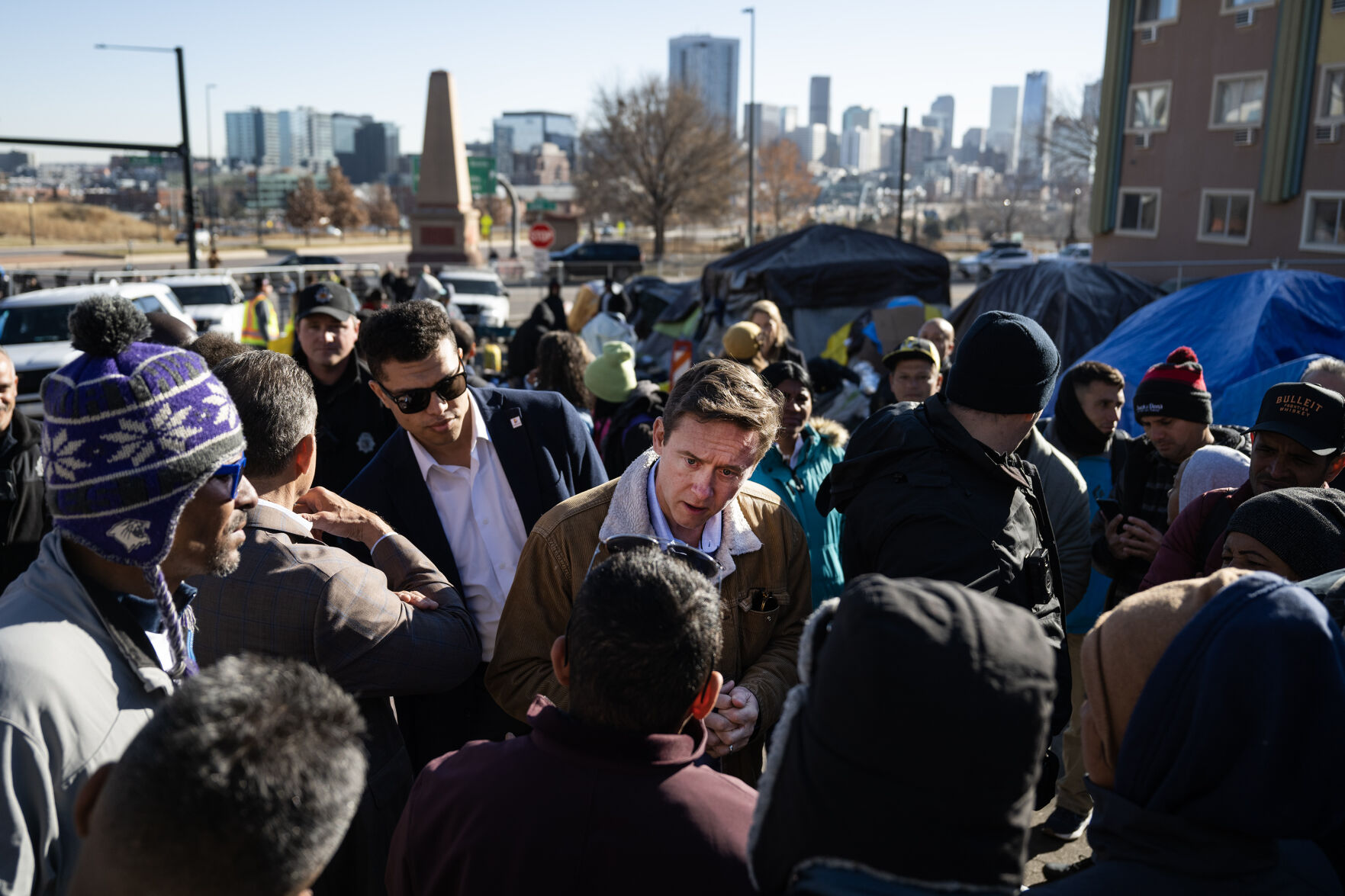
The unfolding crisis has since catapulted Denver into the national spotlight after a press tour by Johnston, who was working to bring attention to the effects the border issue has had on interior cities.
Officials in El Paso Texas have warned that free, onward transportation likely has – inadvertently – encouraged immigrants to come to Denver.
“There’s a pull factor created by this, and the policies in Denver for paying for onward destinations,” Irene Gutiérrez, executive director of El Paso County Community Services in west Texas, has said.
Unconvinced, city council members and Johnston have doubled down on their belief the influx necessitates providing onward travel.
“We don’t have the option of not doing onward travel,” Councilman Darrell Watson has said.
Watson added: “If we did not do onward travel, we would be in a deeper predicament than we are in right now.”
On the day Carrera asked how many immigrants wanted to go to another city, after an impassioned plea to leave, none changed their minds about Denver.
Given the reliance on immigrants voluntarily leaving Denver as part of its long-term strategy, The Denver Gazette inquired about the city’s backup plan.
None was offered.
“As soon as newcomers arrive in Denver, we are very clear with them that resources are extremely limited in Denver, and we cannot provide long-term support,” Fuja said.
“Setting these expectations early gives newcomers the opportunity to develop a long-term plan that accounts for this reality.”
Back in February, the Washington Post asked Johnston what “creative ways” Denver could adopt if help from the federal government didn’t materialize, Johnson replied that Denver officials are “not partisan at heart.”
“We’re just problem solvers,” he said. “We just want to make this work for our city and so we hope there’d be federal support. Now, if the Congress has shown there won’t be, we will figure this out on our own.”


tom.hellauer@denvergazette.com





The African roots of three Colorado leaders | SONDERMANN
Eric Sondermann
eric-sondermann@coloradopolitics.com
Updated 2 days ago
Colorado’s political transformation is measured in many ways. A once reliably red state (with asterisks) became purple and is now a rather deep blue. For better or worse, probably the latter, power is ever more consolidated along the Front Range...

Colorado Politics Calendar Sept. 14-20
Rachael Wright, Special to Colorado Politics
rachael.wright@coloradopolitics.com
Updated 3 days ago
CoPo’s weekly political calendar will help you find political and public-policy events throughout Colorado. It includes candidate and issue campaign events, public policy meetings, court hearings, state and local party conventions, assemblies, debates, rallies, parades, speaking engagements, traveling dignitary appearances,...
Federal judge green-lights civil trial against ex-Fort Collins DUI officer
Michael Karlik
michael.karlik@coloradopolitics.com
Updated 16 hours ago
A federal judge ruled on Thursday that Fort Collins’ former “DUI officer” will face a civil trial for allegedly investigating a motorist for impaired driving without any reasonable suspicion to do so. In recent years, several people arrested by Officer...

Denver police reopen 13 sex assault cases after retesting Missy Woods’ CBI work
Jenny Deam
jenny.deam@gazette.com
Updated 13 hours ago
Thirteen previously closed Denver sexual assault cases have been reopened after the city’s crime lab retested DNA evidence once analyzed by former Colorado Bureau of Investigation forensic analyst Yvonne Woods. A police spokesperson told The Denver Gazette the once-closed cases...

Ballot measure aims to shift Colorado sporting-goods tax revenue to land, water and wildfire projects
Marissa Ventrelli
marissa.ventrelli@coloradopolitics.com
Updated 18 hours ago
Colorado voters this November will decide whether to direct a share of sales tax revenue from sporting goods — including bicycles and skiing equipment — toward land and water conservation, wildfire prevention and expanding outdoor recreation. Supporters say the measure...

Colorado Supreme Court suspends Mesa County judge pending misconduct investigation
Michael Karlik
michael.karlik@coloradopolitics.com
Updated 19 hours ago
The Colorado Supreme Court suspended Mesa County Court Judge Michael J. Grattan on Thursday amid a misconduct investigation. The court’s Sept. 10 order gave Grattan 21 days to explain why his paid suspension should not continue through the end of...

Trump honors the fallen of the 9/11 terrorist attacks during Pentagon speech
Mabinty Quarshie
mabinty-quarshie@coloradopolitics.com
Updated 19 hours ago
President Donald Trump and first lady Melania Trump honored the roughly 3,000 Americans killed during the Sept. 11, 2001, terrorist attacks during a ceremony at the Pentagon. The event marking the 25th anniversary of the deadliest attack on American soil...

Immigration reporting measure fuels debate over Colorado’s role with ICE
Marissa Ventrelli
marissa.ventrelli@coloradopolitics.com
Updated 15 hours ago
A coalition of advocacy groups and several district attorneys rallied outside the Colorado Capitol on Thursday to oppose a ballot measure that, if approved by voters in November, would require state and local law enforcement to cooperate with federal immigration...
Colorado Supreme Court changes course, dismisses case about special district bonds
Michael Karlik
michael.karlik@coloradopolitics.com
Updated 15 hours ago
The Colorado Supreme Court declined on Friday to decide a dispute between a large-scale Commerce City development and the various districts financing it, after initially showing interest in the ongoing case. Colorado has roughly 2,800 special districts, which are local...

Trial remains elusive for purported mastermind accused of plotting 9/11 attacks
The Associated Press
the-associated-press@coloradopolitics.com
Updated 22 hours ago
NEW YORK (AP) — Two decades after U.S. authorities locked Khalid Sheikh Mohammed away at a military detention center in Cuba, the purported mastermind of the Sept. 11 attacks sometimes seems barely any closer to being put on trial than...