

Colorado House bill seeks to limit police use of ‘prone restraint’ technique
A bill introduced in the Colorado House seeks to include “prone” restraint in the state’s legal definition of excessive physical force. If passed, it would require officers who employ the technique to promptly transition the individual to a “recovery position” to facilitate normal breathing.
Critics of the technique say it should be abolished due to elevated risk of asphyxiation and death, while proponents say it is the safest way for law enforcement to handcuff noncompliant individuals.
House Bill 1372 also would require law enforcement agencies to implement, post, and train officers on protocols regarding prone restraint and what to do if an individual is injured. The state’s Peace Office Standards and Training (POST) Board will be tasked with developing a training program and disseminating it to law enforcement agencies.
Bill sponsor Rep. Leslie Herod, D-Denver, told Colorado Politics that the bill would “save lives.”
“While the majority of law enforcement uses the technique of prone restraint appropriately, there are some that do not,” she said. “Unfortunately, too often we’re seeing prone restraint being used inappropriately and not the way that law enforcement have been trained to use it. So, that has resulted in people losing their lives, and we need to stop that. All we’re trying to do with this bill is align with what law enforcement practices already are.”
The House Judiciary Committee heard testimony on the measure this week before passing it along a party line vote. The bill will now go before the House Appropriations Committee.
During discussions, members of the Colorado law enforcement community cautioned lawmakers to think about what the bill would mean.
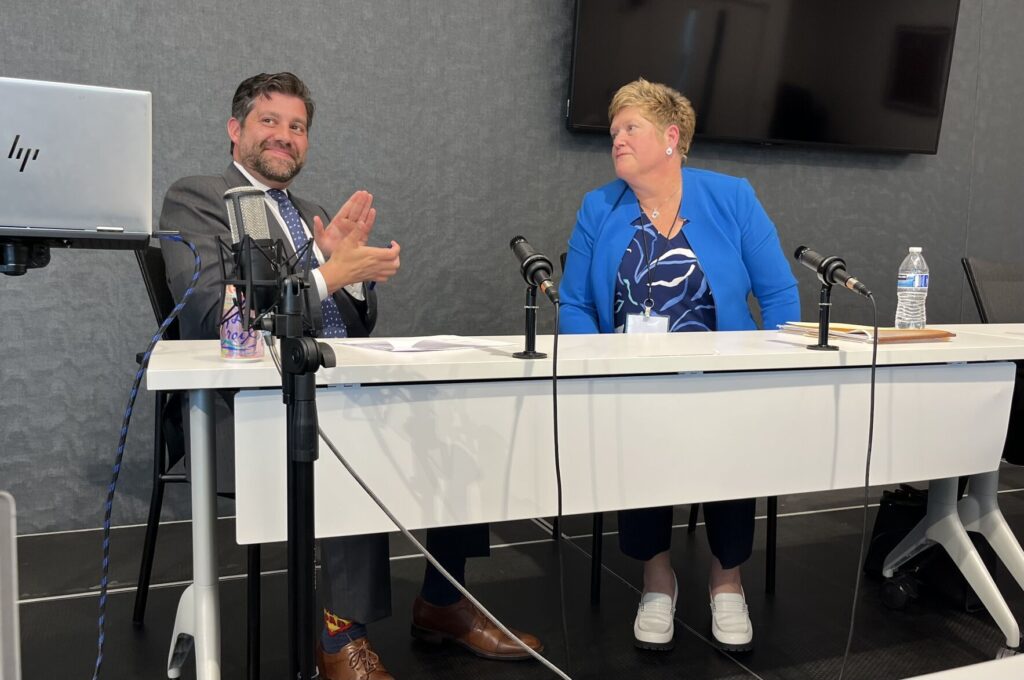
Suzette Friedberger of the Colorado Fraternal Order of Police, who has been a law enforcement officer for over 20 years and has taught arrest control tactics for 16 years, emphasized that while prone restraint is not utilized in every scenario, there are situations where it becomes a necessary recourse, particularly when other positions pose safety risks.
“The prone position is a vital option for law enforcement officers in situations involving elevated risk contact due to the inherent nature of being able to reduce the mobility of potentially dangerous subjects,” she said. “Leaving a subject standing or on their knees or even lying on their back allows for some mobility that an officer cannot allow in many circumstances.”
Friedberger said the FBI’s manual provides law enforcement officers with clear instructions on how to properly administer a prone restraint and transition the individual into the recovery position. She added that for some small-town departments with limited staff, prone restraint is the safest option for a lone officer dealing with a potentially violent or combative subject.
Families of victims of the prone restraint technique spoke in favor of the proposed regulations, including that of Elijah McClain, who died following an encounter with Aurora police in 2019.
The Aug. 24, 2019 incident began when a 911 caller reported seeing a man with a mask who seemed “sketchy.” Aurora officers responded and confronted McClain as he walked home from a convenience store carrying a plastic grocery sack containing three cans of tea and listening to music on ear buds.
The officers subdued McClain, handcuffed him and one used a neck hold that temporarily restricted oxygen to his brain. During the struggle, one officer said McClain tried to grab one of the officer’s gun.
After that, according to multiple medical experts, McClain vomited and inhaled some it, then suffered a series of problems, including low levels of oxygen and high levels of acid in his body. McClain said repeatedly, “I can’t breathe,” before two paramedics injected him with the sedative ketamine.
McClain’s heart stopped a short time later. Although paramedics successfully restored his pulse, he never regained consciousness and died three days later.
McClain’s mother, Sheneen McClain, argued that her son might still be alive today if officers hadn’t restrained him.
“My son just wanted to sit up so that he could breathe better, but also to remove the blood and vomit that was filling up his lungs,” McClain said during a committee meeting on the bill. “My son died in the prone position because law enforcement officers decided that their training was more important than listening to my son about his own body. The prone position is inhumane and dangerous for anyone to be in.”
One of the officers who faced charges in the McClain case was convicted of criminally negligent homicide and sentenced to 14 months in jail with work release. The other two officers were acquitted. Meanwhile, two paramedics were convicted for injecting him with the ketamine and will be sentenced in March — but not guilty of manslaughter, the most serious charge, and of second-degree assault causing serious bodily injury.
Critics raise recruitment worries
The bill initially would have prohibited the use of prone restraint, except when an officer perceives a threat to their life. However, a strike-below amendment, crafted following extensive discussions with stakeholders, removed the word “prohibited.” Instead, the use of prone restraint would be categorized within the state’s criminal code Title 18, which delineates excessive force by law enforcement.
By making this amendment, Herod said groups that were originally opposed to the bill can now take a more neutral or supportive stance.
“The first draft didn’t hit the mark, but it brought people to the table for the conversation,” she said. “I believe that the strike-below we have now really does lead us toward our common and shared goal, which is the humane treatment of citizens in our communities and ensuring that law enforcement has the tools they need to keep our community safe.”
Christina Mascarenas of Pueblo expressed concern that the bill, coupled with the state’s elimination of qualified immunity for law enforcement, may dissuade potential recruits from pursuing careers in law enforcement. She said Pueblo is currently down 53 officers, and with over two dozen murders occurring in the city last year, the few that are left have been overloaded with cases.
“Our LEOs are very busy and they’re stretched thin,” Mascarenas said. “Good men and women don’t want to become officers in Pueblo. I have spoken with officers, and one told me, ‘At this point, I believe it would be better for me and my family to go through the pain of me being killed in the line of duty than for us to lose everything and spend my life in prison for protecting myself.'”
“Now, you want to strip Pueblo LEOs of another tool,” Mascarenas said.
Northglenn’s Mayor Pro-Tempore Shannon Lukeman-Hiromasa also said she has concerns with three areas of the bill: the inclusion of prone restraint as a form of physical force in Title 18, officer and subject safety, and potential officer liability implications outlined in SB20-217.
She noted that Northglenn’s deputy chief, who is also a lawyer, has raised objections to the liability provisions, suggesting that the bill may lower the burden of proof required in civil cases.
Lukeman-Hiromasa said officers might hesitate or even be afraid to utilize prone restraint, even in circumstances where it’s necessary, if the bill is passed.
During the committee’s final discussion of the bill, Rep. Jennifer Bacon, D- Denver, voiced her support for the measure.
“If people hear the phrase ‘I can’t breathe’ now in this country, unfortunately through the death of people, they do associate it with a type of hold,” she said. “We need to be responsive and responsible for that and say, just like we do with other uses of force, when it’s excessive.”
Bacon mentioned the hiring concerns expressed by some of the bill’s opponents, which she believes to be an issue for another reason entirely.
“I am concerned if we are saying that people do not want to be police officers because we are talking about the types of things that lead to death,” she said. “It deeply worries me to hear law enforcement say that they can’t recruit because we are asking people, who are legally the only people allowed to take one’s life or liberty, to know what they’re doing before they do it.”
‘An important step’ to reducing deaths
According to the bill’s prime sponsor, Rep. Steven Woodrow, D- Denver, the U.S. Department of Justice issued a memorandum in 1995 instructing law enforcement officers to immediately take individuals in prone restraints off their stomach as soon as they have been handcuffed to avoid asphyxiation.
Despite this, Woodrow said, prone restraint was a contributing factor to several notable deaths involving police officers, including George Floyd and Eric Garner.
Woodrow cited an investigation by Denver’s 9News that found at least 132 Americans have died as a result of prone restraint.
“This bill marks an important step on the road to reducing these deaths,” he said.
Woodrow said he has seen first-hand officers using the prone restraint correctly, including at the Capitol during last winter’s special session. He emphasized that the bill is not anti-law enforcement, but rather pro-safety, for all parties involved.
“It’s not lost on us as Denver legislators that the optics of a bill like this can be received as reflective of some issue towards law enforcement,” he said. “That is incorrect and not the point of this bill at all. This legislation is intended to honor our shared goals of public safety so that those interactions don’t end in tragedy.”
Meredith Henry of ARC of Colorado said prone restraints can be especially harmful for individuals with disabilities, who may not comprehend the situation and become agitated. She recounted the case of Eric Parsa, a 16-year-old boy with autism from Louisiana, who was at a laser tag facility with his family in January of 2020 when he had a “meltdown” due to sensory overload. In an attempt to calm Parsa, a security guard was called over and placed the teen in a prone position.
Due to Parsa’s speech difficulties, he was unable to tell the officer that he couldn’t breathe. The officer restrained the teen for nearly 10 minutes, during which he eventually stopped breathing. Henry said Parsa’s mother, who is a doctor, tried to resuscitate him, but the officer told her to step back and let him do his job.
Henry said individuals with disabilities have higher rates of interaction with law enforcement, which means an increased likelihood of being held in a prone restraint.
“Law enforcement officers who do not understand the disability community may harbor common misunderstandings that can result in dangerous or lethal situations,” Henry said.
Jacob Oldefest, a paramedic from Denver Health and representative of Denver Health Workers United, said that, during a struggle, the human body requires more oxygen. Placing an individual in prone restraint hinders their ability to effectively use their diaphragm to inhale, he said.
Oldefest said he has not encountered a single paramedic that supports the use of prone restraint due to its potential physical risks. He noted he regularly encounters “medical consequences” of the prone restraint when working in an ambulance.
Oldefest spoke of an incident he responded to in which two men involved in a physical altercation. Officers had placed on of the men in a prone restraint, handcuffed, and left on the ground while they attended to the other man. When Oldefest and his colleagues arrived at the scene, the man on the ground was purple and exhibiting signs of respiratory distress.
“If our ambulance had arrived thirty seconds later, this man might have died, and the officers would not have known until our eventual arrival and initial assessment,” he said. “There’s no reason he should have been left prone, especially prone and unattended. He should have been moved to his side, sitting up, or whatever position could’ve helped him to breathe normally.”


We tested vapes in Colorado for signs of hemp. This is what we found.
Christopher Osher
chris.osher@gazette.com
Updated 8 hours ago
This article was produced for ProPublica’s Local Reporting Network in partnership with The Denver Gazette. Sign up for Dispatches to get our stories in your inbox every week. Leaders in the Colorado marijuana industry have complained in recent years that...
D-49 board repeals policy separating facilities based on biological sex
Eric Young
eric.young@gazette.com
Updated 11 hours ago
Less than six months after passing a policy segregating the use of district facilities based on biological sex, School District 49’s board of education voted to repeal it during a contentious special meeting Tuesday night. Policy JBAA was adopted by...

Tax bill shock: Colorado homeowners could see property taxes jump by as much as 40%
Marianne Goodland
marianne.goodland@coloradopolitics.com
Updated 9 hours ago
Mike Fitz, 76, who lives in Centennial in a single-family home he has owned since 2001, paid $3,876.98 in property taxes to Arapahoe County two years ago. Fitz just learned after checking the website of the Arapahoe County Assessor’s Office...

Federal judge blocks USDA ‘pilot project’ affecting Colorado food assistance
Michael Karlik
michael.karlik@coloradopolitics.com
Updated 15 hours ago
A federal judge blocked the U.S. Department of Agriculture on Wednesday from proceeding further with a “pilot project” that would require five Colorado counties to rapidly recertify more than 100,000 households for food assistance. In a brief ruling from the...
Colorado’s Democratic delegation calls for Noem’s removal, ICE overhaul
Ernest Luning
ernest.luning@coloradopolitics.com
Updated 15 hours ago
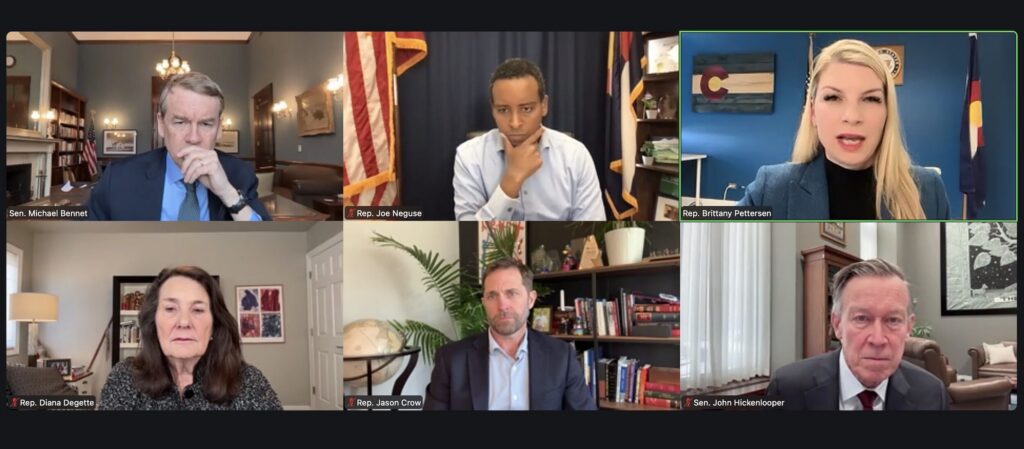
The Democratic members of Colorado’s congressional delegation on Tuesday called for Department of Homeland Security Secretary Kristi Noem to resign or be impeached in the wake of the second fatal shooting by federal immigration agents in Minnesota this month amid...
Colorado’s lack of snow pack hurting outdoor industry; could spell drought conditions this summer
Kyla Pearce
kyla.pearce@gazette.com
Updated 11 hours ago
A snowy weekend forecast in January was a relief to skiers, hydrologists, fire officials and ski resort staff in Colorado, as the state continues to see record high temperatures and record low snowfall. A USDA map showed the average statewide...
Colorado lawmakers hear about increased judicial discipline complaints, fallout from Missy Woods misconduct
Michael Karlik
michael.karlik@coloradopolitics.com
Updated 19 hours ago
Members of the Colorado legislature’s judiciary committees heard about a large increase in complaints against judges and additional forensic misconduct that has come to light, during three days of oversight hearings last week. Leaders of several judicial-related agencies appeared between...
Federal judge warns DOJ against raising repeatedly rejected arguments in immigration detention cases
Michael Karlik
michael.karlik@coloradopolitics.com
Updated 19 hours ago
A federal judge in Colorado warned the U.S. Department of Justice on Monday against raising arguments that she and other judges have repeatedly rejected in cases challenging the lawfulness of immigration detentions. In a Jan. 26 order finding the government...
Will Denver see stepped-up immigration enforcement next? | ANALYSIS
Nico Brambila
nico.brambila@denvergazette.com
Updated 1 day ago
Two years ago — as Denver grappled with a sharp influx of immigrants, many who arrived in the city after illegally crossing America’s borders — Mayor Mike Johnston joined the mayors of Chicago and New York City in criticizing Texas...
$200M in federal funds to be deployed in Denver area for heat pumps aimed at reducing emissions
Sage Kelley
sage.kelley@denvergazette.com
Updated 18 hours ago
The Denver Regional Council of Governments (DRCOG) has officially launched a $200 million program to help reduce carbon emissions with heat pumps. The regional organization announced its new initiative, “Power Ahead Colorado,” which also includes partnerships with the Colorado Energy...
PREV
PREVIOUS

Republicans tee up primary between Gabe Evans, Janak Joshi in Colorado's 8th Congressional District
Republican congressional candidates Gabe Evans and Janak Joshi will face off in the GOP primary to decide who challenges Democratic U.S. Rep. Yadira Caraveo in Colorado’s most closely divided district. Evans, a first-term state representative from Fort Lupton, won top-line designation at the GOP’s 8th Congressional District assembly on Saturday in Greeley. In contrast, Joshi, […]

House Republicans propose renaming DC airport after Trump
A group of House Republicans introduced a bill on Tuesday to rename Washington, D.C.’s main international airport after former President Donald Trump. The legislation, being led by House Chief Deputy Whip Guy Reschenthaler, R-PA, would change the name of Washington Dulles International Airport to the Donald J. Trump International Airport. It would require the name […]