

Colorado River basin states offer divergent plans to govern operations after 2026
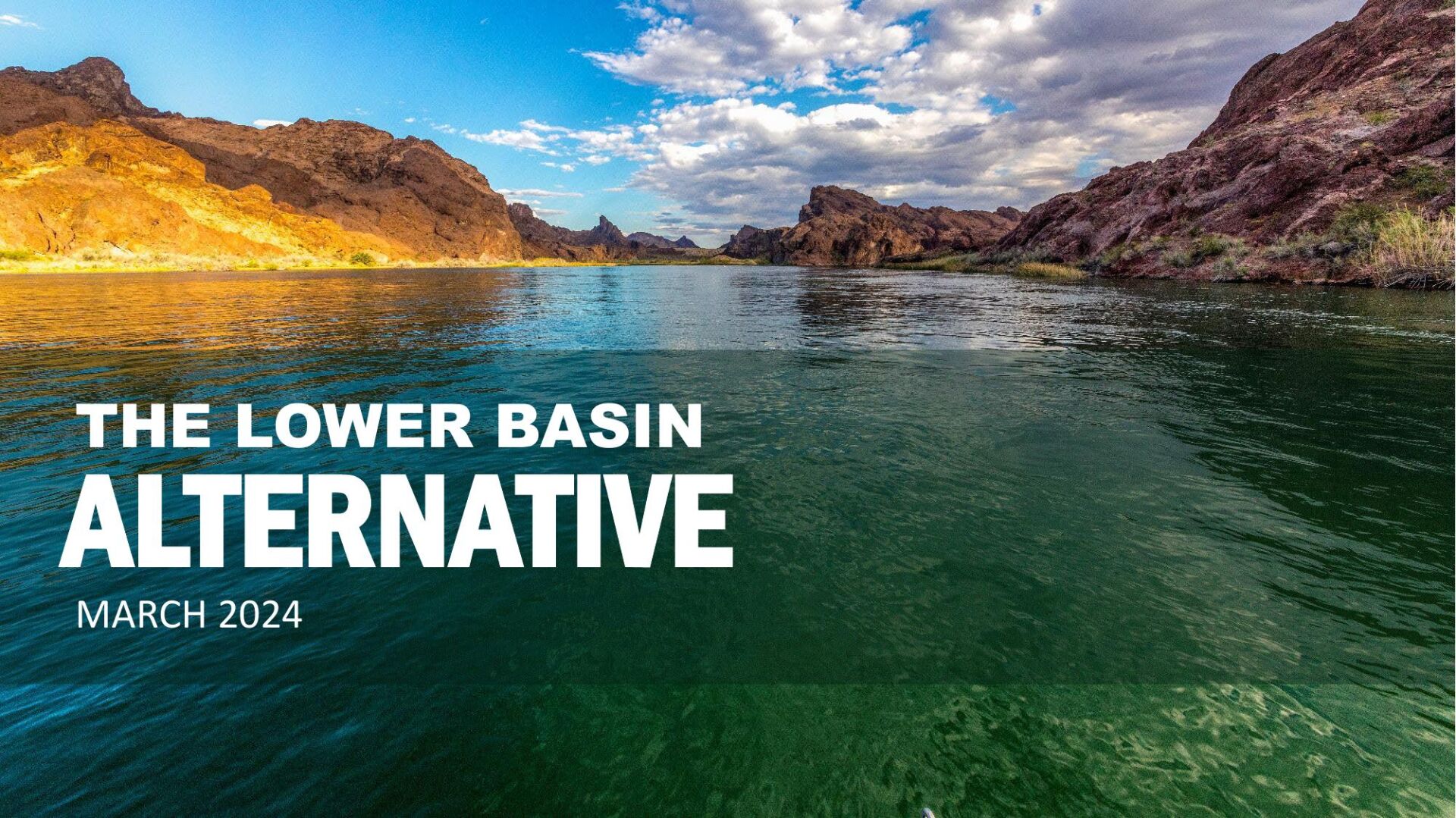
The seven states of the Colorado River — four in the Upper Basin and three in the Lower Basin — released divergent plans on Wednesday on how to maintain water levels at Lake Mead and Lake Powell when the current river operation guidelines expire in 2026.
The ideas submitted by the Upper Basin states of Colorado, Wyoming, New Mexico and Utah differed dramatically from what the Lower Basin states of Arizona, California and Nevada have in mind.
The difference between the two proposals appears to hinge on about 2.4 million acre-feet of water that could shore up water levels at Lake Mead, which provides water to the three Lower Basin states. The Lower Basin states believe it should be a shared sacrifice if water levels at Mead dropped to a crisis point, while the Upper Basin states believe they’ve given up all the water they should.
The latter is a longstanding position of the Upper Colorado River Commission.
The U.S. Bureau of Reclamation set a deadline of Monday for the seven states to come up with plans, but a hoped-for joint plan was not in the cards.
By the end of 2024, the Bureau of Reclamation anticipates having what’s called a draft “environmental impact statement” that will present alternatives for how the Colorado River will operate in the decades to come. Those new guidelines will also determine the management and facilities of the two reservoirs, as well the Hoover and Glen Canyon dams.
The Colorado River faces a crisis resulting from more than two decades of drought in the West, coupled with overconsumption. The amount of water available for the 40 million people who rely on the river has dropped precipitously, mainly due to a drought that has exceeded two decades, some also blaming change in the climate as the culprit.
The conditions have resulted in what many experts call a “new normal,” and the next three years will determine how the seven states will handle water supply that falls short of demand.
Upper Basin plan
The plan submitted by the Upper Basin states calls for the following:
• A commitment from the Upper Basin states to help preserve the ability to make releases from Lake Powell, the nation’s second-largest reservoir that provides power through the Glen Canyon dam
• For Lake Powell: Modeled releases from Lake Powell that are based on hydrologic conditions and designed to rebuild storage to protect Lake Powell’s ability to make releases consistent with the Law of the River, as dictated by the 1922 Colorado River compact
• Lake Mead: Modeled Lower Basin operations adapted from a concept first provided by the Lower Basin States based on the combined storage of Lake Powell and Lake Mead.
The proposal seeks to manage the reservoirs to address the imbalance between water supply and demand in the Lower Basin. That includes operations based on actual conditions — instead of “unreliable” forecasts — to ensure that Lake Powell and Lake Mead are operated sustainably.
In addition, the calls for efforts to rebuild storage at Lake Powell to protect its ability to send water down to Lake Mead. It acknowledges a hydrologic shortage on the river in the Upper Basin states, estimated at 1.2 million acre-feet per year. Finally, the Upper Basin states committed to acknowledging undeveloped water rates for tribes in the Upper Basin states.
According to Amy Ostdiek at the Colorado Water Conservation Board, the upper division plan calls for a recalculation every October to determine how storage will be rebuilt at Lake Powell. Depending on the reservoir’s levels, this could require release from the three largest reservoirs in the Upper Basin: Flaming Gorge in Utah, and Blue Mesa and Navajo in Colorado.
“We can no longer accept the status quo of Colorado River operations,” Becky Mitchell, Colorado’s Commissioner to the Upper Colorado River Commission, said in a statement on Wednesday. “If we want to protect the system and ensure certainty for the 40 million people who rely on this water source, then we need to address the existing imbalance between supply and demand. That means using the best available science to work within reality and the actual conditions of Lake Powell and Lake Mead.”
She added: “We must plan for the river we have — not the river we dream for.”

The post-2026 proposal from the Upper Colorado River Commission.
Marianne Goodland marianne.goodland@coloradopolitics.com
Mitchell was not available to comment on the Lower Basin states’ proposal.
As of Wednesday, Lake Powell was at 32.46% of the total. The reservoir was 40.7 feet higher than a year ago but about 138.5 feet below the full pool.
Over the last several years, the upper and lower basin states have squabbled over declining water availability in the Colorado River. The Upper Basin states claim they have conserved more than their fair share and single out California, in particular, for its past reluctance to reduce its water use.
California, which draws its share of the river from Lake Mead, is the largest user of Colorado River water and holds the most senior water rights.
However, Arizona has taken significant cuts to its allocation, given its junior water rights.
Last year, the three Lower Basin states agreed to conservation measures to shore up Lake Mead, which had been nearing critically low levels before the 2022-23 snow season.
Those conservation measures — the three states committed to saving 1.6 million acre-feet over three years — are intended to keep Lake Mead at levels high enough to generate hydropower at Hoover Dam. They also form some of the underpinnings for the plan submitted by the Lower Basin states this morning.
The Lower Basin plan
Tom Buschatzke, the director of the Arizona Department of Water Resources and the state’s principal negotiator on matters relating to the Colorado River, said while he has not yet fully examined the upper division states’ alternative plan, he told Colorado Politics he is disappointed by what he’s seen so far.
“The entire 3.9-million-acre feet necessary to protect the Colorado River system would come out of the Lower Basin — by the Lower Basin reducing their uses,” he said.
Buschatzke said the Lower Basin states have owned the structural deficit, including acknowledgment of system evaporative losses, which the Upper Basin states have asked the Lower Basin to acknowledge for years.
“The additional 2.4 million acre-feet that’s needed I see as a shared responsibility,” he said.
And that forms a significant part of the alternative plan the Lower Basin states sent to the Bureau of Reclamation this morning.
Here’s what that plan does:
• Addresses the structural deficit in the Lower Basin
• Operates the reservoirs based on system contents, rather than elevations at Lake Powell and Lake Mead
• Shared water use reductions broadly
• Creates provisions for the storage and delivery of stored water
• Releases from Lake Powell that are adaptable to a broad range of hydrology and “hydrologic shortages”
The alternative dictates cuts calculated by state — every state, not just those in the Lower Basin — depending on how much the levels drop at Lake Mead.

In a statement Wednesday, the three Lower Basin states said users at and downstream of Lake Mead would reduce uses of Colorado River water by 1.5 million acre-feet each year “under a broad range of conditions to address the structural deficit and future aridification caused by climate change.”
“While addressing the structural deficit in the Lower Basin is a critical step in stabilizing the Colorado River, developing durable, long-lastng solutions requires all water uses to manage demands and commit to water conservation,” said Southern Nevada Water Authority General Manager John Entsminger, that state’s representative on the Colorado River.
In addition, the statement said that, if system conditions deteriorated further, all water users — in all seven states —would collectively participate in the solution.
That means cuts.
Those additional reductions, beyond the initial 1.5 million acre-feet that would be solely assigned to the Lower Basin and Mexico, would be shared between the Upper and Lower Basins and Mexico — up to a total of 3.9 million acre-feet of reductions.
One acre-foot is about 326,000 gallons of water, or enough water to cover Mile High Stadium’s football field with one foot of water.
Reaction to the plans
Western Resource Advocates, a group dedicated to a flourishing West and is active on the water discussions, offered its own ideas about what should be in the basin plans, but decried the lack of cooperation on Wednesday.
“These proposals show that the basin states are willing to do more to address the region’s water challenges than they did in the past, but having competing proposals fails to address the unprecedented crisis on the river,” said Jon Goldin-Dubois, the group’s president.
The states must move beyond staking out competing positions and reach agreement on comprehensive solutions that address the long-term sustainability of the river, the group said in statement.
The Upper Basin proposal does not commit to implementing the water conservation programs needed to help bring the system into balance and it does not prioritize protecting the river itself, the group said.
Meanwhile, the group said, the Lower Basin proposal mentions operations that benefit the Grand Canyon but does not incorporate environmental considerations basin-wide.
Western Resource Advocates called for reduction in water consumption of 25% and to take “new non-Tribal water development” off the table. The group also proposed a “river resilience” reserve, which would encourage more water users to save water and create a savings account to store that water without affecting reservoir operations.
Water could be stored throughout the basin, its proposal said, wherever it is needed most to protect river health and stabilize the system.
U.S. Sen. John Hickenlooper, however, offered a more positive outlook, at least when it came to the Upper Basin proposal.
“We can’t ignore the realities of a river with less water,” Hickenlooper said Wednesday. “Today’s proposal from the Upper Basin States focuses on a pragmatic approach to addressing the supply and demand crisis of the Colorado River. It’s important we continue to work together to help manage our river — and our future — wisely.”

Latest death brings down wolves’ survival rate to 44% in Colorado
Marianne Goodland
marianne.goodland@coloradopolitics.com
Updated 24 minutes ago
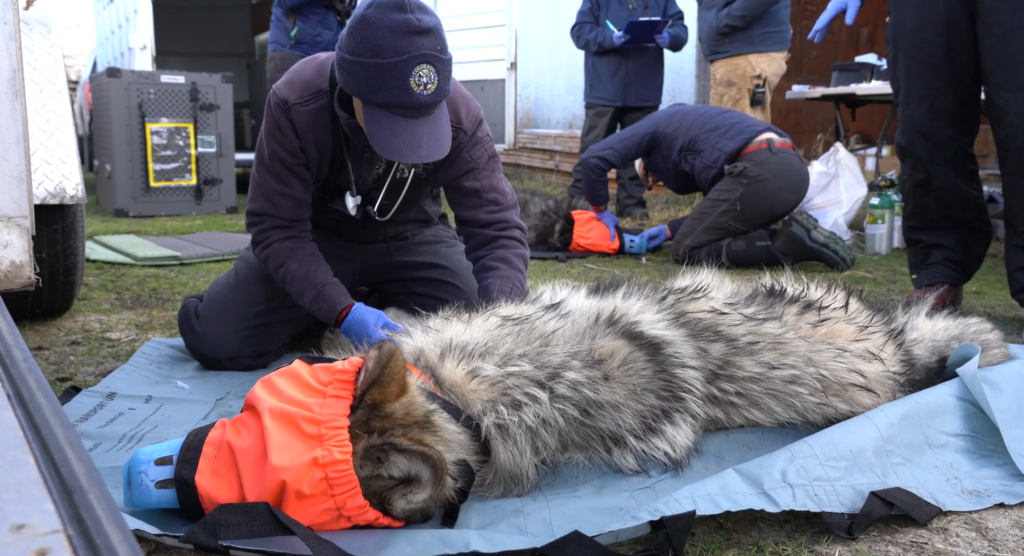
The female wolf of the mating pair for the King Mountain pack has died, bringing total fatalities to 14 out of the 25 animals reintroduced in Colorado. The wolf, identified as No. 2310, was among the 10 wolves brought to...

Who has the power to declare war?
Tom Cronin Bob Loevy
tom-cronin-bob-loevy@coloradopolitics.com
Updated 16 hours ago
Our constitutional framers boldly and ambitiously granted Congress the power to declare war yet granted the executive the responsibility, after war is declared, to supervise war as the commander-in-chief. That worked well until the Cold War began. The U.S. has been...

The delicate, ever-changing dance between politics and religion | SONDERMANN
Eric Sondermann for Colorado Politics
eric_sondermann_for_colorado_politics@coloradopolitics.com
Updated 2 days ago
The dance, really a marathon that brings to mind the classic movie “They Shoot Horses, Don’t They?”, has been going on as long as there have been governments and organized religion. That is to say that this delicate tango has...
Roasts, get yer roasts, here: Capitol M | Week of March 14, 2026
Marianne Goodland
marianne.goodland@coloradopolitics.com
Updated 3 days ago
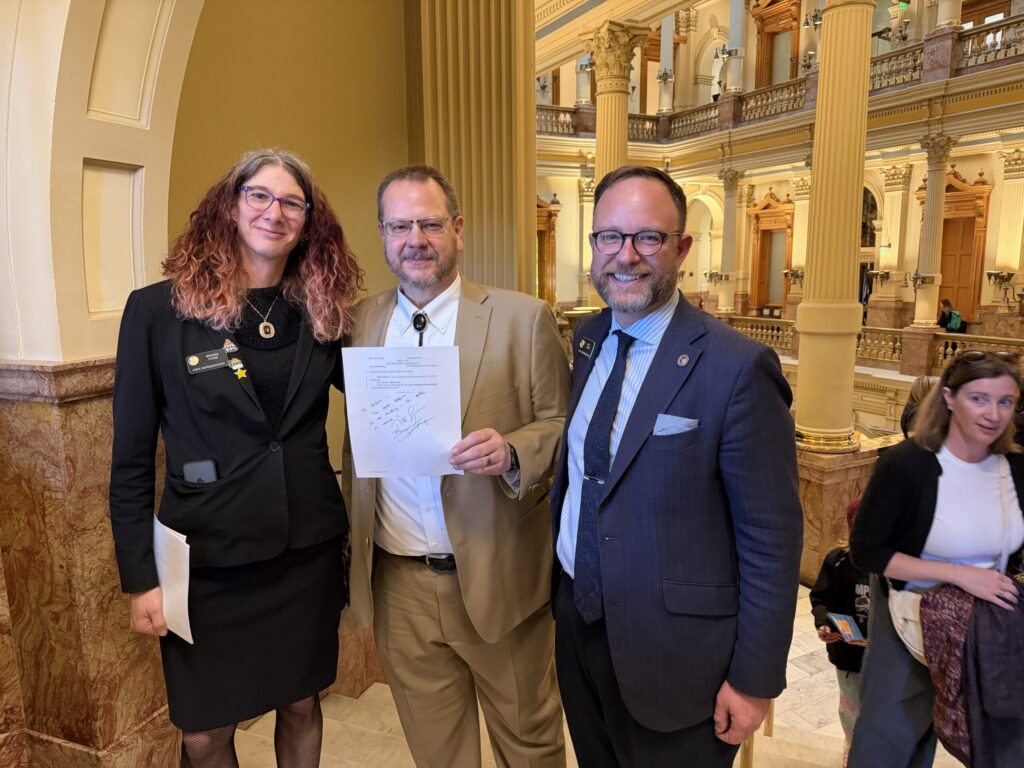
The lighter side of the Capitol, especially in the past week Apparently, the pending and eventual switch to daylight stupid time has put people in some pretty funny moods. And thank goodness! On March 4, the Senate approved the appointments...
Polly Baca elected to DNC | A LOOK BACK
Rachael Wright, Special to Colorado Politics
rachael.wright@coloradopolitics.com
Updated 3 days ago
Forty-Five Years Ago This Week: After her loss to Republican U.S. Rep. Hank Brown the previous year in the race for the 4th Congressional District, state. Sen Polly Baca-Barragan, D-Thortnon, was elected as one of the three vice-chairs of the...

Colorado Politics Calendar Mar. 16-22
Rachael Wright, Special to Colorado Politics
rachael.wright@coloradopolitics.com
Updated 3 days ago
CoPo’s weekly political calendar will help you find political and public-policy events throughout Colorado. It includes candidate and issue campaign events, public policy meetings, court hearings, state and local party conventions, assemblies, debates, rallies, parades, speaking engagements, traveling dignitary appearances,...

Boebert challenger Eileen Laubacher joins lawsuit aimed at blocking her from Democratic assembly
Ernest Luning
ernest.luning@coloradopolitics.com
Updated 15 hours ago
A Denver District Court judge on Thursday permitted Democratic congressional candidate Eileen Laubacher to join a lawsuit filed by one of her primary opponents seeking to prevent Laubacher from participating in the party’s assembly process in a bid to qualify...
House Ethics Committee to begin hearing on Weinberg complaint
Marianne Goodland
marianne.goodland@coloradopolitics.com
Updated 22 hours ago
The House Ethics Committee on Tuesday will begin a hearing requested by Rep. Ron Weinberg, R-Loveland, tied to an ethics complaint filed against him by Rep. Brandi Bradley, R-Roxborough Park. The ethics committee had found probable cause on two issues...

Iran war enters next phase of destroying entire missile supply chain: Hegseth
Brady Knox, Washington Examiner
brady.knox.washington.examiner@gazetteedit.wpenginepowered.com
Updated 23 hours ago
Secretary of War Pete Hegseth said the war with Iran was entering a new phase, as the United States was focusing on destroying Tehran’s defense industrial base. At a Friday Pentagon briefing, Hegseth and Gen. Dan Caine, chairman of the Joint...

Jeffco Public Schools found in violation of Title IX
Sage Kelley
sage.kelley@denvergazette.com
Updated 18 hours ago
Civil rights office: Male students occupy 61 roster positions on girls’ sports teams The U.S. Department of Education announced Friday that the Jeffco Public Schools district violated Title IX by permitting male students to access female bathrooms and compete in...
PREV
PREVIOUS

Trump, Biden dominate Super Tuesday — see the results; Colorado lawmakers begin to tackle 'construction defects' | WHAT YOU NEED TO KNOW
Today is March 6, 2024, and here’s what you need to know: Donald Trump took an early lead over Nikki Haley in Colorado’s Republican presidential primary and kept it as returns posted on Tuesday night. At the same time, President Joe Biden cruised to a win against long-shot opponents in the state’s Democratic primary. The […]

Biden takes on Trump and Republicans in feisty State of the Union speech
WASHINGTON • President Joe Biden took on Donald Trump in a fiery speech to Congress on Thursday, accusing his election rival of threatening U.S. democracy and kowtowing to Russia, as he laid out his case for four more years in the White House. In his last State of the Union address before the election, Biden, […]