

Appeals court says car rental companies can be sued as insurers
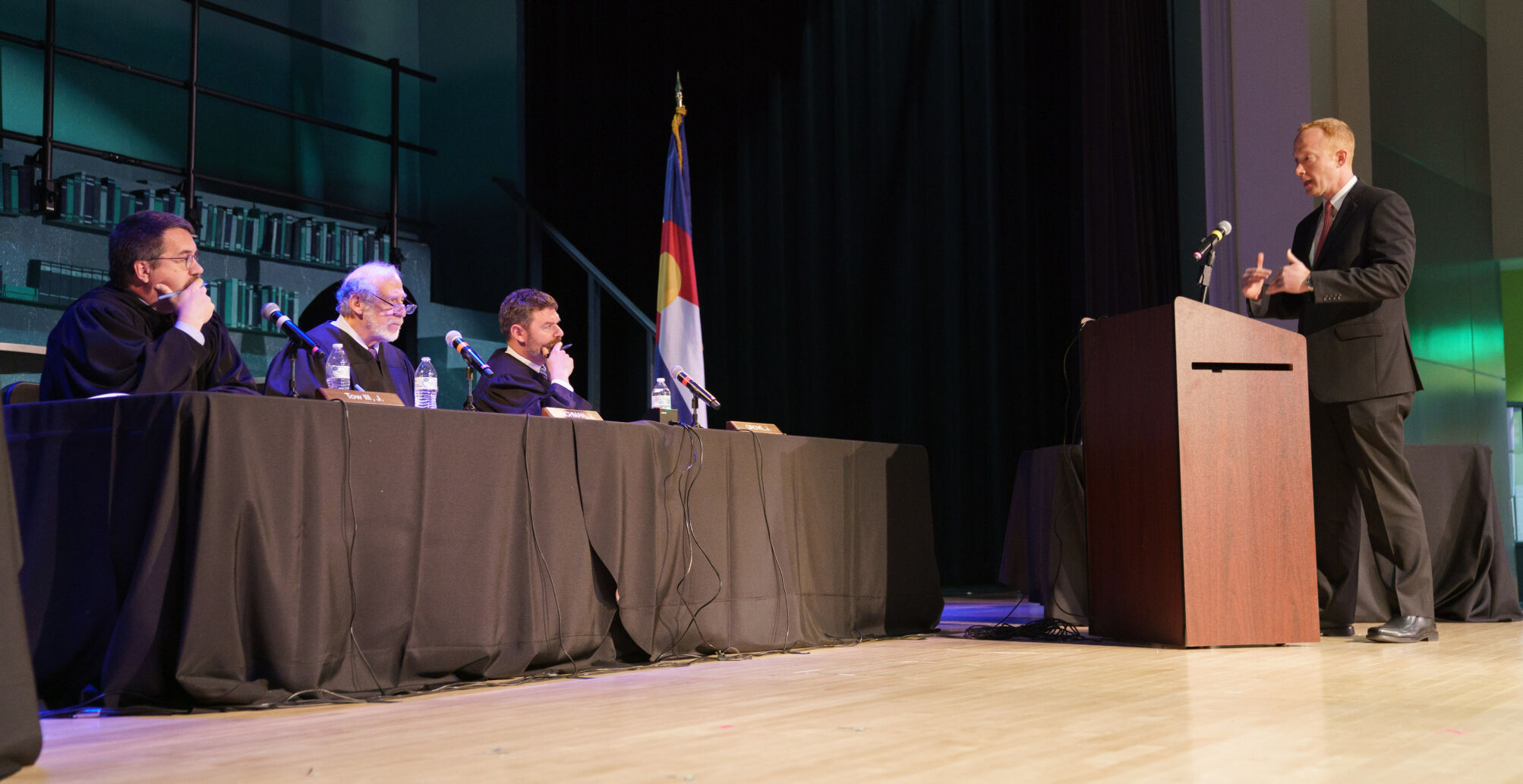
Colorado’s second-highest court clarified last week that car rental companies can be sued as if they were insurance companies when they fail to pay benefits on policies they offer in the course of renting vehicles.
After a hit-and-run driver caused two passengers to sustain more than $700,000 in medical bills, they sought payment from the company that owned the car they were riding in, Hertz. The driver, upon renting the vehicle, opted to purchase insurance covering injuries up to $1 million and the injured passengers alleged Hertz breached that contract.
Hertz insisted it was not the insurer, but the entity being insured. By purchasing extra coverage, the driver and the passengers similarly became insured by Hertz’s own insurer.
But a three-judge panel for the Court of Appeals concluded nothing in state law prevented car rental companies from also being recognized as insurance companies.
“Accordingly, although Hertz was not required to offer (insurance) coverage to its customers, it did. And by offering that and other coverages to customers, it could qualify as an insurer,” wrote Judge David J. Richman in the Feb. 15 opinion.
Case: Babayev v. Hertz Corporation
Decided: February 15, 2024
Jurisdiction: Denver
Ruling: 3-0
Judges: David J. Richman (author)
Stephanie Dunn
Janice B. Davidson
While Hertz emphasized it did not believe a car rental company could never be treated as an insurer, it argued that merely offering “options related to insurance” as part of a vehicle rental contract did not transform it into an insurance company.
The plaintiffs, Stanislav Babayev and Oleg Chikov, sustained serious injuries when a driver hit their car in Aurora and fled the scene. The driver of the rental car, who was not part of the case, purchased supplemental coverage from Hertz in the event of an accident.
Although Hertz offered to settle for a fraction of the plaintiffs’ medical costs, Babayev and Chikov sued Hertz for breach of contract as “a provider of insurance services.”
Hertz countered that it already had an insurer, Chubb, and Hertz’s customers became insured through Chubb as well when they purchased the extra coverage.
In December 2022, Denver District Court Judge Alex C. Myers agreed that Hertz was not legally an insurer.
“The inclusion of an opt-in provision for insurance coverage does not make the rental agreement an insurance policy,” he wrote. “Hertz is not obligated to pay benefits to Plaintiffs (or anyone) under the CHUBB policy – that duty remains with CHUBB.”
On appeal, the plaintiffs pointed to multiple flaws with that logic:
? The rental agreement never mentioned Chubb
? A claims adjuster testified the claim was “their case” – meaning Hertz’s
? A letter from Hertz’s attorney repeatedly cited Hertz’s own “evaluation” of the case
? Hertz needed to approve large-dollar claim payments
“This rental agreement does not say ‘we will get insurance’ or ‘we will list you as an additional insured driver’ or anything of that sort,” the plaintiffs’ attorney, Nelson A. Waneka, told the appellate panel at oral arguments. “They were involved in the entire process and they’re responsible for cutting those checks at the end of the day.”

The Colorado Trial Lawyers Association also weighed in to the court on the plaintiffs’ behalf.
“Hertz performed roles traditionally assigned to insurance carriers, such as determining authority on the case, and the amount of uninsured motorist benefits owed and disputed. By undertaking those functions, Hertz became subject to claims,” wrote attorney Olga Y. Steinreich.
Judge Janice B. Davidson suggested at oral arguments that the question of Hertz’s status would likely reach the Colorado Supreme Court before the case was over.
“No matter what we say, whoever loses will take it upstairs,” she said. “With respect to the Supreme Court, I think that if the issue was something they want to decide, they would decide it. And I think they would.”
Ultimately, the Court of Appeals found Hertz offered to sell the driver insurance coverage, making it an insurer who could be sued for breach of contract. For the plaintiffs’ related claims against the company, which required proof that Hertz “performed the functions of an insurer,” the panel believed the evidence was not yet conclusive. It returned the case to Myers for a trial.
The case is Babayev et al. v. Hertz Corporation.

Colorado Supreme Court blocks ballot initiative defining ‘fees’
Michael Karlik
michael.karlik@coloradopolitics.com
Updated 5 hours ago
The Colorado Supreme Court blocked a proposed ballot initiative on Monday that would have required voter approval for new fees above a certain threshold, while also enshrining a definition of “fee” into the state constitution for the first time. Chief...
Colorado justices, by 5-2, say Longmont detective did not violate suspect’s Miranda rights
Michael Karlik
michael.karlik@coloradopolitics.com
Updated 7 hours ago
The Colorado Supreme Court’s majority ruled on Monday that a Longmont detective did not coerce a suspect into talking by making references to how a judge would look at his character, and by suggesting he may get out of prison...
Colorado justices find Fort Collins police lacked probable cause to arrest suspect in park
Michael Karlik
michael.karlik@coloradopolitics.com
Updated 9 hours ago
The Colorado Supreme Court agreed on Monday that Fort Collins police lacked probable cause to arrest a man for a child sex offense based on his presence in a public park around the time they intended to meet with their...

Supreme Court to hold oral arguments, discipline commission releases report | COURT CRAWL
Michael Karlik
michael.karlik@coloradopolitics.com
Updated 10 hours ago
Welcome to Court Crawl, Colorado Politics’ roundup of news from the third branch of government. The state Supreme Court is holding oral arguments this week, plus Colorado’s judicial discipline commission released its annual report. Colorado Supreme Court news • The Supreme...
Federal judge dismisses developer’s challenge to Denver affordable housing ordinances
Michael Karlik
michael.karlik@coloradopolitics.com
Updated 3 days ago
A federal judge dismissed a homebuilder’s constitutional challenge on Tuesday to a pair of Denver ordinances that impose obligations on developers related to the affordable housing demands created by new construction. Two related companies, redT Homes and redT Capital Partners,...
10th Circuit distances itself from prior decision making it easier to toss prisoner lawsuits
Michael Karlik
michael.karlik@coloradopolitics.com
Updated 3 days ago
The Denver-based federal appeals court distanced itself on Wednesday from its own recent decision that made it easier for prison officials to end civil lawsuits by transferring incarcerated plaintiffs between facilities. A three-judge panel of the U.S. Court of Appeals...

Appeals court overturns Douglas County vehicular homicide conviction due to faulty jury instructions
Michael Karlik
michael.karlik@coloradopolitics.com
Updated 1 day ago
Colorado’s second-highest court overturned a defendant’s vehicular homicide conviction and 12-year prison sentence on Thursday after determining a Douglas County judge omitted key language from the jury instructions that could have resulted in a different outcome. James Paul McDonald was...
Federal judge dismisses malicious prosecution claim against former Denver prosecutor
Michael Karlik
michael.karlik@coloradopolitics.com
Updated 3 days ago
A federal judge concluded on Monday that a former Denver prosecutor could not be sued for allegedly causing the arrests of two plaintiffs after they failed to appear for trial on the scheduled date, even though the trial had been...
Judicial discipline commission reports increased transparency, increased submissions
Michael Karlik
michael.karlik@coloradopolitics.com
Updated 2 days ago
The Colorado Commission on Judicial Discipline received 473 misconduct complaints about judges in 2025, which was nearly 29% higher than in 2024 and substantially greater than any time in the past decade. However, only 31 complaints were referred to the commission...
Colorado Gov. Jared Polis ignites fierce debate after raising clemency questions in Tina Peters case
Marianne Goodland
marianne.goodland@coloradopolitics.com
Updated 5 days ago
Gov. Jared Polis ignited a political firestorm Tuesday night after weighing in on the prison sentences of two former Colorado officials — a Democrat and a Republican — convicted of attempting to influence a public servant. The comments quickly fueled...
PREV
PREVIOUS

Republican Jeff Crank endorsed by Koch network's Americans for Prosperity Action in Colorado's 5th CD
Americans for Prosperity Action, the deep-pocketed political arm of billionaire Charles Koch’s conservative advocacy network, on Thursday announced it’s throwing its support behind Republican Jeff Crank in the crowded GOP primary for the seat held by retiring U.S. Rep. Doug Lamborn. Calling Crank – a podcaster and political consultant who previously served as state director […]

State Rep. Coffman decries slow federal government response to Gulf War Illness | A LOOK BACK
Thirty Years Ago This Week: In a guest column written for The Colorado Statesman, state Rep. Mike Coffman, R-Aurora, reflected on his service during the Gulf War in Operation Desert Storm. Coffman had taken an unpaid leave-of-absence from the legislature to serve. “Thousands of veterans have reported mysterious symptoms from the Persian Gulf War that […]