

Colorado Supreme Court to review felony murder conviction from Arapahoe County
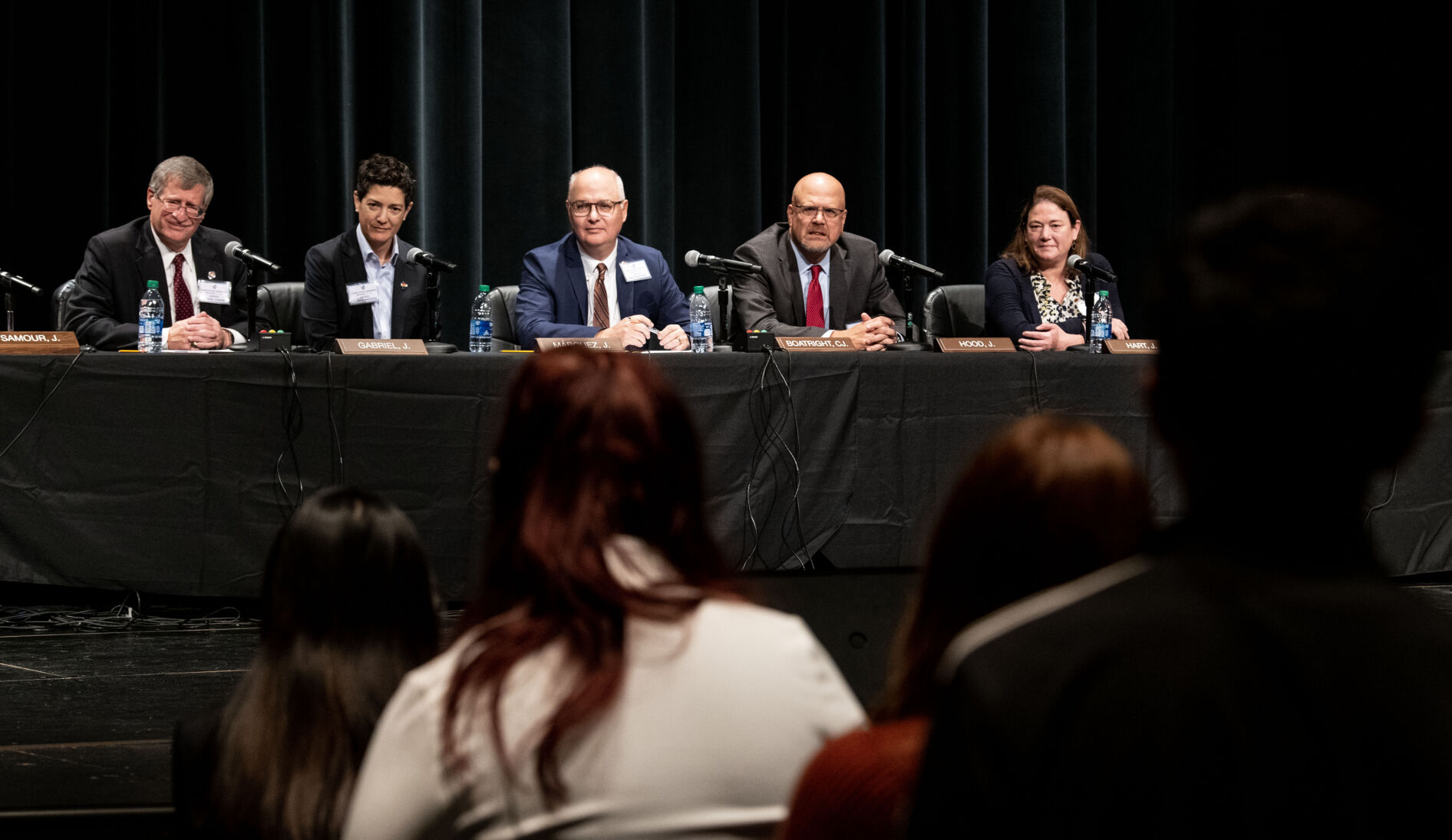
The Colorado Supreme Court announced on Monday that it will review a high-profile murder case out of Arapahoe County in which the state’s second-highest court previously concluded the defendant’s conviction could not stand.
At least three of the court’s seven members must agree to hear a case on appeal.
The justices narrowly turned down a second criminal appeal in which a trial judge allegedly gave a defendant a harsher sentence solely for not saying the words, “I’m sorry.” Only two members of the Supreme Court showed an interest in deciding that case.
Murder defense
Lloyd Chavez IV, a student at Cherokee Trail High School, died in May 2019 after four teenagers attempted to rob him during a meetup to purchase vaping supplies. Demarea Mitchell was the one who fatally shot Chavez, but jurors also convicted Kenneth Alfonso Gallegos of felony murder.
Felony murder does not require that someone pull the trigger and cause another person’s death. Instead, to be guilty of felony murder, someone need only participate in certain serious offenses, like robbery, in which a person happens to die.
Gallegos insisted he did not plan to rob Chavez, nor was he aware the other members of the group had a gun. To that end, he asked Arapahoe County District Court Judge Ben L. Leutwyler to instruct jurors about Gallegos’ affirmative defense to felony murder. An affirmative defense – which would result in an acquittal if the prosecution is unable to disprove any part of it – must be given when there is “some credible evidence” supporting it.
Leutwyler rejected the request and jurors found Gallegos guilty.
Last year, a three-judge panel for the Court of Appeals agreed there was some evidence suggesting Gallegos was unaware of any plan to kill Chavez. Whether or not Gallegos committed the underlying robbery, wrote Judge Lino S. Lipinsky de Orlov, was separate from his defense to murder.
“Gallegos would face a wrongful conviction for first degree murder if denied the right to present a potentially meritorious affirmative defense,” Lipinsky explained.
The prosecution appealed to the Supreme Court insisting felony murder is inextricably linked to the underlying crime, meaning Gallegos could not deny the robbery and avail himself of a defense aimed only at the murder.
The Supreme Court will answer whether Gallegos needed to admit his involvement in the robbery in order to raise his murder defense.
The case is People v. Gallegos.

The defendant who did not say ‘sorry’
In February 2020, Trinidad Renay Marquez shot at multiple people at a Commerce City King Soopers. The victims claimed Marquez and the people with him were harassing them, while Marquez asserted the victims would not leave him alone. Prosecutors charged Marquez with multiple counts of attempted murder, but he pleaded guilty to one assault charge.
Although the offense merited 10 to 32 years in prison, the prosecution agreed to a sentence of 10 to 15 years. During a pre-sentencing interview, Marquez acknowledged he was “not going to say what I did was right, and I should not have let these guys get under my skin. I just don’t think it was right that I was the only one arrested.”
At sentencing, then-Adams County District Court Judge Roberto Ramirez indicated he wanted to hear from Marquez directly about Marquez’s comments that “both sides” needed to be arrested. However, Marquez declined to speak on his own behalf. The judge called his silence “unfortunate.”
“You want to be the tough guy, Mr. Marquez,” Ramirez said. “All you had to do was say, ‘Hey, I’m sorry.’ All you had to do was say, ‘You know what? Whenever I said that it was all their other – it was my victims’ fault, they had it coming to them. Man, I was – you know what? I was just upset. I’m sorry.'”
If Marquez had only said “sorry,” he “would have gotten 10 years. But you want to stay hard, man. You want to be the tough guy,” Ramirez continued. “I gave you the chance. Fifteen years.”
Marquez appealed his 15-year sentence, arguing he had the constitutional right against self-incrimination and Ramirez could not increase Marquez’s sentence as punishment for not speaking.
A Court of Appeals panel upheld the sentence, with the majority concluding Ramirez appropriately relied on Marquez’s defiant comments in the pre-sentencing report. Judge Stephanie Dunn indicated she “reluctantly” would have ordered a new sentencing.
“Indeed, one of the district court’s comments – ‘All you had to say is I’m sorry. You would have gotten ten years’ – causes me concern that the court improperly punished Marquez for refusing to admit guilt or express remorse,” Dunn wrote.
Appealing to the Supreme Court, Marquez argued Ramirez inappropriately tried to “compel” him to testify and penalized him for not complying.
“Mr. Marquez’s right to remain silent is a constitutionally prohibited factor. In fact, the Trial Court appeared to consider no other factor,” wrote attorney Avery Lehr.
Chief Justice Brian D. Boatright and Justice Melissa Hart would have accepted the appeal to determine if Ramirez’s actions were appropriate.
The case is Marquez v. People.



Federal judge dismisses claims against medical contractor for Eagle County jail suicide
Michael Karlik
michael.karlik@coloradopolitics.com
Updated 2 days ago
A federal judge dismissed the claims against a medical contractor for the Eagle County jail and its employees earlier this month, concluding there were insufficient allegations that they violated the constitutional rights of a man who died by suicide in...

Federal judge advances lawsuit seeking overtime compensation for Aurora firefighter trainees
Michael Karlik
michael.karlik@coloradopolitics.com
Updated 2 days ago
A federal judge gave preliminary approval earlier this month to a class of Aurora firefighter trainees who may sue the city over allegations that they were denied overtime pay in violation of federal law. Joseph Elias, who attended Aurora’s fire...
Appeals court says jury not obligated to apply discounts to determine value of stolen merch
Michael Karlik
michael.karlik@coloradopolitics.com
Updated 2 days ago
Colorado’s second-highest court concluded on Thursday that it was up to a Douglas County jury to determine the value of stolen merchandise at a defendant’s theft trial, after both sides presented different estimates of the items’ value. Under state law,...
Public figures have limited path to sue over accusations of criminality, says appeals court
Michael Karlik
michael.karlik@coloradopolitics.com
Updated 2 days ago
Colorado’s second-highest court ruled last week that a public figure cannot sue for defamation solely because a person publicly accuses them of committing a crime, as the statement may be constitutionally protected opinion. A three-judge Court of Appeals panel narrowed...
Federal judge to consider sanctioning ex-Colorado judicial discipline director
Michael Karlik
michael.karlik@coloradopolitics.com
Updated 3 days ago
A federal judge ordered Colorado’s former head of judicial discipline on Wednesday to explain why she should not sanction him for making inaccurate statements about the defendants in his lawsuit against the Colorado Supreme Court and related entities. U.S. District...

Federal judge green-lights trial against Denver officer over race-based enforcement
Michael Karlik
michael.karlik@coloradopolitics.com
Updated 2 days ago
A federal judge green-lit a jury trial last week on a man’s claim that a Denver police officer engaged in racially selective enforcement of the law by arresting him for video recording at a police station, while not arresting a...
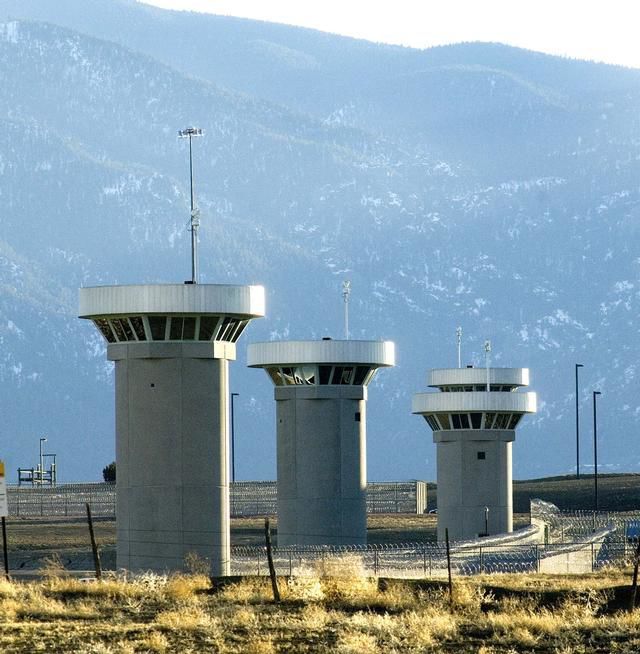
Federal judge says 8 years in solitary confinement not grounds to reduce man’s sentence
Michael Karlik
michael.karlik@coloradopolitics.com
Updated 4 days ago
A federal judge concluded earlier this month that a man’s eight years allegedly spent in solitary confinement did not justify granting his request for a sentence reduction. However, U.S. District Court Senior Judge William J. Martínez signaled his willingness to...
10th Circuit rejects ‘potential for violence’ when police arrest vehicle occupant’s romantic partner
Michael Karlik
michael.karlik@coloradopolitics.com
Updated 3 days ago
The Denver-based federal appeals court rejected the idea on Tuesday that a vehicle occupant poses a danger to police solely because they are romantically involved with another occupant who officers are arresting. By 2-1, a three-judge panel of the U.S....

Colorado justices grill debt collector about compliance with law
Michael Karlik
michael.karlik@coloradopolitics.com
Updated 4 days ago
The Colorado Supreme Court repeatedly pressed a debt collection company last week to explain how its lawsuit against a Boulder woman for an unpaid credit card balance complied with the specific requirements that state lawmakers have created. Portfolio Recovery Associates,...
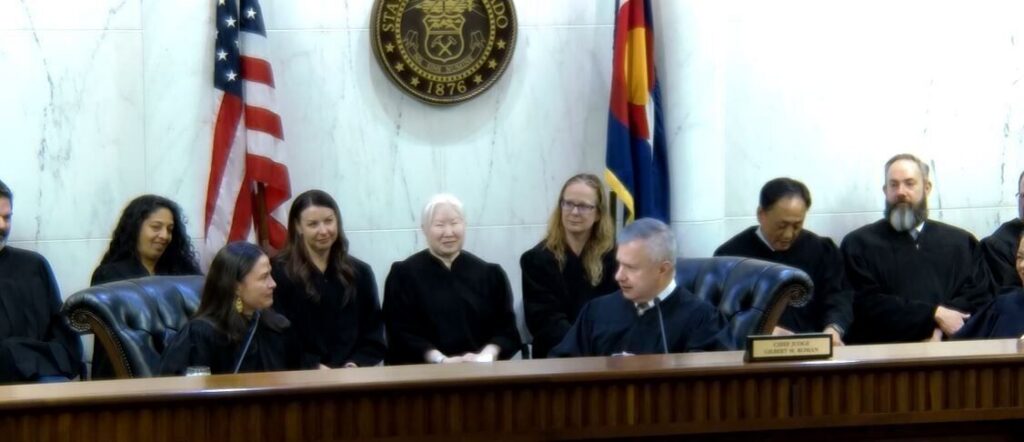
Appeals court agrees defendant’s speech constitutionally protected against El Paso County judge
Michael Karlik
michael.karlik@coloradopolitics.com
Updated 4 days ago
Colorado’s second-highest court agreed last week that a defendant’s critical statements toward an El Paso County judge were constitutionally protected and could not form the basis of a retaliation charge. A three-judge Court of Appeals panel concluded that, in context,...
PREV
PREVIOUS

Colorado legislators look to strengthen data privacy protections
As advancements in artificial intelligence and technology reshape the digital landscape, Colorado lawmakers are considering a slew of bills they say would protect Coloradans from the potential misuse of their personal information. According to a survey by Pew Research Center, 78% of Democrats and 68% of Republicans believe there should be more government regulation on how companies […]
What comes next for Mayorkas following House impeachment?
Homeland Security Secretary Alejandro Mayorkas was impeached on Tuesday, setting the secretary up for a trial in the Senate that likely will place him right back in his position. Mayorkas became the first Cabinet member in nearly 150 years to be impeached after House Republicans led the charge to remove him following several investigative hearings […]