

Science gets politicized in abortion debate | PODIUM

You would have to be living a solitary existence in a remote cave not to be aware of the extreme polarization of our politics. Virtually everyone is concerned by the creeping political polarization in the media, universities, and businesses. However, many of us still cling to the naïve assumption that science is a safe harbor from this polarization. Science is supposed to be the unflinching pursuit of the “truth.” But is it? And might the politicization of science impact Coloradans health and public policy?
That science is not the arbiter of unvarnished truth is a sad but an increasingly undeniable reality. There are many contemporary examples of this, but perhaps the clearest illustration arises from the most vexing source of political polarization — abortion rights vs. prenatal human rights.
Sometimes publication bias simply distorts our understanding of reality. The Turnaway study is widely cited by abortion researchers, abortion rights groups, and mainstream media as the most definitive research on the physical, psychological and economic benefits of abortion. It compared outcomes from women who had an abortion to those who sought an abortion but were denied an abortion because of gestational age limits at different abortion clinics across the country. Few scientists had the willingness to point out the small survey-based study was susceptible to significant participation bias since women with the most unfavorable experiences are the least likely to respond to surveys and the most likely to drop out early. An astounding 83% of survey participants dropped out by the 5-year conclusion of the study. This suggests the reported results may substantially exaggerate the benefits of abortion. The fact that abortion rights advocates conducted and submitted the research is omitted from the required conflict of interest disclosures.
Stay up to speed: Sign up for daily opinion in your inbox Monday-Friday
Selective reporting of research results is another problem. The most common Turnaway reference is, “95% of women who’ve had an abortion say it is the right decision.” What is omitted in both the scientific papers and media reporting is 96% of women denied an abortion eventually no longer wished they had an abortion. Contrary to the notion women are certain about their need for an abortion, the study revealed within one week of being denied an abortion, a whopping 35% no longer wanted one.
Sometimes the belief in abortion rights seems to create scientific blind spots when pursuing reproductive health care research. There has been an urgent need to address increasing infant and maternal mortality in Colorado which disproportionately affect people of color. Premature birth is a significant driver of infant mortality and maternal mortality. In 2021, a panel of experts published an exhaustive analysis of the factors that might contribute to the racial disparities in preterm birth which they acknowledged had a devastating impact in the Black community.
Despite evaluating 33 “hypothesized” causes of the racial disparity, the one cause they omitted was surgical abortions. This is very curious since the connection between surgical abortions and preterm birth has been suggested since at least 2009. Furthermore, it is widely recognized the abortion rate for Black women is four times the rate for White women. It strains credulity to believe reproductive health researchers weren’t influenced by their predisposition toward abortion rights when evaluating the racially disparate factors that lead to the scourge of preterm birth.
Coloradans need to recognize science isn’t always objective and is prone to the same political biases that permeate the rest of our society. You can bet other politically charged issues such as gender-affirming care or racial/ethnic differences in disease prevalences/management are influenced by contemporary politics as well. Coloradans need to remain aware of the politicization of science as activists advance politically charged scientific arguments in an attempt to pass legislation and ballot initiatives this year.
The scientific community should require their members to disclose political/ideological conflicts of interests just as they are required to disclose financial conflicts of interests. And it would behoove clinical researchers and their scientific media allies to go the extra mile to evaluate all the implications of their research, even when it conflicts with their underlying political assumptions.
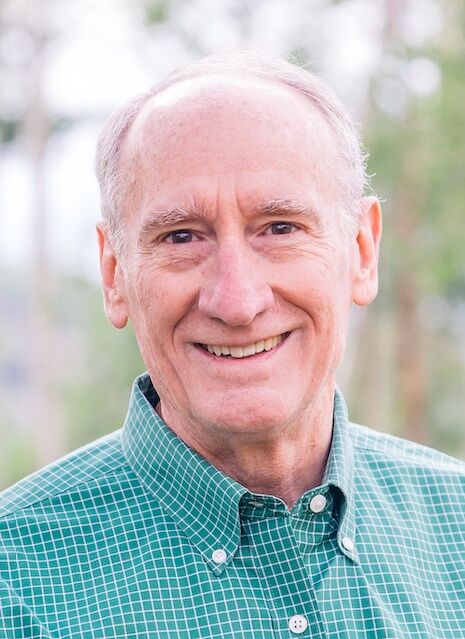
Thomas J. Perille, M.D., is president of Democrats for Life of Colorado.


Colorado is shrinking — time for our elected officials to take notice | Jon Caldara
Jon Caldara
jon-caldara@coloradopolitics.com
Updated 3 days ago
By Jon Caldara Something strange is happening in Colorado — strange enough that the political class should notice. People are leaving Colorado. After years of being one of the fastest-growing states in the nation, net in-migration has stopped and may...
Capitol M: Return to Gold Dome High, 2026 edition, and a salute to old IU
Marianne Goodland
marianne.goodland@coloradopolitics.com
Updated 3 days ago
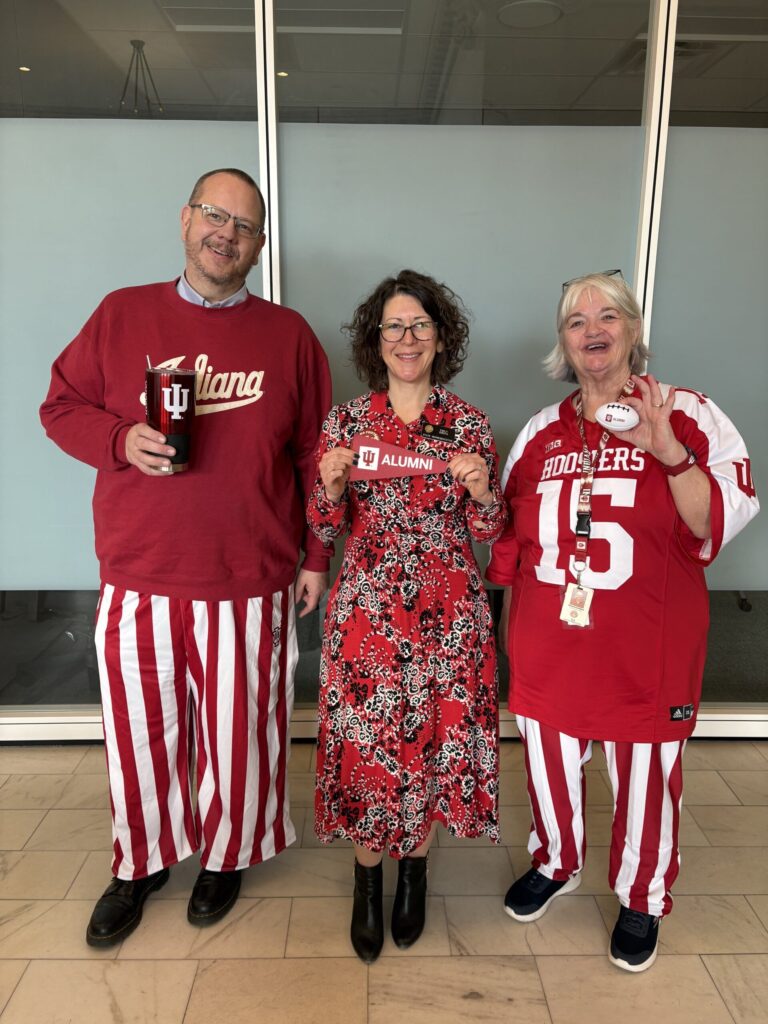
Welcome back, campers! The 2026 legislative session is upon the good citizens of Colorado, and for a few, the first Monday of the session, Jan. 19, was pretty special. There are at least four folks in the Capitol who are...

The biggest accelerant of our political tribalism | SONDERMANN
Eric Sondermann
eric-sondermann@coloradopolitics.com
Updated 4 days ago
In years past, my go-to word in describing our political condition was “polarization.” I used it endlessly and still do on occasion. But as time has moved on, and the divide has only grown in depth and toxicity, polarization no...
The ramifications of President Trump’s pursuit of Greenland | Kelly Sloan
Kelly Sloan
kelly-sloan@coloradopolitics.com
Updated 2 days ago
President Donald Trump has evidently stepped back from his threatened fantasy of invading Greenland — the sovereign territory of a U.S. ally — to which many a sigh of relief has been expressed, including by the markets. There was next...
Let’s find out who’s up to the gubernatorial task post Polis | Paula Noonan
Paula Noonan
paula-noonan@coloradopolitics.com
Updated 3 days ago
Gov. Jared Polis is bold and his policies are bolder than bold. That’s the paraphrase of his State of the State speech to open the 2026 General Assembly and start off his last year in office. His sweeping review of...
We dream, we dare, we decouple — how Colorado turns values into policy | OPINION
Colorado Politics
colorado-politics@coloradopolitics.com
Updated 3 days ago
By Kathy White Gov. Jared Polis’ final State of the State address was a clear victory lap. After eight years as governor, he used the moment to highlight accomplishments, reflect on progress and remind Coloradans what his administration has delivered....
Volunteer homeowners’ associations to be hit with new lot-splitting law | Bob Loevy
Bob Loevy
bob-loevy@coloradopolitics.com
Updated 3 days ago
Volunteer homeowners’ associations in Colorado Springs, particularly those close to the downtown area, are preparing for another attack on single-family zoning from Gov. Jared Polis and the state legislature during the just underway 2026 legislative session. The new proposal is...

Comprehensive energy permitting reform benefits Colorado, the mountain west | PODIUM
Colorado Politics
colorado-politics@coloradopolitics.com
Updated 4 days ago
By Ron Dickson Thank you, U.S. Reps. Gabe Evans and Jeff Hurd, for your participation in the Congressional Problem Solvers Caucus and your support of comprehensive energy permitting reform. We also appreciate U.S. Sen. John Hickenlooper’s continued efforts to enhance...

Colorado kids will die with CDC’s recent changes to vaccine schedule | OPINION
Colorado Politics
colorado-politics@coloradopolitics.com
Updated 4 days ago
By Connie Ingram and Lesley Thompson No parent or grandparent should ever face the terror of watching a child fight for their life against a disease that could have been prevented. Yet more families could be put in exactly this...
Solutions right in front of us to solve political extremism crisis | OPINION
Colorado Politics
colorado-politics@coloradopolitics.com
Updated 4 days ago
By Landon Mascareñaz Everywhere I went these past two weeks, the sentiment was the same: “What are we going to do about political extremism and the conflict in this country?” I heard it from folks on the left, right and...
PREV
PREVIOUS
'Smarter' cities, communities tackle Colorado's policy challenges | OPINION
Tyler Svitak Earlier this month, state legislators packed into the House chamber for Gov. Jared Polis’s State of the State address, in which he outlined some of the top issues facing Coloradans today. It’s no surprise housing, public safety and the state’s transportation network were at the top of the list. Fortunately, public- and private-sector […]

Buckley is a boon to Colorado and country | Denver Gazette
Even its name makes clear that Buckley Space Force Base in Aurora is on the leading edge of our nation’s defense. U.S. national security depends more than ever on our ability to develop and deploy the latest satellite technology to keep the peace high above the Earth in space. At the same time, Buckley’s role […]