

In house or privatize: Comparing indigent legal defense in Aurora, Denver and Colorado Springs
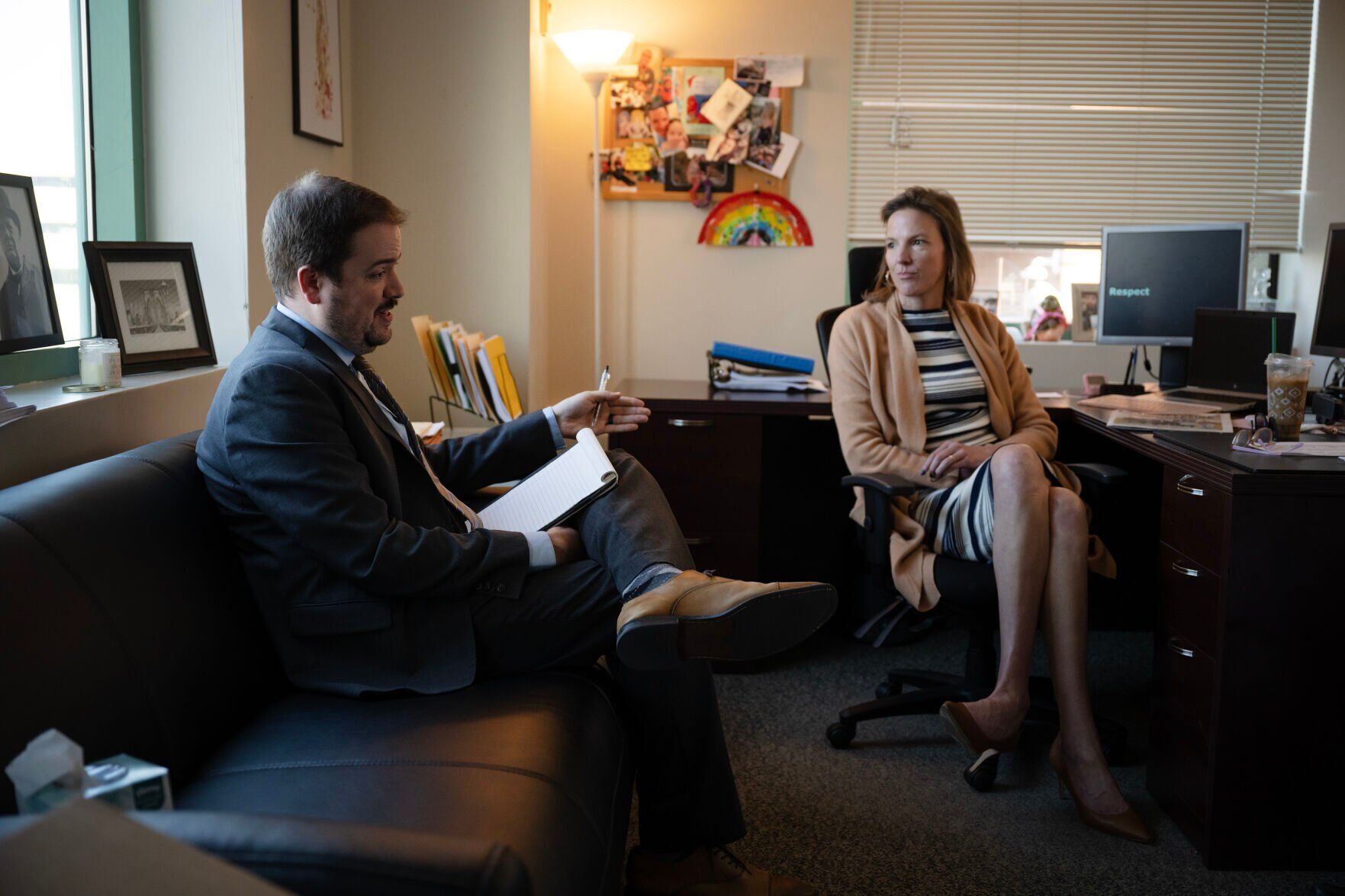
As Aurora’s policymakers debate the future of its Public Defender’s Office, an analysis of Colorado’s two other biggest cities shows major differences in structure and costs, largely driven by the types of cases their indigent legal teams handle.
Both Denver and Aurora have in-house public defender’s offices, while Colorado Springs contracts out for indigent client defense.
The similarities and differences can be instructive to Aurora’s councilmembers, who are weighing the costs and benefits of privatizing its public defender’s office.
Denver and Aurora are unique in having in-house public defenders. Only a few other municipalities in Colorado do.
But Denver and Aurora also handle domestic violence cases, which are a lot more complex than other crimes, such as motor vehicle theft. In most Colorado cities, domestic violence cases are not handled by municipal courts.
The comparison between the municipal court systems in Aurora and Colorado Springs isn’t “apples to apples,” noted Judge HayDen Kane, the administrator of Colorado Springs’ municipal court.
Aurora sent out a request for proposals in January to determine the financial impact of contracting out for public defense services and getting rid of the city’s in-house public defender’s office.
Councilmembers want to know if the move would save the city money.
During a hearing in January, Aurora Interim City Manager Jason Batchelor noted the city is an “outlier” because very few Colorado municipalities have an in-house public defender’s office.
Aurora Chief Deputy Public Defender Elizabeth Cadiz countered that the council should also consider other ways in which Aurora, along with Denver, is an outlier, noting the two cities’ public defender’s offices have prosecuted well over 1,000 domestic violence cases a year for the last five years, and Aurora is among the most diverse cities in Colorado.
She said both facts about Aurora — the handling of domestic cases and its diverse makeup — make the city, indeed, an outlier, so that “you should consider with great caution the decisions in this matter.”
In addition to domestic violence, Aurora’s municipal court handles cases involving the city’s mandatory minimum sentence crimes, which include shoplifting, car theft and failure to appear — following a tough-on-crime strategy the City Council supports to curb these cases.
Denver and Colorado Springs have not adopted such mandatory minimum sentences.
At a recent council meeting, Cadiz, two Aurora councilmembers and other officials said the RFP, in its current form, does not fully encompass the public defender’s role or the extra costs that come with privatization. With privatization would also come increased incarceration costs, Cadiz said.
Supporters like Councilmember Dustin Zvonek argue that privatizing the service would not end access to a public defender for those who qualify, but it would likely save the city money.
In March, staff will present the RFP’s findings to the council, at which time it will decide whether to move forward with privatization.
Differences in cost
Aurora’s 2023 adopted budget allocated $2.2 million to its public defender’s office. By comparison, Denver appropriated $4.5 million to its municipal public defender’s office last year. Colorado Springs spent $580,000 on defense lawyers in 2023, said Kane, the city court administrator.
Kane’s office saw four total jury trials in 2022.
“Colorado Springs just sees it as cost beneficial to contract out with private attorneys,” Kane said. “Frankly, we’re very happy with the services we’re getting from these lawyers.”
When it comes to contracts, Colorado Springs saves money because it doesn’t have to pay for building costs, legal support insurance, salaries and benefits like Denver and Aurora do, Kane said.
Cadiz, the Aurora defender, insisted that contracting out public defenders would end up being more expensive if it’s done right, given the number of cases her office handles.
“If the representation provided in a contract, or some other way, is upholding the Sixth Amendment, then paying hourly for representation and on a case-by-case basis will add up,” Cadiz said.
Kane, who agreed that comparing Aurora and Colorado Springs’ courts is not an “apples to apples” comparison, said Aurora’s “ordinance games” are the reason it spends so much on public defense.
“When I hire a contractor, all I do is pay them per case. I don’t have to pay benefits or building insurance,” Kane said. “The real answer why they’re spending so much money out there is their ordinance games.”
Differences in types of cases
Colorado Springs (486,000), Denver (713,000) and Aurora (394,000) are the three largest cities by population in Colorado, but their courts aren’t necessarily structured based on size.
Denver’s chief public defender, Colette Tvedt, said her office represents about 10,000 clients per year. With a budget of $4.5 million for indigent legal defense, that translates to $450 per client.
In Denver, the public defenders’ clients are generally charged with low-level offenses, such as trespassing, disturbing the peace, shoplifting and minor assault. Tvedt’s office also handles domestic violence cases.
“We are in court seven days a week,” Tvedt said.
In addition to being in court, Denver’s public defenders provide services to clients to help them get back on their feet, Tvedt said, claiming that individuals who end up with public defenders are frequently facing charges — such as shoplifting or trespassing — that arise out of “life situations.”
“So many of our clients are charged with crimes based upon their situation in life,” Tvedt said. “It’s one thing to get a not guilty, but it’s another thing to really help someone get back on their feet or try to help them in any way that we can.”
Aurora’s in-house public defender’s office handles similar cases, including domestic violence, according to Cadiz.
Aurora adopted three mandatory minimum sentences for motor vehicle theft, shoplifting over $300 and for failure to appear. Aurora’s public defenders can be appointed on all of those types of cases.
Aurora’s officials have been touting notable decreases in crime across the city, noting statistics from the police department showing violent crime going down 14.5% compared to the year before. Robberies also took a nosedive — down 33% — while murders decreased 12%.
Notably, the city’s motor vehicle thefts went down 24%, a decrease that mirrored the 21% fewer auto thefts recorded statewide from 2022 to 2023, which officials partly attributed to legislation that increased the severity of auto theft crimes by not tying the charges to the value of the stolen vehicle and making all car thefts a felony.
Under the new law, penalties for motor vehicle theft are now tied to behavior, rather than vehicle value.
Aurora’s public defenders handled over 4,000 cases in 2023. With a public defender’s budget of $2.2 million, that comes out to $550 per case.
Like public defenders in Denver, Aurora’s public defenders provide assistance to clients that extends beyond the courtroom, Cadiz said.
Their office partners with Aurora Mental Health and independent psychologists, who conduct competency evaluations. The office also employs an investigator.
“We do all of those things in addition to anything and everything you could possibly think of for helping clients, like directing them to resources to help them get clothes or food, find childcare when they’re expected to be in court, speaking to family members, etc.,” Cadiz said.
Meanwhile, Colorado Springs neither handles domestic violence cases nor has mandatory jail minimums for certain crimes.
Colorado Springs’ municipal court contracts out lawyers to work with indigent clients, Kane said. Most of their clients come from the city’s homeless population and tend to be charged with low-level offenses, such as shoplifting, trespassing and camping.
In 2023, Colorado Springs contracted defense lawyers for more than 3,000 cases, which translates to nearly $200 per case, based on the city’s contractual spending for outside attorneys.
The city has six contracted defense lawyers to choose from when an indigent defendant needs a court-appointed lawyer, Kane said. The city tries to keep its lawyers’ case loads balanced.
Handling domestic violence cases completely changes the structure of a court, Kane said.
“It’s a messy legal world, it just is,” Kane said. “The messier things are, the more legal resources get consumed to get those resolved.”
Broadly speaking, domestic violence cases include domestic law, divorces and child custody additions that are much more complicated and time consuming.
Kane said these kinds of cases are better suited for county court because county and state courts have more resources to better handle them.
Denver public defender stands with Aurora public defender
Tvedt said her office stands with Aurora Public Defender’s Office, arguing the latter provides “excellent representation to the most vulnerable citizens” and it “would be devastating to lose them.”
Aurora established its public defender’s office in 1989 and in-house public defenders have been serving Aurora’s indigent clients in the city since the new municipal court opened to the public in January 1990.
The Public Defender’s Commission was established in May 1992 to govern the office and “ensures that indigent clients are represented in accordance to its strict guidelines,” according to the city’s website.
Tvedt argued that contracting out lawyers for indigent clients isn’t the same as having in-house public defenders, who have the institutional knowledge about the city’s court system, officers, attorneys and services.
Tvedt also claimed that municipal court and juvenile courts are the “birthplace of mass incarceration in this country,” saying people who are the most vulnerable get caught up in the system.
“That leads to people pleading out without proper legal advice from very experienced lawyers,” Tvedt said, saying public defenders are a big part of the solution to that.
At a recent meeting, Aurora Councilmember Danielle Jurinsky said she takes offense to suggestions the council wouldn’t take care in choosing competent defense for its constituents. She also pushed back against the notion that only in-house defenders can do the job.
“This is not solely about money and what potential savings would be. There would have to be a standard,” Jurinsky said. “I also find it very disingenuous to potentially say that there are no public defenders in this area who have access to investigators and can do research and investigations.”
Colorado Springs Judge Kane said that, while he understands the cost and benefits of privatizing, since he pays less to contract defense lawyers than he would if he had an in-house office, there are differences in municipal courts that make the cost benefits more muddy.
“I think the overarching answer to … what the difference is,” he said, “is the ordinance schemes and specifically domestic violence. Aurora handles those two types of cases and we don’t.”
In talking to Aurora’s municipal court staff, Kane said he discovered that a vast majority of the deployments from their public defender’s office are due to domestic violence and auto theft
“There’s the money side of it. But I mean if we had to handle domestic violence here, it would completely change our business model,” Kane said.


CoComandering? | Miller Hudson
Miller Hudson
miller-hudson@coloradopolitics.com
Updated 1 day ago
At 8 a.m., Friday morning, Aug. 28, 70 or 80 mostly bleary-eyed visitors to the Transportation Technology Center outside Pueblo packed a conference room to attend the Front Range Passenger Rail District’s (FRPRD) Board meeting. With the exception of those...

Even Dem court couldn’t abide theft of GOP seats | Dick Wadhams
Dick Wadhams
dick-wadhams@coloradopolitics.com
Updated 1 day ago
Thanks to the Colorado Supreme Court, Colorado voters will be able to reaffirm their support for the Independent Congressional Redistricting Commission after the court struck down the Democratic scheme to steal three Republican congressional seats. Billionaire-funded national Democratic groups from...

Chaotic meeting began with attempt to squelch public comment | Rachel Gabel
Rachel Gabel
rachel-gabel@coloradopolitics.com
Updated 1 day ago
When Attorney General Phil Weiser takes the governor’s office in January, he must immediately address the chaos of the latest round of appointees to the Colorado Parks and Wildlife Commission to assure stakeholders he’s willing to put pressure on the...

Graduated income tax proposal is a flat tax in disguise | Jon Caldara
Jon Caldara
jon-caldara@coloradopolitics.com
Updated 4 days ago
“Youth is wasted on all the wrong people.” That’s one of my favorite lines from “It’s a Wonderful Life.” The older I get, the less it sounds like a joke. Every generation inherits victories it did not win. Young Americans...

AI optimism vs. anxiety — podcasters debate this every night | Tom Cronin
Tom Cronin
tom-cronin@coloradopolitics.com
Updated 2 days ago
President Donald Trump, CNBC’s “Mad Money” host Jim Cramer and entrepreneurial “accelerationists” celebrate the AI revolution and the infrastructure data-center build-out. Cramer recently gushed, “I like data centers so much that I wish I lived in one.” Trump criticized any community...

Parenting from prison: Inmates hope to be present in their children’s lives, while physically absent
Marianne Goodland
marianne.goodland@coloradopolitics.com
Updated 2 hours ago
The room was decorated with balloons, the tables sparking bright with colors as the smell of pizza and cake wafted through the air. As did music. This was, after all, a father-daughter dance. Except this was not a typical father-daughter...

The dissonance of an American Jew thinking about Israel | SONDERMANN
Eric Sondermann
eric-sondermann@coloradopolitics.com
Updated 4 days ago
The Jewish High Holidays will soon be upon us. The third anniversary of Oct. 7 will then quickly follow. Three weeks later, Israeli voters will head to the polls to elect all 120 members of its parliament, the Knesset and...

Blue-collar support trends highlighted GOP gains among rank‑and‑file workers | A LOOK BACK
Rachael Wright, Special to Colorado Politics
rachael.wright@coloradopolitics.com
Updated 4 days ago
Forty-five years ago this week: Kathy Oatis of the Colorado AFL-CIO’s Committee on Political Education said that organized labor had a negative image with the American voter. “I don’t think the country is against us,” said Oatis. “I think the...

Colorado Politics Calendar Sept. 7-13
Rachael Wright, Special to Colorado Politics
rachael.wright@coloradopolitics.com
Updated 5 days ago
CoPo’s weekly political calendar will help you find political and public-policy events throughout Colorado. It includes candidate and issue campaign events, public policy meetings, court hearings, state and local party conventions, assemblies, debates, rallies, parades, speaking engagements, traveling dignitary appearances,...
Colorado House ethics committee issues ‘stern letter’ to Democrat over caucus funds mismanagement
Marianne Goodland
marianne.goodland@coloradopolitics.com
Updated 1 day ago
The Colorado House ethics committee on Friday voted unanimously to issue a “stern letter” to Rep. Mandy Lindsay, D-Aurora, regarding her mismanagement of House Democratic caucus funds. The committee further voted to request that Lindsay resign as Democratic Caucus co-chair...