

Johnston reshuffles Denver’s homeless | Denver Gazette
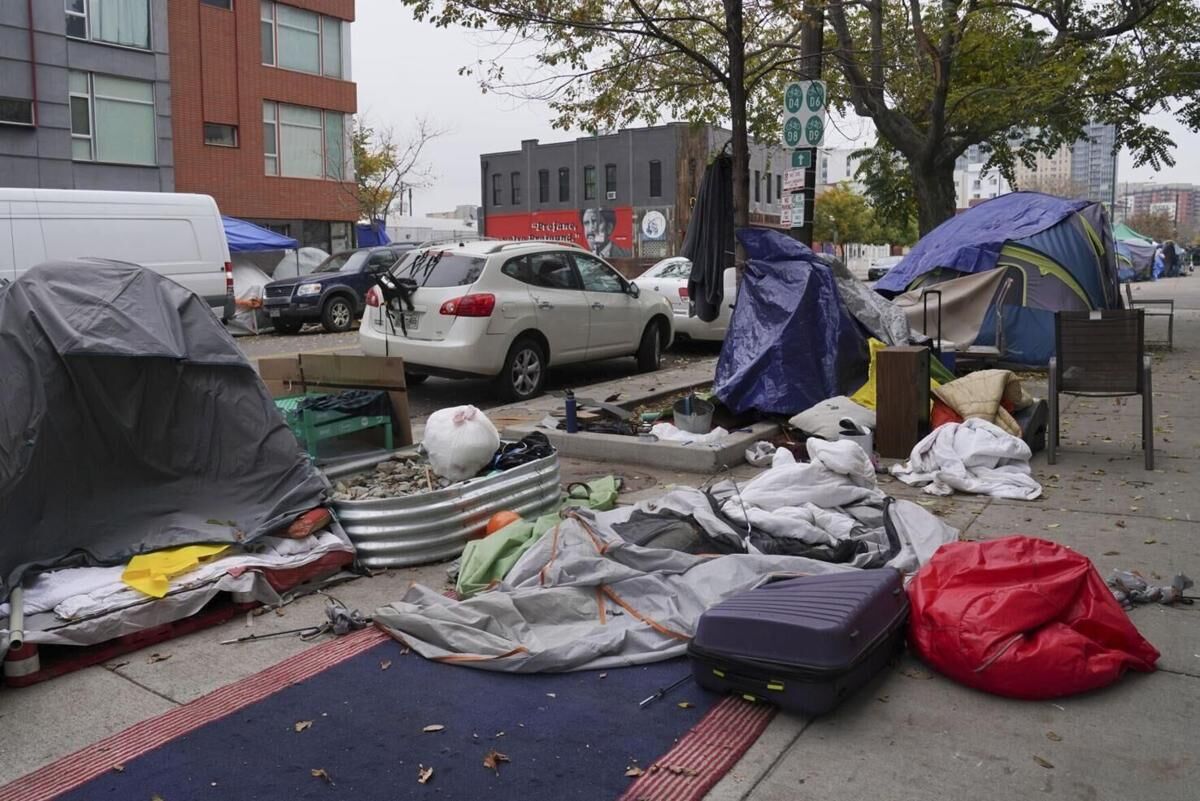
After spending half a year and $45 million in tax dollars, freshman Denver Mayor Mike Johnston surprised no one this week when he declared he’d met his goal of moving some 1,000 of Denver’s diehard street dwellers indoors by year’s end.
He seemed bound and determined to fulfill that much-publicized pledge – made last July when he took office – even if he had to book every available hotel room in Denver. Indeed, his administration spent tens of millions of dollars in record time to acquire hotels, buy “tiny” shelters and set up “micro-communities” to accommodate the city’s urban “campers.”
To Johnston, his New Year’s Eve announcement no doubt represented some sort of victory.
Rank-and-file residents of the city, however, are left to wonder: a victory over what?
Stay up to speed: Sign up for daily opinion in your inbox Monday-Friday
Sure, the effort did get some people off the streets for however long that lasts. Authorities dismantled some of the wretched shantytowns that have sprouted up around the city in disregard of the law. It’s short-term relief for beleaguered homeowners and embattled small businesses that endured the stench, noise, rowdy behavior, panhandling, petty crime and blight.
Yet, the mayor’s approach is unlikely to achieve any lasting success because it is fundamentally flawed. Simply housing people temporarily as an end in itself is, in fact, a dead end. It’s a costly one, too, at about $45,000 per person housed.
Denver’s drifters are by and large addicted to drugs or alcohol. For many, that also has led to declining mental and physical health. Their addictions – not Denver’s high rents or some broader economic injustice – are what has kept most of them on the streets.
The premise of the Johnston administration’s plan is “housing first,” i.e., finding indoor space for habitual street denizens – to continue the very lifestyle that landed them on the streets in the first place. That ignores the cumulative, extensive damage they have done to themselves through substance abuse. It politely sidesteps their need to mend their ways.
They are “homeless” and, for the most part, jobless only because they have left themselves incapable of holding a job or affording a place to stay.
That’s why it’s a sure bet most of those “housed” in the mayor’s six-month blitz will be back on the streets sooner or later – reportedly, some already are – still dependent on drugs or alcohol. Until then, they’ll be dependent on the kindness of taxpayers. All the while, few will make the return to a more productive life or even get back on their feet.
As we noted here recently, data so far on the mayor’s efforts to relocate and corral those on the streets suggests very few will sign up for rehab or other services that the program merely offers – but doesn’t require. As of Tuesday, only one out of more than 1,000 had entered inpatient rehab.
None of the participants is getting the help they truly need – a compassionate, helping hand up. Not a handout. No one is charting a path for their rehabilitation as functional members of the community.
Of course, the mayor will be able to check a box – “promise kept” – on his political agenda. So, there’s that.
Johnston crowed to The Gazette: “It’s both inspiring for the lives that are being transformed and, I think, for the city to have a sense that we think these hard problems are solved again – if we really put our shoulder to the wheel, big things are possible.”
In reality, the mayor’s effort has “solved” nothing – beyond reshuffling some of Denver’s endless procession of street dwellers.
Denver Gazette Editorial Board


The danger of when government goes rogue | Paula Noonan
Paula Noonan
paula-noonan@coloradopolitics.com
Updated 6 hours ago
It’s dangerous, even fatal, when government goes rogue whether in a democracy or autocracy. Government officials who ignore or taunt laws that constrain bad acts should be given the heave ho. We’re witnessing these egregious scenarios now at the federal...

The Future of Colorado condo development | OPINION
Colorado Politics
colorado-politics@coloradopolitics.com
Updated 6 hours ago
By Peter LiFari For nearly two decades, the story of condominium construction in Colorado has been mistold, misunderstood and misrepresented. This outcome reflects the cumulative effect of more than two decades of Colorado policy, beginning with the Construction Defect Action Reform...
George Brauchler on Colorado’s ‘Jailbreak’ | The OpEdge Podcast
Tony Olivero
tony.olivero@gazette.com
Updated 19 hours ago
We are pleased to introduce the inaugural episode of The OpEdge — The Gazette’s new opinion podcast. District Attorney and law enforcement hawk George Brauchler tells host and investigative columnist Jimmy Sengenberger what lawbreakers can expect in the 23rd Judicial District. Brauchler recaps...
Update, safeguard Colorado’s mail ballot with voter ID | PODIUM
Colorado Politics
colorado-politics@coloradopolitics.com
Updated 21 hours ago
By Chuck Broerman and Suzanne Taheri Coloradans often refer to our state as a leader for accessible and secure elections. We have led on all-mail ballots, automatic voter registration, and same-day registration, turning Colorado into a model for modern elections...

Preserving access for vulnerable communities should be a top priority in Congress | OPINION
Colorado Politics
colorado-politics@coloradopolitics.com
Updated 21 hours ago
By Tony Henderson As both a minister and as president of the NAACP Denver, I believe access to high-quality, accessible health care is a right that should be afforded to each and every one of us. To that end, Medicare...

Yet again, when rights are in conflict | Hal Bidlack
Hal Bidlack
hal-bidlack@coloradopolitics.com
Updated 2 days ago
I admit, it is going to take quite a bit of self-control to not have this entire column end up being yet another screed about a certain president who continues to shock the world in his race to the bottom...

Turn blueprint into action with the Outdoors Opportunities Act | OPINION
Kent Thiry
kent-thiry@gazette.com
Updated 2 days ago
Nearly a year has passed since Gov. Jared Polis, Colorado Parks and Wildlife, the Colorado Department of Natural Resources, Colorado’s Outdoor Recreation Industry Office and other key partners finalized the visionary Colorado Outdoor Strategy, establishing the framework to ensure Colorado’s...

Let Colorado’s communities govern their own neighborhoods | OPINION
Colorado Politics
colorado-politics@coloradopolitics.com
Updated 2 days ago
By Jeff Bailey and Cindy Bailey Coloradans have always done things their own way. From how we manage our land to how we build our economies, the instinct to govern locally — to trust mayors, councils and commissioners over distant...

Threats inside and out loom for Colorado’s Republicans | Dick Wadhams
Dick Wadhams
dick-wadhams@coloradopolitics.com
Updated 4 days ago
Colorado Republicans made strides in 2024 despite an insidious state chairman who tried to defeat successful Republican candidates. Newly elected U.S. Reps. Gabe Evans, Jeff Hurd and Jeff Crank fought off unethical opposition from their own state party chairman, making...

Is it time for both parties to bail on Colorado’s political nominating system? | Miller Hudson
Miller Hudson
miller-hudson@coloradopolitics.com
Updated 4 days ago
Cracks are beginning to appear in Colorado’s political nominating system. Recently, Mario Nicolais, a formerly Republican-leaning pundit, and Doug Friednash, former Democratic legislator, have opined regarding the imminent demise of the caucus/assembly framework which controls partisan candidate selection. There has...
PREV
PREVIOUS

For Bennet, a chance at a 'profile in courage' with Colorado education | NOONAN
Paula Noonan Profiles in courage are hard to come by these days. If “Profiles in Courage” author and former President John Kennedy, from the day of the Sandy Hook Elementary School slaughter a decade ago to now, examined courage in relation to safe firearms/gun control legislation he’d be hard-pressed to find any. The Washington Post […]

Ten years in, Colorado needs stricter pot policies | Colorado Springs Gazette
The best news to emerge from Colorado’s decade-long experiment with legal recreational marijuana – today being the 10th anniversary – could be the claim by a Big Marijuana mouthpiece in The Gazette last week that the state is “killing its own industry with regulation and taxes.” If only it were true. Regulation and taxation of […]