

The math and definitions of environmental social justice | NOONAN
The Energy and Carbon Management Commission (ECMC) is about to get into the dictionary and the math business. HB23-1294, Pollution Protection Measures, tasks the ECMC with defining two terms: “incremental” and “cumulative.” The legislation then tasks the commission with adding up incremental pollution impacts to determine the cumulative effects of oil and gas extraction on the environment, which includes the people of Colorado and not just the bottom lines of oil and gas operators.
The two terms are significant to the study of air pollution that has become an annual summer event in Colorado as the chemicals from vehicle emissions and oil and gas extraction mix with sunlight to create ozone that irritates human tissue and turns up the heat on the planet.
The words are also important to the concept of environmental social justice which embraces the idea that the deleterious overall effects of pollution too often impact mostly low-income families living close to pollution sources.
In its previous iteration as the Colorado Oil and Gas Conservation Commission, whose mission was to “foster” oil and gas development, air pollution was viewed through near-sighted lenses. Pollution studies relied on data and analysis from industry rather than from independent sources. This data were looked at in incremental bits like the individual dots in a pointillist painting. The commission never put the dots together to create a full picture.
Stay up to speed: Sign-up for daily opinion in your inbox Monday-Friday
The commission, in its old and new form, has been told twice by the legislature to fix its rules on oil and gas development. SB19-181 changed the commission’s mission from “fostering” oil and gas drilling to regulating extraction in a manner that “protects public health and the environment.” In the 2023 General Assembly, like parents telling a child the second time to put out the trash, the legislature passed HB23-1294 demanding new rules to bring Colorado into compliance with federal pollution law and international agreements.
The new rules must come to terms with the terms “incremental” and “cumulative,” especially “cumulative.” This shouldn’t be a tough job since the federal government put together this definition more than 50 years ago through the National Environmental Policy Act (NEPA).
NEPA states the following: “Cumulative impact is the impact on the environment, which results from the incremental impact of the action when added to other past, present, and reasonably foreseeable future actions regardless of what agency… or person undertakes such other actions. (40 CFR § 1508.8).”
Fifty years of case law on this definition says an oil and gas leak cannot be considered in isolation. First, a leak affects many parts of the environment. Second, in the extraction industry, a leak is one of many leaks. When they are accumulated as a whole, they have brought us to a tipping point in climate catastrophe.
In a counter-intuitive goal, our political and economic leaders have stated Colorado should expand its oil and gas drilling by 30%. Our political leaders also have stated the state must reduce greenhouse gas emissions and other pollutants to comply with various national agreements such as the Paris Accords. Isn’t it impossible to add and subtract two opposing numbers acting on the same number simultaneously and reach the correct numbers for two opposing goals simultaneously?
NEPA requires Environmental Impact Statements (EIS) as part of pollution regulation. An EIS examines various options related to proposed projects to mitigate pollution. Currently in Colorado’s model, mitigation involves such actions as rearranging well sites or changing equipment from storage tanks to pipes.
A NEPA EIS goes further by requiring a no-action option in which the alternative to drilling 100 wells in a well pad would be not drilling new wells at all. Such an analysis would put oil and gas projects under a far-sighted lens.
As an example, mitigation assessments based on changed rules might include expanding renewable energy or doing nothing. Colorado’s current oil and gas operations produce a lot of energy, enough to satisfy the needs of the state with excess shipped out of state, often to foreign buyers. A NEPA-based EIS would examine whether it would be smarter environmentally and economically to leave the oil or gas in the ground in the short term rather than producing and shipping this resource to other countries.
With this deeper analysis, the state can determine whether the risk of pollution, especially for populations close to pollution sources, is too great. History suggests the ECMC needs this kind of rigor in its analysis as the vast majority of requests for drilling permits currently are granted.
A great deal is at stake in this rule-writing. The legislature has spoken. Will the executive branch of government through this ECMC hear what the people’s representatives have asked them to do, twice?
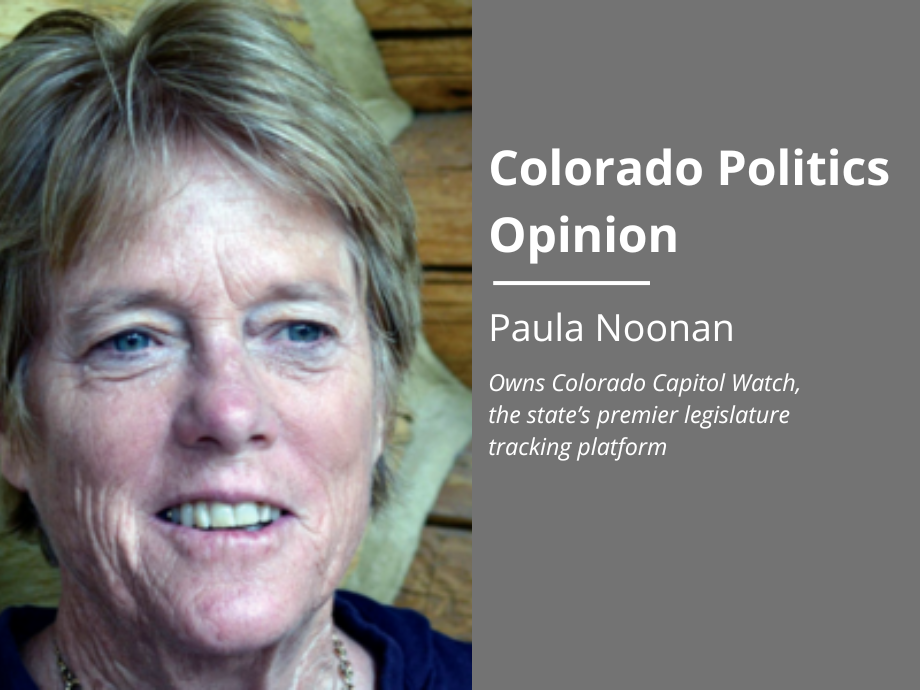
Paula Noonan owns Colorado Capitol Watch, the state’s premier legislature tracking platform.


Killing off the Regional Transportation District | Miller Hudson
Miller Hudson
miller-hudson@coloradopolitics.com
Updated 4 hours ago
This column is appearing the same day state Sen. Matt Ball (D) of Denver and his legislative co-sponsors unveil legislation implementing many of the recommendations advanced by last summer’s Regional Transportation District Accountability Committee. Although it isn’t readily apparent, they...

Green energy shouldn’t come at expense of Colorado farmers, ranchers feeding us | Rachel Gabel
Rachel Gabel
rachel-gabel@coloradopolitics.com
Updated 4 hours ago
In 2023, the Department of Energy released the National Interest Electric Transmission Corridors (NIETC) study identifying areas they speculate would experience transmission capacity constraints of congestion. The map identified more than 2 million acres or 24% of the state of...

Bill in state legislature would put large apartment projects in single-family neighborhoods | Cronin & Loevy
Tom Cronin Bob Loevy
tom-cronin-bob-loevy@coloradopolitics.com
Updated 4 hours ago
There is an old joke that goes something like this: “When the state legislature is in session, no person and their property are safe.” That is not a joke in the older, more traditional neighborhoods that surround the downtown regions...

Colorado hates its disabled citizens | Jon Caldara
Jon Caldara
jon-caldara@coloradopolitics.com
Updated 3 days ago
This is a selfish column. The legislature is about to hurt my disabled son. My son, Chance, has Down syndrome and a few years ago would have been labeled “retarded.” Then “developmentally delayed.” Now the hypersensitive prefer “intellectually disabled.” Whatever...

Kwame Spearman warrants plenty of criticism, not cancellation | SONDERMANN
By Eric Sondermann
by-eric-sondermann@coloradopolitics.com
Updated 4 days ago
All of us are flawed humans, some more so than others. This is the tale of Kwame Spearman who burst onto Denver’s business and political scene a handful of years back. His ride has taken a downhill trajectory. Within the...
From pause to progress — a better path on AI policy | OPINION
Colorado Politics
colorado-politics@coloradopolitics.com
Updated 3 days ago
By Brittany Morris Saunders and Loren Furman Last year, following the Special Legislative Session, we wrote in Colorado Politics that delaying Colorado’s AI Act was not a setback. It was an opportunity. We asked state leaders to pause, bring more...

Cutting Prop 123 would cost Colorado far more than it saves | OPINION
Colorado Politics
colorado-politics@coloradopolitics.com
Updated 3 days ago
By Luke Teater Colorado’s legislative budget writers are about to receive updated revenue forecasts and begin making final cuts to close a historic budget gap, and Proposition 123’s affordable housing financing tools are on the chopping block. But in their...
Colorado’s place in President Trump’s oil-and-gas approach | Paula Noonan
Paula Noonan
paula-noonan@coloradopolitics.com
Updated 4 days ago
Head spinning is the unwanted reality of today’s world. Let’s start at the international level. The wars in the Middle East since the 1950s have never ended. Though religion and ethnicity are factors, oil and gas access is always predominant...

Reject onerous ad limits in sports-betting bill | OPINION
Colorado Politics
colorado-politics@coloradopolitics.com
Updated 4 days ago
By Justin Sasso A dangerous precedent is potentially afoot in the Colorado state Senate right now, where a bill was recently introduced to restrict advertising for local broadcast media across Colorado. Senate Bill 26-131, seemingly designed to discourage Coloradans from participating...
Reform to Colorado’s grantmaking drives efficiency, strengthens state’s partnership with nonprofits | OPINION
Colorado Politics
colorado-politics@coloradopolitics.com
Updated 4 days ago
By Marco Dorado and Jack Murphy Colorado’s nonprofit sector is one of the most significant contributors to our state’s economic and civic life, with more than 14,000 registered nonprofit organizations supporting more than 262,000 jobs — approximately 10% of all...
PREV
PREVIOUS

Rethink the abuse of censure in Colorado politics | OPINION
Greg Fulton The action by the state Republican Party in November to censure Sen. Larry Liston not only points out how far afield the GOP’s leadership has fallen from the mainstream but also how the use of censure in politics has gone off the rails. For those who may not know Larry Liston, he is […]
Weiser, Polis gut state law — want feds to fight crime | BRAUCHLER
George Brauchler This week’s proposal by Gov. Jared Polis and Attorney General Phil Weiser to use Colorado tax money to hire prosecutors to loan to the feds to prosecute laws in opposition to our own is as hypocritical as it is misguided. On March 12, 2021, less than one year after the George Floyd incident […]