

Colorado Supreme Court, 4-3, agrees with drastic penalty for misconduct-plagued DA’s office
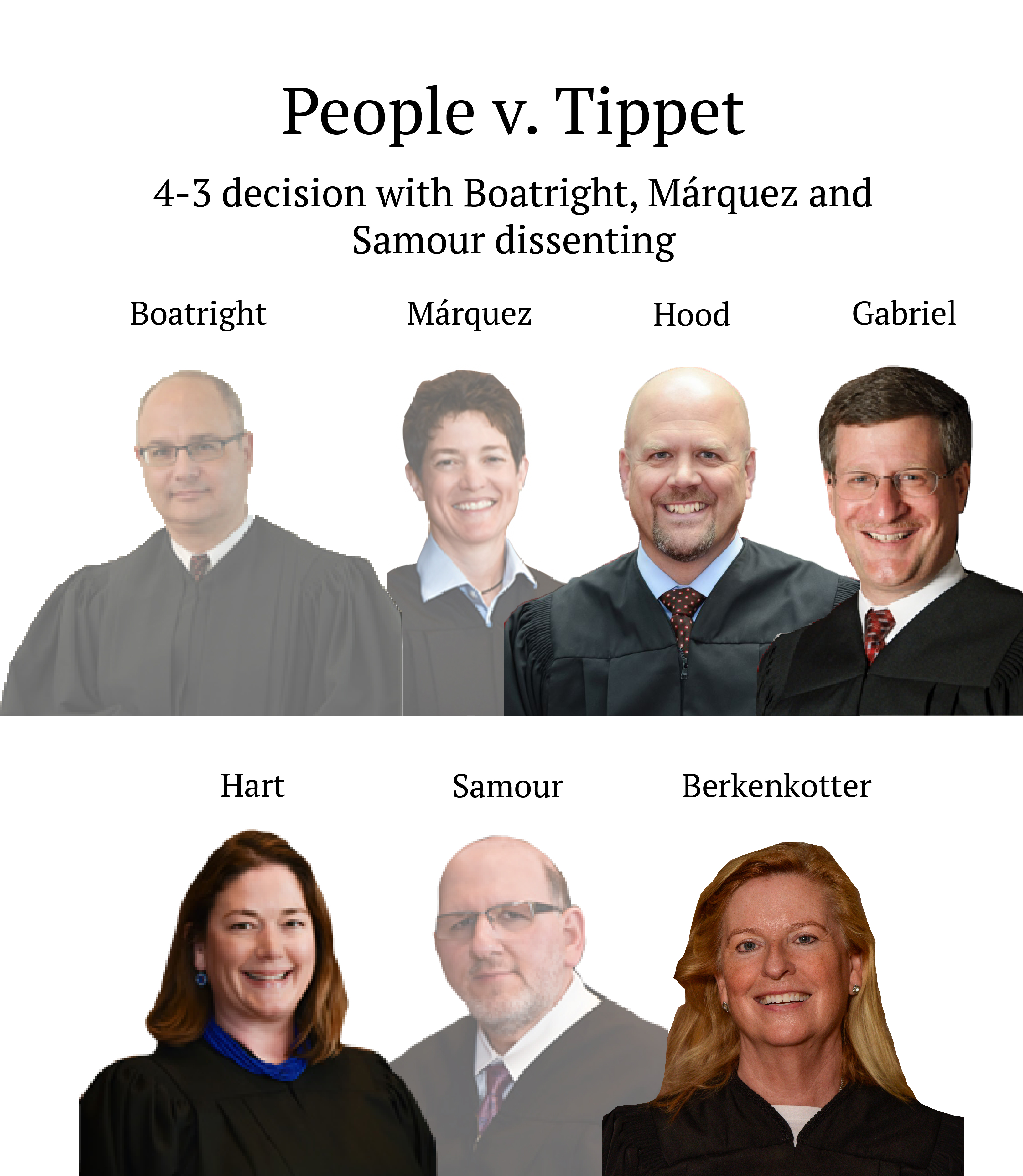
The Colorado Supreme Court on Monday, by 4-3, agreed a Fremont County judge was within her authority to reduce a first-degree murder charge against a criminal defendant because the district attorney’s office was responsible for a pattern of withholding evidence across many cases in violation of its professional obligations.
Despite the split decision, all members of the court seemingly acknowledged the judges of the 11th Judicial District have grown fed up with how the district attorney’s office repeatedly failed to disclose evidence to defense attorneys. The rules of criminal procedure require prosecutors to do so within 21 days of a defendant’s first appearance.
Specifically, the Supreme Court cited 20 recent cases in which various judges and magistrates in the central Colorado jurisdiction called out the misconduct.
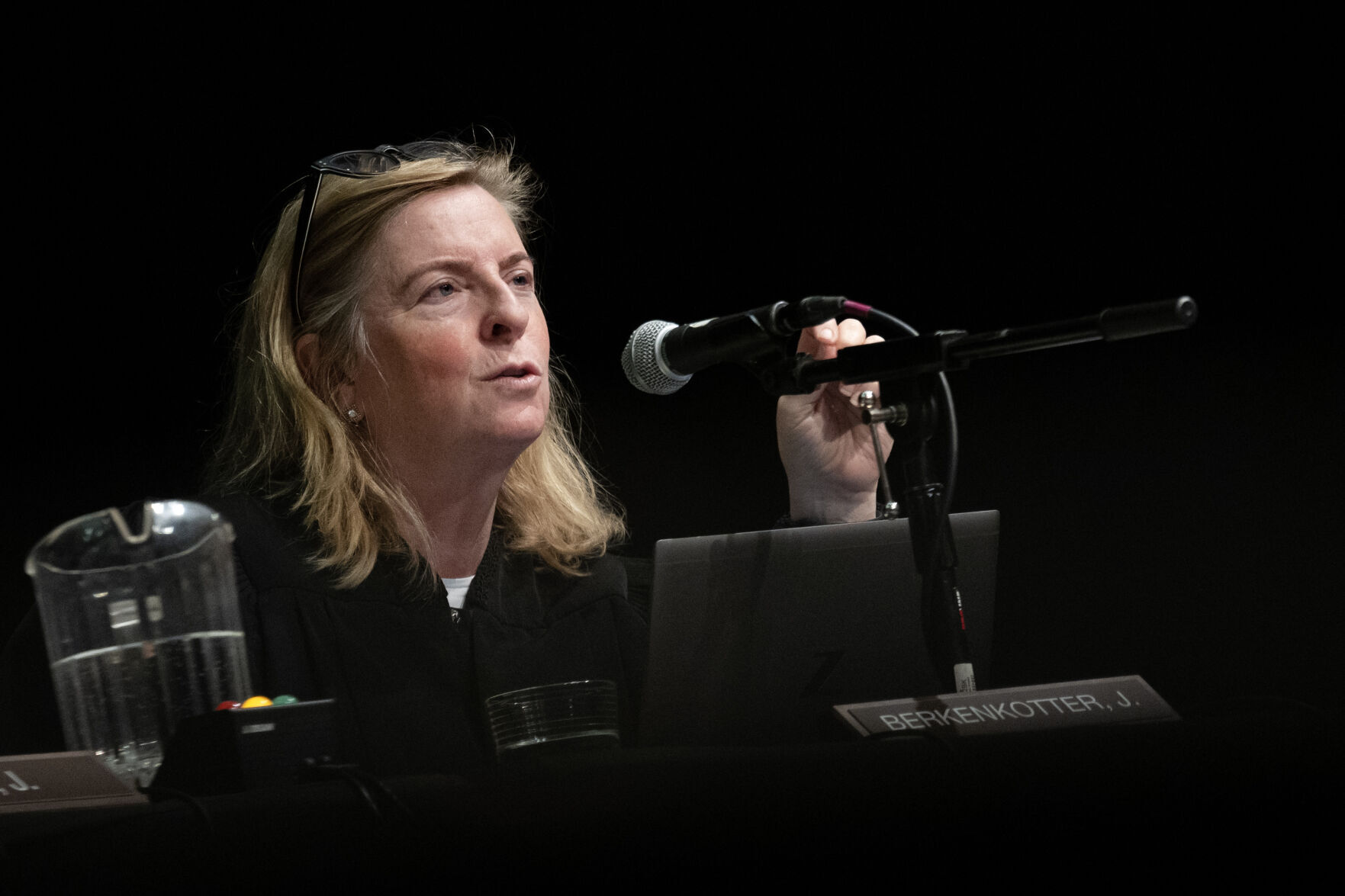
“The 20 cases illustrate, among other things, multiple significant discovery violations by the district attorney’s office; explicit warnings from various judges that a pattern of neglect was emerging or had emerged,” wrote Justice Maria E. Berkenkotter, “an apparent lack of oversight by the district attorney in the face of significant continuing discovery problems; and a pattern by the district attorney’s office of dismissing cases when faced with discovery sanctions.”
The elected district attorney, Republican Linda Stanley, is herself under investigation for allegedly violating seven rules of professional conduct, KRDO reported in October. The charges include Stanley’s own failure to ensure the disclosure of evidence.
Although trial judges are permitted to dismiss charges against defendants for discovery violations, the Supreme Court elected to hear the prosecution’s appeal in the case of Joseph James Tippet because it had never previously decided whether a reduction in the severity of a charge was appropriate to deter future misconduct.
Janene McCabe, the president of the Colorado Criminal Defense Bar, said more common sanctions against prosecutors would not be effective when a district attorney’s office habitually drags its feet on disclosing evidence.
“I think primarily it is a message to Linda Stanley’s office, but I think it’s also a warning to other prosecutors’ offices to do a better job and be very clear when they have patterns, that it is the elected district attorney’s responsibility to solve those patterns,” she said. “I have not seen a judge reduce a murder charge in the past, but I also have not seen this extreme of a pattern.”
‘You have to do your job’
Tippet stands accused of first-degree murder for shooting his father in the head on Jan. 6. He confessed to the crime while in custody. Under the rules of procedure, the deadline for the prosecution to disclose evidence to the defense was Feb. 8.
The district attorney’s office produced multiple packets of discovery by Feb. 8 including close to 200 files. However, in the ensuing weeks, after complaints by the defense about withheld evidence, the prosecution continued to hand over more files – most of which existed prior to Feb. 8.
By the end of March, the prosecution’s disclosure ballooned to more than 1,100 items, only a small portion of which fell within the deadline.
Appearing in court to address the evidentiary issues, prosecutors showed up late and unprepared to discuss the case.
“You have to do your job. You simply have to do it. And there is a pattern of this office not doing it,” Magistrate Michael W. Meyrick scolded Deputy District Attorney David Little on March 22, warning that “sanctions of possibly a lesser charge” could be on the horizon.

On March 31, District Court Judge Kaitlin B. Turner held a hearing to address a possible penalty for the district attorney’s office. Turner, who was Stanley’s Democratic opponent in the 2020 district attorney election, responded icily to Little’s claim that support staff in his office were to blame for the disclosure problems.
“You are admitting here today that there’s some lack of training, at least, or understanding by your support staff. And what I was hoping to hear today is, ‘Here’s our plan, not just to avoid this in this case, but in all cases’,” Turner said. “This makes me believe these issues are not going to stop.”
Days later, she issued an order outlining 20 cases during Stanley’s tenure that featured either dismissal of the charges or sanctions on the district attorney’s office for discovery violations. In one instance, another judge had reduced a murder charge from first-degree to second-degree homicide. Turner ordered the same thing happen with Tippet’s case.
Consequences
Stanley’s office appealed directly to the Supreme Court, arguing it was unclear what a “pattern” of discovery violations looks like. The office argued a pattern must involve the same prosecutor, with an official policy of withholding evidence, and “egregious and repeated sloppiness.”
The Colorado District Attorneys’ Council and Colorado Attorney General’s Office also wrote in support of Stanley’s office, arguing a judge’s order about which charges a prosecutor can file was an infringement on the separation of powers between the executive and judicial branches.
Berkenkotter, in the Supreme Court’s Dec. 11 opinion, noted there was clearly a pattern of withholding evidence in the 11th Judicial District, and the narrow definition of “pattern” offered by Stanley’s office would insulate prosecutors from consequences “even when it is apparent that there are systemic problems.”
She added that even if Tippet confessed to the crime and the case was in its early stages, Turner had imposed a sanction to address the pattern of misconduct. Because judges have the power to dismiss charges, they also can order a reduction in charges. In Tippet’s case, a second-degree murder charge would still result in a sentence he could serve until his eighties.
“The prosecution is not entitled to disregard its discovery obligations because it believes it has a strong case,” Berkenkotter wrote.
Justice Carlos A. Samour Jr., writing in dissent, claimed the majority was leaving out “the rest of the story.” Namely, he believed Stanley’s office was not on notice that Turner would order a reduction in the murder charge after it handed over more than 1,000 pieces of evidence belatedly.
“The sense I get from reviewing this record (especially the transcripts of the hearings) is that the judicial officers in question were at their wits’ end with this District Attorney’s Office and wanted to send a message that would finally be effective,” Samour wrote for himself, Chief Justice Brian D. Boatright and Justice Monica M. Márquez.
“They were looking for an opportunity to impose a severe sanction. Having sat on a trial court for many years, I understand their frustration,” he elaborated. “But that doesn’t justify the severe sanction handed out here, which seems capricious and forced.”
Samour concluded that Tippet should not “get a freebie,” meaning face a lesser murder charge, just because the prosecution took weeks to fulfill its obligations.
Neither the prosecution, the defense, nor the outside organizations that submitted briefs immediately responded to a request for comment. Last month, former District Court Judge Ramsey Lama, one of the judges who previously imposed sanctions, told The Denver Gazette he had filed his own disciplinary complaint against Stanley for her alleged retaliatory investigation into him.
The case is People v. Tippet.
Editor’s note: This story has been updated with additional comments.


Federal judge upholds constitutionality of Colorado campaign contribution limits
Michael Karlik
michael.karlik@coloradopolitics.com
Updated 9 minutes ago
A federal judge upheld Colorado’s individual campaign contribution limits as constitutional on Thursday, finding that three Republican plaintiffs failed to prove the campaign finance framework violates their First Amendment rights. U.S. District Court Senior Judge John L. Kane recognized that...

Appeals court rejects theory that existing tax revenue undermines need for new fees
Michael Karlik
michael.karlik@coloradopolitics.com
Updated 5 hours ago
Colorado’s second-highest court rejected a plaintiff’s claim on Thursday that the tax revenue generated by an existing activity should prevent local governments from imposing new fees aimed at regulating the activity. The question stemmed from Colorado’s unique constraints on taxation...
Appeals court finds no illegal sentence when defendants forfeit time-served credit
Michael Karlik
michael.karlik@coloradopolitics.com
Updated 11 hours ago
Colorado’s second-highest court ruled on Thursday that criminal defendants may agree to relinquish the credits they earned while incarcerated pending trial, despite a state law guaranteeing that such time “shall be deducted” from a person’s sentence. Kerry Ellis Endsley pleaded...
Appeals court reinstates Garfield County arson charge
Michael Karlik
michael.karlik@coloradopolitics.com
Updated 1 day ago
Colorado’s second-highest court reinstated a Garfield County defendant’s arson charge on Thursday, concluding a trial judge improperly credited a witness’s claim that she alone was responsible for starting the fire. A sheriff’s deputy responded to a brush fire near Parachute...
Federal judges rebuke ex-Colorado judicial discipline director for conduct in lawsuit
Michael Karlik
michael.karlik@coloradopolitics.com
Updated 1 day ago
A pair of federal judges expressed a desire on Thursday to break the logjam on a lawsuit by Colorado’s former judicial discipline director against the state Supreme Court and related entities, while simultaneously showing little tolerance for the plaintiff’s scorched-earth...
Democratic bill would let recipients of ‘conversion therapy’ sue Colorado providers with no statute of limitations
Marissa Ventrelli
marissa.ventrelli@coloradopolitics.com
Updated 1 day ago
Colorado lawmakers have advanced a proposal that would allow people who underwent conversion therapy to sue licensed providers for damages, moving the measure forward on a party-line vote in the House Judiciary Committee. House Bill 1322, proposed by Democratic Reps....
Federal judge refuses to authorize immediate appeal in World Cup trafficking lawsuit
Michael Karlik
michael.karlik@coloradopolitics.com
Updated 2 days ago
A federal judge declined to authorize an immediate appeal last week of a prior decision allowing companies operating out of Colorado to be sued for allegedly participating in a human trafficking venture involving Filipino laborers who constructed facilities for the...
Federal judge considers second round of sanctions against ex-Colorado judicial discipline director
Michael Karlik
michael.karlik@coloradopolitics.com
Updated 2 days ago
A federal judge ordered Colorado’s former judicial discipline director on Tuesday to explain why she should not sanction him a second time for filing documents for improper purposes, such as harassment or delay. U.S. District Court Senior Judge Kathryn H....
Colorado justices agree to review insurance question that has divided federal judges
Michael Karlik
michael.karlik@coloradopolitics.com
Updated 3 days ago
The Colorado Supreme Court granted a federal judge’s request on Friday to address an issue that has produced conflicting answers in policyholders’ lawsuits against insurance companies over unpaid benefits. “Parties (and judges) regularly spend undue time and money fighting in...

Federal judge dismisses background screeners’ challenge to Colorado law
Michael Karlik
michael.karlik@coloradopolitics.com
Updated 3 days ago
A federal judge dismissed a challenge on Friday to a portion of Colorado law that prohibits certain information from being included in consumer reports, in what seemed to be a conflict with federal law. Congress originally enacted the Fair Credit...
PREV
PREVIOUS

Republican, Democratic leaders vow to fight destructive discourse; new mayor Wendi Strom talks about Lakewood | WHAT YOU NEED TO KNOW
Today is Dec. 11, 2023, and here’s what you need to know: Colorado’s top Republican and Democratic legislative leaders offered a unified front against what they described as the rising tide of destructive discourse that’s been creeping up at the state Capitol during a forum on Friday. The legislative breakfast at the Warwick Hotel was […]

State agencies sit on millions in cash in violation of state law
Several state agencies, including the Governor’s Office, are holding tens of millions of dollars in cash reserves in excess of statutory limits as of June 30, 2023, and several have been put on spending restrictions until the dollars are spent down, the Colorado state auditor announced Monday. State agencies are allowed to keep no more than […]