

Federal judge says ‘hands are tied,’ cannot resentence defendants under drug reform law
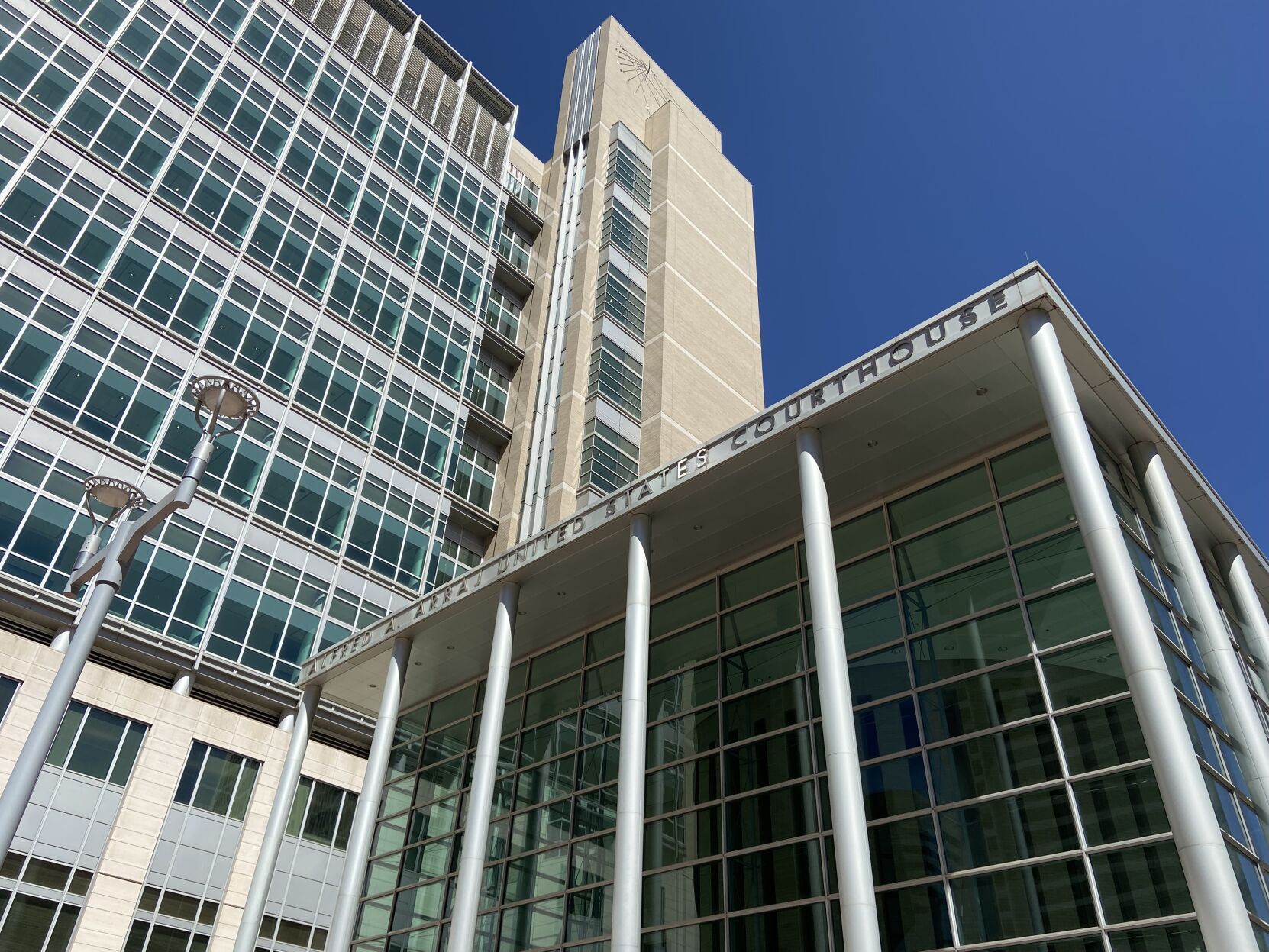
A federal judge last month told two men serving life sentences that her “hands are tied” and she cannot reduce their prison terms, even in the face of recent federal legislation addressing the historical disparities in punishment for cases involving crack cocaine.
U.S. District Court Judge Regina M. Rodriguez denied the resentencing requests from Lee Arthur Thompson and Alvin Hutchinson, who were convicted more than 15 years ago in a drug distribution scheme out of Adams County. Since their trials, Congress passed a pair of laws to reduce the longstanding imbalance between powder cocaine and crack cocaine offenses – including for those with existing convictions.
The change unquestionably applied to Thompson and Hutchinson. However, the complicating factor was the “grouping” of their drug sentences with their convictions for violating the Racketeer Influenced and Corrupt Organizations (RICO) Act. Their RICO sentences were tethered to the drug crimes, but the new sentencing laws do not cover RICO offenses.
Although some federal appeals courts have decided trial judges may still provide relief to defendants on non-covered crimes like RICO, the U.S. Court of Appeals for the 10th Circuit, based in Denver, has taken the opposite view. Consequently, Congress’ intervention into drug sentencing has more broadly benefitted defendants in some parts of the country, but not Thompson and Hutchinson.
“The Court recognizes that there is a circuit split on this issue,” Rodriguez wrote in a Sept. 25 order. “Under binding Tenth Circuit precedent, however, the Court’s hands are tied. Therefore, the Court must dismiss Defendants’ requests for reduction of their sentences.”
Weeks before her order, one of Thompson and Hutchinson’s co-defendants filed a petition with the U.S. Supreme Court asking it to decide whose interpretation of federal law is correct: the 10th Circuit and two other appellate courts that have agreed with it, or the three circuits that believe convictions not covered by the sentencing reforms are, nonetheless, eligible for reduction.
The federal government has until Nov. 13 to respond to the petition.
Thompson and Hutchinson were involved in an extensive drug distribution conspiracy out of the Alpine Rose Motel in Adams County. Jurors heard that Thompson and Hutchinson were at the top of the organization, directing the sale of crack cocaine over many months. Their activities even included throwing crack off a balcony on Mother’s Day for mothers at the motel to grab, and using a “big rock of crack” in lieu of an egg at an Easter egg hunt.
Federal authorities charged each man with a conspiracy to distribute more than 50 grams of cocaine and a RICO violation, among other offenses. Two additional men were their co-defendants, also with similar charges. Thompson and Hutchinson’s convictions were grouped, meaning a single offense level applied to their aggregate sentence and they received life in prison for both the drug conspiracy and RICO offenses.
A few years later, Congress enacted the Fair Sentencing Act. Congress’s intent was to reduce the sentencing disparity, which existed since 1986, that punished someone for a crack cocaine offense as harshly as someone with 100 times the amount of powder cocaine. Historically, defendants in crack cocaine cases were overwhelmingly Black, while cases involving powder cocaine had mostly White defendants.
The legislation reduced, but not eliminated, the discrepancy – effectively raising the amount of crack cocaine needed to sustain a harsher sentence. In 2018, Congress passed the First Step Act, which made the changes retroactive to previously convicted defendants. In response, Thompson and Hutchinson petitioned for a reduction of their lifetime punishment.
U.S. District Court Senior Judge Marcia S. Krieger acknowledged in April 2021 that the defendants, as Black men convicted of drug crimes, were the intended beneficiaries of the new legislation. The problem was that their RICO convictions, grouped into their life sentences, were not covered by the change in law.
She also doubted the revisions would do anything practically for the defendants. Prosecutors had charged them with distributing more than 50 grams of crack, which previously allowed for a life sentence. Now, the threshold for life is 280 grams, but, Krieger pointed out, the evidence at trial suggested the men distributed a lot more than that.
“Thus, it is clear to the Court that any recalculation,” she wrote, “would nevertheless result in a Guideline range that included life imprisonment.”
Last summer, the 10th Circuit reviewed the appeal of William L. Gladney, one of Thompson and Hutchinson’s co-defendants whose sentence-reduction request Krieger also denied in her order. The 10th Circuit concluded Krieger was correct that the RICO conviction was not eligible for a sentence reduction and, as a result, any relief to the lifetime drug conspiracy sentence would have no practical effect.
Although the court believed there “must” be a prohibition against reducing sentences for non-covered offenses that are grouped with drug crimes, the Chicago-based Seventh Circuit reached the opposite conclusion in 2020, finding nothing prohibited judges from reconsidering a punishment for convictions not covered by the recent sentencing reform laws.
In early September, Gladney’s lawyer petitioned the Supreme Court for intervention, arguing trial judges “struggle” with whether they can give relief to defendants whose sentences are grouped with non-covered offenses in the wake of the Fair Sentencing and First Step acts.
Rodriguez, addressing Thompson and Hutchinson’s request to reconsider Krieger’s prior order, acknowledged the petition pending in the nation’s highest court. But she conceded she was obligated to follow the 10th Circuit’s directive and uphold their life sentences.
The case is United States v. Thompson et al.



Colorado Supreme Court to address child’s CCTV testimony
Michael Karlik
michael.karlik@coloradopolitics.com
Updated 11 hours ago
The Colorado Supreme Court announced on Monday that it will review the impact of a victim’s closed-circuit testimony on the prosecution of a juvenile defendant. At least three of the court’s seven members must agree to hear an appeal. There...

10th Circuit to hold all-judges hearing, judicial committee turns down ‘civility code’ | COURT CRAWL
Michael Karlik
michael.karlik@coloradopolitics.com
Updated 1 day ago
Welcome to Court Crawl, Colorado Politics’ roundup of news from the third branch of government. The Denver-based federal appeals court agreed to hold a rare all-judges hearing in a criminal case, plus a state Supreme Court committee overwhelmingly rejected a...
Divided Colorado Supreme Court curtails use of laced-substances defense
Michael Karlik
michael.karlik@coloradopolitics.com
Updated 1 day ago
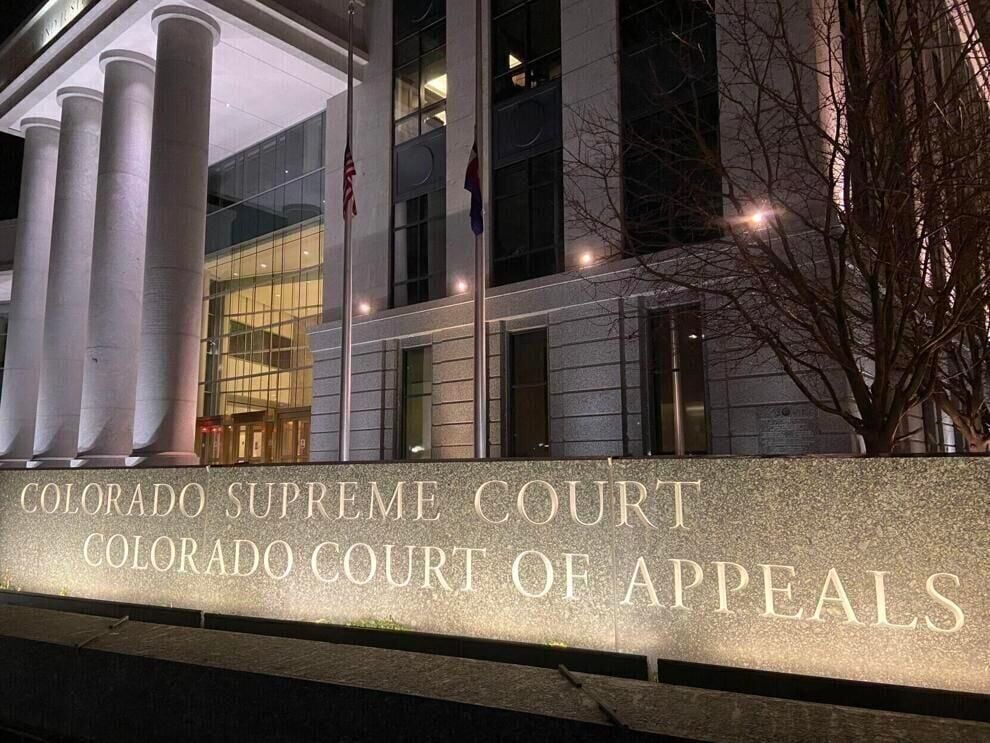
The Colorado Supreme Court on Monday walked back the ability of criminal defendants to claim their conduct was the result of consuming an intoxicating substance that secretly contained another behavior-altering substance. Under state law, “involuntary intoxication” is an affirmative defense,...
Colorado justices say utilities commission overreached by immunizing Xcel in rate document
Michael Karlik
michael.karlik@coloradopolitics.com
Updated 1 day ago
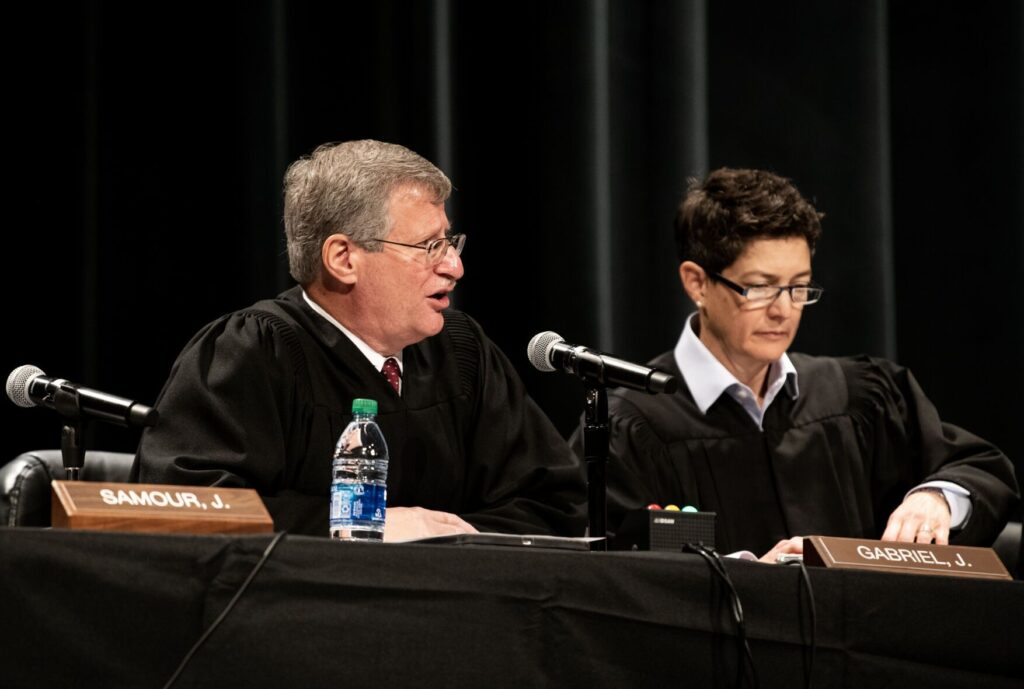
Xcel Energy cannot rely upon a rate-setting document to broadly immunize itself from liability against electrocutions, the Colorado Supreme Court ruled on Monday. The justices originally heard the electrocution-related lawsuit from Francisco Cuevas to decide whether Xcel’s tariff, which sets...
Colorado Supreme Court committee rejects civility proposal amid fears of weaponization by judges, ‘jerks’
Michael Karlik
michael.karlik@coloradopolitics.com
Updated 2 days ago
The Colorado Supreme Court’s Civil Rules Committee overwhelmingly rejected a proposal last week to create an enforceable “civility code” for lawyers and legal paraprofessionals, which would allow judges to quickly impose corrective action without a formal complaint and investigation by...
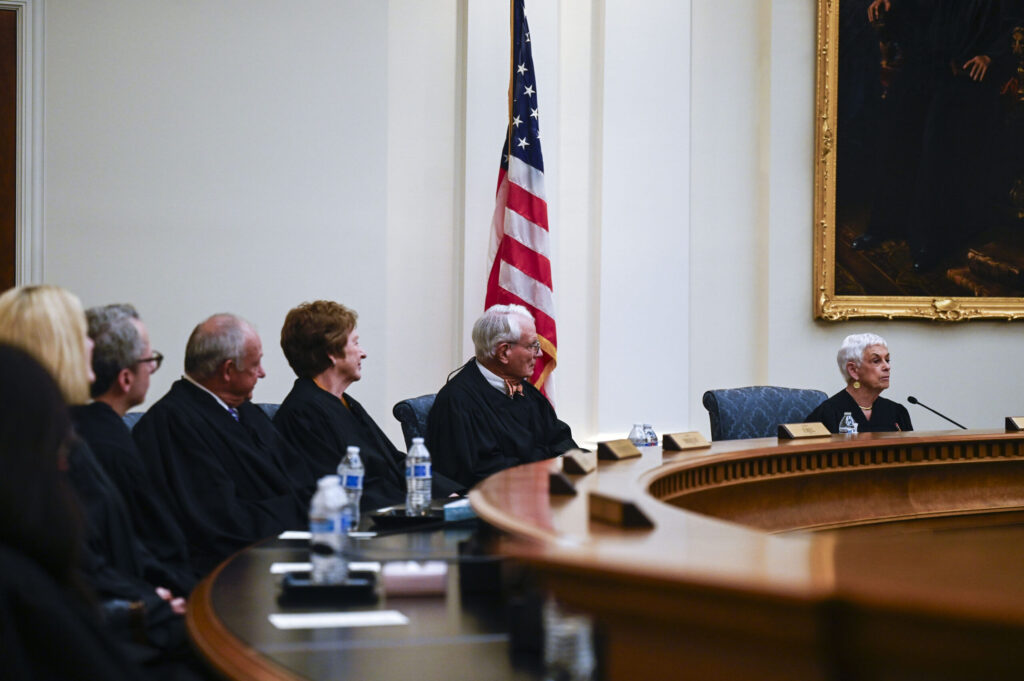
10th Circuit to address resentencing of probation violators in rare all-judges hearing
Michael Karlik
michael.karlik@coloradopolitics.com
Updated 3 days ago
The Denver-based federal appeals court agreed on Thursday to hold a rare all-judges hearing to determine the proper procedure for resentencing a criminal defendant who has violated the terms of his probation. In the federal appellate courts, the vast majority...
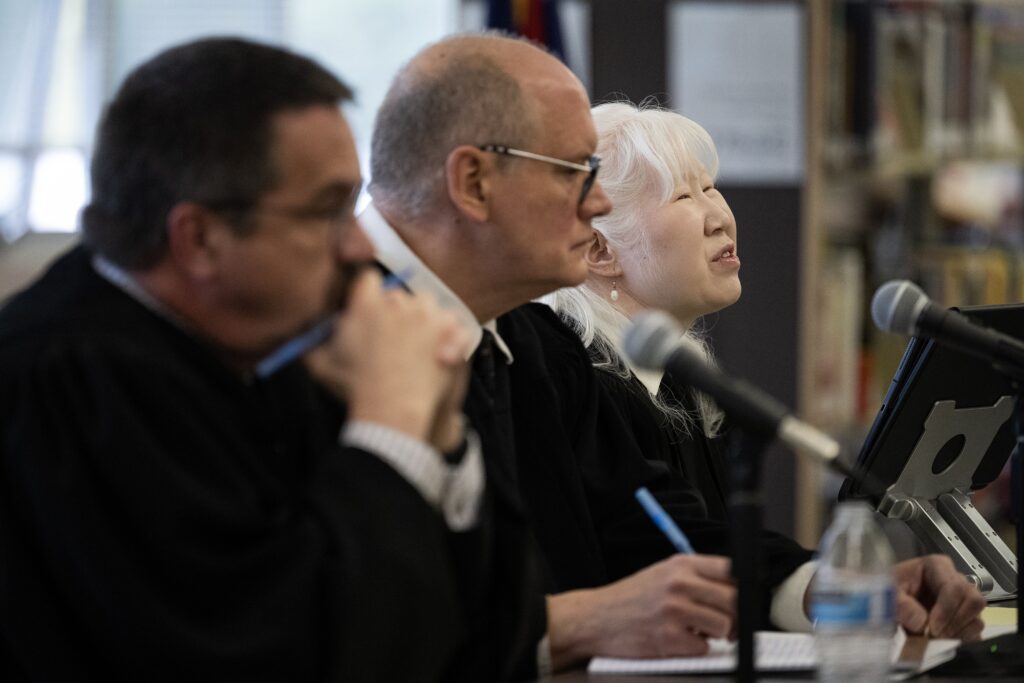
Appeals court overturns Adams County sex offense convictions due to prosecutor’s misconduct
Michael Karlik
michael.karlik@coloradopolitics.com
Updated 2 days ago
Colorado’s second-highest court reversed multiple child sex assault convictions on Thursday after concluding an Adams County prosecutor committed misconduct while cross-examining the defendant. A three-judge Court of Appeals panel observed the charges against Daniel Michael Boerner depended on the jury...

Fort Carson soldier’s wife could be deported
Carol McKinley
carol-mckinley@coloradopolitics.com
Updated 5 days ago
As the country’s largest immigration enforcement crackdown continues in Minnesota’s Twin Cities, a Fort Carson sergeant is fighting a personal immigration crisis — one that may implode his family. Sgt. Tyler Garza’s wife, Jennifer Maradiaga Baca, is not a legal...
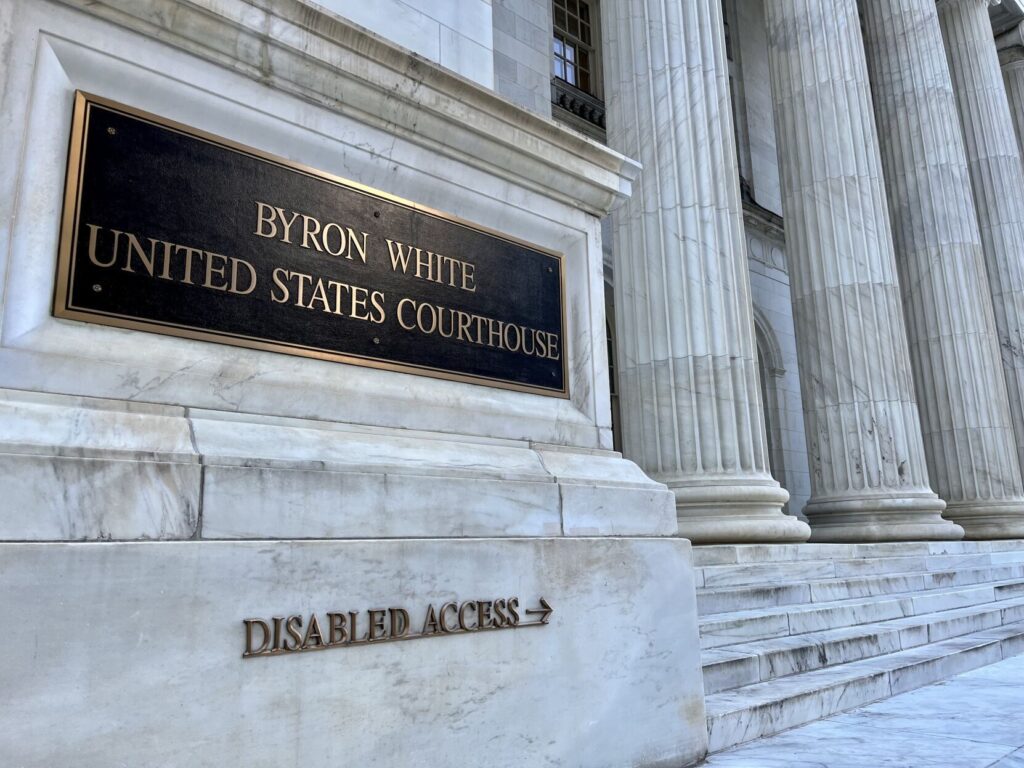
Elizabeth School District dismisses challenge to book-ban injunction on eve of appellate arguments
Michael Karlik
michael.karlik@coloradopolitics.com
Updated 5 days ago
An Elbert County school district has dismissed its challenge to a judge’s injunction ordering it to return banned books to library shelves, days before the Denver-based federal appeals court was set to hear oral arguments this week. Although a three-judge...

Colorado Supreme Court to hear cases on insurance coverage for COVID, witness credibility
Michael Karlik
michael.karlik@coloradopolitics.com
Updated 6 days ago
The Colorado Supreme Court announced on Tuesday that it will decide the degree to which a virus or other hazard must affect a commercial property before it can trigger loss-or-damage coverage under an insurance policy. At least three of the...
PREV
PREVIOUS

Colorado Republican leaders call for inquiry into education data breach reporting delay
Colorado House Republican leaders on Monday called for an investigation into why Colorado’s higher education agency allegedly failed to timely report a massive data breach this summer. In a two-page letter hand-delivered to Gov. Jared Polis and Attorney General Phil Weiser, five state representatives also urged an inquiry into why thousands potentially affected by the […]

Witness argues Trump spurred Jan. 6 attack on Capitol in Colorado ballot disqualification hearing
An expert on political extremism testified on Tuesday in Denver District Court that Donald Trump stoked his followers into staging a violent attack on the U.S. Capitol on Jan. 6, 2021, during a hearing in a lawsuit seeking to declare the former president ineligible to appear on next year’s Colorado ballot. A group of Republican […]