

Biden’s White House allocates $327 million for Indian water rights, earmarking millions for Colorado
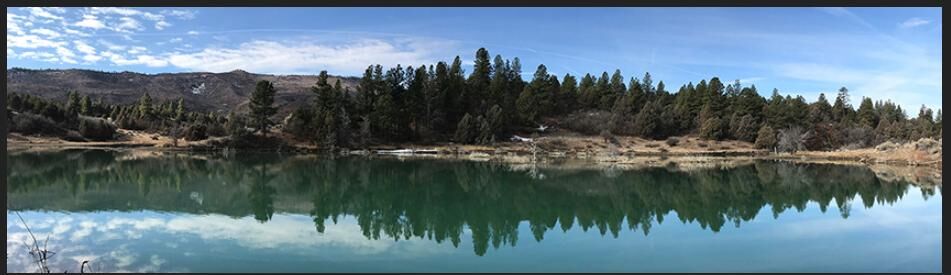
A long-standing settlement between the federal government and Colorado’s Ute tribes will see millions of dollars in federal money headed the latter’s way, according to an announcement from the Biden administration on Thursday.
The administration is putting nearly $327 million into fulfilling Indian water rights claims.
The announcement said that 34 congressionally-enacted Indian water rights settlements were in place at the time a trillion-dollar infrastructure law was signed, including one in Colorado.
Of the amount, $207 million will come from the “Infrastructure Investment and Jobs Act” and another $120 million from the Reclamation Water Settlements Fund for agreements enacted prior to the infrastructure law, which would also apply to the Colorado settlement. Congress created the Reclamation Water Settlements Fund in 2009 and it will receive $120 million in mandatory funding annually from 2020 through 2029.
The funding will support major water projects across the West to secure reliable water supplies for Tribes, the announcement said.
“Through the President’s Investing in America agenda, the Interior Department is continuing to uphold our trust responsibilities and ensure that Tribal communities receive the water resources they have long been promised,” said Secretary of the Interior Deb Haaland. “Reliable water is crucial to ensuring the health, safety and empowerment of Indigenous communities. I am grateful that Tribes, some of whom have been waiting for this funding for decades, are finally getting the resources they are owed.”
The Ute Mountain Ute and Southern Ute tribes in southwestern Colorado are slated to receive $3.4 million, tied to the Colorado Ute Indian Water Rights Settlement Act of 1988. That act was signed into law by President Ronald Reagan and sponsored in the U.S. House by then-Rep. Ben Nighthorse Campbell, then an Ignacio Democrat.
The act was the culmination of three years of negotiations between the U.S. government, the state of Colorado, and the two Colorado Ute tribes over water rights in southwestern Colorado.
The 1988 settlement act authorized the Secretary of the Interior to supply both irrigation and municipal and industrial water to the tribes to come from the Animas-La Plata Project, which had been in the works since 1956. But that took longer than expected – the Animas-La Plata project wasn’t completed until 2013.
Last January, the Biden administration announced a total of $2.5 billion from the “Bipartisan Infrastructure Law” for more settlements under the the Indian Water Rights Settlement Completion Fund.
“Indian water rights settlements help ensure that Tribal Nations have safe, reliable water supplies; improve environmental and health concerns on reservations; and enable economic growth,” the Interior Department said. “These settlements have the potential to end decades of controversy and contention among Tribal Nations and neighboring communities and promote cooperation in the management of water resources. Indian water rights settlements also promote community and economic development for regions surrounding Tribal communities, as conflicts are resolved and vital infrastructure is developed.”
According to an Oct. 13 Congressional Research Service report on Indian water rights settlements, the primary issue is quantification – that is, identifying the amount of water to which users hold rights within the existing systems of allocation in the West.
“However, quantification alone is often not sufficient to secure resources for tribes,” the report said. “Thus, the negotiation process frequently also involves provisions to construct water infrastructure that increases access to newly quantified resources.”
Since 1990, the Department of the Interior policy has been to resolve Indian water rights issues through settlements rather than litigation.
“These agreements allow tribes to quantify their water rights on paper, while also procuring access to water through infrastructure and other related expenses,” the report noted.
marianne.goodland@coloradopolitics.com


Can deliberation save democracy? | Vince Bzdek
Vince Bzdek
vince.bzdek@gazette.com
Updated 4 hours ago
In September 2019, 523 Americans traveled to Dallas, Texas, for an experiment called “America in One Room.” The gathering was designed to test a theory: Could representative citizens deliberate productively even in an era of intense polarization? The event took...
Colorado health equity funder’s redirection debated
DEBBIE KELLEY
debbie-kelley@coloradopolitics.com
Updated 23 hours ago
A redirection in grantmaking that began two years ago for The Colorado Trust, a 40-year-old Denver-headquartered funder, has led some employees to now voice concerns, which has reportedly put their jobs in jeopardy. The vice president of communications for the...
Redistricting scheme would give Colorado Democrats seven House members, split El Paso County
Bob Loevy
bob-loevy@coloradopolitics.com
Updated 11 hours ago
A proposed redistricting plan, which could give Colorado seven Democratic members of the U.S. House of Representatives and only one Republican, would split El Paso County into two parts and thereby weaken the county’s influence in Congress. El Paso County,...

Is Trump a builder or just a latter-day headhunter? | SONDERMANN
By Eric Sondermann
by-eric-sondermann@coloradopolitics.com
Updated 2 days ago
It was well under 100 hours after President Donald Trump’s overly long, overly theatrical State of the Union speech that he unleashed American bombers across Iran. As I write, it is now less than 100 hours since those bombers started...

LDS activist excommunicated from the church speaks out on women’s rights across Colorado | A LOOK BACK
Rachael Wright, Special to Colorado Politics
rachael.wright@coloradopolitics.com
Updated 2 days ago
Forty-Five Years Ago This Week: “Women must demand — now and if necessary at the peril of our lives — that we be granted civil rights in the same way rich white men in this country were granted them: constitutional...

Democrats eye new taxes on alcohol, marijuana to fund Colorado mental health spending
Marissa Ventrelli
marissa.ventrelli@coloradopolitics.com
Updated 2 days ago
Facing a more than $1 billion budget shortfall, Colorado lawmakers are searching for ways to fund mental health services in a state that consistently ranks among the worst in the nation for mental health outcomes. Several proposals this session aim...

Hopes and fears: Colorado Iranians speak out on widening war
Mark Samuelson Special to The Denver Gazette
mark.samuelson@denvergazette.com
Updated 9 hours ago
Group talks about young people protesting against the Islamic Republic, and Reza Pahlavi and the monarchy When Denver area real estate agent Fara Novin dined out for her birthday Friday night, Feb. 27, she blew out a candle on a...
DOJ publishes more Epstein documents mentioning Trump after initial omission
Rena Rowe, Washington Examiner
rena.rowe.washington.examiner@gazetteedit.wpenginepowered.com
Updated 1 day ago
The Justice Department released additional Epstein files on Thursday, including uncorroborated accusations from a woman claiming she was sexually assaulted by President Donald Trump. Last week, Rep. Robert Garcia (D-CA), the top Democrat on the House Oversight and Government Reform...
Federal judge dismisses developer’s challenge to Denver affordable housing ordinances
Michael Karlik
michael.karlik@coloradopolitics.com
Updated 22 hours ago
A federal judge dismissed a homebuilder’s constitutional challenge on Tuesday to a pair of Denver ordinances that impose obligations on developers related to the affordable housing demands created by new construction. Two related companies, redT Homes and redT Capital Partners,...

Another TABOR fight: Democrats plan to redirect residents’ refunds to K-12 spending
Marianne Goodland
marianne.goodland@coloradopolitics.com
Updated 7 hours ago
Colorado voters could decide this fall whether billions of dollars that would otherwise be returned as refunds under the Taxpayer’s Bill of Rights should instead go to public schools under a ballot measure unveiled Thursday by Democrats. Supporters say the...
PREV
PREVIOUS

Former Colorado governor Bill Owens endorses Lauren Boebert's GOP primary challenger
Republican Jeff Hurd won support for his primary challenge against U.S. Rep. Lauren Boebert this week from former Colorado Gov. Bill Owens. Owens, the state’s only GOP governor elected in the last 50 years, cited the Grand Junction attorney’s character, values and integrity in his endorsement. Boebert, a Silt Republican, is seeking a third term […]

Crime victim cannot sue over sheriff's mishandling of evidence, appeals court rules
A crime victim cannot claim the Huerfano County Sheriff’s Office violated his constitutional rights when it failed to process key evidence and compromised his assailant’s prosecution, Colorado’s second-highest court ruled on Thursday. In a case that seemed to be the first of its kind, Brian Puerta attempted to sue Sheriff Bruce Newman and three of […]