

Denver residents, councilmembers insist $17.5 million for rental assistance will prevent homelessness

The majority of people who spoke on Denver’s proposed spending plan during Monday’s council meeting praised councilmembers’ push to earmark $17.5 million for the city’s rental assistance program, saying the latter helps to prevent homelessness.
Denver Mayor Mike Johnston did not budge on his $12.6 million budget request when the council asked for additional funding. The council proposed to Johnston $17.5 million, $5.1 million more than his original plan to fund the emergency rental program in his proposed budget.
But a mayor’s spokesperson late on Tuesday said Johnston added $3 million to the program – for a total of $15.6 million.
The residents who showed up to the meeting mentioned the program and how they believe it would positively affect those who are dealing with the city’s lack of affordable housing.
They said difficulties in making rent payments is a leading cause of Denver’s homelessness and urged the council to fund the city’s Emergency Rental Assistance Program.
To qualify for the program, which is aimed at helping tenants, the household income must be at or below 80% of the Area Median Income for Denver, according to guidelines.
The Department of Housing Stability oversees the city’s emergency rental assistance program.
Councilmembers earlier sent a letter to Johnston, proposing to add $81 million to Johnston’s budget. In response, the mayor rejected 87% of their suggestions. The council has authority to make amendments to the budget.
The mayor does not want to go over 15% in reserves, according to his letter to the council.
“Mayor Johnston agrees that funding rental assistance is not only the moral, humanitarian thing to do, but it’s the right financial thing to do,” the mayor’s office told The Denver Gazette on Tuesday.
“That’s why we have proposed a 500% expansion of city funding for rental assistance despite a massive drop off in federal funding for this priority,” the mayor’s office added. “Mayor Johnston knows that we have a solemn obligation to deliver a balanced budget that meets this urgent need.”
On his first day in office, Johnston declared a homelessness state of emergency and vowed to house 1,000 homeless people by year’s end.
The city stopped accepting emergency rental applications in August due to insufficient funds.
Councilmembers asked the Johnston administration to consider allocating more for rental assistance.
“I know my district in particular has had a huge increase in calls for eviction assistance and emergency rental assistance,” District 3 Councilwoman and Council President Jamie Torres told The Denver Gazette on the emergency rental program.
The people who spoke during the council meeting on Monday said they believe rent is the biggest need, saying rental assistance program prevents homelessness. They argued that, even though the funding for emergency rental assistance has increased, it is still not enough.
Denver is currently witnessing record numbers of evictions, the Department of Housing Stability said. The department is projecting 12,000 eviction filings this year.
Denver’s record for eviction filings was 10,241 in 2010, according to the city’s 2022-2026 five year plan document.
The report also cites plans to reduce Denver’s “unsheltered” homelessness – people who sleep in public places, such as cars or on the street – from the 2022 point-in-time count by 50% in 2026. The city also wants to increase the annual number of households served in rehousing and supportive housing programs from 1,800 to 3,000.
Denver saw a significant increase in homeless in 2023.
Of Colorado’s major cities, Denver saw the biggest increase in the number of homeless people – 5,818 as of January, up from 4,794 last year, according to a point-in-time count that offers a single night’s snapshot of the crisis back in January.
Between 2022 and 2023, the number of unsheltered people grew by 33%, from 2,078 to 2,763, according to the survey.
“This isn’t going to be the last time we’re gonna have to talk about money for it,” Torres said.
“I wouldn’t put it as a one and done conversation around this even if there is an amendment that comes through. We’re going to be having this conversation next year,” Torres added.
Under the city’s budget timelines, the council may propose additional budget amendments between Oct. 30 and Nov. 6. The deadline for Johnston to accept or veto any amendments is Nov. 10.
The key day is Nov. 13, when the council must pass the city’s final spending plan for next year.


Newly formed PAC promises a stronger voice for southern Colorado businesses
Breeanna Jent
breeanna-jent@coloradopolitics.com
Updated 1 day ago
A new political action committee has launched in southern Colorado, aiming to strengthen and elevate the voices of local businesses and their regional influence on state-level policy. Over the last two years, the Colorado Legislature has enacted more than 1,000...
Power grid shutdowns in Colorado bring protection — and problems
Scott Weiser
scott.weiser@gazette.com
Updated 7 hours ago
A downed power line in Sunshine Canyon in the mountains west of Boulder in December posed an electrocution risk to firefighters and bystanders after Xcel Energy re-energized it without repairing it, despite being notified of the break the day before....

Colorado farmers begin spring planting season with soaring fertilizer costs and price-gouging fears
Marianne Goodland
marianne.goodland@coloradopolitics.com
Updated 5 days ago
As Colorado farmers prepare their fields for spring planting, many are sounding the alarm over fertilizer prices that have surged far beyond what they say global supply disruptions can explain. With nitrogen costs up 30% in a matter of days,...

CDOT pivots from snowplowing to wildfire mitigation along highways
Scott Weiser
scott.weiser@gazette.com
Updated 5 days ago
Colorado Department of Transportation maintenance crews have launched an early push to clear dry vegetation along highways to reduce the chance that sparks or cigarette butts from passing vehicles might ignite fast-moving fires this summer. With CDOT meteorologists forecasting above-normal...

Denver airport hasn’t had notice ICE agents will assist TSA yet. Wait times are short, though
Bernadette Berdychowski
bernadette.berdychowski@denvergazette.com
Updated 1 week ago
As President Donald Trump deployed immigration agents to help U.S. airports manage hours‑long security lines during the partial government shutdown, Denver International Airport remained relatively calm on Monday. At the nation’s third‑busiest airport, TSA PreCheck lanes remained open to start...
Proposed data center regulation in Colorado draws critics, backers
Scott Weiser
scott.weiser@gazette.com
Updated 1 week ago
A packed marathon hearing at the state Capitol in Colorado highlighted the sharp divide between two competing approaches to the effects of data centers, one of America’s fastest-growing technology sectors. Data centers are the physical facilities that host the servers,...
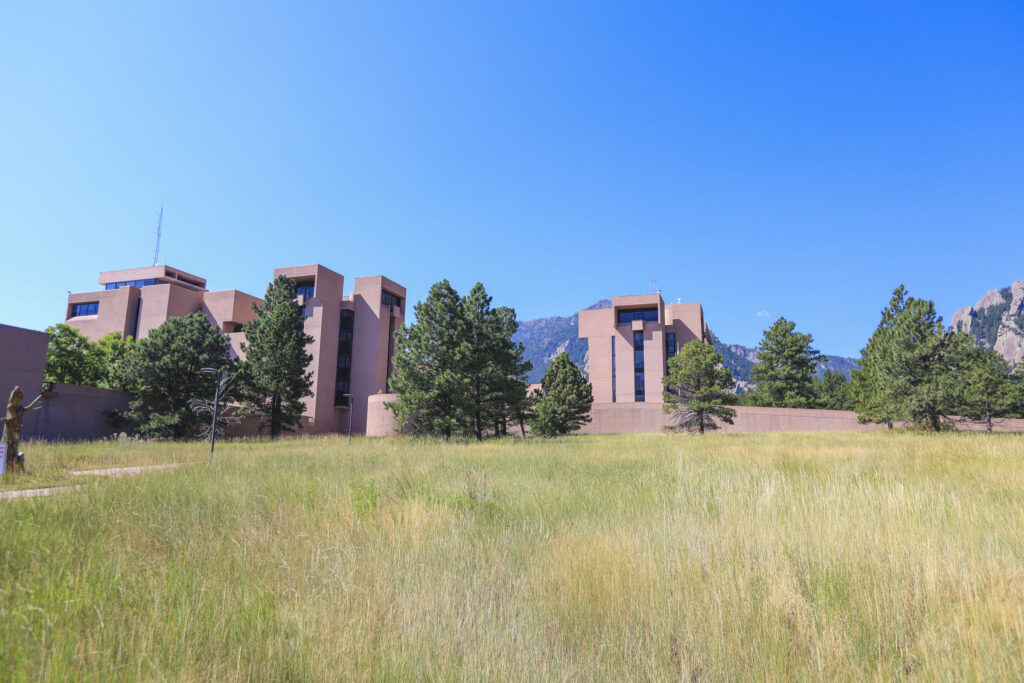
Universities sue to block dismantling of Boulder’s NCAR
Scott Weiser
scott.weiser@gazette.com
Updated 2 weeks ago
A consortium of universities filed a federal lawsuit Monday, alleging the Trump administration’s plan to dismantle the National Center for Atmospheric Research is unlawful retaliation against Colorado. The group also argued that the move violates federal law. The University Corporation...

Democrats want to bar use of consumer data to set Colorado prices, employee wages
Marissa Ventrelli
marissa.ventrelli@coloradopolitics.com
Updated 2 weeks ago
A closely divided House committee advanced a bill aimed at curbing the use of personal data to set individualized prices and wages, reviving a proposal that failed last year and setting up a broader debate over how far the state...

Proposal to levy new fees on alcohol products in Colorado dies
Marissa Ventrelli
marissa.ventrelli@coloradopolitics.com
Updated 2 weeks ago
The proposal to collect millions in new fees on alcohol products — dollars to be earmarked for Colorado programs aimed at addressing the behavioral and physical health effects of alcohol abuse — died on Tuesday. House Bill 1271 sought to...

Red flags raised for Colorado’s economy in national ranking, but it remains in top 10
Mark Samuelson Special to The Denver Gazette
mark.samuelson@denvergazette.com
Updated 3 weeks ago
A new report on economic competitiveness by a Greenwood Village-based research institute ranks Colorado seventh among U.S. states for overall economic performance. But the report is laden with red flags about where the state’s economy is headed. The Common Sense...
PREV
PREVIOUS

Republican legislators call on Gov. Jared Polis to convene special session on property taxes
Colorado’s Republican legislators on Wednesday rolled out three bills they intend to introduce to rein in property taxes, along with a plea to Gov. Jared Polis to bring them back for a special session. The ideas Republicans proposed borrow heavily on the legislation from the 2023 session that created the ballot measure voters will decide […]

Feds announce less drastic steps to stave off Colorado River shortages
Last winter’s better-than-average snowfall, coupled with promises of less water use by Arizona, California and Nevada, means less drastic actions between now and 2026 for the Colorado River from the U.S. Bureau of Reclamation. Water experts welcomed the news, which prompted officials in Arizona to describe the river system as “stable.” The federal agency on […]