

Denver decides to seek bids for next 300 tiny homes
Denver officials are eyeing to buy several hundred more tiny units to house homeless people, but this time they’ve decided to seek bids from companies.
That decision stands in stark contrast to the last time Denver procured “pallet shelters,” when the city dispensed with the bidding process and awarded about $5 million to buy 200 units from a company based in Everett, Washington.
Officials never clarified how or who picked the company, and whether the city determined it was getting the best price and service.
Denver’s decision to award $7 million in ‘pallet shelters’ contract shrouded in mystery
This time around, the city said it is seeking a purchase agreement with Clayton Properties Group, Inc. to construct up to 300 “manufactured sleeping units.” The city said it picked the company, which is also known as Solution Builders, after soliciting bids and getting nine responses. The city said it reviewed the bids’ price, specification compliance, delivery schedule and warranty before settling on Solution Builders.
The Denver Gazette learned the city sought the bids via BidNet, which local governments often use to procure products and services.
“This particular contractor proposed that they could deliver up to 350 units by the end of the year,” said Cole Chandler, the Johnston administration’s homelessness czar. “They came in at a very competitive price.”
Chandler told the City Council’s homelessness committee that the units will be deployed at “micro-communities,” places where the Johnston administration wants to bring homeless people to.
The city envisions erecting “pallet shelters” – which supporters say bridge the gap between temporary and permanent housing options by offering a unit that is cheaper, quicker to produce and easier to assemble – at these micro-communities, which will also offer services.
The proposed $6 million contract with Solution Builders still needs the approval of the City Council. The proposal is on the council’s agenda for a first reading on Oct. 23.
In a news release, Johnston said the “most significant obstacle” to transitioning people into housing is procuring high-quality units “built quickly and affordably.”
“We are proud to have a partner right here in Denver that has stepped up to take on developing individual sleeping units that will provide people with the dignity, security and stability they need to be successful,” the mayor said.
In another development, city officials disclosed that the purchase of pallet shelters from Pallet PBC, Inc. is being finalized for $3.5 million – half of what it was originally allocated for.
“We anticipate spending about $3.5 million,” Chandler said. “We are not expecting to spend the $7 million you granted to us.”
Denver mayor picks south Santa Fe Drive site for first micro-community
Johnston promised to get 1,000 homeless off of the city’s streets by year’s end. The number of tiny units, once all the purchases have been delivered, would constitute half of the housing needs to reach his goal.
At $6 million, the 300 sleeping units Solution Builders will build, assuming the City Council approves the purchase, would cost $20,000 per unit.
“That’s the scope of what’s allowed in this purchase order,” Chandler said.
Chandler said the “manufactured sleeping units” offer advantages compared to other options, such as having a longer lifetime at a similar cost; a “one-hour” fire rating, which allows closer proximity between units; and coming out fully built from a factory and delivered whole.
They also come in different colors, and the units will include a porch, space for a bed, desk inside units, air conditioning and heating, Chandler said.
Two types of options are available: single units, and rowhouses – units that are lined up together.
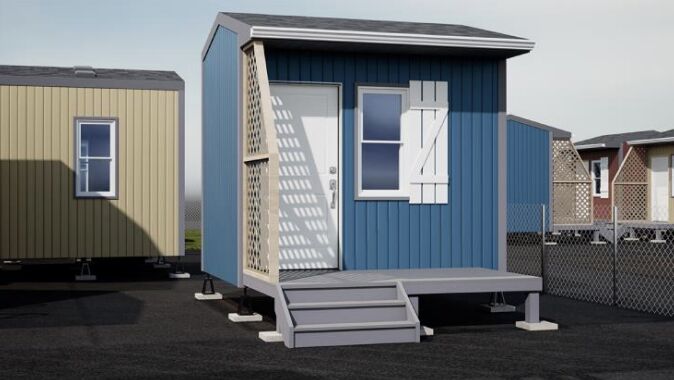
The “Type A” option would mean a minimum floor area of 70 square feet, with no dimensions less than 7 feet, and a ceiling height of 7 feet and 6 inches.
The “Type B” option meets Americans with Disabilities Act requirements.
The “sleeping units” are also equipped to handle high winds, rain and cold weather.
In addition to the 300 units, a future contract will include a request for community centers, Chandler said.
“70 square feet is awfully small for a desk and bed,” District 6 Councilman Paul Kashmann said, adding he wants to see the units. “I’d like to see the reality of it.”
Chandler earlier told The Denver Gazette officials are “really excited about some of the units that were stacking up in the pipeline.”
“We know that the pipeline skews towards the end of the year and so we’re excited about a pretty historic month of December,” he said.
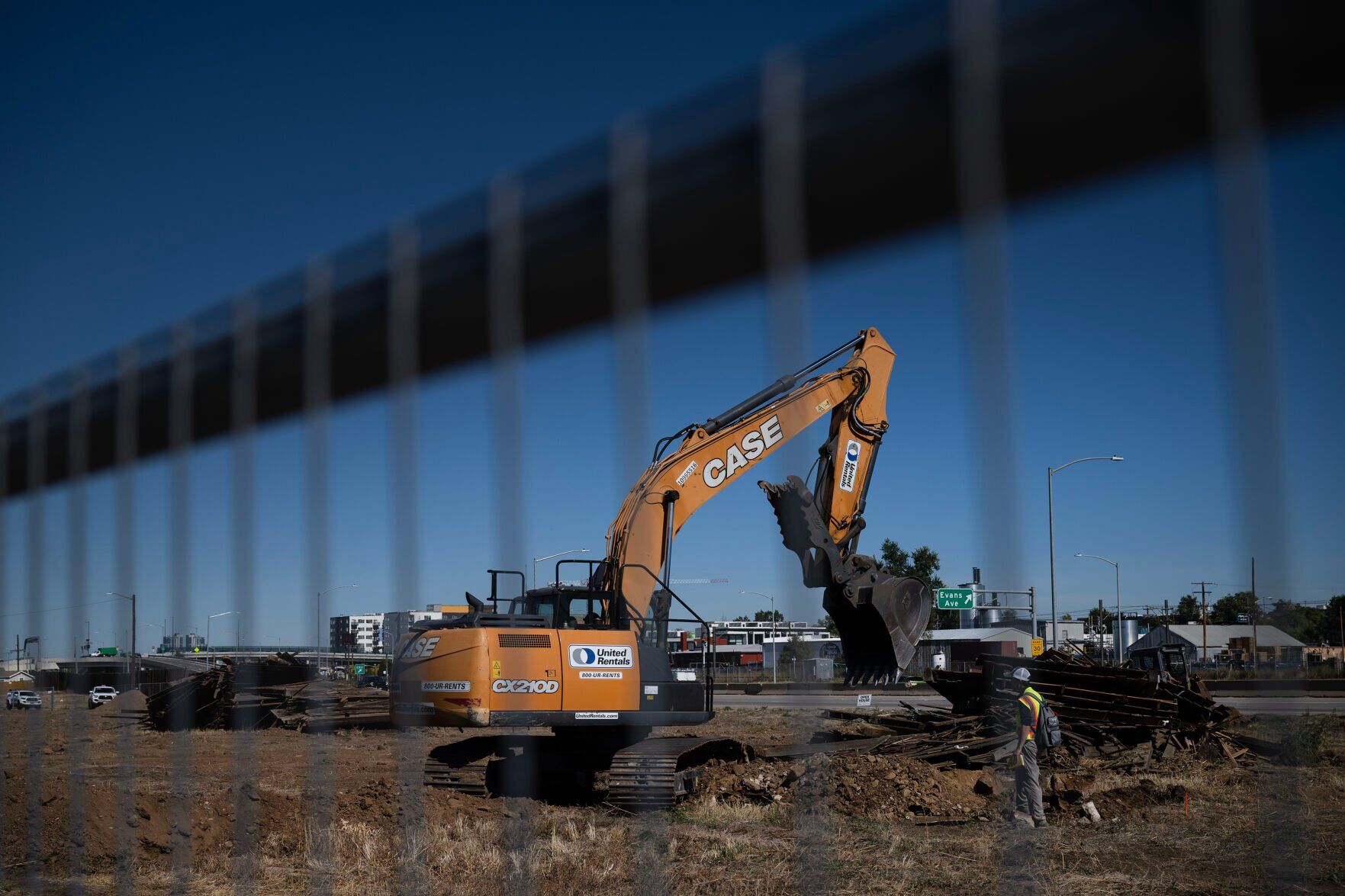
Meanwhile, the construction of Johnston’s first “micro-community” site at 2301 S. Santa Fe Drive is underway, which means it could see the first such tiny homes. Work began this past week to level the land and get the grounds ready.
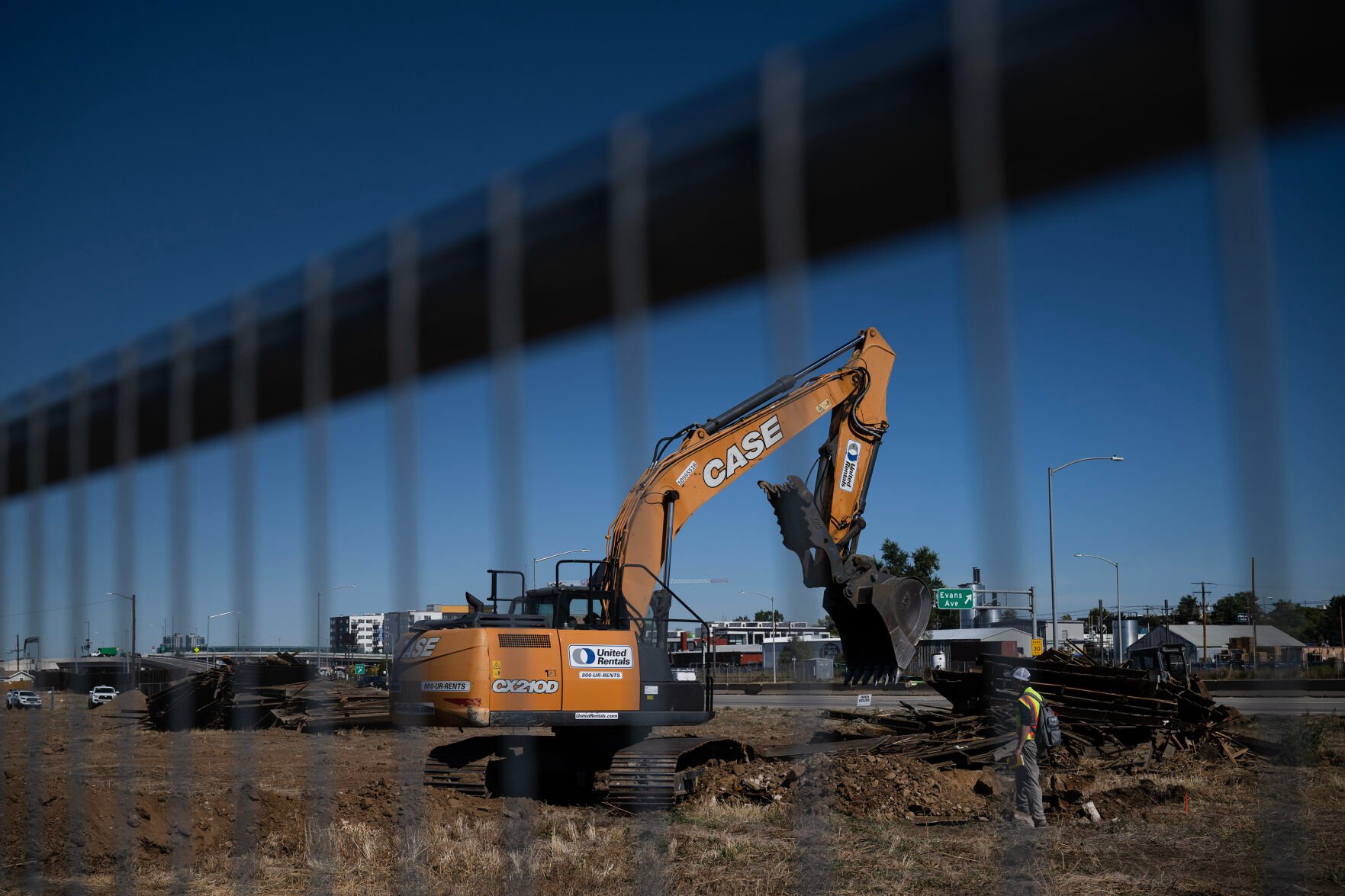
Nearby residents have expressed worries about the land being toxic because it is 3,000 feet away from a former a Superfund Site. The city’s Department of Public Health and Environment tested the property and told The Denver Gazette there are no traces of radioactive material following an assessment.
“The soil samples taken did not include radium,” a health department spokesman said.
Nearby residents also expressed worries about loitering, crime, drug use and decreases in local property values.
Previously, the city council approved spending $7 million to purchase 200 pallet shelters from Pallet PBC, Inc., even though the purchase order was only for $5 million. That extra money is a cushion for further payments, the city said.
Denver officials, who chose to forgo the bidding process in picking Pallet PBC, never clarified if they considered other companies or explored alternative prices.
When pressed for answers, the city only said officials looked to “another jurisdiction” that made a similar purchase.
“Under the city’s Homelessness Emergency Declaration, Pallet PBC, Inc. was awarded a master purchase agreement based on a similar procurement by another jurisdiction, outside of Colorado, with similar needs to Denver’s current emergent housing initiative,” a city spokesperson said.



Colorado Politics Calendar June 29-July 5
Rachael Wright, Special to Colorado Politics
rachael.wright@coloradopolitics.com
Updated 3 days ago
CoPo’s weekly political calendar will help you find political and public-policy events throughout Colorado. It includes candidate and issue campaign events, public policy meetings, court hearings, state and local party conventions, assemblies, debates, rallies, parades, speaking engagements, traveling dignitary appearances,...

Gov. Lamm’s GOP challenger gives insights into his campaign | A LOOK BACK
Rachael Wright, Special to Colorado Politics
rachael.wright@coloradopolitics.com
Updated 3 days ago
Forty-five years ago this week: “I see Gov. (Richard) Lamm is fairly popular in general,” said gubernatorial candidate and state Sen. Bill Hughes, R-Colorado Springs. “ … And he’ll be hard to beat.” Hughes was on a whirlwind campaign trail...

Giving credit to Polis where credit is due | SONDERMANN
Eric Sondermann
eric-sondermann@coloradopolitics.com
Updated 3 days ago
It is an understatement to suggest that Gov. Jared Polis has had a tough couple of months. The bloom was already off the rose and Coloradans were paying far more attention to the choice of his replacement than they were...

Bennet, Hickenlooper to vote against Trump’s 10th Circuit nominee from Colorado
Michael Karlik
michael.karlik@coloradopolitics.com
Updated 9 hours ago
Colorado’s two Democratic senators will not vote to confirm President Donald Trump’s nominee to a vacancy on the Denver-based federal appeals court. Trump has selected U.S. District Court Chief Judge Daniel D. Domenico, who he appointed as a federal trial...
Who’s spending in Colorado to get your vote?
Marianne Goodland
marianne.goodland@coloradopolitics.com
Updated 10 hours ago
Groups that raise unlimited amounts of money have spent about $20 million in May and June to try and influence Colorado voters’ choices in the upcoming June 30 primaries. By law, these groups cannot coordinate with the candidates they support....

U.S. government declines to oppose multiple challenges to immigration detention in Colorado
Michael Karlik
michael.karlik@coloradopolitics.com
Updated 1 day ago
Multiple federal judges in Colorado granted petitions from people challenging the lawfulness of their immigration detention this week after the government took the unusual step of declining to submit arguments in opposition. Colorado’s federal trial court is facing a flood of...

Tina Peters tells supporters to ‘stand up and fight back’ at Castle Rock event
Marissa Ventrelli
marissa.ventrelli@coloradopolitics.com
Updated 1 day ago
Tina Peters, the former Mesa County clerk recently released from prison, warned supporters that what happened to her could happen to them, too, if they did not “stand up and fight back” at an event at the Douglas County Fairgrounds....

Iran strikes cargo ship in Strait of Hormuz, endangering Trump’s peace
Christian Datoc
christian-datoc@coloradopolitics.com
Updated 1 day ago
Iran attacked a cargo ship traveling through the Strait of Hormuz on Thursday, possibly upending President Donald Trump‘s diplomatic end to the war with Iran. A U.S. official confirmed to the Washington Examiner that the Islamic Revolutionary Guard Corps “struck...

Senate GOP tries to mend fences with Trump after heated lunch
David Sivak
david-sivak@coloradopolitics.com
Updated 1 day ago
Senate Republicans are trying to turn the page on a heated lunch with President Donald Trump that brought weeks of tensions to a new high-water mark. In a symbolic gesture, Senate Republicans took another vote on the Iran war Wednesday...
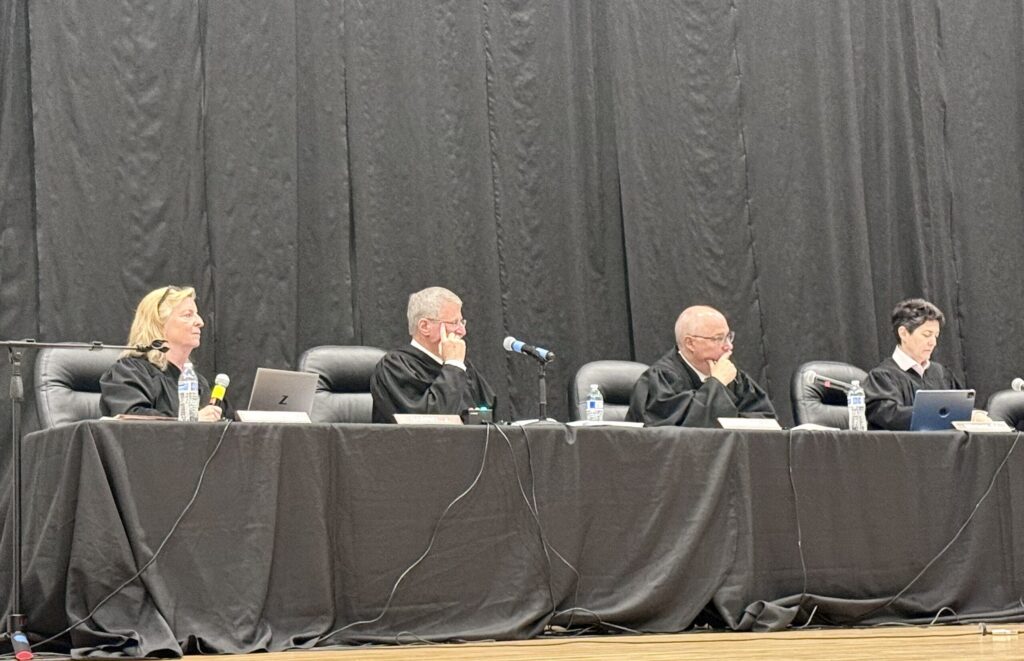
Colorado justices discuss solution to confusion from prior criminal ruling
Michael Karlik
michael.karlik@coloradopolitics.com
Updated 23 hours ago
The Colorado Supreme Court pondered the fallout on Tuesday from its nearly six-year-old decision interpreting the state’s impaired driving laws, with the justices now addressing how defendants affected by the legal change must seek postconviction relief. In contrast to other...
PREV
PREVIOUS

All of I-25 reopened after train derailment
Interstate 25 near Pueblo is fully reopened after the recent fatal train derailment, the Colorado Department of Transportation announced in an email Thursday. CDOT announced that I-25 reopened around 4:30 p.m. Traffic camera images displayed on cotrip.org show traffic flowing northbound and southbound on the previously closed section of roadway. The reopening follows three days of […]

Homelessness in Colorado: Will half a billion over two years solve Denver's crisis?
Editor’s note: This series explores the unique complexities and similarities of the homeless challenge in Denver, Aurora and Colorado Springs. Part 1 focuses on Denver. When Denver Mayor Mike Johnston’s administration swept a homeless encampment across from Colorado’s “Governor’s Mansion” last month, Maurice Richardson hoped to get into a shelter. City officials the week before […]