

State Supreme Court returns for arguments, a peek at naturalization ceremonies | COURT CRAWL
Welcome to Court Crawl, Colorado Politics’ roundup of news from the third branch of government.
The state Supreme Court returned from its summer break and began hearing oral arguments, plus Colorado Politics looked behind the scenes at the U.S. District Court’s involvement in naturalizing new citizens.
New term commences
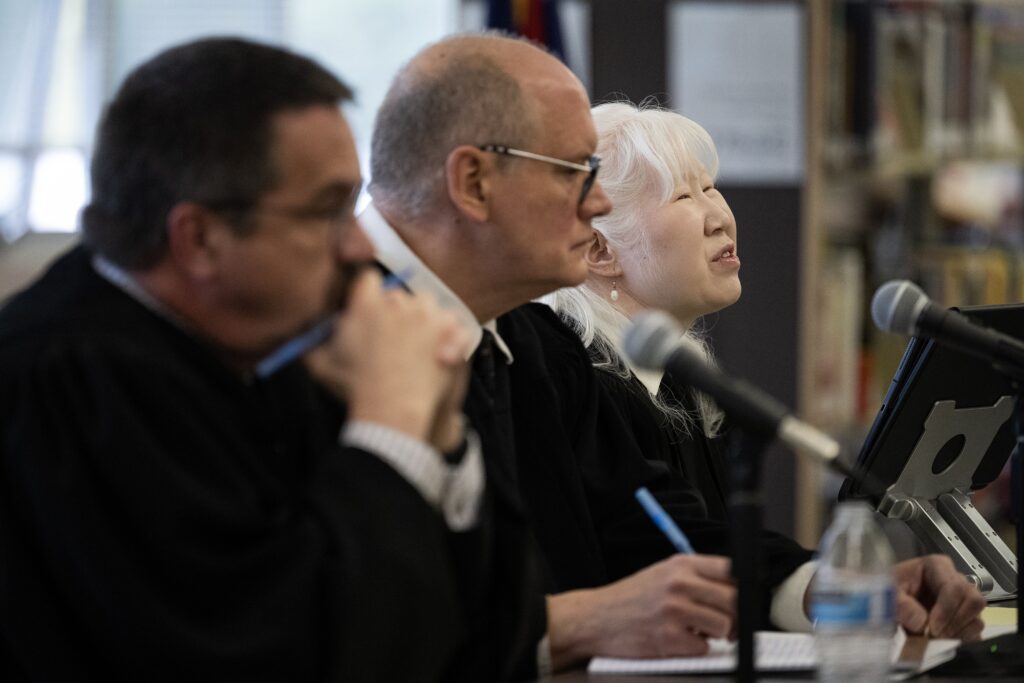
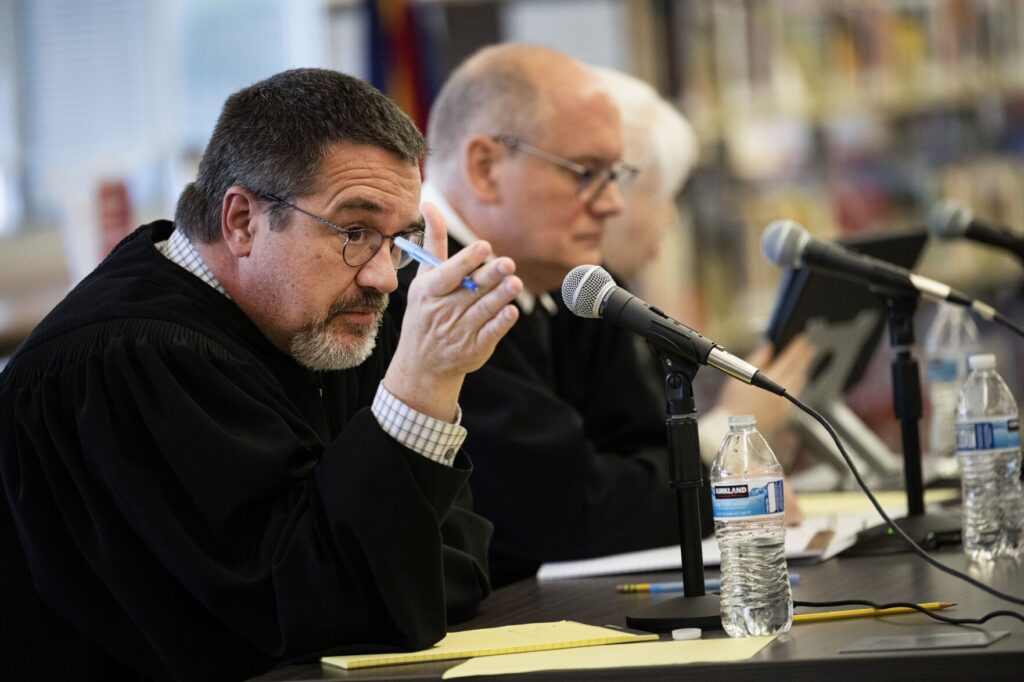
? After taking a break from its regular calendar during July and August, the Colorado Supreme Court returned in September to hear oral arguments in cases. Among the major appeals this term is the former death penalty case of Sir Mario Owens, who stands convicted of murdering a state senator’s son and his fiancée as an act of witness intimidation. Last month’s arguments before the state Supreme Court marked the first time an appellate court has heard Owens’ direct appeal challenging alleged racial discrimination and evidentiary issues at his 2008 trial.
? Sen. Rhonda Fields, D-Aurora, whose son, Javad Marshall-Fields, was one of Owens’ victims, told Colorado Politics it was not fair that Owens, in pressing for a new trial, “gets to play these games at the expense of re-traumatizing our family.”
? Turning to the other cases on the docket, the justices considered whether the Court of Appeals correctly ruled that a police officer who receives consent to enter a home may leave, then reenter a short time later to continue their investigation without getting consent again. Members of the Supreme Court, however, openly mused about dismissing the appeal because of defects in the underlying case. They followed through days later and tossed the case.
? The court also weighed the legality of state regulations for urban renewal areas, which would tip the scales between tax revenues funneled to counties and school districts on the one hand, and money available for urban renewal projects on the other.
? Finally, can Adams County and its municipalities sue Denver today for failing to report actual noise levels around Denver International Airport for over two decades? The justices weren’t so sure.

? The Supreme Court ruled that healthcare organizations, unlike individual employees, can be sued for reporting faulty allegations of prescription drug theft to the state. Two justices urged the legislature to think about restoring immunity in those situations.
? The court agreed to consider three cases involving 1.) the proof prosecutors need for child prostitution offenses, 2.) whether it’s a crime to steal personal identifying information from an organization instead of a human, and 3.) whether a front porch outside an apartment unit is part of the dwelling and enables the occupant to use lethal force against an intruder.
Other news out of the high court
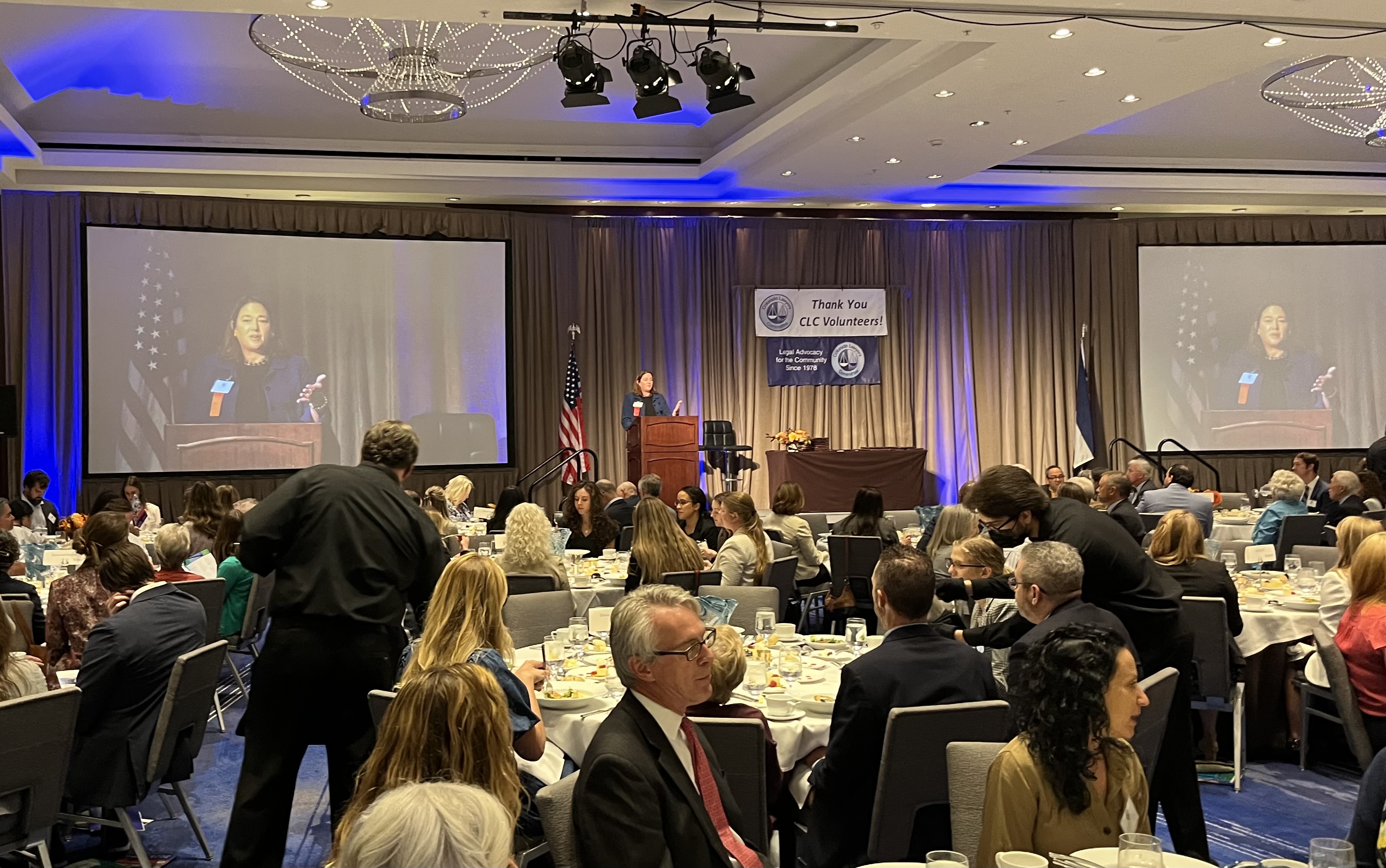
? Last week, Justice Melissa Hart spoke at a legal group’s luncheon, where she addressed the many access-to-justice barriers facing litigants across Colorado. Among the themes: not all solutions are legal in nature, and many require engagement with local leaders.
? “We, sitting here in this room, will not be able to figure out what’s the best way to get someone to a courthouse in Alamosa. It’s not gonna happen,” she said.
? Hart and Chief Justice Brian D. Boatright also visited Moffat County to see the new courthouse, built inside a renovated Kmart. Boatright praised it as a “model for innovation and creativity.”
michael.karlik@coloradopolitics.com
Naturalization and the court
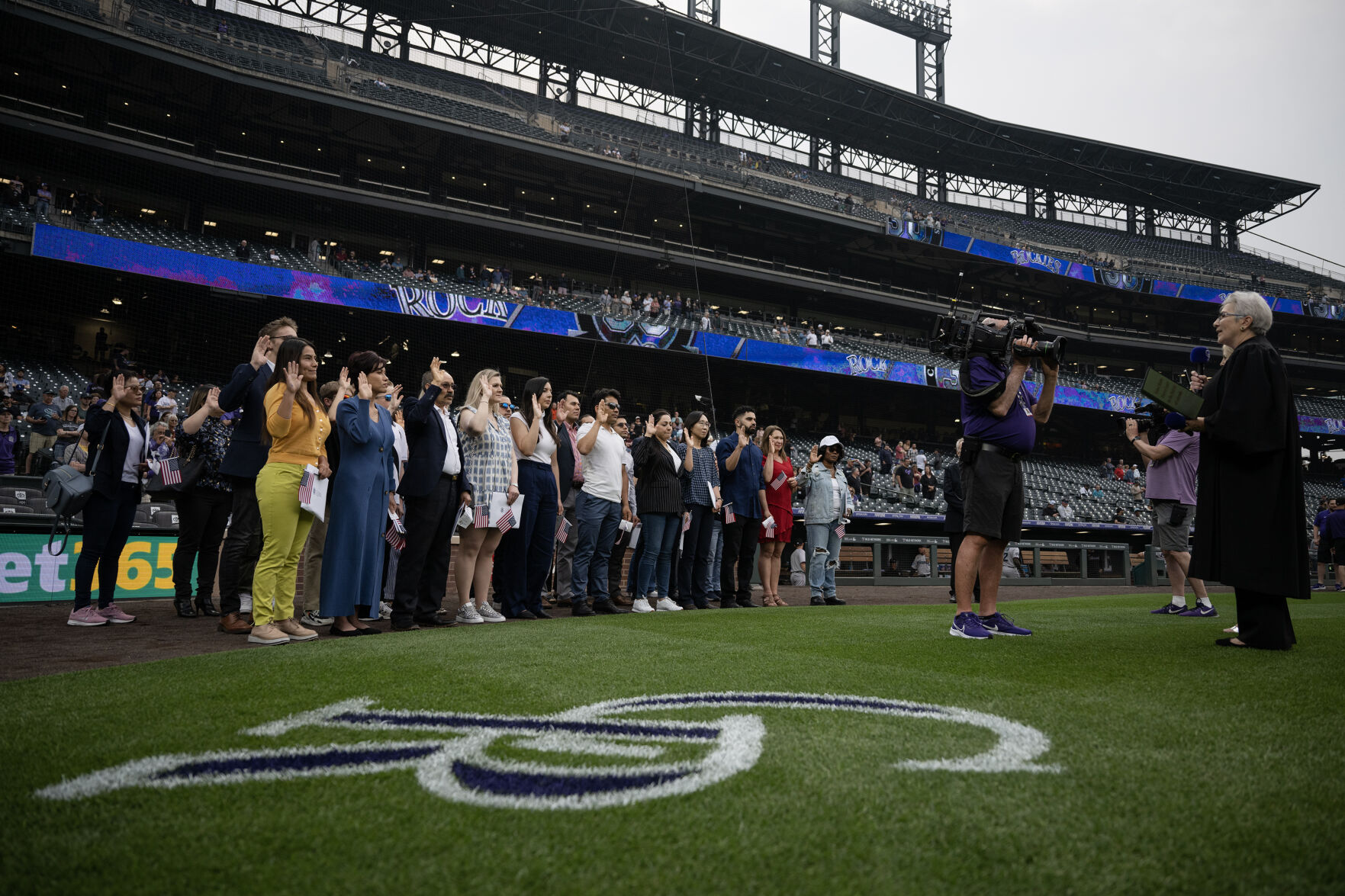
? Laws governing the naturalization of new citizens have changed since the country’s founding, and federal courts do retain some role in the process. However, Colorado’s federal trial court has largely opted to limit its involvement to the fun stuff: swearing in new citizens every month, hearing their stories and taking pictures with their families. Colorado Politics’ recent cover story looked at the court’s less well-known work. Here is an excerpt:
There are two types of ceremonies: administrative, which are run by U.S. Citizenship and Immigration Services, and judicial, which occur through the courts – specifically, the U.S. District Courts, whose members sometimes contrast the pleasant work of welcoming new citizens with their typical routine of deciding cases and, inevitably, making people unhappy.
“The district court has to do these in person because of the nature of what we’re providing,” said Mark Fredrickson, who works in the clerk’s office of Colorado’s federal trial court. “We’re providing a name change. That always has to be in front of a judge.”
For more than 12 years, Fredrickson has been the court’s point person for naturalization ceremonies. He is retiring at the end of the year. He estimated that court personnel spend 10 hours per month working on a single ceremony and related tasks.
Part of that work involves signing up judges to preside over the ceremonies. Fredrickson provides a script to the district judges and magistrate judges, with room for them to modify the speech.
“They all have their own views about immigration, I’m sure. And some of that comes through, but all of them are thrilled to be part of the legal process of doing this,” he said. “Some of them are appointed by Democrats, some are appointed by Republicans. Some are quite conservative, some are quite liberal. But they all support that process in slightly different ways.”
Trial in the death of Elijah McClain
? Colorado Politics’ sibling publication, The Denver Gazette, has been following the criminal trial of two Aurora police officers for their role in the 2019 death of Elijah McClain. McClain’s encounter with police and paramedics helped spur the passage of law enforcement accountability legislation in 2020. Here is the coverage to date:
Jury pool whittled in trial of Aurora officers charged in Elijah McClain’s death
Opening statements given in trial over Elijah McClain’s death
Attorneys battle over body-worn camera footage in Aurora officers’ trial
Heard on appeal
? By 2-1, the state’s Court of Appeals decided a Denver prosecutor’s repeated arguments that the defendant “fabricated” his testimony didn’t amount to misconduct.
? The Court of Appeals warned trial judges they can’t rescind a parent’s request for a jury trial in child neglect cases solely because the parent doesn’t show up for a pretrial conference.
? A Jefferson County judge wrongly dismissed drug charges against a defendant, the Court of Appeals ruled, even though prosecutors waited seven months after the man’s arrest to charge him.
? There was a series of problems in a Jefferson County man’s criminal case that led to the reversal of multiple organized crime and money laundering convictions. However, the appeals court upheld the use of a pole-mounted surveillance camera on the defendant’s street.
? Denver Public Schools board member Auon’tai M. Anderson may proceed with his defamation lawsuit against two women who broadcast unproven accusations of sexual assault against him, the Court of Appeals decided.
? The daughters of a woman who died in an apartment fire don’t have to arbitrate their mother’s wrongful death, the appeals court ruled in evaluating the mandatory arbitration clause of the mother’s lease.
In federal news
? A jury will decide whether Douglas County’s former sheriff terminated his subordinate for her performance or because of an election-related post she made on Facebook.
? A federal judge allowed a single excessive force claim to proceed against Denver’s ex-police chief, involving a plaintiff who was injured during the 2020 racial justice protests in the city.
? Members of the U.S. District Court’s Committee on Conduct, along with a magistrate judge, discussed the process for disciplining attorneys at the state’s federal trial court.
Vacancies and appointments
? The judges of the U.S. District Court have hired Mesa County District Court Judge Richard T. Gurley to be a part-time magistrate judge based in Grand Junction. He succeeds now-U.S. District Court Judge Gordon P. Gallagher.
? Applications are due by Oct. 5 to succeed retiring District Court Judge Sandra H. Gardner in the 14th Judicial District (Grand, Moffat and Routt counties).
Miscellaneous proceedings
? A trial judge may testify at lawyer discipline hearings involving an elected district attorney without needing to automatically recuse from criminal cases, the Colorado Supreme Court’s ethics panel advised.


10th Circuit warns lawyers after finding fake case in filing
Michael Karlik
michael.karlik@coloradopolitics.com
Updated 3 hours ago
The Denver-based federal appeals court warned attorneys to be more careful last month after discovering one lawyer cited a fake case in his arguments. In recent months, federal and state judges in Colorado have begun cautioning lawyers explicitly about the...
Colorado leaders weigh next steps after US Supreme Court rules against state’s ‘conversion therapy’ ban
Marissa Ventrelli
marissa.ventrelli@coloradopolitics.com
Updated 2 hours ago
Colorado leaders and advocacy groups remain divided after the U.S. Supreme Court on Tuesday ruled against the state’s ban on conversion therapy for minors, ruling 8-1 that the 2019 law violates the First Amendment. While it is a victory for...

10th Circuit rules cognitively impaired man’s risk of lobotomy, mistreatment in Mexico not ‘torture’
Michael Karlik
michael.karlik@coloradopolitics.com
Updated 15 hours ago
The Denver-based federal appeals court concluded last month that a man’s risk of mistreatment or forced lobotomy in his native Mexico did not amount to “torture” that should shield him from deportation. A three-judge panel of the U.S. Court of...
Colorado justices side with news organizations for disclosure of high-level child abuse data
Michael Karlik
michael.karlik@coloradopolitics.com
Updated 20 hours ago
The Colorado Supreme Court ruled on Monday that the state must disclose the number of child abuse reports at individual group living facilities in response to an open records request, as the addresses are already in the public domain. The...
Divided Colorado Supreme Court finds Denver detective did not violate defendant’s Miranda rights
Michael Karlik
michael.karlik@coloradopolitics.com
Updated 15 hours ago
The Colorado Supreme Court determined on Monday that a Denver detective did not improperly resume questioning of a defendant in custody after he invoked his right to counsel. By 4-3, the justices reversed a trial judge’s order that found a...

Out-of-state judges address ex-discipline director’s lawsuit, Colorado justices accept federal invitation | COURT CRAWL
Michael Karlik
michael.karlik@coloradopolitics.com
Updated 1 day ago
Welcome to Court Crawl, Colorado Politics’ roundup of news from the third branch of government. A pair of out-of-state judges got down to business in a lawsuit brought by Colorado’s former judicial discipline director, plus the state Supreme Court has...
Federal judge upholds constitutionality of Colorado campaign contribution limits
Michael Karlik
michael.karlik@coloradopolitics.com
Updated 4 days ago
A federal judge upheld Colorado’s individual campaign contribution limits as constitutional on Thursday, finding that three Republican plaintiffs failed to prove the campaign finance framework violates their First Amendment rights. U.S. District Court Senior Judge John L. Kane recognized that...
Appeals court rejects theory that existing tax revenue undermines need for new fees
Michael Karlik
michael.karlik@coloradopolitics.com
Updated 4 days ago
Colorado’s second-highest court rejected a plaintiff’s claim on Thursday that the tax revenue generated by an existing activity should prevent local governments from imposing new fees aimed at regulating the activity. The question stemmed from Colorado’s unique constraints on taxation...
Appeals court finds no illegal sentence when defendants forfeit time-served credit
Michael Karlik
michael.karlik@coloradopolitics.com
Updated 3 days ago
Colorado’s second-highest court ruled on Thursday that criminal defendants may agree to relinquish the credits they earned while incarcerated pending trial, despite a state law guaranteeing that such time “shall be deducted” from a person’s sentence. Kerry Ellis Endsley pleaded...
Appeals court reinstates Garfield County arson charge
Michael Karlik
michael.karlik@coloradopolitics.com
Updated 2 days ago
Colorado’s second-highest court reinstated a Garfield County defendant’s arson charge on Thursday, concluding a trial judge improperly credited a witness’s claim that she alone was responsible for starting the fire. A sheriff’s deputy responded to a brush fire near Parachute...
PREV
PREVIOUS

Adams County Democrats pick Manny Rutinel for House vacancy
Tonty “Manny” Rutinel was selected on Monday night by a House District 32 Democratic vacancy committee to replace former state Rep. Dafna Michaelson Jenet, who was chosen by another vacancy committee in August to represent Senate District 21. Michaelson Jenet succeeded Sen. Dominick Moreno of Commerce City, who resigned to take a position in the […]
Denver school board paid Auon'tai Anderson $3,500 settlement
The Denver school board paid board Vice President Auon’tai Anderson a $3,500 settlement in March, according to school district records. Anderson said the payment represents reimbursement for legal expenses he incurred during a 2021 sexual misconduct investigation, in which the most serious allegations were not substantiated. Yet the board president said the board never voted […]