

Colorado Supreme Court finds no requirement for strong evidence of guilt in special type of guilty plea

Criminal defendants may validly enter into a specific type of guilty plea, even if they insist they are innocent and no strong evidence of guilt supports the plea, the Colorado Supreme Court ruled on Monday.
More than five decades ago, in the case of North Carolina v. Alford, the nation’s highest court upheld the constitutionality of a guilty plea in which defendants proclaim their innocence, but nonetheless decide it is in their interest to take a plea deal. According to one 2004 dataset, 6.5% of defendants incarcerated for state offenses entered “Alford pleas.”
The question before the state Supreme Court was whether judges must find evidence of guilt exists for the offense in question before they can accept an Alford plea. The answer was no.
Instead, a defendant’s Alford plea, like other guilty pleas, must only be free from coercion and made with an understanding of the consequences.
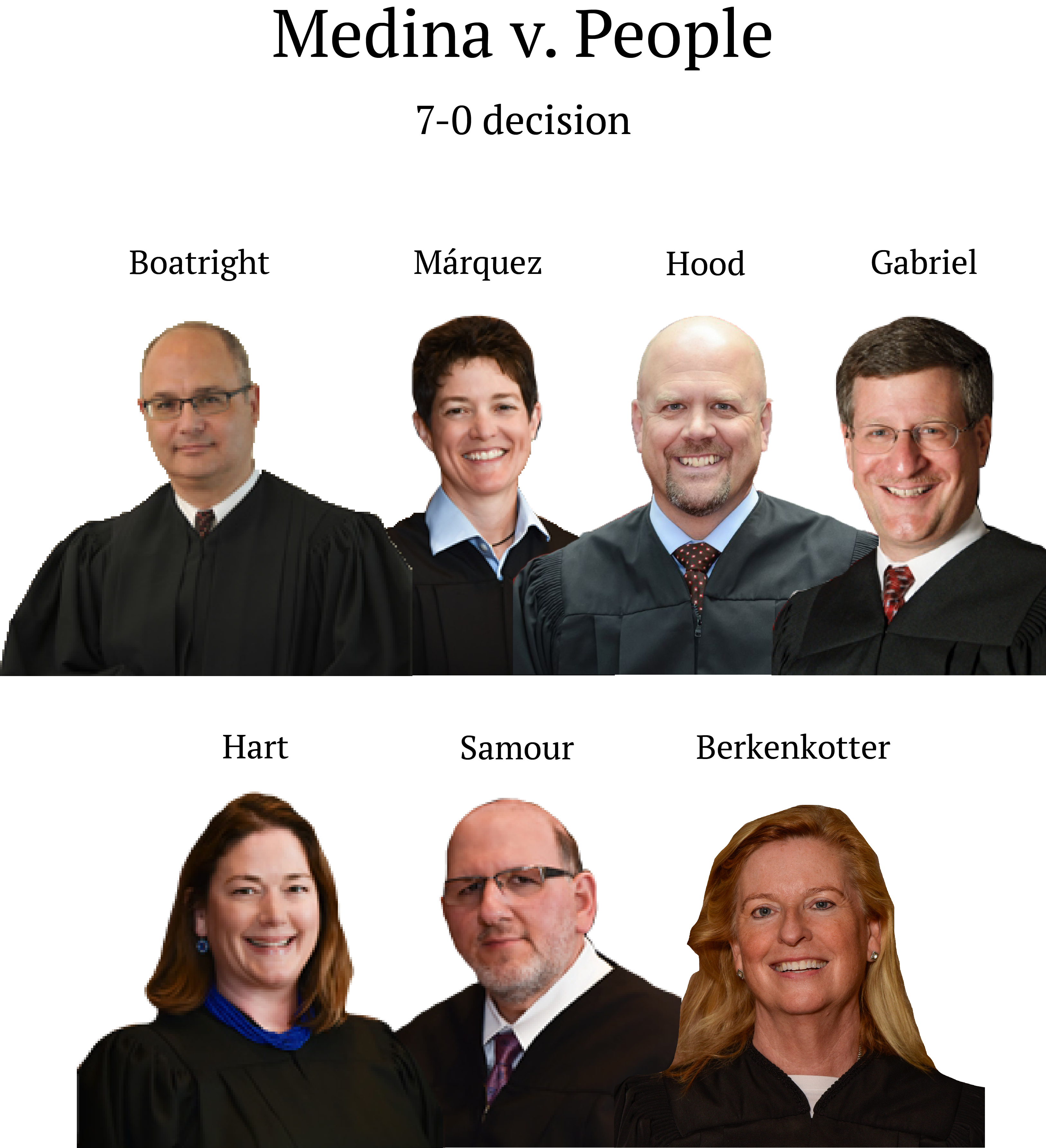
“Although a finding of strong evidence of actual guilt can show that an Alford plea comports with due process, it is not a constitutional prerequisite for every such plea,” wrote Chief Justice Brian D. Boatright in the Sept. 11 opinion.
Delano Marco Medina appealed his case to the Supreme Court after entering an Alford plea in Lake County for the offense of felony menacing. Medina’s attorney at the time said Medina did not believe in his “heart of hearts” that he committed the crime, but the guilty plea was designed to dismiss several other felony cases against Medina and impose a relatively light sentence on him.
Only later, when there was allegedly new evidence of Medina’s innocence of the menacing offense, did he seek to withdraw his plea. He argued the trial judge improperly allowed him to proceed with his Alford plea, despite the requirement in Colorado’s criminal rules that guilty pleas have a “factual basis” – meaning evidence of guilt.
Although Medina acknowledged he made the Alford plea voluntarily, “Mr. Medina continued to say, ‘I am innocent.’ This shows he is not understanding what is going on,” attorney Krista A. Schelhaas argued to the Supreme Court earlier this year.
The Court of Appeals previously examined whether Medina’s plea was knowing, voluntary and intelligent, which is a requirement of due process. A three-judge panel looked to the original Alford decision, which involved a defendant who pleaded guilty to murder while maintaining his innocence because a guilty verdict at trial could have resulted in the death penalty. The panel determined Alford did not contain a constitutional requirement for strong evidence of guilt.
While courts across the country have disagreed about whether a factual basis for an Alford plea is necessary, the panel declined to impose such a requirement in Colorado.
Even if Medina pleaded guilty to an offense he did not commit, wrote Judge Sueanna P. Johnson, he did so to purposefully receive a “very generous” plea deal that resulted in dismissal of his other criminal cases – in which Medina did not dispute he was guilty.
On appeal to the state Supreme Court, the justices recognized the safeguard that comes from convicting defendants only when there are facts suggesting their guilt.
“The defendant doesn’t have to admit guilt, but the whole point of saying there’s some factual basis is to ensure we don’t enter a judgment of conviction against an innocent person,” said Justice Richard L. Gabriel.
Alford pleas can be controversial. In a 2003 article, law professor Albert W. Alschuler argued there can “hardly be a clearer violation of due process than sending someone to prison who has neither been found guilty nor admitted his guilt.”
Similarly, law professor Bryan Ward has observed that Alford pleas provide a “false sense of security,” especially for those convicted of sex offenses who typically must take responsibility for their actions to receive treatment.
The state Supreme Court ultimately decided there is no constitutional requirement for a judge to find evidence of guilt before accepting an Alford plea. Boatright noted such evidence can be one way – but not the only way – for judges to determine a defendant has voluntarily entered a guilty plea with knowledge of the consequences.
“While a defendant’s choice to plead guilty may be influenced by the factual basis for the charge, it may equally be influenced by other considerations,” Boatright explained.
In Medina’s case, he chose to plead guilty to a crime he believed he was innocent of, in exchange for one year in prison and the dismissal of other charges he acknowledged he was guilty of. In doing so, Medina gave up his right to have a judge find that evidence of his guilt existed, and he indicated he understood what was happening.
“So long as the defendant’s choice to plead guilty is voluntary, knowing, and intelligent, the Constitution’s mandate is met,” Boatright concluded.
The case is Medina v. People.


Colorado justices accept appeals on Netflix taxation, children pursuing neglect cases
Michael Karlik
michael.karlik@coloradopolitics.com
Updated 11 hours ago
The Colorado Supreme Court announced on Monday that it will decide whether Netflix subscriptions are subject to the state’s sales tax as “tangible personal property.” At least three of the court’s seven members must agree to hear an appeal. The...

Denver judge denies Gov. Polis request to dismiss ICE-related records case
Marianne Goodland
marianne.goodland@coloradopolitics.com
Updated 14 hours ago
A year after blocking the release of state records to federal immigration agents, a Denver judge has now denied Gov. Jared Polis’ effort to end the lawsuit at the center of the dispute. The lawsuit filed against the governor in...

10th Circuit grants rare all-judges’ review of Colorado banking regulation
Michael Karlik
michael.karlik@coloradopolitics.com
Updated 15 hours ago
The Denver-based federal appeals court announced on Thursday that it will hold a rare all-judges review of a recent decision that permits Colorado to require out-of-state banks to abide by the state’s maximum interest rates when they lend to in-state...
Colorado appeals court orders new sentencing for Tina Peters, upholds convictions
Michael Karlik
michael.karlik@coloradopolitics.com
Updated 10 hours ago
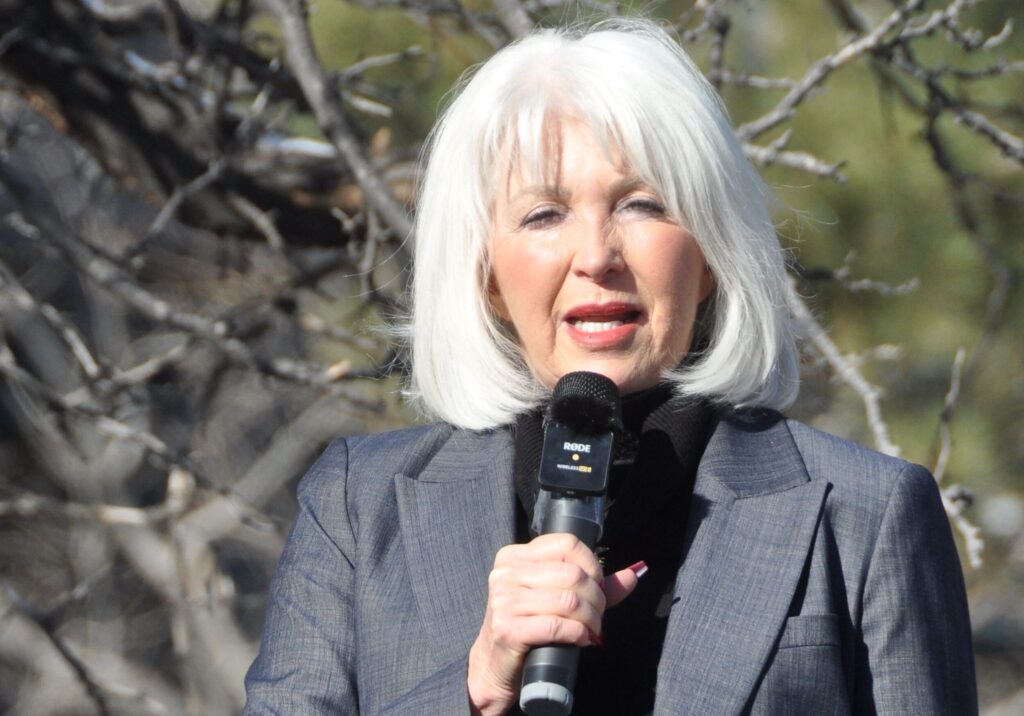
Colorado’s second-highest court determined on Thursday that a trial judge improperly sentenced former Mesa County clerk Tina Peters based upon her exercise of protected speech, while at the same time upholding her convictions. The three-judge Court of Appeals panel also...
Judge rules that Colorado law makes it too hard for parties to bar unaffiliated voters from primaries
Ernest Luning
ernest.luning@coloradopolitics.com
Updated 17 hours ago
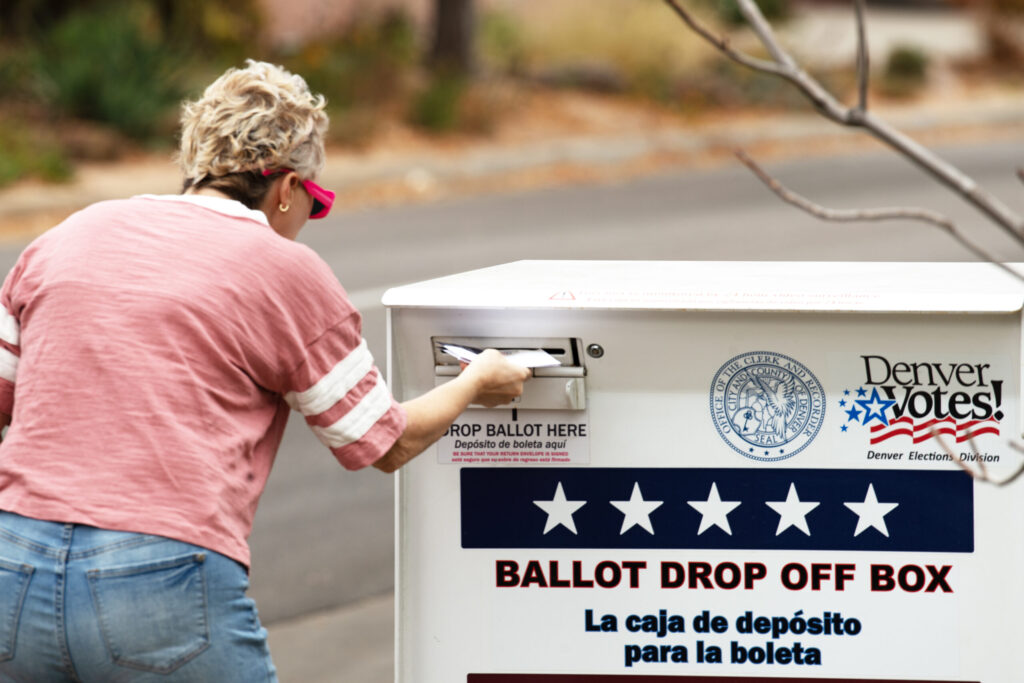
A federal judge ruled in favor of the Colorado Republican Party late Tuesday, saying that a portion of the state law that allows unaffiliated voters to cast ballots in party primaries is unconstitutional because it imposes an unrealistic burden on...
10th Circuit upholds regulator’s methodology for Tri-State exit fees
Michael Karlik
michael.karlik@coloradopolitics.com
Updated 17 hours ago
The Denver-based federal appeals court upheld a regulatory agency’s methodology for calculating the fee owed by entities seeking to withdraw from Tri-State Generation and Transmission Association last week. Tri-State is a Westminster-based cooperative that provides and transmits electricity to member...
Federal judge proposes sanctions against Mike Lindell’s lawyers for continued fake citations
Michael Karlik
michael.karlik@coloradopolitics.com
Updated 2 days ago
A federal judge is once again pursuing sanctions against lawyers for MyPillow CEO Mike Lindell for continuing to cite to court cases that do not exist, likely based on the faulty output of artificial intelligence tools. Last year, a jury...
Susan Blanco signals views on role of appellate courts in first opinion as Colorado justice
Michael Karlik
michael.karlik@coloradopolitics.com
Updated 2 days ago
Justice Susan Blanco’s first solo opinion as a new member of the Colorado Supreme Court made clear her view of the guardrails that keep the state’s highest court tethered to the issues it is asked to decide. On Monday, the...

Colorado leaders weigh next steps after Supreme Court rejects state ban on ‘conversion therapy’
Marissa Ventrelli
marissa.ventrelli@coloradopolitics.com
Updated 2 days ago
Colorado leaders said they are weighing next steps after the U.S. Supreme Court on Tuesday rejected the state’s ban on “conversion therapy” for children, as critics and supporters cheered or lambasted the ruling. The court’s near-unanimous decision called the Colorado...
Federal judge dismisses U.S. government lawsuit against Colorado, Denver’s ‘sanctuary’ laws
Michael Karlik
michael.karlik@coloradopolitics.com
Updated 2 days ago
A federal judge dismissed the U.S. government’s lawsuit against Colorado and Denver on Tuesday, which alleged that various local policies impermissibly infringed on federal immigration enforcement. U.S. District Court Judge Gordon P. Gallagher followed the lead of judges in Illinois...
PREV
PREVIOUS
Asphalt remains in Yellowstone River, even after cleanup from train derailment | OUT WEST ROUNDUP
MONTANA Petroleum asphalt remains in Yellowstone River after train derailment cleanup REED POINT – Two months after a railroad bridge collapse sent carloads of hazardous oil products plunging into Montana’s Yellowstone River, the cleanup workers are gone and a mess remains. Thick mats of tarry petroleum asphalt cover portions of sandbars. Oil-speckled rocks and bushes […]

Fourth Polis official 'transitions' in less than three months
Gov. Jared Polis on Monday announced the “transition” of Rick Garcia, who has served as executive director of the Colorado Department of Local Affairs since the governor took office in 2019. Garcia, who is leaving his current in January, becomes the fourth member of the Polis cabinet to “transition” in the administration this year. That […]