

Denver judge denies state motion to dismiss lawsuit over $5.4 billion transportation fees

A Denver District Court judge Wednesday dismissed a state motion to toss a lawsuit filed against a 2021 law setting up a series of transportation fees.
The lawsuit was filed in April 2022 by Advance Colorado Institute, two individual plaintiffs and Americans for Prosperity.
It challenged the General Assembly’s passage of Senate Bill 21-260, which established four state enterprises and modified a fifth to pay for transportation projects. The measure, which Gov. Jared Polis signed into law, is a $5.4 billion, 10-year plan to build out roads and bridges, create electric vehicle charging stations, boost mass transit and mitigate air pollution.
The plaintiffs said the law violates the state constitution’s single-subject requirement and was an attempt to get around Proposition 117, a 2020 ballot measure that requires voter approval for any new fees for enterprises that generate more than $100 million in revenue in the first five years.
Judge Andrew J. Kuken orally denied the state’s motion Wednesday.
“Voters passed Proposition 117 to make sure they had a say when it comes to big fees,” Michael Fields of Advance Colorado said Wednesday. “Since SB-260 is a $5.4 billion fee increase over the next decade, voter approval was necessary before it could become law. We are happy to see the judge deny the motion to dismiss and allow this important case to continue.”


Federal judge dismisses claims against medical contractor for Eagle County jail suicide
Michael Karlik
michael.karlik@coloradopolitics.com
Updated 23 hours ago
A federal judge dismissed the claims against a medical contractor for the Eagle County jail and its employees earlier this month, concluding there were insufficient allegations that they violated the constitutional rights of a man who died by suicide in...

Federal judge advances lawsuit seeking overtime compensation for Aurora firefighter trainees
Michael Karlik
michael.karlik@coloradopolitics.com
Updated 1 day ago
A federal judge gave preliminary approval earlier this month to a class of Aurora firefighter trainees who may sue the city over allegations that they were denied overtime pay in violation of federal law. Joseph Elias, who attended Aurora’s fire...
Appeals court says jury not obligated to apply discounts to determine value of stolen merch
Michael Karlik
michael.karlik@coloradopolitics.com
Updated 1 day ago
Colorado’s second-highest court concluded on Thursday that it was up to a Douglas County jury to determine the value of stolen merchandise at a defendant’s theft trial, after both sides presented different estimates of the items’ value. Under state law,...
Public figures have limited path to sue over accusations of criminality, says appeals court
Michael Karlik
michael.karlik@coloradopolitics.com
Updated 1 day ago
Colorado’s second-highest court ruled last week that a public figure cannot sue for defamation solely because a person publicly accuses them of committing a crime, as the statement may be constitutionally protected opinion. A three-judge Court of Appeals panel narrowed...
Federal judge to consider sanctioning ex-Colorado judicial discipline director
Michael Karlik
michael.karlik@coloradopolitics.com
Updated 2 days ago
A federal judge ordered Colorado’s former head of judicial discipline on Wednesday to explain why she should not sanction him for making inaccurate statements about the defendants in his lawsuit against the Colorado Supreme Court and related entities. U.S. District...

Federal judge green-lights trial against Denver officer over race-based enforcement
Michael Karlik
michael.karlik@coloradopolitics.com
Updated 22 hours ago
A federal judge green-lit a jury trial last week on a man’s claim that a Denver police officer engaged in racially selective enforcement of the law by arresting him for video recording at a police station, while not arresting a...
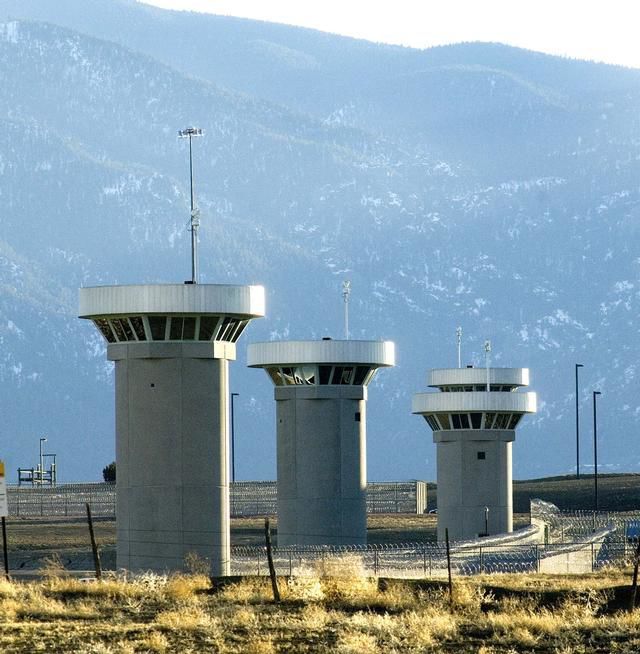
Federal judge says 8 years in solitary confinement not grounds to reduce man’s sentence
Michael Karlik
michael.karlik@coloradopolitics.com
Updated 3 days ago
A federal judge concluded earlier this month that a man’s eight years allegedly spent in solitary confinement did not justify granting his request for a sentence reduction. However, U.S. District Court Senior Judge William J. Martínez signaled his willingness to...
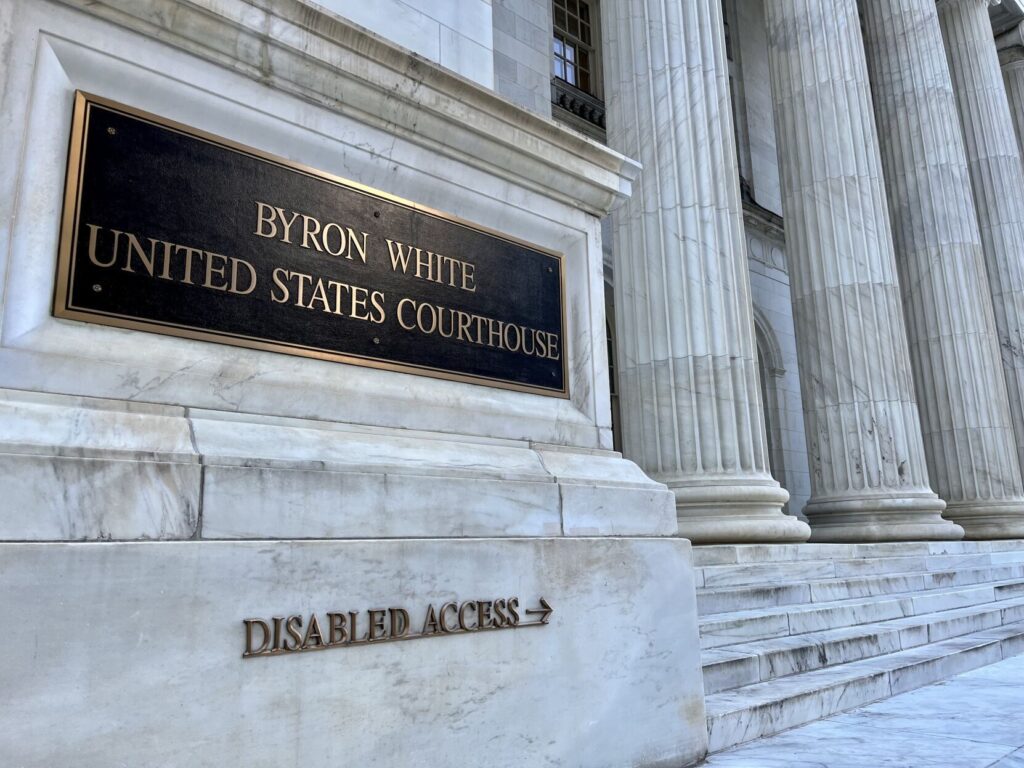
10th Circuit rejects ‘potential for violence’ when police arrest vehicle occupant’s romantic partner
Michael Karlik
michael.karlik@coloradopolitics.com
Updated 2 days ago
The Denver-based federal appeals court rejected the idea on Tuesday that a vehicle occupant poses a danger to police solely because they are romantically involved with another occupant who officers are arresting. By 2-1, a three-judge panel of the U.S....

Colorado justices grill debt collector about compliance with law
Michael Karlik
michael.karlik@coloradopolitics.com
Updated 3 days ago
The Colorado Supreme Court repeatedly pressed a debt collection company last week to explain how its lawsuit against a Boulder woman for an unpaid credit card balance complied with the specific requirements that state lawmakers have created. Portfolio Recovery Associates,...
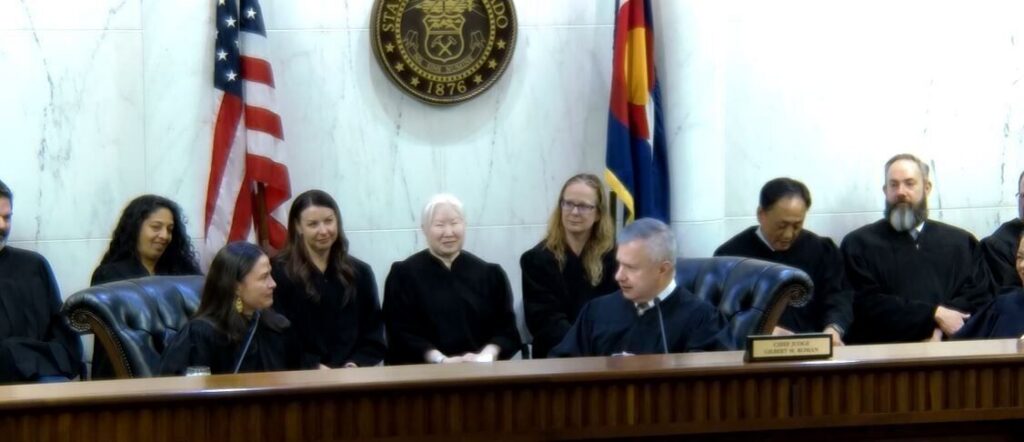
Appeals court agrees defendant’s speech constitutionally protected against El Paso County judge
Michael Karlik
michael.karlik@coloradopolitics.com
Updated 3 days ago
Colorado’s second-highest court agreed last week that a defendant’s critical statements toward an El Paso County judge were constitutionally protected and could not form the basis of a retaliation charge. A three-judge Court of Appeals panel concluded that, in context,...
PREV
PREVIOUS

Colorado companies urged to help solve the West's water woes
As more people pay attention to the water crisis in the West, Colorado business leaders are being asked to take on a larger role. One effort, led by Colorado Concern and the Denver Metro Chamber of Commerce, began on Tuesday night in a forum at the Denver Museum of Nature & Science, where panelists, who […]

Appeals court allows ex-Boulder council candidate's defamation lawsuit to proceed against activist
Colorado’s second-highest court more precisely defined the contours of defamatory online speech last week, allowing a former Boulder City Council candidate’s lawsuit to proceed against a political activist who created an impersonation Twitter account that linked to unflattering material about the candidate. At the same time, a three-judge panel of the Court of Appeals declined […]