

Elijah McClain Case: Toxicology, use of force experts to take stand
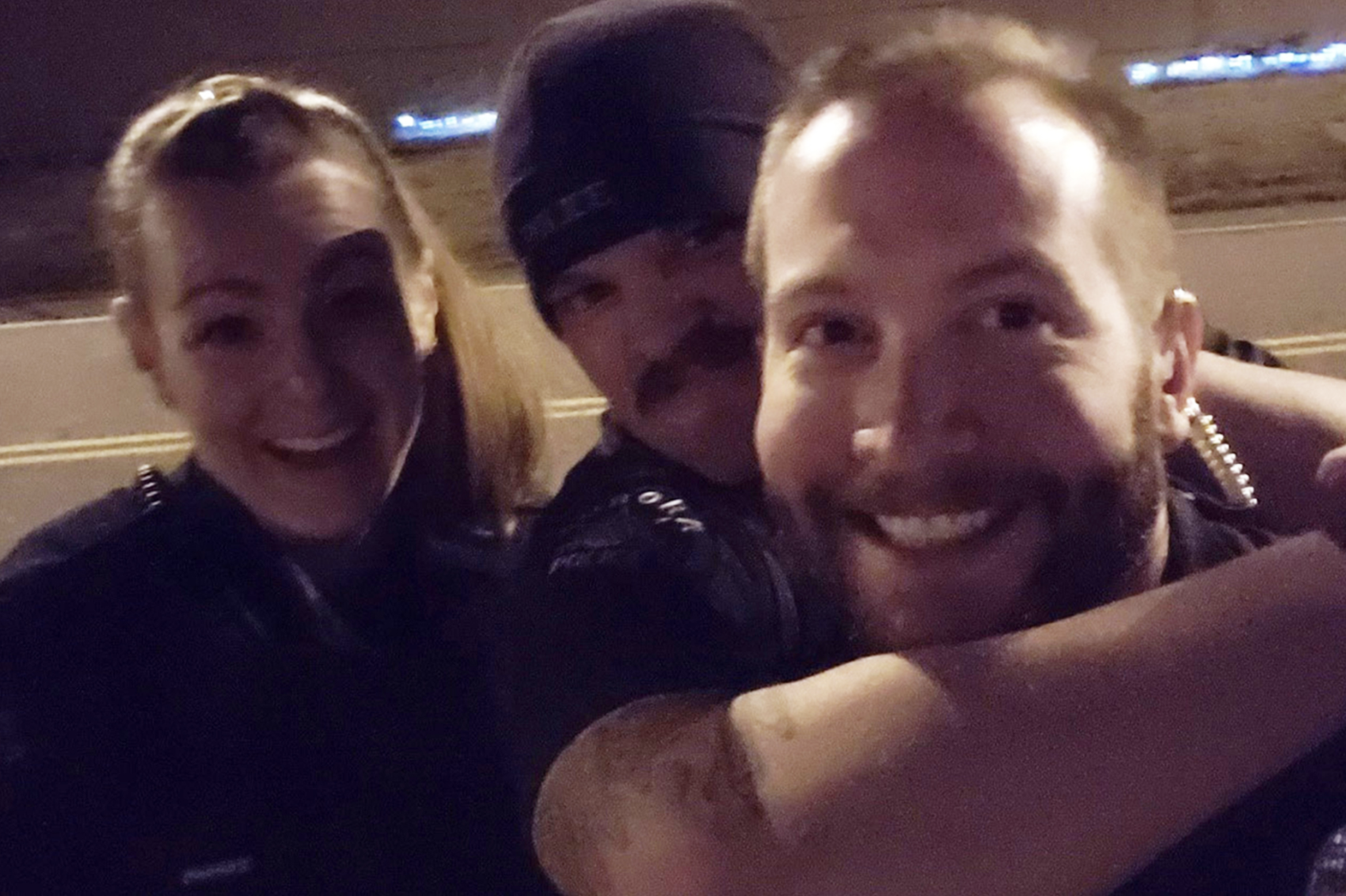
Carotid holds, police use-of-force procedure and a selfie mocking Elijah McClain’s death were discussed Friday in a motions hearing which offered a sneak preview into one of three upcoming trials in the high-profile case.
Aurora police officer Nathan Woodyard was in the courtroom for the five-hour motions hearing dressed in civilian clothes. He was placed on non-enforcement duties in June 2021.
Trial pushed back for two Aurora police officers accused in Elijah McClain’s death
Prosecutors with the Colorado Attorney General’s office, Woodyard’s attorneys and 17th Judicial District Judge Mark Warner also discussed how best to pare down the number of prospective jurors with a questionnaire, since Adams County’s jury assembly room can only hold 500 people. Jury selection is scheduled to start Monday, Oct. 16.
Woodyard’s attorneys argued that though he was the first on the scene, he became emotionally distraught as McClain was held down by the other two officers. They also pointed out that Woodyard never opened – and actually deleted – a selfie sent by three other Aurora officers mocking McClain’s death two months after the incident.
Judge Warner countered that it would require “a great deal of speculation” for the jury to be sure whether what Woodyard’s behavior meant in relation to his role in McClain’s death.
First trial for officers in Elijah McClain’s death now set for September
Woodyard, who was on the Aurora force for nearly three years, is being tried separately from former Aurora police officers Randy Roedema and Jason Rosenblatt, whose joint trial begins Sept. 18. Their trial was pushed back from its original July date after their attorneys argued they needed more time to review the approximately 40,000 pages of evidence produced by prosecutors.
Paramedics Jeremy Cooper and Peter Cichuniec are currently scheduled for a pre-trial conference Nov. 2.
The three trials are each expected to take three weeks.
During Friday’s hearing in Woodyard’s case, attorneys revealed that the prosecution intends to call dozens of expert witnesses including at least one person who will discuss police use of force policies, a toxicology expert from NMS Labs, and the Denver police officer who trained the Aurora police and testified in the grand jury.
Gov. Jared Polis ordered Attorney General Phil Weiser to open a criminal investigation into the case and a statewide grand jury indicted two paramedics and three officers in September 2021 in McClain’s death.
McClain, 23, died in a hospital in 2019 days after he went into cardiac arrest following an encounter when the three police officers forcibly restrained him on Aug. 24, put him in a control neck hold and a paramedic called to the scene injected him with the sedative ketamine.
Aurora Police officers had responded to a call reporting a person wearing a mask who looked “sketchy” as McClain walked home from a convenience store after buying iced tea, but he was not suspected of any crime. He wore a ski mask to keep warm because of anemia, according to relatives.
The five face 32 counts altogether, including criminally negligent homicide, manslaughter and second-degree assault causing serious bodily injury. Cooper and Cichuniec also face a count each of second-degree assault with a deadly weapon – ketamine – and unlawfully administering the sedative without consent.
They have each pleaded not guilty.
An autopsy report by Dr. Stephen Cina originally characterized McClain’s cause and manner of death undetermined. But an amended autopsy report, released last year after a group of news organizations sued the Adams County coroner for its disclosure, concluded McClain would have most likely survived if not for the administration of ketamine. It was determined to be too high for his body weight. However, Cina still found his manner of death undetermined, not a homicide.
Cina’s amended report adds he saw “no evidence that injuries inflicted by police contributed to death” because McClain was conscious, able to speak and responsive following the neck hold and removal of the officers’ body weight from him.
Attorneys request trial delay for two Aurora officers charged in Elijah McClain’s death
In court Friday, Woodyard’s attorney, Andrew Ho, said “quite frankly, we don’t know the cause of death” and noted it’s also unknown whether Woodyard’s actions caused it. Earlier he argued for jurors to be instructed in the difference between a choke hold and a carotid hold. “There’s not a shred of evidence that officers used a choke hold” on McClain,” said Ho.
Prosecutor Jason Slothouber countered that a state grand jury and a judge found that there was probable cause to take the five defendants to trial.
McClain’s mother, Sheneen McClain watched Woodyard’s hearing virtually.
This story has been corrected to clarify the fact Nathan Woodyard, who is still an Aurora police officer, was present for Friday’s hearing.
Denver Gazette reporter Julia Cardi contributed information for this report.


Appeals court overturns Douglas County vehicular homicide conviction due to faulty jury instructions
Michael Karlik
michael.karlik@coloradopolitics.com
Updated 11 hours ago
Colorado’s second-highest court overturned a defendant’s vehicular homicide conviction and 12-year prison sentence on Thursday after determining a Douglas County judge omitted key language from the jury instructions that could have resulted in a different outcome. James Paul McDonald was...
Federal judge dismisses malicious prosecution claim against former Denver prosecutor
Michael Karlik
michael.karlik@coloradopolitics.com
Updated 1 day ago
A federal judge concluded on Monday that a former Denver prosecutor could not be sued for allegedly causing the arrests of two plaintiffs after they failed to appear for trial on the scheduled date, even though the trial had been...
Judicial discipline commission reports increased transparency, increased submissions
Michael Karlik
michael.karlik@coloradopolitics.com
Updated 1 day ago
The Colorado Commission on Judicial Discipline received 473 misconduct complaints about judges in 2025, which was nearly 29% higher than in 2024 and substantially greater than any time in the past decade. However, only 31 complaints were referred to the commission...
Colorado Gov. Jared Polis ignites fierce debate after raising clemency questions in Tina Peters case
Marianne Goodland
marianne.goodland@coloradopolitics.com
Updated 1 day ago
Gov. Jared Polis ignited a political firestorm Tuesday night after weighing in on the prison sentences of two former Colorado officials — a Democrat and a Republican — convicted of attempting to influence a public servant. The comments quickly fueled...

Colorado Supreme Court signals intervention in dispute over treatment for trans children
Michael Karlik
michael.karlik@coloradopolitics.com
Updated 2 days ago
The Colorado Supreme Court ordered Children’s Hospital Colorado on Tuesday to explain why it should not direct the organization to resume providing certain types of services to transgender children in compliance with the state’s non-discrimination law. Last month, a Denver...

Judge nixes latest policy requiring 7 days’ notice for Congress members to visit ICE facilities
Michael Kunzelman
michael.kunzelman@associatedpress.com
Updated 2 days ago
WASHINGTON (AP) — A federal judge agreed on Monday to temporarily suspend the latest version of a Trump administration policy that requires members of Congress to provide a week’s notice before they can visit immigration detention facilities. U.S. District Judge...
Judge nixes latest policy requiring 7 days’ notice for Congress members to visit ICE facilities
Michael Kunzelman
michael.kunzelman@associatedpress.com
Updated 2 days ago
WASHINGTON • A federal judge agreed on Monday to temporarily suspend the latest version of a Trump administration policy that requires members of Congress to provide a week’s notice before they can visit immigration detention facilities. U.S. District Judge Jia...
Colorado Supreme Court clarifies restraining order violations can always support burglary charge
Michael Karlik
michael.karlik@coloradopolitics.com
Updated 1 day ago
The Colorado Supreme Court’s majority ruled on Monday that a violation of a restraining order can also serve as a basis for finding a defendant guilty of burglary. Under state law, a person commits second-degree burglary by unlawfully entering or...

10th Circuit judge creates vacancy, district court gets new chief judge | COURT CRAWL
Michael Karlik
michael.karlik@coloradopolitics.com
Updated 3 days ago
Welcome to Court Crawl, Colorado Politics’ roundup of news from the third branch of government. A longtime member of the Denver-based federal appeals court will give the president a vacancy to fill, plus Colorado’s federal trial court will see a...
Morgan County man accused of killing wife, staging her suicide charged with first-degree murder
Kyla Pearce
kyla.pearce@gazette.com
Updated 2 days ago
A grand jury announced the indictment of 52-year-old Ronald Lowry, who is accused of killing his wife in October 2023 and staging the crime scene to look like a suicide. Lowry, who was arrested Friday in Morgan County, was charged...
PREV
PREVIOUS

Colorado students' records exposed after massive data breach
Decades of records belonging to Colorado students could be at risk following a massive data breach at the state’s Department of Higher Education. Officials are continuing to investigate a cybersecurity ransomware incident that occurred between June 11 and June 19, exposing students’ names, social security numbers, student identification numbers and other education records, CDHE announced […]

Romer calls special session to deal with ‘Summer of Violence’ | A LOOK BACK
Thirty Years Ago This Week: Answering to mounting pressure, Gov. Roy Romer announced a special legislative session on Sept. 7 to address an onslaught of juvenile violence that had swept across the Denver metro area and the state. One approach being considered by Romer’s staff was a ‘boot-camp’ for juveniles apprehended in the possession of […]