

Oil, gas withdrawal by feds fuels debate over economic costs to Navajo Nation | OUT WEST ROUNDUP
NEW MEXICO
Drilling withdrawal sparks debate over economic costs for Navajos
ALBUQUERQUE – Some Republican members of Congress on July 13 denounced the Biden administration’s recent move to withdraw hundreds of square miles of federal land in New Mexico from oil and gas development, offering their support instead to legislation that would unravel the ban.
U.S. Rep. Eli Crane was among those to speak out during a congressional subcommittee hearing on the legislation that he and fellow Arizona Republican Rep. Paul Gosar recently introduced to nullify what they consider overreach by the federal government.
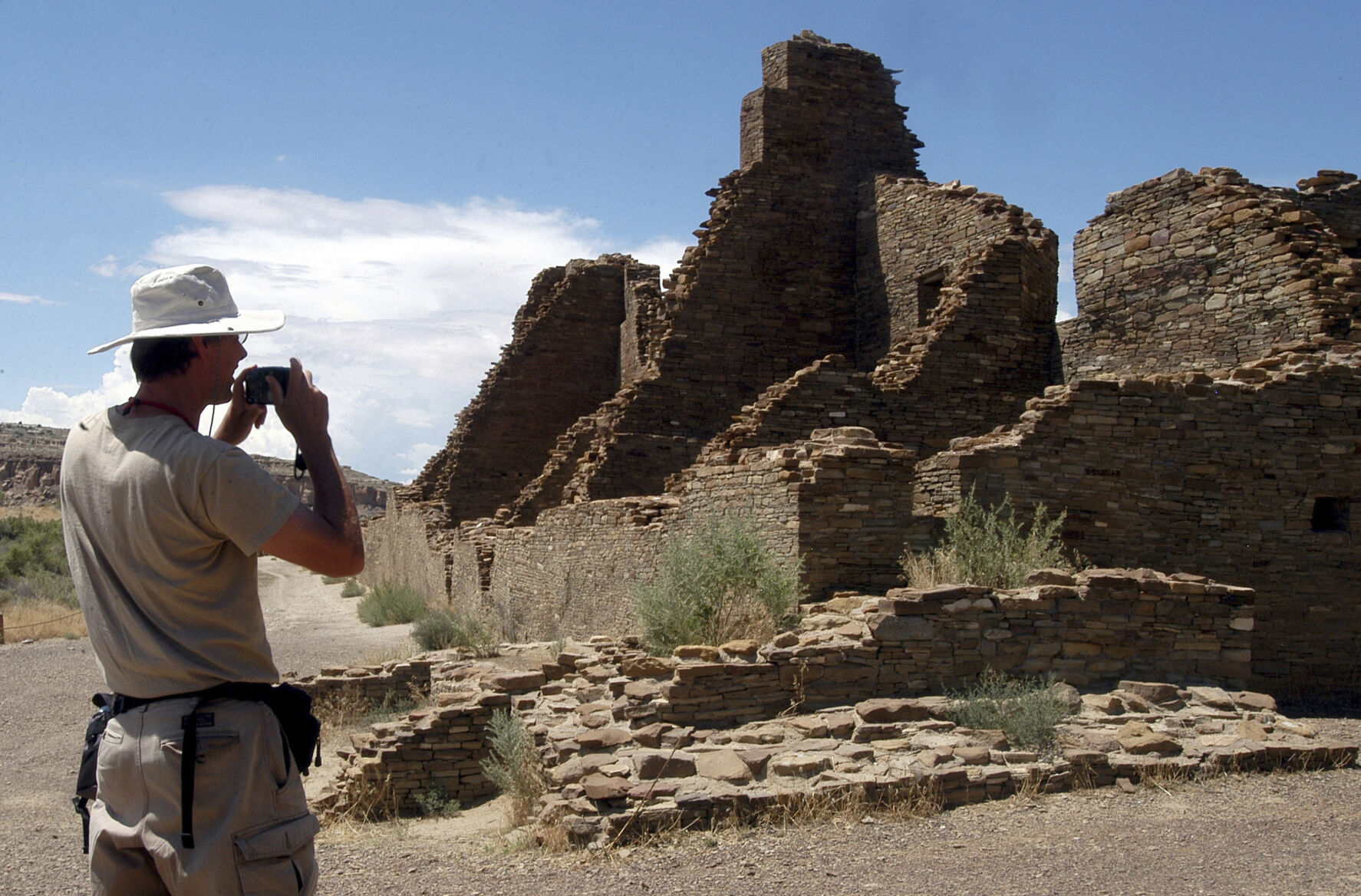
Crane’s district includes part of the vast Navajo Nation, which spans portions of Arizona, New Mexico and Utah. The eastern side of the reservation is part of a jurisdictional checkerboard that includes federal, state and private lands along with Chaco Cultural National Historical Park.
Although the Navajo Nation has been among the tribes to seek protections for sacred areas within the Chaco region over the decades, Navajo leaders had proposed a smaller buffer around the park to limit the economic consequences of a federal ban land locking individual Navajo parcels.
Navajo President Buu Nygren contends that the administration gave no weight to the tribe’s concerns before imposing the ban.
Interior Secretary Deb Haaland, the first Native American Cabinet member in the U.S., has said previously that her agency consulted with Navajo leadership, and numerous public meetings and comment periods were held over the last two years as part of the process.
US officials vow to prioritize cleanup at nuclear lab
ALBUQUERQUE – The price tag for cleaning up waste from the once top-secret Manhattan Project and subsequent Cold War-era nuclear research at Los Alamos National Laboratory has more than doubled in the last seven years, and independent federal investigators say federal officials will have to do better to track costs and progress.
The Government Accountability Office in a report issued on July 19 said while some improvements have been made, the U.S. Energy Department hasn’t taken a comprehensive approach to prioritizing cleanup activities at the New Mexico lab.
The report came as federal officials hosted a forum on July 20 in Los Alamos to talk about cleaning up contaminated soil and groundwater and handling hazardous waste generated by decades of research that started with development of the atomic bomb during the 1940s.
Ike White, who heads DOE’s Office of Environmental Management, said the release this week of the “Oppenheimer” film makes it a good time to talk about the legacy that came from the dawning of the atomic age. Part of the environmental cleanup mission requires an examination of history, White told those gathered at the historic Fuller Lodge in the heart of Los Alamos.
Environmental management officials at Los Alamos said they expect to complete remaining cleanup activities at the lab by 2043 at an estimated cost of about $7 billion.
IDAHO
Groups sue to overturn ‘abortion trafficking’ law
Advocates who counsel and aid Idaho teenagers seeking abortion care filed suit on July 11 against Republican Attorney General Raúl Labrador in a bid to overturn the state’s abortion travel ban.
The travel ban, which took effect May 5, created the crime of ” abortion trafficking,” punishable by a minimum of two years in prison. It forbids helping a person under 18 years old obtain abortion pills or leave the state for abortion care without parental permission.
The complaint, filed in federal court in Boise, Idaho, says the ban infringes on the right to interstate travel and on First Amendment rights to speak about abortion and “engage in expressive conduct, including providing monies and transportation (and other support) for pregnant minors traveling within and outside of Idaho.”
In a statement, Idaho’s Office of the Attorney General said, “While we don’t comment on pending litigation, our office is always prepared to vigorously defend the constitutionality of statutes duly passed by the legislature.”
The plaintiffs include the Indigenous Idaho Alliance, a nonprofit that has helped pregnant minors access abortion care outside the state; the Northwest Abortion Access Fund, which provided financial assistance to 166 Idahoans in 2022, including 18 minors; and Lourdes Matsumoto, an attorney who works with victims of domestic and sexual violence, many of whom are minors.
Idaho’s law, the first in the nation to describe “abortion trafficking,” requires a minimum two-year prison sentence for any adult who acts “with the intent to conceal an abortion from the parents or guardian of a pregnant, unemancipated minor.”
NEVADA
Federal court denies bid to block lithium mine
RENO – The latest bid by conservationists and tribal leaders to block construction of a huge lithium mine already in the works along the Nevada-Oregon line was denied by the 9th U.S. Circuit Court of Appeals on July 17.
A three-panel judge of the San Francisco-based appellate court rejected a half-dozen legal arguments the opponents had put forth in their appeal seeking to overturn federal land managers’ approval of one of the projects at the forefront of President Joe Biden’s plans to combat climate change.
The critics have been fighting it in federal court for two years. They claim the open-pit mine, as deep as the length of a football field, will violate multiple environmental laws and destroy lands tribal members consider sacred because they say dozens of their ancestors were massacred there in 1865.
Lithium Nevada Corp.’s mine at Thacker Pass, 200 miles northeast of Reno, would involve extraction of the silvery-white metal used in electric vehicle batteries.
The bureau approved the mine in 2021 on an accelerated basis under Donald Trump’s administration. The Biden administration has continued to embrace it in an effort to ramp up U.S. lithium production.
Spokespeople for the plaintiffs said after the July 17 ruling they were considering their legal options.
OKLAHOMA
State executes man for 1995 butcher knife slaying
McALESTER- Oklahoma executed a man on July 20 for stabbing a Tulsa woman to death with a butcher knife in 1995 after his escape from a prison work center.
Jemaine Cannon, 51, received a lethal injection at 10:01 a.m. and was pronounced dead 12 minutes later at the Oklahoma State Penitentiary in McAlester. It was the second execution in Oklahoma this year and the ninth since the state resumed lethal injections in 2021.
Cannon was convicted of killing 20-year-old Sharonda Clark, a mother of two with whom Cannon had been living at an apartment in Tulsa after his escape weeks earlier from a prison work center in southwest Oklahoma. Cannon had been serving a 15-year sentence for the violent assault of another woman who suffered permanent injuries after prosecutors say Cannon raped her and beat her viciously with a claw hammer, iron and kitchen toaster.
A federal appeals court late on July 19 denied Cannon’s last-minute appeal seeking a stay of execution in which Cannon claimed, among other things, that he was Native American and not subject to Oklahoma jurisdiction. Asked if he had any last words, Cannon said: “Yes, I confess with my mouth and believe in my heart that God raised Jesus from the dead. Therefore I am saved. Thank you.”
Clark’s eldest daughter, Yeh-Sehn White, and Clark’s sister, Shaya Duncan, witnessed Cannon’s execution and described it as peaceful.
In a statement sent to The Associated Press, Cannon’s attorney Mark Henricksen said the state’s decision to proceed with Cannon’s execution amounted to “historic barbarism,” saying his client is “nearly deaf, blind, and nearing death by natural causes” after decades of incarceration.


Democrats and Republicans tied on economy heading into 2026, survey finds
Rachel Schilke, Washington Examiner
rachel.schilke.washington.examiner@gazetteedit.wpenginepowered.com
Updated 5 hours ago
Voter confidence in Democrats and Republicans regarding the handling of the economy is evenly split, according to recent polling, highlighting the challenge both parties face on a central matter ahead of the 2026 midterm elections. A survey released on Thursday...

Advance Colorado initiative allowing law enforcement cooperation with ICE clears 200,000 signatures
Marissa Ventrelli
marissa.ventrelli@coloradopolitics.com
Updated 4 hours ago
A petition supporting a proposed 2026 ballot measure that would allow law enforcement to cooperate with federal immigration officers has received more than 200,000 signatures, according to Advance Colorado. If passed, Initiative 95 would allow Colorado law enforcement to report...

Trump sets his sights on peace progress in the new year with Netanyahu and Zelensky meetings
David Zimmermann Washington Examiner
davidzimmermannwashingtonexaminer@wpstage.coloradopolitics.com
Updated 4 hours ago
In the days leading up to the new year, President Donald Trump is reportedly preparing to meet with Israeli Prime Minister Benjamin Netanyahu and Ukrainian President Volodymyr Zelensky again to discuss peaceful resolutions to the foreign nations’ respective conflicts. The...
$3 million penalty upheld against for-profit college following half-decade of appeals
Michael Karlik
michael.karlik@coloradopolitics.com
Updated 5 hours ago
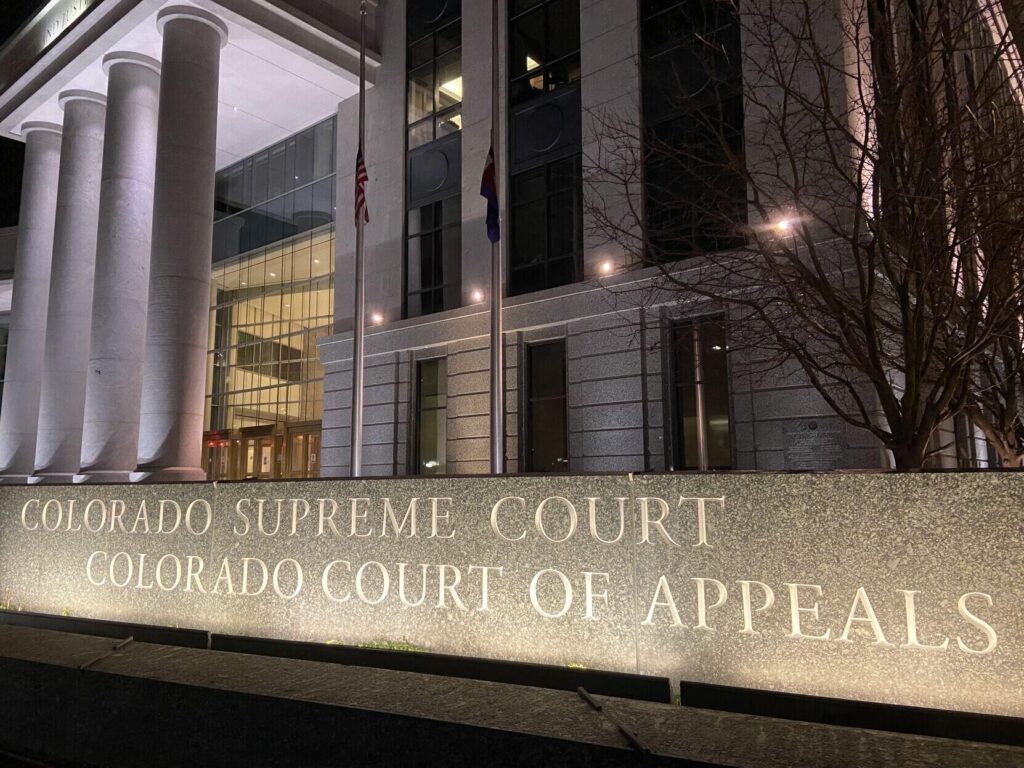
Colorado’s second-highest court upheld a $3 million penalty against a defunct for-profit college on Wednesday, agreeing the state had proven multiple violations of its consumer protection law. The Court of Appeals’ decision against CollegeAmerica followed a trial judge’s order in...

Colorado ski areas suffer, nobody has measured over 70 inches of total snowfall for winter 2025-26
Jonathan Ingraham
jonathan.ingraham@denvergazette.com
Updated 6 hours ago
Big changes coming as 10-15 inches of snow possible from incoming weekend storm, second snow event could double figure to start 2026 No Colorado ski area or resort has surpassed 70 inches of reported or estimated total snowfall amounts for...
Appeals court decides violations of child custody orders may be prosecuted per child
Michael Karlik
michael.karlik@coloradopolitics.com
Updated 1 day ago
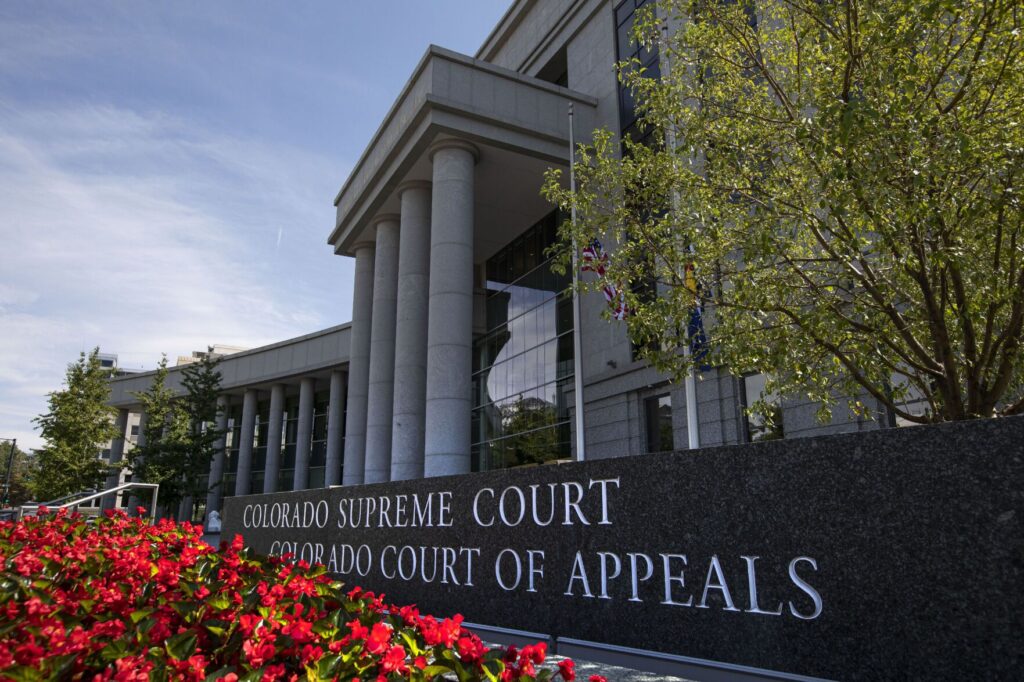
Colorado’s second-highest court concluded for the first time on Wednesday that a defendant may be charged with violating a child custody order based on the number of children affected, not the number of orders violated. Mesa County jurors convicted Tiffany...

Douglas County judge violated defendant’s right to counsel at sentencing, appeals court finds
Michael Karlik
michael.karlik@coloradopolitics.com
Updated 1 day ago
A Douglas County judge violated a defendant’s constitutional right to the counsel of her choice by refusing to postpone sentencing until her lawyer returned to the country, Colorado’s second-highest court concluded on Wednesday. In early 2023, Lyndie J. Felsher received...

New year, higher wages for Denver hourly and tipped workers
Deborah Grigsby
deborah.smith@denvergazette.com
Updated 22 minutes ago
Some Denver workers will be starting the new year with a pay raise as the city’s minimum wage rises to $19.29, up from $18.81. For tipped food and beverage workers, the minimum wage will jump from $15.79 to $16.27 per...

Businesses face losses after Xcel power shutoffs
Sage Kelley
sage.kelley@denvergazette.com
Updated 6 hours ago
Restaurants west of Denver are still coming to grips with product losses and future revenue concerns after power shutoffs last week by Xcel Energy, which cited high winds as the rationale for the decision. “It’s like living in a third-world...

Colorado PUC slates January hearings on natural gas plan, transmission line appeal, railroad rules
Scott Weiser
scott.weiser@gazette.com
Updated 6 hours ago
The Colorado Public Utilities Commission announced January public comment opportunities on railroad safety rules, natural gas infrastructure, and a major transmission line siting appeal. The hearings form part of expanded outreach efforts the commission launched to increase public participation in...
PREV
PREVIOUS

'Intersectionality' run wildly amok and other issues | SONDERMANN
“Intersectionality” is all the rage these days on the social justice left. The idea is that multiple forms of discrimination overlap or intersect to hold back members of marginalized groups. So, let’s talk briefly about intersections. Though, in this case, the subject is not civil rights or social equity, but the old-fashioned definition of the […]

Incoming leaders for Space Command, Northern Command, NORAD set to be delayed by Sen. Tommy Tuberville's hold on confirmations
For months GOP Sen. Tommy Tuberville has kept hundreds of military officers from taking their posts as he pressures the Department of Defense to change its abortion policy and now the incoming leaders of Colorado Springs-based Space Command and the combined Northern Command and North American Aerospace Defense Command are set to get caught up […]