

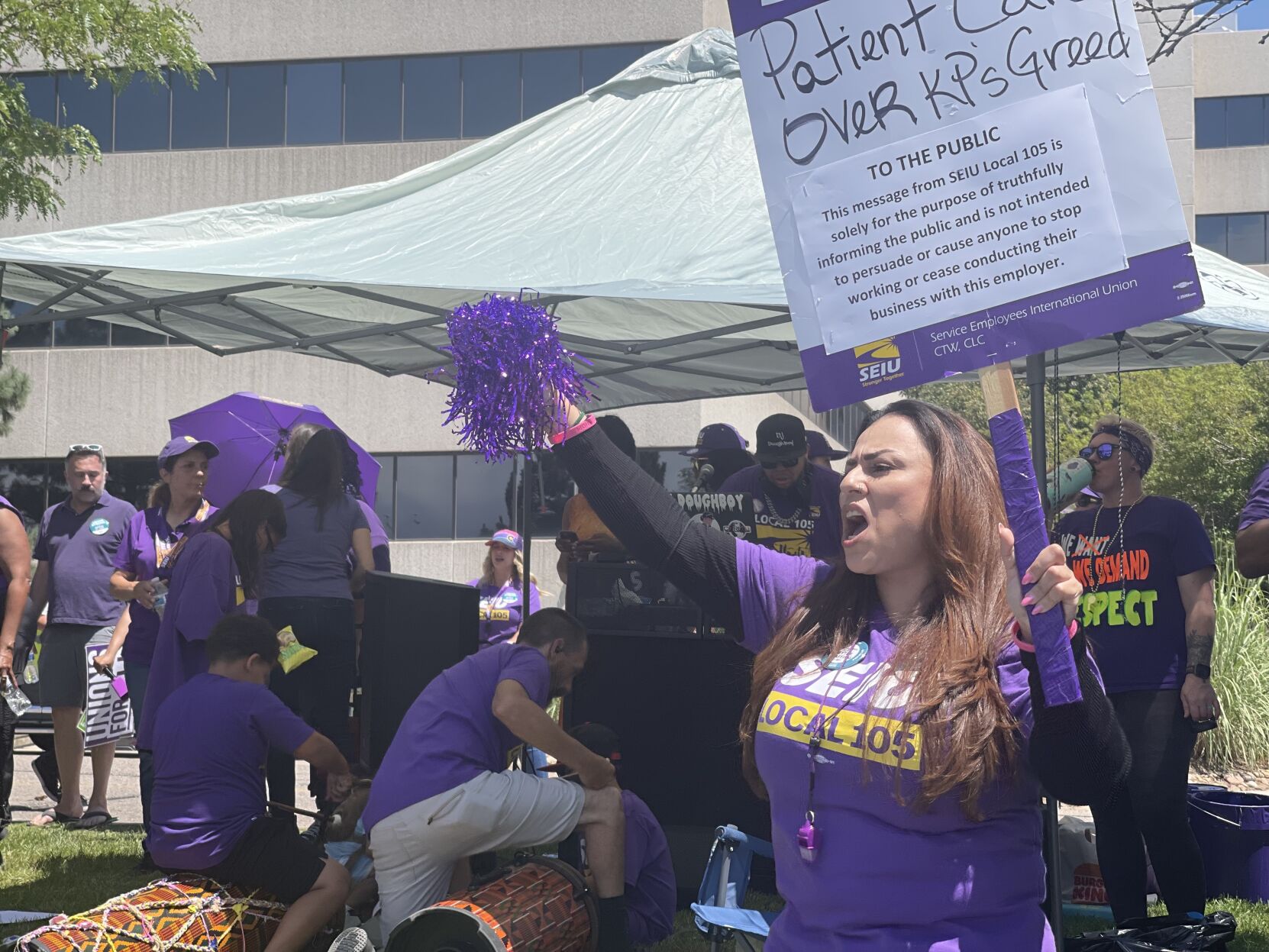
Kaiser Permanente employees picket in Aurora to demand higher wages, more staff

Carmen Madrigal, a breast cancer survivor, gets choked up talking about the phone calls she’s made to cancer patients to cancel appointments because Kaiser Permanente was short staffed.
“This is not OK,” said Madrigal, of Aurora.
Madrigal, an optical business coordinator, has worked for Kaiser Permanente in Colorado for nearly nine years.
She was one of what organizers estimated as roughly 1,000 Service Employees International Union (SEIU) members who stood on the picket line outside the Kaiser Permanente Waterpark Administrative Facility in Aurora on Saturday. They joined thousands of Kaiser employees in California, Washington and Oregon in a coordinated protest of the “unsafe staffing and patient care crisis.”
“This is about patient care,” Madrigal said. “This is not just about us.”
Colorado has about 3,000 SEIU union members who work for Kaiser and more than 85,000 in seven states and Washington D.C.
The SEIU is in the midst of negotiating its contract, which expires on Sept. 30.
Negotiations began in April.
The picket was not a strike and health care services were not interrupted Saturday.
Kaiser employees described a staffing shortage severe enough to lead to months-long waits and delayed care.
“We’re low staff on everything,” said Lupe Azua, 61, a patient transporter at Franklin Medical offices in Denver.
Azua logs 10, 12, 15,000 steps a day transporting patients on 12 floors of the medical building. Two transporters had worked the building until April. Her work load has doubled since.
“If we’re not taking care of patients, who is going to take care of them?” Azua asked.
The staffing crisis is not unique to Kaiser.
Health officials have been sounding the alarm for years because Americans are living longer with chronic health conditions. And as the gray tsunami of Baby Boomers, who are between the ages of 55 and 73, head into retirement the need for Medicare and age-related health care services will continue to rise.
The exodus from the profession during the COVID-19 pandemic, too, has only exacerbated the staffing crisis.
Over the next three years, Colorado is expected to face a shortage of 54,000 lower wage health care workers and more than 10,000 registered nurses, according to an analysis by Emsi.
Esmi, Economic Modeling Specialists International, conducts labor market data and economic analysis using an array of government sources.
To address the national staffing shortage, Kaiser Permanente has committed to hiring 10,000 union-represented jobs this year, of which roughly 6,500 have been filed.
“Our priority is to reach an agreement that ensures we can continue to provide market-competitive pay and outstanding benefits,” Elizabeth Whitehead, a Kaiser spokesperson in Colorado, said in an email to The Denver Gazette.
It’s unclear how many of those jobs will be in Colorado.
Kaiser, though, is hiring for a number of Colorado roles that include licensed practical nurses, medical assistants, lab and pharmacy techs, among others.
Matt Glatt-Paulison, of Colorado Springs, had worked as a pharmacy tech until recently, switching to the claims department.
He didn’t make the move on a whim.
Glatt-Paulison, who had always wanted to work in healthcare, spent two years trying to get on with Kaiser Permanente.
But a lot has changed since 2014, when he began working as a pharmacy tech for Kaiser. Jobs that once saw a clamor for applicants like Glatt-Paulison now linger unfilled, he said.
“It’s not what it used to be,” Glatt-Paulison said.
Staffing shortages have meant missed breaks and lunches, or shortened ones, Glatt-Paulison said, adding he kept hoping conditions would improve.
“It’s not safe,” Glatt-Paulison said. “I didn’t feel like I could provide the level of care for our patients the way I wanted to.”
For those on the picket line Saturday, the protest was about earning a living wage – not living paycheck to paycheck – providing for their families and giving the top-notch care for which Kaiser Permanente has been known.
Whitehead said the organization is confident they will reach an agreement with the union. But she also questioned the national picket at this stage of the bargaining.
“Given where we are in the bargaining process, it’s clear the picketing by the Coalition isn’t about drawing attention to new issues, but rather an attempt to create bargaining leverage,” Whitehead said.
Union members recoiled at the characterization.
“That’s a slap in the face, in my opinion,” said Patricia Johnson Gibson, vice president of Healthcare at SEIU Local 105.
“You should take care of your employees in the same way you expect your employees to care for your patients,” Gibson said.
Gibson is a contract specialist who has worked at Kaiser for more than two decades.
Kaiser Permanente, a non-profit organization, posted $1.2 billion in profits the first quarter of this year after reporting $4.5 billion in losses last year, according to Healthcare Dive.
Many of the frontline workers picketing Saturday in Aurora earn less than $25 an hour.
According to Kaiser, more than two-thirds of the organization’s workforce is comprised of people from “underrepresented and historically marginalized groups” and 75% of the company’s employees are represented by unions.
Across the health care industry, the average employee turnover rate last year was 19.8%, according to PwC’s annual Saratoga survey. Kaiser had an 8.5% turnover last month, Whitehead said.
In Colorado, Kaiser Permanente has 30 medical offices along the Front Range that serve more than 500,000 patients annually.

nico.brambila@denvergazette.com

nico.brambila@denvergazette.com
nico.brambila@denvergazette.com

nico.brambila@denvergazette.com

nico.brambila@denvergazette.com


Democrats and Republicans tied on economy heading into 2026, survey finds
Rachel Schilke, Washington Examiner
rachel.schilke.washington.examiner@gazetteedit.wpenginepowered.com
Updated 5 hours ago
Voter confidence in Democrats and Republicans regarding the handling of the economy is evenly split, according to recent polling, highlighting the challenge both parties face on a central matter ahead of the 2026 midterm elections. A survey released on Thursday...

Advance Colorado initiative allowing law enforcement cooperation with ICE clears 200,000 signatures
Marissa Ventrelli
marissa.ventrelli@coloradopolitics.com
Updated 4 hours ago
A petition supporting a proposed 2026 ballot measure that would allow law enforcement to cooperate with federal immigration officers has received more than 200,000 signatures, according to Advance Colorado. If passed, Initiative 95 would allow Colorado law enforcement to report...

Trump sets his sights on peace progress in the new year with Netanyahu and Zelensky meetings
David Zimmermann Washington Examiner
davidzimmermannwashingtonexaminer@wpstage.coloradopolitics.com
Updated 4 hours ago
In the days leading up to the new year, President Donald Trump is reportedly preparing to meet with Israeli Prime Minister Benjamin Netanyahu and Ukrainian President Volodymyr Zelensky again to discuss peaceful resolutions to the foreign nations’ respective conflicts. The...
$3 million penalty upheld against for-profit college following half-decade of appeals
Michael Karlik
michael.karlik@coloradopolitics.com
Updated 47 seconds ago
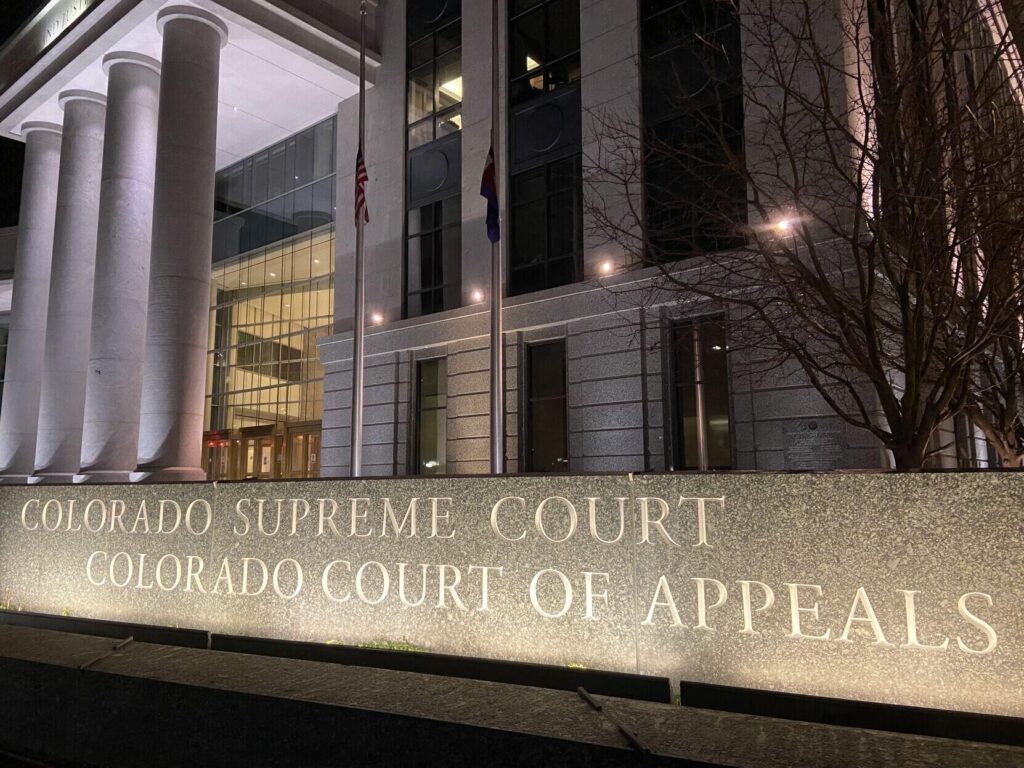
Colorado’s second-highest court upheld a $3 million penalty against a defunct for-profit college on Wednesday, agreeing the state had proven multiple violations of its consumer protection law. The Court of Appeals’ decision against CollegeAmerica followed a trial judge’s order in...

Colorado ski areas suffer, nobody has measured over 70 inches of total snowfall for winter 2025-26
Jonathan Ingraham
jonathan.ingraham@denvergazette.com
Updated 6 hours ago
Big changes coming as 10-15 inches of snow possible from incoming weekend storm, second snow event could double figure to start 2026 No Colorado ski area or resort has surpassed 70 inches of reported or estimated total snowfall amounts for...
Appeals court decides violations of child custody orders may be prosecuted per child
Michael Karlik
michael.karlik@coloradopolitics.com
Updated 1 day ago
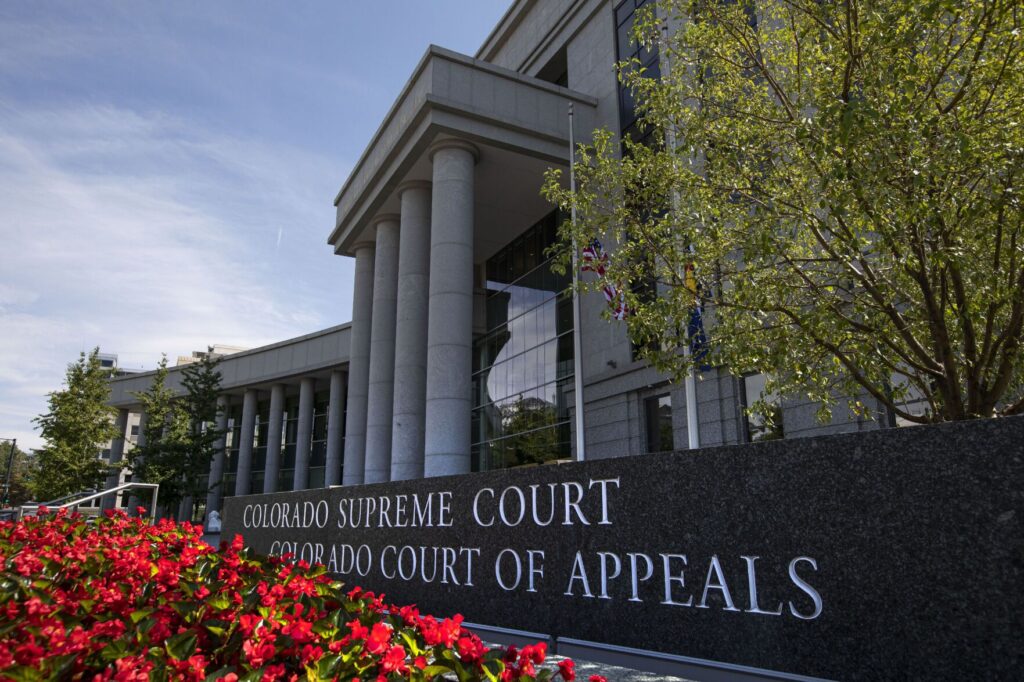
Colorado’s second-highest court concluded for the first time on Wednesday that a defendant may be charged with violating a child custody order based on the number of children affected, not the number of orders violated. Mesa County jurors convicted Tiffany...

Douglas County judge violated defendant’s right to counsel at sentencing, appeals court finds
Michael Karlik
michael.karlik@coloradopolitics.com
Updated 1 day ago
A Douglas County judge violated a defendant’s constitutional right to the counsel of her choice by refusing to postpone sentencing until her lawyer returned to the country, Colorado’s second-highest court concluded on Wednesday. In early 2023, Lyndie J. Felsher received...

New year, higher wages for Denver hourly and tipped workers
Deborah Grigsby
deborah.smith@denvergazette.com
Updated 27 minutes ago
Some Denver workers will be starting the new year with a pay raise as the city’s minimum wage rises to $19.29, up from $18.81. For tipped food and beverage workers, the minimum wage will jump from $15.79 to $16.27 per...

Businesses face losses after Xcel power shutoffs
Sage Kelley
sage.kelley@denvergazette.com
Updated 7 hours ago
Restaurants west of Denver are still coming to grips with product losses and future revenue concerns after power shutoffs last week by Xcel Energy, which cited high winds as the rationale for the decision. “It’s like living in a third-world...

Colorado PUC slates January hearings on natural gas plan, transmission line appeal, railroad rules
Scott Weiser
scott.weiser@gazette.com
Updated 6 hours ago
The Colorado Public Utilities Commission announced January public comment opportunities on railroad safety rules, natural gas infrastructure, and a major transmission line siting appeal. The hearings form part of expanded outreach efforts the commission launched to increase public participation in...
PREV
PREVIOUS
Harmful algae found in multiple northeast Colorado reservoirs, CPW warns
Potentially toxic algae blooms have been found in northeastern Colorado reservoirs, Colorado Parks and Wildlife announced in a press release. On Friday, the department announced that toxin levels are being tested at North Sterling State Park, Jackson Lake State Wildlife Area, Prewitt State Wildlife Area and Jumbo (Julesburg) State Wildlife Area. CPW inspects bodies of water weekly […]

'Intersectionality' run wildly amok and other issues | SONDERMANN
“Intersectionality” is all the rage these days on the social justice left. The idea is that multiple forms of discrimination overlap or intersect to hold back members of marginalized groups. So, let’s talk briefly about intersections. Though, in this case, the subject is not civil rights or social equity, but the old-fashioned definition of the […]