

22% of suicide hotline calls went unanswered in Colorado, report says
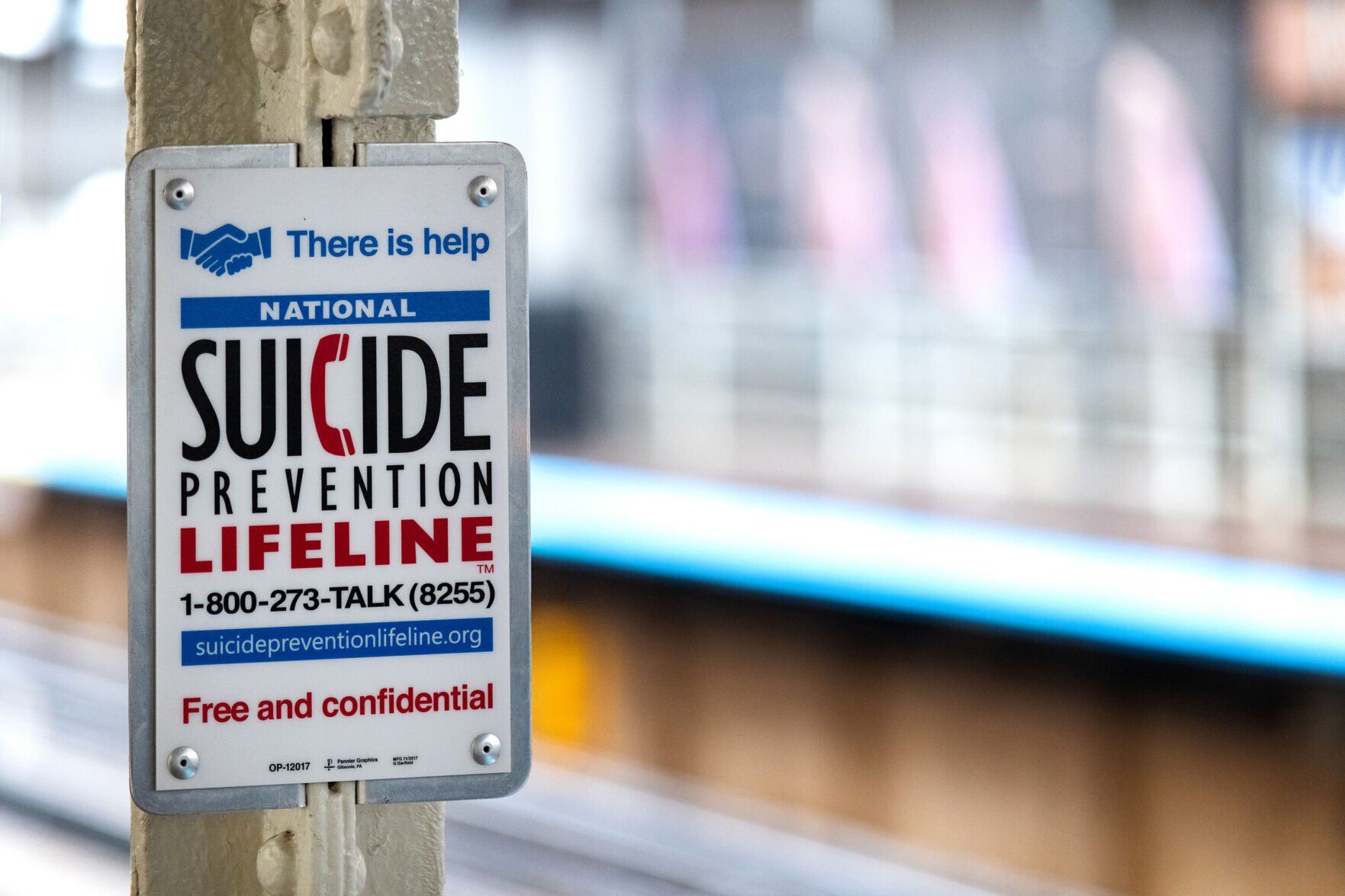
The Colorado suicide prevention lifeline received more than 11,200 calls – 22% of which went unanswered – between April and May of this year, according to a new report from a health policy research group.
The 988 suicide and crisis lifeline went live in July of 2022, providing both phone and text support for individuals experiencing a mental health crisis. As a federally-mandated part of the National Suicide Hotline Designation Act of 2020, each state is required to have a call center that puts callers in contact with a live counselor. The program combined the former National Suicide Prevention Hotline and Veterans Crisis Line under a 3-digit alias.
KFF, the health policy research group, notes that since its inception, 988 has made almost five million contacts nationally. But the program’s ability to answer calls has proven to be a tough task.
Between April and May, five states reported answer rates between 55% and 69%.
Though not as low as others, Colorado’s 78.2% answer rate puts it as the 13th-worst in the country.
The solution to improving answer rates lies in sustainable funding, something local crisis centers are struggling with, the report said. While federal budgets support 988 nationally, states are responsible for the long-term funding of their own call centers.
A 2021 report by the Substance Abuse and Mental Health Services Administration said most crisis centers only receive $2,500 to $5,000 a year in federal funds. The majority of the funding comes from local and private parties and most centers rely on volunteers for work, making it difficult to maintain staff levels, the group said.
In 2021, Colorado passed legislation to fund crisis services through telecom fees. Under the legislation, the 988 program can create a retail transaction fee every year. This fee cannot exceed 30 cents per transaction.
In May, the Biden administration announced $200 million in funding to help boost the infrastructure of state crisis services. KFF said that move isn’t a substitute for the need for long-term state funding strategies.
While the flood of calls can be redirected to national workers to help increase answer rates, this may lower their effectiveness, KFF said, adding, “If national overflow facility counselors are not familiar with local resources, they may not be able to assist callers with treatment referrals or extra assistance, which can be better provided by local crisis centers.”


Appeals judge argues prior decision on defendant’s ‘3-strikes’ sentence was wrong
Michael Karlik
michael.karlik@coloradopolitics.com
Updated 54 minutes ago
A member of Colorado’s second-highest court argued on Thursday that a defendant stands wrongfully sentenced under the state’s “three-strikes” law, and an earlier appellate decision saying otherwise was incorrect. A three-judge Court of Appeals panel agreed that Kiki Lamount Douglas’...

Where government funding talks stand as Congress careens toward partial shutdown
Ramsey Touchberry, Washington Examiner
ramsey.touchberry.washington.examiner@gazetteedit.wpenginepowered.com
Updated 2 hours ago
The federal government is expected to enter a partial shutdown starting Saturday, but it could be short-lived as Senate Democrats and the White House negotiate new restrictions for President Donald Trump’s sweeping deportation agenda. A procedural vote to advance a...

Colorado lawmakers roll out bipartisan plan aimed at lowering home insurance risk
Marianne Goodland
marianne.goodland@coloradopolitics.com
Updated 3 hours ago
Homeowners’ insurance rates continue to rise, prompting a bipartisan group of lawmakers to introduce a bill Wednesday aimed at reducing damage from hail and wildfire. The measure would encourage homeowners and homeowner associations to take additional mitigation steps and, in...

Appeals court overturns convictions after Douglas County judge let biased juror serve
Michael Karlik
michael.karlik@coloradopolitics.com
Updated 51 minutes ago
Colorado’s second-highest court reversed a defendant’s robbery-related convictions and 18-year prison sentence on Thursday because a Douglas County judge allowed a biased juror to serve. During Ahmarion Kaliel Shead’s trial in January 2023, one juror, identified as “J.H.,” indicated on...

From child actors to ‘kidfluencers’: Colorado lawmakers consider digital-age Coogan Act
Marissa Ventrelli
marissa.ventrelli@coloradopolitics.com
Updated 6 hours ago
Jackie Coogan had been an actor since birth, or just about. His first acting gig was as a toddler in the 1917 silent film “Skinner’s Baby,” where he played the titular infant. At age 7, he starred alongside Charlie Chaplin...

Colorado Democratic Rep. Jason Crow’s reelection campaign hauls in over $750K in 4th quarter
Ernest Luning
ernest.luning@coloradopolitics.com
Updated 6 hours ago
U.S. Rep. Jason Crow raised more than $750,000 in the final three months of 2025, marking the Aurora Democrat’s largest quarterly haul since his first run for Congress in Colorado’s 6th District, when he unseated a Republican incumbent, according to...

Colorado hit a population milestone in 2025; numbers ‘don’t lie,’ but what do they say?
Stephanie Earls
stephanie-earls@coloradopolitics.com
Updated 7 hours ago
Colorado is: full Standing room only How ‘bout, More crowded than it was but less crowded than we thought? Local takeaways from the U.S. Census Bureau’s most recent data drop are too complex for bumper sticker treatment, but here’s the...

We tested vapes in Colorado for signs of hemp. This is what we found.
Christopher Osher
chris.osher@gazette.com
Updated 11 hours ago
This article was produced for ProPublica’s Local Reporting Network in partnership with The Denver Gazette. Sign up for Dispatches to get our stories in your inbox every week. Leaders in the Colorado marijuana industry have complained in recent years that...

Tax bill shock: Colorado homeowners could see property taxes jump by as much as 40%
Marianne Goodland
marianne.goodland@coloradopolitics.com
Updated 20 hours ago
Mike Fitz, 76, who lives in Centennial in a single-family home he has owned since 2001, paid $3,876.98 in property taxes to Arapahoe County two years ago. Fitz just learned after checking the website of the Arapahoe County Assessor’s Office...

Aurora files Petition for Rehearing in court ruling on crime punishment, seeking ‘clarity’
Kyla Pearce
kyla.pearce@gazette.com
Updated 7 hours ago
The city of Aurora filed a Petition for Rehearing with the Colorado Supreme Court on Monday, seeking clarity on a court decision in Aurora v. Simons. The court determined that municipal criminal penalties cannot exceed state sentencing caps for similar...
PREV
PREVIOUS

Colorado Supreme Court to hear criminal appeals on racial bias, 'Make My Day' defense
The Colorado Supreme Court announced earlier this month that it will review multiple criminal cases, with issues ranging from racial bias in jury selection and the meaning of a parent-child relationship to the law justifying deadly force against home intruders. At least three of the court’s seven members must agree to hear a case on […]

Layoffs, food insecurity are top-of-mind concerns for King Soopers and Safeway employees
With a potential merger between two national supermarket chains hanging in the balance, dozens of concerned employees and consumers showed out to Attorney General Phil Weiser’s town hall Wednesday night in Colorado Springs to share their stories and push for action. Attendees say the merger between Kroger and Albertsons, which operate King Soopers and Safeway, […]