

7-year saga: Millions in legal fees in fight between ethics commission and Glendale mayor
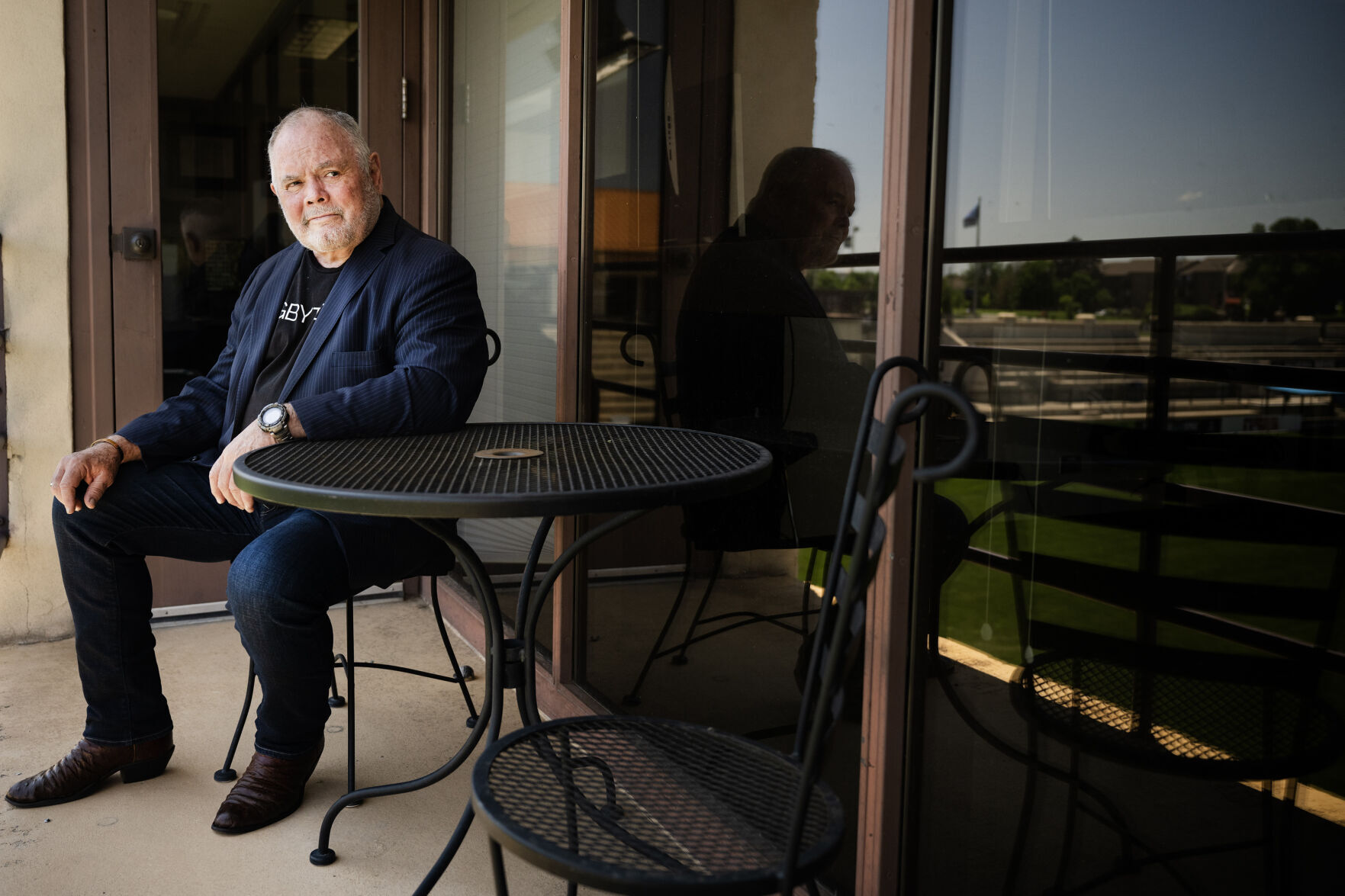
In 2016, the Colorado Independent Ethics Commission decided an ethics complaint against Glendale Mayor Mike Dunafon, filed by the owners of a Glendale rug store, warranted an investigation.
Seven years later, Dunafon said he still doesn’t know what he’s being charged with.
In the meantime, the Colorado Court of Appeals, in an unpublished opinion from June 1, decided the ethics commission’s efforts to assert jurisdiction over the city government in the Dunafon case had no basis in law – either in a voter-approved constitutional amendment that bans receiving of gifts by public officials or in the statutes enacted by the Colorado General Assembly that set up the ethics commission.
While it’s unclear when the case might be resolved, the battle between the commission and the city of Glendale and its mayor has so far cost Glendale taxpayers more than $2 million, making it the most expensive ethics case in state history by a factor of at least four.
The state, meanwhile, won’t tell Colorado Politics how much it has spent litigating the case.
The case is now on its way back to Denver District Court for final resolution. The commission could have appealed the June 1 ruling to the state Supreme Court but the deadline for seeking that review was July 13 and no request has been filed, according to court records.
The saga of the IEC’s longest-running complaints – a second was filed a year later – includes a cast of characters and places: a strip club, the founder of the Glendale Tea Party and the owners of a Colorado Boulevard rug store who have accused the city of seeking to tear down their store.
At the heart of the two cases – IEC v. Glendale and Dunafon v. IEC – is whether Glendale’s ethics code is sufficient to meet the requirements of Amendment 41, the 2006 constitutional amendment that led to the formation of the ethics commission.
A final decision, either by the commission or the courts, could determine whether small towns and cities will have to set up separate ethics boards, which could be a tall order in communities that already struggle to find people to serve on local government bodies and commissions.
A densely populated city in the middle of an ethics fight
Glendale, population 4,613, is the most densely populated city in Colorado, and one completely surrounded on all sides by the city and county of Denver. The city was incorporated in 1952 and is about 850 acres in total size or 1.3 square miles.
It’s also home to the second largest Target store in the nation, which is the anchor for Glendale’s only shopping center.
Glendale only has one single-family home within city limits, according to its mayor. A majority of its residents are renters (80% of residents, according to one estimate) and condo owners.
Since 2010, the city has been working on redevelopment of a 10-acre site on Colorado Boulevard between East Virginia Avenue and Cherry Creek South Drive. That site, now known as Glendale 180, is a $150 million planned entertainment district.
The project has been slowed by lawsuits, first from the owners of an existing hotel on the site and then by the owners of Authentic Persian and Oriental Rugs on Colorado Boulevard, who believed the city planned to use eminent domain to seize their land for the district.
A Glendale City Council meeting in February 2015 prompted the ethics complaints, filed by the Colorado Ethics Watch on behalf of MAK, the rug store.
The city council was set to vote on a site development plan and special use permit for the Smoking Gun, a marijuana dispensary owned by Debbie Matthews, who also owns the strip club Shotgun Willie’s. Matthews was, at the time, Dunafon’s long-time partner. They married several months later – in July 2015.
Dunafon told Colorado Politics he has never had any financial interest in his wife’s companies.
The complaint filed by Colorado Ethics Watch claimed, without offering proof, that the mayor had a personal financial interest in his wife’s business dealings.
A certified public accountant who handled both Matthews’ and Dunafon’s taxes for 20 years said their taxes were filed separately until the 2015 tax year, after they married, and that there was no commingling of assets, nor was Dunafon a signatory on any of Matthews’ bank account.
What happened in the February 2015 vote on the Smoking Gun site plan was unclear, said Glendale City Manager Chuck Line, who was a deputy city manager at the time.
The council took a voice vote on the site plan but the results were inconclusive. The council’s mayor pro tem, Paula Bovo, couldn’t say for sure whether she voted or not, and an audio recording wasn’t any help.
A 97-page investigation from attorney Nathan Chambers, hired by the council to investigate the Colorado Ethics Watch complaint, said a second vote was taken, an “imprecise variation of a roll call vote,” where the results were also less than clear.
“However, it is apparent [from the recording] that all members of the City Council believed the vote as a tie,” and no member objected to that conclusion, Chambers concluded.
The site plan and permit for Smoking Gun had earlier been approved unanimously by the city’s planning commission, which includes city council members.
Line, as deputy city manager, advised the council that Dunafon could break the tie, provided that he disclosed why he had recused himself.
Dunafon said he had no ownership interest in the Smoking Gun and that he had recused himself out of an “abundance of caution.” He then voted to break the tie in favor of approval of the site plan.
But the unclear vote sent city officials back to the drawing board.
Line said that, under the rules, there had to be a specific reason cited for rejecting a site plan. Even the city attorney, who reviewed the recording, said the record and initial vote wasn’t clear and recommended the council revote, which took place in March 2015.
The revote passed, 5-1. Dunafon didn’t vote, recusing himself.
Colorado Ethics Watch seized on the second vote from the February 2015 meeting, filing an ethics complaint in January 2016 with the city of Glendale under its ethics ordinance. A second complaint followed, tied to an April 2015 approval of a liquor license for Shotgun Willie’s, which was part of a consent agenda – meaning it didn’t encounter any resistance or opposition from council members.
As with the Smoking Gun, the independent investigation determined Dunafon had no financial interest in Shotgun Willie’s and Colorado Ethics Watch failed to offer any evidence proving otherwise.
Amendment 41
First adopted in 2000, the council updated Glendale’s ethics ordinance after the passage of Amendment 41 to ensure that it complied with the new law.
Amendment 41, also known as Article 29 in the state constitution, bans gifts of a certain amount to public employees, the goal of which is to prevent corruption. The new law applies to spouses, as well.
In addition, the constitutional change gives the ethics commission jurisdiction over local governments that do not have their own ethics codes or ordinances.
But the language has some wiggle room.
It states that any municipality can adopt an ethics ordinance that’s stricter than the state, and the requirements of the amendment shall not apply to home rule municipalities that have adopted ordinances “that address the matters covered by this article.”
Over the past decade, the ethics commission itself decided some local government ethics codes do not address all the matters covered by Amendment 41.
That includes exactly who hears ethics complaints.
In Glendale’s case, the town doesn’t have a separate commission or body that handles ethics complaints. So, the Glendale City Council, of which Dunafon is a member, was charged with hearing the complaint filed by Ethics Watch against Dunafon.
Chambers, the lawyer hired to investigate the complaint, concluded that, because Dunafon had no financial interest in the Smoking Gun, his recusal was based on discretion and not an actual conflict of interest.
He also noted the Colorado Ethics Watch complaint presented no evidence that Dunafon would benefit from the approval, nor could Chambers find any in his own investigation.
As to the Shotgun Willie’s liquor license, Chambers concluded the same thing – Dunafon had no personal financial interest and Colorado Ethics Watch offered none. More importantly, there was no evidence that Dunafon voted on the consent agenda that included the license approval.
Chambers recommended in his April 2016 report – and the council voted accordingly – to dismiss both complaints as frivolous.
But the matter was far from over.
The rug store connection
MAK Investment is owned by Nasrin Kholghy, although the initials are for another family member and co-owner, Mohammad Ali Kheirkhahi. The family bought 5.5 acres along Colorado Boulevard in Glendale in 2006 for $6.5 million. The family, according to a 2022 Denver Business Journal report, wanted to develop the property to include a residential component, which the city ultimately rejected. The city wanted the area for Glendale 180, an entertainment site.
The city offered to buy the land, which the Kholghy family rejected because the city wouldn’t agree to the price, set at $17.5 million. The family then sued the city in federal court over the land being designated as blighted, arguing the city failed to notify MAK of that designation and saying they could have challenged that designation had they known it.
The city later decided it didn’t want the land, but refused to remove the blight designation.
The federal lawsuit was settled in favor of the Kholghy family, but the plaintiffs received only a pledge from Glendale that the city would not seek condemnation of the land. The family didn’t even ask for attorneys’ fees, which they could have received.
The ethics commission and jurisdiction
Two months after the city dismissed the Colorado Ethics Watch complaint as frivolous, MAK submitted the first of several nearly-identical complaints to the state ethics commission.
The company also submitted two complaints against a Glendale City Council member, Jeff Allen. The 2016 complaint was tied to December 2015 votes on a consent agenda and related to the Glendale Chamber of Commerce, which Allen also manages. Glendale has no economic development agency, choosing back in 2003 to allow the chamber to handle those matters and to receive annual grants.
The commission dismissed the 2016 complaint because the city council’s action occurred prior to the issuance of a 2016 position statement that sought to clarify the commission’s authority on ethics for home rule municipalities.
The 2017 complaint alleged Allen had an ownership interest in Shotgun Willie’s, which was up for a consent agenda vote on its liquor license in March 2016. The commission found that Allen had no ownership interest and MAK couldn’t prove otherwise, and dismissed the complaint for that reason.
But the commission, after seven years, has still not ruled on that 2016 complaint on Dunafon nor on another complaint filed a year later tied to Dunafon’s presumed vote on the consent agenda that included approval of Shotgun Willie’s license.
The issue? Jurisdiction, which has grabbed the attention of home rule cities and towns all over the state.
After seven years, the first hearing on the 2016 complaint was initially scheduled for August 15, 2023, but that’s been pushed off due to the Colorado Court of Appeals ruling issued on June 1, which found in Glendale’s favor and sent the case back to Denver District Court.
That ruling dealt with the jurisdiction issue that has tied up the complaints in court and kept Dunafon in a peculiar state of limbo and lawyers representing Glendale, MAK and the commission on the clock.
In 2018, two years after the first complaint, the commission ruled that it holds jurisdiction because Glendale’s ethics code failed to address “a core component” of Article 29, the constitutional amendment codified by the public’s approval of Amendment 41.
As basis, the commission cited a case involving a 2017 complaint against Weld County Commissioner Julie Cozad, in which the commission ruled that, if the local government had not sufficiently addressed Article 29 components, it was not entitled to an exemption.
The Cozad case was filed after both Dunafon complaints.
In its 2018 ruling, the commission said Glendale’s ethics code lacked both a “meaningful and unbiased process for adjudicating complaints against public officials” and an independent decision-making body for the purpose of hearing ethics complaints. Without those elements, the city’s “substantive ethical standards are toothless,” the commission ruling said.
The commission also issued a position statement to that effect in December 2016, again, after the first Dunafon complaint had been filed.
City officials claimed the position statement was “reverse-engineered” to deal with the matters raised in the Dunafon complaint.
The commission disputed that claim.
In an email to Colorado Politics, commission Executive Director Dino Ioannides, who responded on behalf of the commissioners, would “not comment for media on pending cases, as this could compromise their independence, neutrality, and objectivity.”
The commission had to hire an independent investigator for the Dunafon complaints as Ioannides, who usually does all the investigations on ethics complaints, recused himself up until December 2020 for an unrelated reason.
Ioannides said the position statement issued in December 2016 had been in the works for more than two years. An earlier draft in 2014 had been tabled. The commission issued an advisory opinion in 2017 that dealt with a case tied to a state employee who had been elected to Aurora City Council in 2015. While Aurora is a home rule municipality, the commission also asserted its jurisdiction over the employee-turned-city councilmember.
In his email, Ioannides outlined the seven-year timeline by saying it took the commission 11 months of preliminary investigation to determine that the complaints were non-frivolous.
The legal challenge mounted by Dunafon in Dunafon v. Jones then ate up almost two more years, from January 2019 to November 2020.
That first round of lawsuits filed by Dunafon against the commission, known as Dunafon v. Jones, initially favored the commission, after a November 2020 ruling from the Colorado Court of Appeals and a decision by the state Supreme Court not to hear the appeal.
In that lawsuit, Dunafon challenged the commission’s jurisdiction over him as a city official in a home rule municipality.
That first case was a challenge from Dunafon over the commission’s jurisdiction, but Josh Weiss of Brownstein, Hyatt, Farber & Schreck, who has represented Dunafon and others associated with Glendale, insisted that, without a final judgment from the commission (which still hasn’t happened), the case is not ripe for final action from the courts.
Ioannides also said the commission’s “minimum staffing” is also a factor in the delayed resolution. Given that Ioannides had recused himself, and at the time he was the commission’s only employee, the commission’s efforts to hire a third-party investigator took longer than expected, in part because the first person it hired died.
In the seven years since the state ethics commission accepted the first complaint from MAK, at least 17 people have served on the five-member body. The commission itself has completely turned over twice, and none of the current commissioners is a member in 2016. Only one, in fact, has been on the commission since mid-2018.
Ioannides also cited Dunafon’s refusal to fully participate in the investigation as a factor in the delay. Dunafon would only participate in the investigation in writing, and he refused a sit-down interview, even after being subpoenaed last November, Ioannides told Colorado Politics.
Additional delays resulted from having to subpoena every witness in the case aside from the complainants, which Ioannides called “highly unusual. This process caused, for one witness in particular, “additional delays,” he said.
Line, the town manager, has been subpoenaed to testify and is challenging that subpoena in court.
The commission’s investigative report, ordered in early 2021 after the original litigation ended, was completed in March 2023.
Millions in legal costs – and counting
The second lawsuit, Glendale v. IEC, produced the June 1, 2023 decision by the appellate court. The complaint was filed a month after the decision by the state Supreme Court to reject the Dunafon appeal in Dunafon v. Jones.
While the issues are similar to Dunafon v. Jones, the outcome in Glendale v. IEC has been decidedly different.
Weiss, who is not representing the city on this lawsuit, said Glendale asked the courts to decide, as a broad matter of law, whether the IEC has jurisdiction over a home rule municipality.
Denver District Court ruled in the commission’s favor, stating the city lacked standing in the matter as it had not been harmed.
The Court of Appeals decided otherwise.
After addressing the standing issue, the appeals court tackled the jurisdictional issue. The court noted in its ruling that the commission does not contest that home rule municipalities that comply with Article 29 are exempt from its reach, which is consistent with the 2016 position statement.
But the commission contends that it has authority in any case whether the municipality has addressed the “matters” in Article 29, which the court referred to in its ruling as the concept of “concurrent jurisdiction.”
The court said nothing in Article 29 nor the statutes passed by the General Assembly enacting the law “suggest that home rule municipality and the IEC share concurrent jurisdiction over ethics complaints against the municipality’s covered individuals.”
In addition, the court said, neither provision authorizes the commission to make “a case by case determination as to whether the municipality’s process was sufficiently ‘impartial’ or ‘disinterested’ for the municipality to retain its exemption” from Article 29.
The appeals court concluded that it is not clear, based on the current record and the arguments of the parties, that the IEC has the authority it claims to determine Glendale’s entitlement to an exemption under Article 29. That’s a question for the district court to consider when evaluating the merits of Glendale’s claims, the appeals court said.
The appeals court decision was unpublished in accordance with procedural rules of the court that apply to an opinion that does not involve a “legal issue of continuing public interest.”
The legal costs are mounting.
Prior to the cases involving Dunafon, the most expensive complaint before the ethics commission was legal costs of more than $500,000 over the complaint against former Secretary of State Scott Gessler, who fought a fine of $1,514.88 all the way to the U.S. Supreme Court, which rejected his petition for review.
How much the state has spent on the Dunafon cases is unknown.
The Attorney General’s office denied a CORA request from Colorado Politics for billing records tied to three lawsuits and four ethics complaints, citing a state law that allows for confidentiality of “privileged information.” The only cost the office would provide is for a 2022 subpoena for the Glendale city manager, who isn’t under investigation.
That taxpayer cost, based on what the Attorney General provided and covering from last September to this month, is just over $40,000.
What MAK Investment Group, the company that owns the rug store, spent on legal costs – it is represented by Ireland Stapleton, one of the state’s oldest legal firms – is also unknown. The company did not respond to multiple requests for comments and interviews sent via their attorney, Russell Kemp.
The Colorado Municipal League, which represents 270 cities and towns in Colorado, including home rule municipalities, begs to differ from the appellate court’s decision to not publish its opinion.
Kevin Bommer, the group’s executive director, pointed out in an email that it had filed an friend of the court brief on the Dunafon lawsuit, but “it was understood that when it came back around to the substance of the home rule argument and the meaning of the term ‘covers the matters’ language from Article 29, CML would want to be involved.”
As to the June 1 ruling, Bommer said “procedurally, the Glendale suit is still at an early stage, but the substantive issue has great significance. As to the ruling, it is only right that home rule municipalities have the power to protect their constitutional authority in the courts.”
Amendment 41 could not be clearer, Bommer said, arguing that voters, in approving the amendment, “affirmed the clear language of the question that said the people of a home rule local government can keep the power to define and handle ethics issues involving their local officials and employees.”
Amendment 41 gives that power to the home rule government and its voters, not the state ethics commission, he added.
The commission cannot supersede the will of the voters, Bommer said, adding the trade group and all home rule municipalities are interested in the outcome of the lawsuit and that he is confident common sense related to the clear language and intent of Amendment 41 would prevail.
Dunafon speaks out
To call Dunafon – who has been mayor of Glendale since 2012, served as mayor pro tem before that and has been on the planning commission going on 18 years – “colorful” is an understatement.
A 2015 profile in the Denver Business Journal and in 2017 with Colorado Politics highlighted his beginnings: born in a home for unwed mothers with his mostly-absent father a rodeo cowboy.
He grew up in orphanages and relatives’ homes and went his own way at age 13. He graduated from Golden High School,where he played football, once being caught sleeping in the teachers’ lounge.
Dunafon went on to the University of Northern Colorado, where he became a star wide receiver. That earned him a berth on the 1976-77 Denver Broncos, but injuries brought that to an early end. He switched to rugby after that, playing for the British Virgin Islands football club until 1992. The US Rugby Foundation gave Dunafon its lifetime achievement award in 2020.
It was his days in the Virgin Islands that began to set him on a political path. He had worked as a dive master, owned a bar and “kinda did the Jimmy Buffett-light thing.” That life gave him exposure to the government style of the British crown, he said, which he called “oppressive.”
He began reading about power structures, and that led him back to the states, where this kind of “oppression” could never happen, he said. It also cured him of what he calls Acquired Island Mentality Syndrome, which is “you either change your life or die on the bar stool.”
He landed in Glendale, a small town that was not unlike where he had just left, finished his college degree and met Matthews. They hadn’t really known each other before that, aside from him pumping gas when he was in college at UNC, but, as it turned out, there was another connection – her mother dated his father in 1947.
Yes, they’ve had their DNA checked, he quipped.
Matthews came to Dunafon with a problem: Glendale politicians, she said, were trying to “commandeer” Shotgun Willie’s.
“They can’t just steal your property,” Dunafon recalled.
That led to the formation of the Glendale Tea Party, the mayor said.
The group put together what its own ticket, which changed the makeup of the city council by successfully backing allies.
Once on the city council, Dunafon’s agenda sought to reduce ordinances, which he said is as difficult as putting a new one on the books. Part of that involved the number of traffic tickets written by the police department, which went from 9,000 per year when the ordinance was changed to 263 last year.
There’s no reason to ticket someone for a bad tail light, he said, which led to creating what he calls “concierge policing.”
The battle with the ethics commission and MAK is over power, Dunafon said, citing Lord Acton’s oft-repeated quotation: “Power corrupts; absolute power corrupts absolutely.”
As to how the last seven years have been, with the complaints and lawsuits hanging over his head, Dunafon replied, “It makes me personally angry because I see what they’re trying to do to everyone, not just me. It’s a fundamentally unfair way of approaching life.”
He sees what happened to him as part of what he believes is a frightening set of developments that are happening all across the country.
The ethics situation is an attempt to grab power by seeking secure individual authority, Dunafon said, adding it has affected the way he sees power.
“I’m aghast at why a government does the things it does,” he said, “but it’s made me understand what government really is, and we need less of it.”
What has Dunafon learned in the last eight years since the 2015 city council meeting that started it all?
“I’ve learned the worst phrase I could ever utter is ‘out of abundance of caution,'” he said.

Glendale v. IEC, an unpublished opinion from the Colorado Court of Appeals. Marianne Goodland
marianne.goodland@coloradopolitics.comMarianneGoodland, Colorado Politics
marianne.goodland@coloradopolitics.com
https://www.coloradopolitics.com/content/tncms/avatars/e/f4/1f4/ef41f4f8-e85e-11e8-80e7-d3245243371d.444a4dcb020417f72fef69ff9eb8cf03.png

marianne.goodland@coloradopolitics.com






Federal judge sides with Mesa County school district in ex-student’s First Amendment claims
Michael Karlik
michael.karlik@coloradopolitics.com
Updated 1 day ago
A federal judge concluded last week that Mesa County Valley School District 51 and three of its administrators did not violate the First Amendment rights of a former student when they imposed minor discipline in response to disruptive behavior. In...

Colorado Supreme Court intervenes in 4 ongoing cases
Michael Karlik
michael.karlik@coloradopolitics.com
Updated 2 days ago
The Colorado Supreme Court recently moved to intervene in four ongoing cases, including two criminal prosecutions, a civil lawsuit, and a child welfare proceeding. At least four of the court’s seven members must agree to hear a case outside of...

Federal judge releases man immediately as consequence for immigration judge disobeying orders
Michael Karlik
michael.karlik@coloradopolitics.com
Updated 2 days ago
A federal judge ordered a man’s immediate release from immigration detention on Thursday after finding an immigration judge disregarded his prior orders requiring a bond hearing. For the past year, Colorado’s federal district court has faced a flood of “habeas corpus”...

Denver judge denies Gov. Polis request to dismiss ICE-related records case
Marianne Goodland
marianne.goodland@coloradopolitics.com
Updated 22 hours ago
A year after blocking the release of state records to federal immigration agents, a Denver judge has now denied Gov. Jared Polis’ effort to end the lawsuit at the center of the dispute. The lawsuit filed against the governor in...
Colorado justices accept appeals on Netflix taxation, children pursuing neglect cases
Michael Karlik
michael.karlik@coloradopolitics.com
Updated 2 days ago
The Colorado Supreme Court announced on Monday that it will decide whether Netflix subscriptions are subject to the state’s sales tax as “tangible personal property.” At least three of the court’s seven members must agree to hear an appeal. The...
Letecia Stauch murder conviction in stepson Gannon’s death overturned by Colorado appeals court
Nick Smith
nick-smith@coloradopolitics.com
Updated 2 days ago
An El Paso County woman convicted of killing her stepson in 2020, shoving his body in a suitcase, then dumping it in Florida, is getting a new trial. The Colorado Court of Appeals published a 52-page ruling on Thursday, stating...

10th Circuit grants rare all-judges’ review of Colorado banking regulation
Michael Karlik
michael.karlik@coloradopolitics.com
Updated 2 days ago
The Denver-based federal appeals court announced on Thursday that it will hold a rare all-judges review of a recent decision that permits Colorado to require out-of-state banks to abide by the state’s maximum interest rates when they lend to in-state...
Colorado appeals court orders new sentencing for Tina Peters, upholds convictions
Michael Karlik
michael.karlik@coloradopolitics.com
Updated 3 days ago
Colorado’s second-highest court determined on Thursday that a trial judge improperly sentenced former Mesa County clerk Tina Peters based upon her exercise of protected speech, while at the same time upholding her convictions. The three-judge Court of Appeals panel also...

Judge rules that Colorado law makes it too hard for parties to bar unaffiliated voters from primaries
Ernest Luning
ernest.luning@coloradopolitics.com
Updated 3 days ago
A federal judge ruled in favor of the Colorado Republican Party late Tuesday, saying that a portion of the state law that allows unaffiliated voters to cast ballots in party primaries is unconstitutional because it imposes an unrealistic burden on...
10th Circuit upholds regulator’s methodology for Tri-State exit fees
Michael Karlik
michael.karlik@coloradopolitics.com
Updated 3 days ago
The Denver-based federal appeals court upheld a regulatory agency’s methodology for calculating the fee owed by entities seeking to withdraw from Tri-State Generation and Transmission Association last week. Tri-State is a Westminster-based cooperative that provides and transmits electricity to member...
PREV
PREVIOUS

Residents plan to appeal development plans from Colorado Springs City Council
Separate groups of residents are preparing to appeal two controversial development plans in front of the City Council during the board’s regular meeting Tuesday. Launchpad Apartments Residents plan to appeal the Colorado Springs Planning Commission’s June 14 decision to uphold city planning staff’s administrative approval of plans to build the 50-unit Launchpad Apartments just north […]

Challenger announces bid to unseat conservative Armstrong | A LOOK BACK
Forty Years Ago This Week: In an anticipated move, Colorado’s former Lt. Gov. Nancy Dick launched her candidacy for the U.S. Senate with an official announcement that lambasted the incumbent she was seeking to throw out, Republican Sen. Bill Armstrong. Dick decried Armstrong for his positions on the nuclear arms race, the environment, taxes, abortion […]