

Polis can find accountability with appointments | OPINION


It’s cliché: politicians make bold promises while they are on the campaign trail, but once they are elected, they make every excuse under the sun for why they can’t, or simply won’t, do the things they said they’d do. Colorado’s current administration is, unfortunately, no different. Gov. Jared Polis was elected and re-elected thanks to the support of BIPOC Coloradans, to whom he made bold promises about swift progress toward environmental justice; movement away from the predatory paradigm to a new reality where our communities truly have the opportunity to thrive. So far, he has fallen woefully short of staying true to his word.
Promises with integrity result in action that makes a tangible difference. Empty promises only heap additional harm onto the exhausted, traumatized communities that have been asking for help for, quite literally, generations.
As the climate crisis accelerates, our trauma only stands to be compounded, the cumulative impact on our health increased. Meanwhile, Gov. Polis prioritizes the interests of the well-funded oil and gas industry over the stated priorities and needs of disproportionately impacted communities of color. This begs the question: how bad does it have to get, how many of our community members have to suffer the negative impacts on our health, before Gov. Polis lives up to his promises and joins us in our fight?
Stay up to speed: Sign-up for daily opinion in your inbox Monday-Friday
An important initial step in the right direction begins with one word: opportunity. For too long, the boards and commissions charged with regulating industries that contribute to polluting our communities have been led and controlled by strong industry allies. Though we recognize the need for industry representation, the voices of community members with lived experience must be front and center in leadership positions on the boards and commissions making decisions that affect our future health and well-being. With his appointment power, Governor Polis can create the opportunities for BIPOC folks from disproportionately impacted communities to become commissioners and board members, especially in positions related to land, air and water.
Environmental justice and community engagement cannot simply be boxes that get checked. Again, promises with integrity lead to tangible results. Boards and commissions play an important role in delivering those results. Not only do they pass rules, they are ultimately responsible for actually enforcing rules. From the beginning of rule-making processes, enforceability and elimination of loopholes that let industries off the hook must be of the utmost importance. It is far past time to move beyond performing commitment to environmental justice to actually demonstrating it.
To make it possible for community members to serve on these boards and commissions, the governor and legislature must look into making some of the most important positions paid, so that working people can afford to serve; membership should not only be for people of means, or for people whose jobs or employers give them the time they need to serve.
Members of the BIPOC community have something that trumps every college degree, high-end career, or affluent opportunity: real, lived experience. BIPOC people have historically dealt with gentrification, land seizures, redlining and systemic disadvantages at every turn, all while living in communities that have lower carbon footprints in spite of the impact they suffer from proximity to industry. Who better to advance the needed paradigm shift toward an equitable world which also respects the biome that allows us all to breathe clean air, drink clean water and have protected green spaces for all our relatives?
Gov. Polis always talks about a “Colorado for all.” To walk the talk, he should give BIPOC Coloradans the opportunity to serve on these boards and commissions with authentic compensation. We are not numbers, not tokens. We are resilient, and ready to meet the challenges and targets that will form a better world for our people.
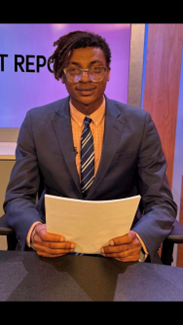
Miah Ntepp serves as policy advisor and civil rights leader for the Denver NAACP fighting for equity, environmental justice and progress in Colorado. Katara Burrola was born and raised in Greeley by hard-working migrant workers who instilled in her a love for land and community. With a B.S. in ecology, Katara has worked alongside conservation districts and the forest service before switching her focus to Environmental Justice for BIPOC communities. Renée M. Chacon, is Diné/Xicana/ Filipina, and is the co founder and executive director of Womxn from the Mountain for transforming education through justice, art and cultural education as a Sahumadora en Danza Azteca. She works as a cultural educator in several environmental justice initiatives to stop environmental racism in Commerce City with Suncor Sundown. She was co-chair on the equity analysis subcommittee for the Environmental Justice Action Taskforce and is currently Commerce City Council Womxn for Ward 3.

What exactly makes you a public figure? | Hal Bidlack
Hal Bidlack
hal-bidlack@coloradopolitics.com
Updated 16 hours ago
Well, once again, this non-lawyer columnist is going to jump in the deep end of legal scholarship and will explore a recent Colorado Court of Appeals decision. Buckle up. In yet another terrific Colorado Politics Court Crawl article, we learned...
Modernizing Pinnacol is about its members, not politics | IN RESPONSE
Colorado Politics
colorado-politics@coloradopolitics.com
Updated 7 hours ago
By Akasha Absher While we share the passion for protecting Colorado’s workers expressed in a recent op-ed from the perspective of trial attorneys and union representatives, the piece paints a picture of Pinnacol Assurance that is more rooted in 1915...
Mum on his own replacement, Bennet disrespects voters | Dick Wadhams
Dick Wadhams
dick-wadhams@coloradopolitics.com
Updated 3 days ago
U.S. Sen. Michael Bennet is playing an arrogant game of hide-and-seek with Colorado voters as he seeks to abandon his Senate seat to become governor. Bennet insists that if he is elected governor in November, he will wait until he...

What kind of energy independence did we pay for? | Miller Hudson
Miller Hudson
miller-hudson@coloradopolitics.com
Updated 3 days ago
It was during the summer of 1972 AT&T published an internal solicitation for installation and repair supervisors with “inner-city” experience to transfer to Mountain Bell. The catch was an applicant’s readiness to work 10 hours a day, six days a...

Those who cannot live without wild things | Rachel Gabel
Rachel Gabel
rachel-gabel@coloradopolitics.com
Updated 3 days ago
Aldo Leopold wrote in his Sand County Almanac, “There are some who can live without wild things and some who cannot.” The collection of essays first published in 1949 was accepted by a publishing house after a steady stream of...

Thank God for Wyoming — the un-Colorado | Jon Caldara
Jon Caldara
jon-caldara@coloradopolitics.com
Updated 3 days ago
Years ago, I interviewed a Canadian health-care broker whose job was helping his countrymen escape their own failing system. When their “free” health care turned into “free to wait until you die,” he’d save his clients by routing them to...
It’s time to let unaffiliated voters caucus | Vince Bzdek
Vince Bzdek
vince.bzdek@gazette.com
Updated 1 day ago
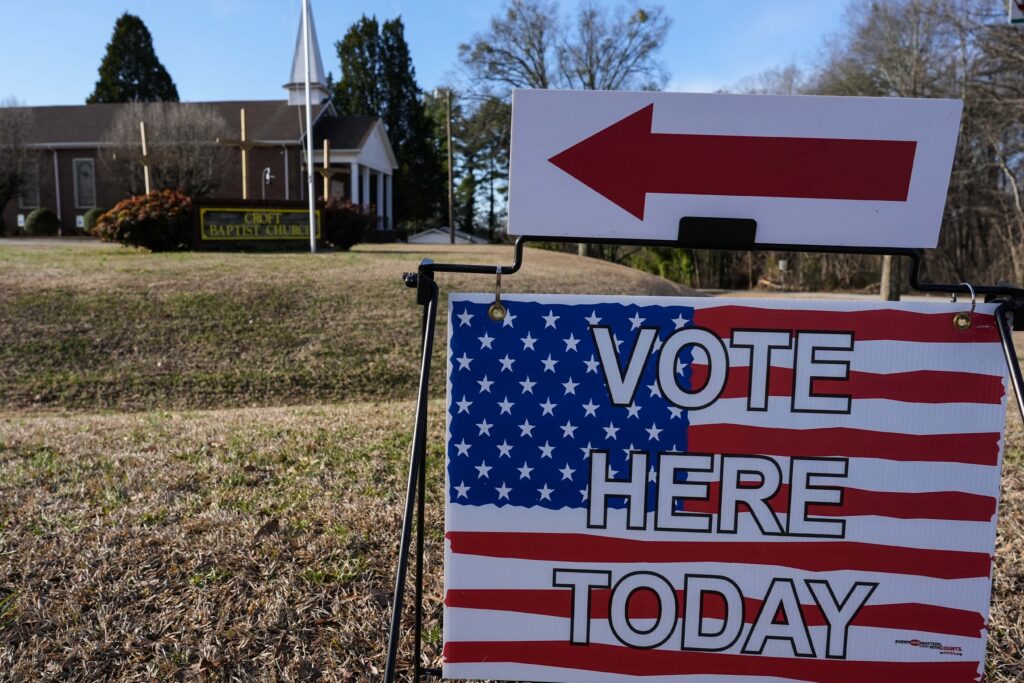
There’s no getting around it: Colorado’s 3,000 county caucuses, which just wrapped up recently, left half the electorate out in the cold. Since unaffiliated voters now make up 51% of all Colorado voters, a majority of Colorado electors are barred...
A Mile High, again: Capitol M | Week of March 21, 2026
Marianne Goodland
marianne.goodland@coloradopolitics.com
Updated 6 days ago
The lighter side of the Capitol, usually…. Local Journalism Day, except they forgot their very own local journalists. The state Senate on Thursday, March 19, passed a resolution recognizing Local Journalism Day. Everyone voted for it, which is good, because...
The insular bubble of caucuses and assemblies | SONDERMANN
Eric Sondermann
eric-sondermann@coloradopolitics.com
Updated 5 days ago
Nearly 30 years ago, then-Federal Reserve Chairman Alan Greenspan coined the term “irrational exuberance” to describe the overheated stock market. That descriptive phrase could also apply to much of the political realm. The hype in politics often grossly exceeds the...
Set appropriate state guidelines for critical surveillance technology | OPINION
Colorado Politics
colorado-politics@coloradopolitics.com
Updated 5 days ago
I admit it: I’m worried. I’m hearing a lot about surveillance in the public arena. I hear cameras are capturing my car’s license plate wherever I drive, my face as I go in and out of stores and health facilities,...
PREV
PREVIOUS

Make school safety a priority in Colorado | Denver Gazette
Parents are understandably on edge over the potential for harm to come to their kids on Colorado’s K-12 campuses. Incidents of school violence nationally and especially closer to home in our own state have heightened awareness – and raised questions – about what safety measures are in place to protect children. Too often, the answers […]
What a full-time state legislature would fix | BIDLACK
Hal Bidlack As I often do, and as my editors’ love (Editor: actually, not so much), I’d like to begin my column by talking about what I am not going to write about: Donald Trump’s claim he could end the war in Ukraine in 24 hours. Yup, I’m not going to talk about that. I’m […]