

‘Watermelon snow’ piques curiosities in Utah after abnormally wet winter | OUT WEST ROUNDUP
UTAH
‘Watermelon snow’ piques curiosities after abnormally wet winter
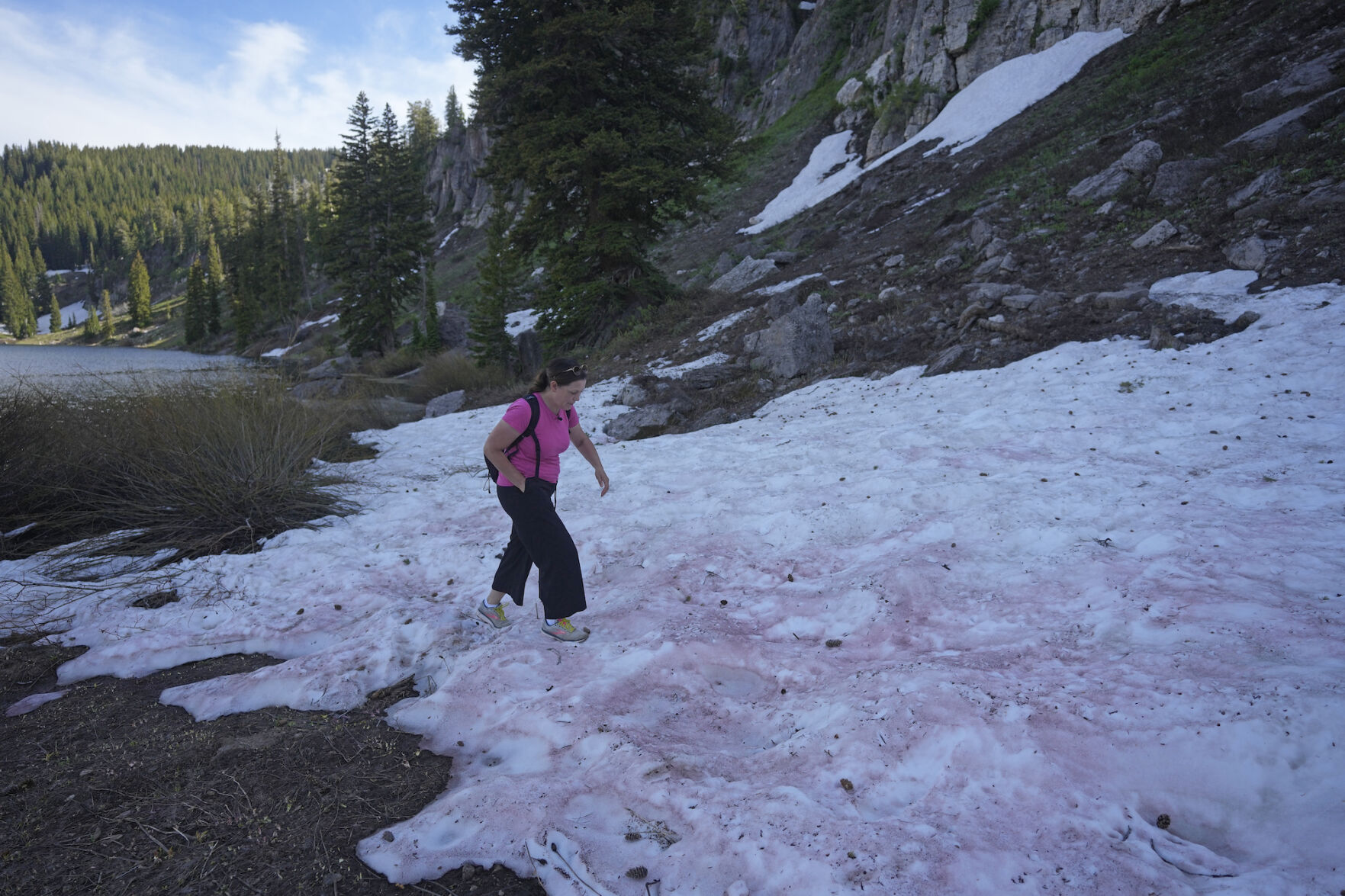
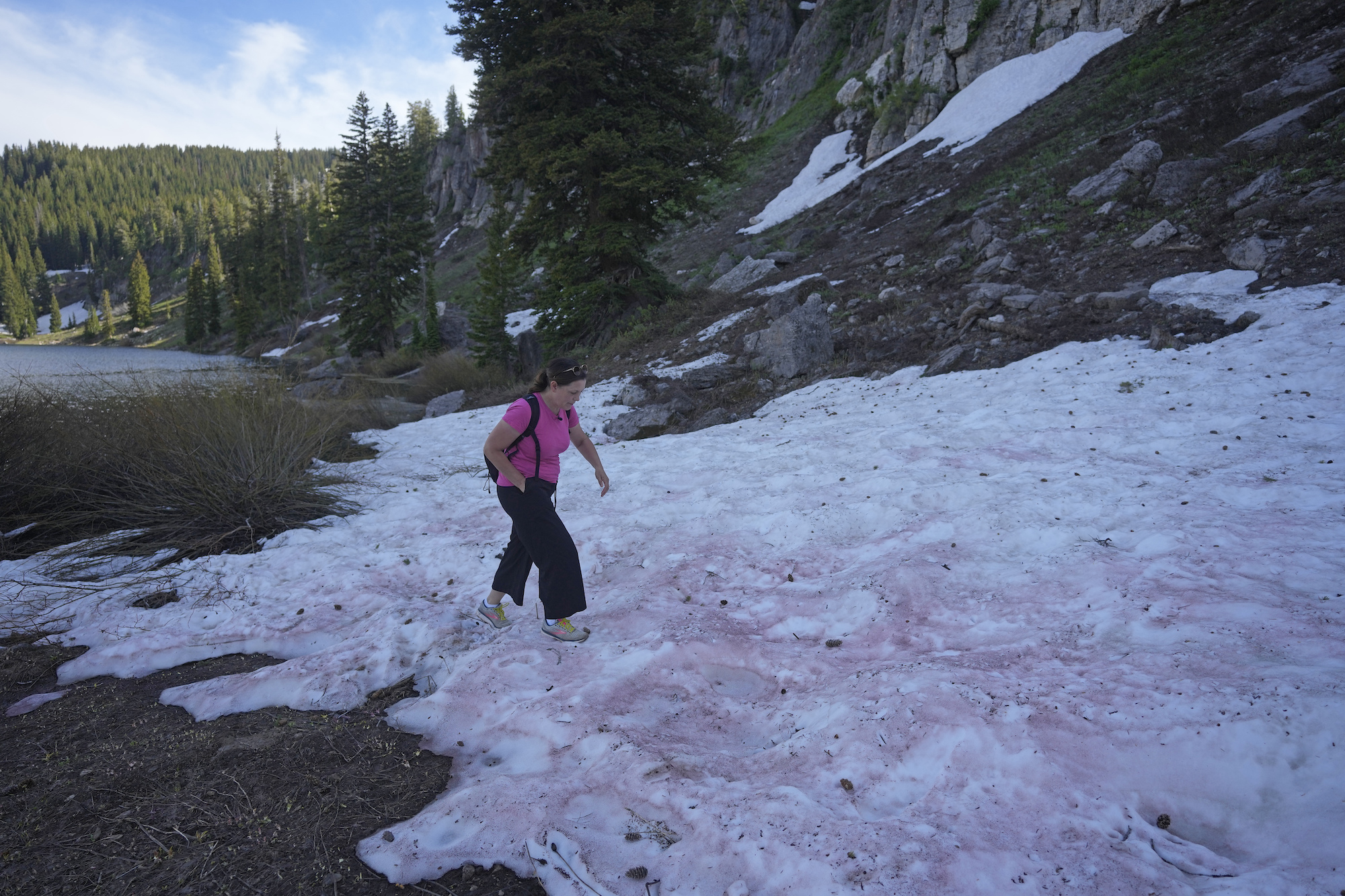
LOGAN – High up in the mountains, amid pinyon pine and quaking aspen trees, the remaining remnants of the winter’s snow is dotted with hues of pinks, purples and oranges.
Hikers, campers and church youth groups journeying by grasp it in their palms and liken it to flavored snow cones, Flamin’ Hot Cheetos, pink lemonade, dissolved blood or if passersby conducted an art project using red food coloring.
Last winter’s record snowfall is heating up, baking under the sunlight and turning hues of red. The presence of so-called “watermelon snow” – referred to unofficially due to its pinkish tint – is piquing the curiosities of photo-seeking visitors and raising a host of questions about nature, health and climate. Its prevalence this summer is particularly striking on ridges and in mountain ranges where snow would have melted by now in drier years.
The technicolor snow appears in high-altitude environments throughout the globe when a perfect storm of conditions – water content, sunlight, temperatures and the presence of nutrients – awaken dormant green algae called chlamydomonas nivalis that thrive in cold temperatures. The algae swim to the surface of the snow, where they bloom and divide. Upon arrival, when they’re hit by sun and ultraviolet rays, their color changes to absorb radiation and protect themselves from damage.
Scott Hotaling, a Utah State University ecologist who studies biodiversity in cold and high altitude environments, likened the algae’s ability to produce a secondary pigment to humans, whose skin uses pigmentation to absorb ultraviolet radiation and protect from the sun.
Many wonder if they can eat the pink snow.
The answer: Technically yes because it is not harmful to ingest, Hotaling said. However, it is not recommended since it is often found in melting snow banks also dotted with dirt and dust that contain toxins.
ARIZONA
Governor bars prosecution of legal abortion seekers, providers
PHOENIX – Arizona Gov. Katie Hobbs on June 23 signed a sweeping executive order to protect anyone involved with a legally obtained abortion from prosecution.
The order bans local prosecutors from bringing abortion-related charges and state agencies from assisting in any criminal investigations without a court order. In addition, Arizona will not honor any extradition requests for people wanted for assisting, providing or seeking an abortion.
Only Arizona Attorney General Kris Mayes, a Democrat, will be able to oversee abortion-related prosecutions.
Under the order, Hobbs will also create a special council to make recommendations on how to expand access to sexual and reproductive health care.
Abortions are currently allowed in Arizona in the first 15 weeks of pregnancy under a 2022 law. Last year, the Arizona Court of Appeals ruled that abortion doctors cannot be prosecuted under a law dating back to 1864 that criminalizes nearly all abortions. That pre-statehood law was already barred from being enforced for decades because of Roe v. Wade.
Planned Parenthood Arizona President and CEO Brittany Fonteno called Hobbs’ action a “promising and welcome path.”
Cathi Herrod, president of the socially conservative Center for Arizona Policy, accused the governor of overreaching.
Hobbs’ action came at the one-year anniversary of the U.S. Supreme Court’s overturning of Roe v. Wade, which had legalized abortion nationally.
MONTANA
Cleanup begins after train derailment spills asphalt binder
HELENA – Globs of asphalt binder that spilled into Montana’s Yellowstone River during a bridge collapse and train derailment could be seen on islands and riverbanks downstream from Yellowstone National Park a week after the spill occurred, witnesses report.
Officials with the Environmental Protection Agency said cleanup efforts began on July 2, with workers cooling the gooey material with river water, rolling it up and putting the globs into garbage bags. It will probably be recycled, said Paul Peronard with the EPA.
A bridge over the river collapsed as a train crossed it early on June 24 near the town of Columbus and 10 cars fell into the water, spilling liquid asphalt and molten sulfur, officials said. Both materials were expected to cool and harden when exposed to the cold water, and officials said there was no threat to the public or downstream water supplies, officials said.
However, the asphalt binder behaved differently – not sinking and adhering to rocks, Peronard said.
The Montana Department of Environmental Quality, the EPA and Montana Rail Link – the entities managing the cleanup – said more asphalt product was released on June 30 as a rail car was being removed from the river.
A team led by professor Kayhan Ostovar with the Yellowstone River Research Center at Rocky Mountain College has been conducting turtle surveys below the derailment and is sharing the GPS locations of sensitive sites that are near areas where the asphalt binder has come to rest.
Turtles are particularly vulnerable to this type of spill, Ostovar said, because they are leaving the water right now to seek out nesting sites on gravel bars and basking in the sun.
NEW MEXICO
Nearly $47 million in loans OK’d for recovery following historic wildfire
SANTA FE – About half of the money set aside earlier this year by New Mexico lawmakers to help cities and counties recover from a historic wildfire has been allocated by the state.
Gov. Michelle Lujan Grisham’s office announced on June 28 that nearly $47 million in no-interest loans have been approved for road repairs and culvert restoration in San Juan and Mora counties. Those counties were hit hard by the Calf Canyon/Hermits Peak Fire in 2022.
The blaze – the largest in the state’s recorded history – was sparked by prescribed burn operations conducted by the U.S. Forest Service. Now, residents in the burn scar are preparing for another season of post-fire flooding.
Mora and San Miguel counties are the only local governments to apply for the funding so far. State officials say they are working with others to identify projects and ensure applications and implementation complies with federal and state requirements so that the loans will eventually be covered by Federal Emergency Management Administration’s public assistance program.
State lawmakers who represent residents within the burn scar said the recovery process will be long and difficult.
The governor also issued 21 executive orders on June 27 for emergency funding totaling more than $15 million for wildfire recovery work and to reimburse other states that helped during the initial response.
IDAHO
Judge reverses approval of phosphate mine over prairie bird impact
A federal judge has yanked approval for a phosphate mining project in southeastern Idaho, saying federal land managers in the Trump administration didn’t in part properly consider the mine’s impact on sage grouse, a bird species that has seen an 80% decline in population since 1965.
U.S. District Judge B. Lynn Winmill’s June 2 decision came five months after he found fault with the way the U.S. Bureau of Land Management approved the Caldwell Canyon Mine in 2019.
The mine has been proposed by P4 Production LLC, a subsidiary of German pharmaceutical giant Bayer AG. Three environmental groups – the Center for Biological Diversity, Western Watersheds Project and WildEarth Guardians – sued.
In January, Winmill agreed with the conservation groups that the federal agency violated the National Environmental Policy Act and other laws on several counts when it approved the mine, including failing to consider the indirect effects of processing ore at a nearby plant and the cumulative impacts on sage grouse, whose population has dramatically declined over its habitat in 11 Western states, according to the U.S. Geological Survey.
The mine was projected to last for 40 years, with ore taken by truck or rail to a nearby processing plant.

Federal judge deems Jeffco’s appeal ‘frivolous’ in jail death case
Michael Karlik
michael.karlik@coloradopolitics.com
Updated 48 minutes ago
A federal judge declared Jefferson County’s appeal of his evidentiary decision “frivolous” on Thursday, which enables him to continue handling the civil rights litigation even as an appellate court separately addresses the appeal. The order from U.S. District Court Judge...

Trump calls Jared Polis a ‘sleazebag’ for keeping ‘elderly woman’ Tina Peters in jail, governor responds
Washington Examiner Staff, Washington Examiner
washington.examiner.staff.washington.examiner@gazetteedit.wpenginepowered.com
Updated 57 minutes ago
President Donald Trump took to Truth Social on Wednesday to scold Gov. Jared Polis (D-CO) regarding the case of former Mesa County Clerk Tina Peters, who was sentenced to nine years in prison in 2024 for charges of giving unauthorized...
Proposed development sparks rally to ‘save’ trail, open space south of Denver
Seth Boster
seth-boster@coloradopolitics.com
Updated 59 minutes ago
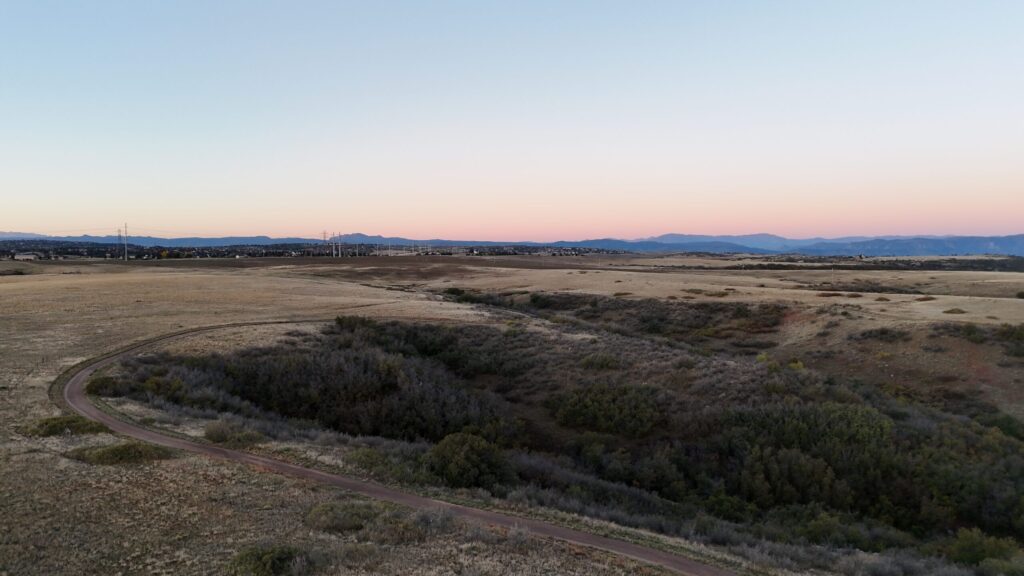
For the past 25 years around Denver’s south metro area, Mike Smith has watched homes, offices and commercial centers rise in open spaces he once viewed from the seat of his bike. But then there’s what he calls “the heart...
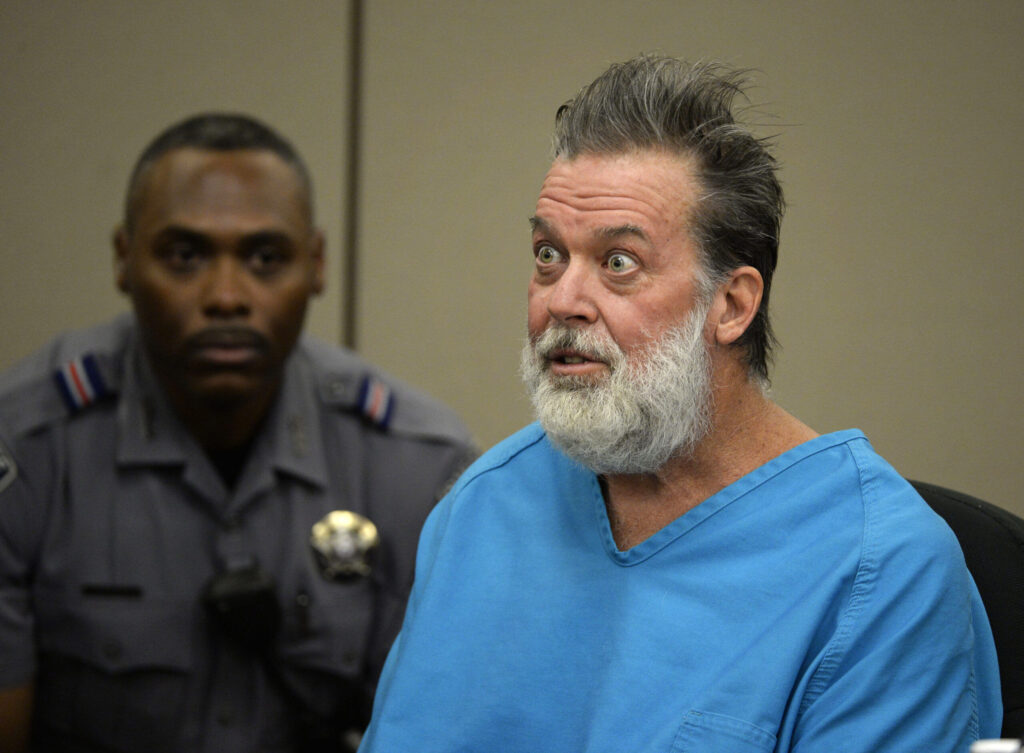
Cause of death revealed for self-proclaimed Planned Parenthood gunman
Mackenzie Bodell
mackenzie-bodell@coloradopolitics.com
Updated 3 hours ago
The self-proclaimed gunman in the Planned Parenthood shooting in Colorado Springs in November 2015 died from congestive heart failure and other related medical conditions, the Federal Bureau of Prisons said in a recent court filing. The Federal Bureau of Prisons...

Q&A: Denver Metro Chamber of Commerce VP says it’s ‘getting harder, more expensive to do business’ in Colorado | FISCAL ROCKIES
Thelma Grimes
thelma.grimes@coloradopolitics.com
Updated 2 hours ago
Editor’s Note: Once among the nation’s fastest-growing economies, Colorado today confronts mounting challenges that threaten its momentum. This series reveals how a state once defined by prosperity is navigating economic cliffs and ridges. We explore the impact of increased regulations, tariffs,...

Can you afford to live in Denver? | FISCAL ROCKIES
Michael Braithwaite
michael.braithwaite@gazette.com
Updated 2 hours ago
Editor’s Note: Once among the nation’s fastest-growing economies, Colorado today confronts mounting challenges that threaten its momentum. This series reveals how a state once defined by prosperity is navigating economic cliffs and ridges. We explore the impact of increased regulations, tariffs,...

After years of leading the nation, Colorado’s economy shows signs of cooling | FISCAL ROCKIES
Marissa Ventrelli
marissa.ventrelli@coloradopolitics.com
Updated 2 hours ago
Editor’s Note: Once among the nation’s fastest-growing economies, Colorado today confronts mounting challenges that threaten its momentum. This series reveals how a state once defined by prosperity is navigating economic cliffs and ridges. We explore the impact of increased regulations, tariffs,...

Q&A: Colorado Chamber of Commerce CEO sees warning signs for state economy, despite strengths | FISCAL ROCKIES
Thelma Grimes
thelma.grimes@coloradopolitics.com
Updated 2 hours ago
Editor’s Note: Once among the nation’s fastest-growing economies, Colorado today confronts mounting challenges that threaten its momentum. This series reveals how a state once defined by prosperity is navigating economic cliffs and ridges. We explore the impact of increased regulations, tariffs,...

Once a step ahead, Colorado’s economy cools, burdened by rising costs and regulations | FISCAL ROCKIES
Thelma Grimes
thelma.grimes@coloradopolitics.com
Updated 2 hours ago
Editor’s Note: Once among the nation’s fastest-growing economies, Colorado today confronts mounting challenges that threaten its momentum. This series reveals how a state once defined by prosperity is navigating economic cliffs and ridges. We explore the impact of increased regulations, tariffs,...

Council will consider $27M contract for Denver police body cameras, tasers
Deborah Grigsby
deborah.smith@denvergazette.com
Updated 4 hours ago
It’s been close to 10 years since the Denver Police Department first donned body-worn cameras in January 2016, and technology has advanced since then. The Department of Public Safety is asking the City Council to approve a new five-year, $27...
PREV
PREVIOUS

Mayor-elect's committee holds economic public forum, one of many through next week
Mike Johnston’s committee for the Denver Economic Development and Opportunity (DEDO) held a public forum Saturday morning, one of 28 public meetings the mayor-elect’s team is holding before Johnston takes office. The forums are “a platform for community members across Denver to make their voices heard,” according to the Vibrant Denver website. Each forum is […]
New, increased fees proposed for recreation areas in Colorado
The U.S. Forest Service has proposed sweeping increases and new fees across recreation areas in northwest Colorado. Campgrounds and trailheads around Routt County are among the long list of changes proposed for some 2.9 million acres of federal land spanning that part of the state and eastern Wyoming. Medicine Bow-Routt National Forest leadership has identified […]