

New state judicial discipline system won’t include Denver county judges

Nearly two dozen Denver County Court judges will not be impacted by any reform to the state’s judicial discipline system should voters approve the proposal next year.

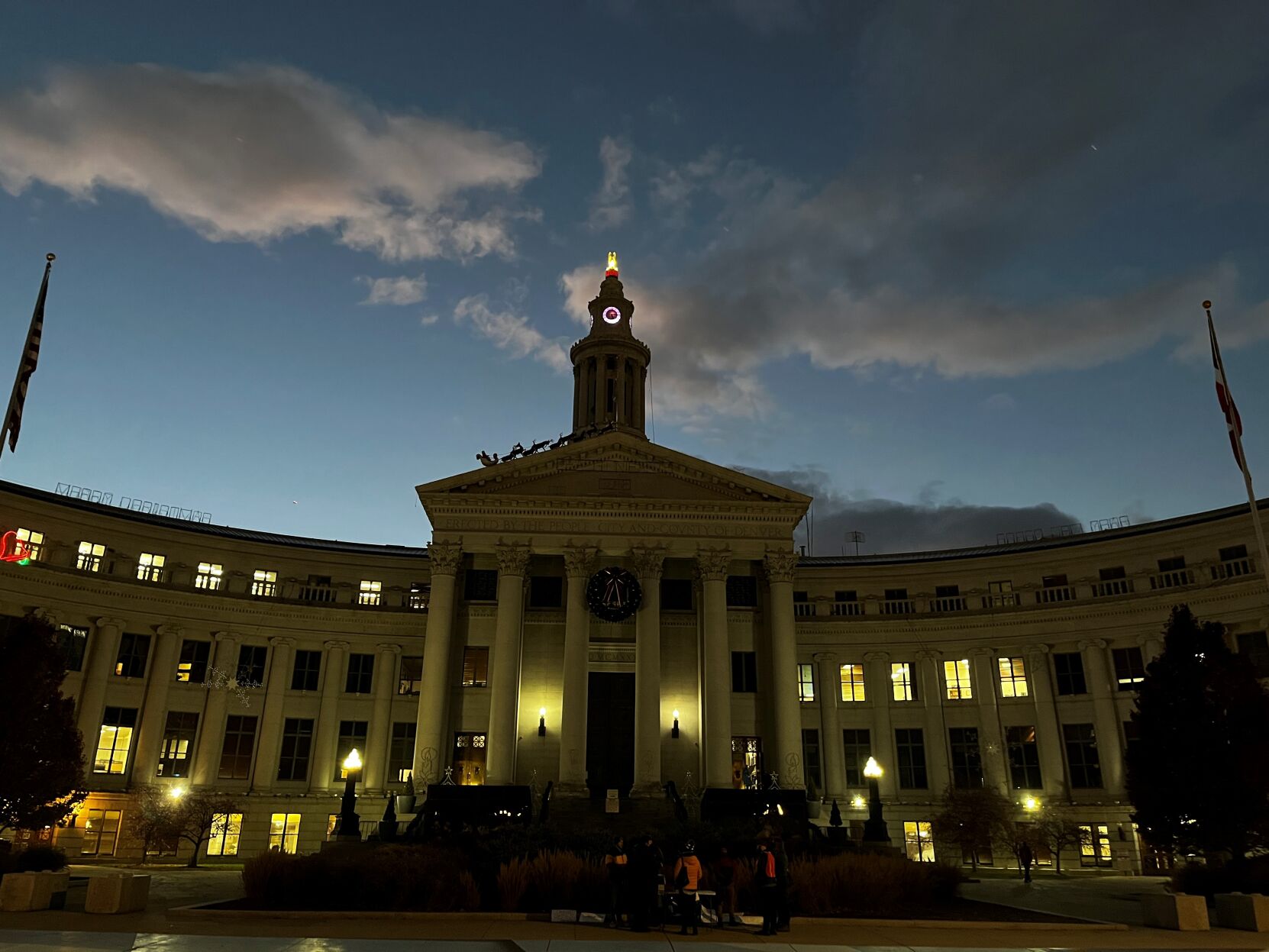
That’s because Denver’s 19 county jurists – each appointed by the mayor and apart from the 27 Denver district court judges named by the governor – fall under an autonomous city judicial discipline commission different from a state panel that oversees everyone else.
That means while 339 district and county court judges across Colorado must comply with any change to the state’s system of discipline, Denver’s county court judges will still answer to another – one that strongly mimics the very methods voters are being asked to reform in 2024.
The city’s commission can continue to hold hearings in secret, continue to act as prosecutor and jury on any case it brings against a Denver county court judge, or even allow the mayor to sit in judgment, despite any potential conflict of interest.
Denver commission officials told The Denver Gazette they’re waiting and watching to see what happens with the statewide vote and would likely take up similar changes after that, a process that could take months and require another vote of the city’s electorate.
The sweeping reforms proposed to how Colorado’s Commission on Judicial Discipline works – such as transforming its now-secret proceedings into alleged misconduct to a more transparent process – came after months of public testimony last summer before a special legislative committee. That was followed by extensive hearings at the General Assembly that ultimately yielded three measures, including a proposed amendment to the Colorado Constitution that will go before voters in November 2024.
Included in those reforms is the creation of an ombudsman’s office, where people with concerns about alleged misconduct can go for information, support and guidance in pursuing a complaint. That change does not require voter approval.
And although Denver voters will be able to make a choice on the amendment, it won’t actually impact them.
The city’s judicial discipline rules are separate and still rely on a process cloaked in secrecy, one that’s managed by a seven-member panel that ironically includes two Denver district court judges, who would personally be subject to the state’s new system while administering the city’s.
A surprise to legislators
That any reforms won’t impact Denver was a surprise to legislators key to the process.
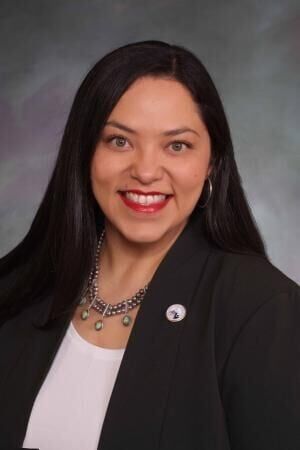
“I honestly didn’t even know Denver had it’s own judicial discipline commission and I didn’t understand or realize the city’s county judges would fall outside of the state’s purview,” said Sen. Julie Gonzales, D-Denver, co-chair of the legislative committee that conducted the summertime hearings. “We thought this would apply to them and we believed the rules we contemplated would include all judges. We would have addressed this challenge had we been aware the challenge existed.”
Committee chairman Rep. Mike Weissman, D-Aurora, was similarly surprised.

“The issue of a separate system for Denver county judges did not come up in the legislative process,” Weissman said. “Time has passed (since the Denver and state discipline systems were created), and, in the same way that what was an adequate system decades ago no longer is for the state, it’s most likely time for an update in Denver, as well.”
Denver’s discipline system is not unlike the state’s current method, where a single entity approves any public censure of a judge. For the state commission it’s the seven-member Supreme Court. The city’s structure – in place since at least 1967 – gives the mayor the ultimate decision on whether to discipline a county judge and how.
Much like the state’s current process, the city judicial commission recommends any public censure to the mayor but can also issue private admonishments that never reach City Hall.
Voters will be asked to change the state’s system to one where a three-person panel – a lawyer, a judge and a citizen who is neither – hears discipline cases brought by the state commission. Currently, the commission makes its own determination or forwards one from a three-judge panel named by the Supreme Court to the high court for its agreement or rejection.
The city commission has seven voting members – the two district court judges, a pair of attorneys and three citizens, all appointed by the mayor – and is supervised by the presiding county judge, Nicole Rodarte, who makes the initial decision about whether a complaint merits the commission’s attention. She also oversees any discipline of the city’s magistrates, all of whom serve at her pleasure.
The state’s commission currently has 10 members – four judges appointed by the Supreme Court, and two attorneys and four non-attorneys appointed by the governor. How the judges are chosen for the panel would change under the new rules.
Following the state?
Rodarte told The Gazette in an email that the city’s commission has been keenly aware of what the state has been doing.
“While the Denver County Court is not part of the state court system affected by the 2023 legislative changes, because it is carved out as a separate court by state statute and the Colorado Constitution, the (Denver Judicial Discipline) Commission has been closely following the state interim committee’s extensive work and resulting 2023 legislation,” Rodarte said in the email, “including the constitutional amendment referred to the voters for consideration.”
She said if the referendum passes, the Denver commission would use it as a framework for its own changes to its operating rules.
“Our Judicial Discipline Commission is committed to examining and revising its rules and will use the state interim committee’s recommendations and the legislative changes from this summer as a framework for its upcoming revisions,” Rodarte wrote.
That work could entail an amendment to the Denver City Charter, which authorizes the discipline commission’s work, much like the state Constitution authorizes that of the state commission.
The City Council and the city attorney would likely play a role, as well, in evaluating how to get any changes done.
Councilman Kevin Flynn said there’s too much at stake not to follow the state’s lead.
“Public trust in our nation’s judicial system, from the top down, is in a tailspin right now,” Flynn told The Gazette in an email. “While I understand the reason why Denver as a consolidated city and county is exempt from these statewide reforms in judicial discipline, we are not exempt from increasing public scrutiny. Updating Denver’s procedures for judicial complaints to be in line with the statewide improvements needs to be near the top of the agenda for the new (Mike) Johnston administration next month.”
More than 40 complaints against county court judges have been filed with the Denver commission from 2017 through 2022, according to its reports.
None resulted in any action taken against a judge.
The city council in April approved a $200,000 settlement with Rebecca Norris, a courtroom clerk who filed a federal lawsuit in 2020 that accused the city of wrongfully firing her after she accused senior Denver County Court Judge Andrew Armatas – known as “Judge Touchy Feely” among courthouse staff, according to the lawsuit – of sexual assault and harassment she endured during the summer of 2016. The city said her allegations were false and dishonest and fired Norris in 2019.
The commission’s annual reports indicate it did not discipline any judge in that timeframe and it’s unclear if Norris reported the incidents to the commission.
The city commission for years had said it was either rewriting or considering a rewrite of its rules to replicate the state’s, according to nearly a decade of its annual reports reviewed by The Gazette.
That began in 2013, when then-Presiding Judge John Marcucci said he asked commission member attorney Aaron Hyatt of Brownstein Hyatt Farber Schreck in Denver to take on the task. In 2015, Marcucci enlisted retired Denver County Court Judge Raymond Satter to look over the final drafts Hyatt had written.
“Unfortunately, just as we were nearing final approval on the amended rules, a matter filed with the Commission put everything on hold,” Marcucci wrote in its 2015 report.
A complaint against a judge had been filed and Marcucci said it would have been inappropriate to change the commission’s rules at the same time.
It’s unclear if it was the Armatas case that stalled the rewrite.
“It is my vow to finish this work by the end of 2016,” Marcucci wrote.
That didn’t happen.
As the city commission was about to renew the process, the state commission said it was redoing some of its rules, so the city set its own rewrite aside.
“It seemed senseless to finish our re-write only to be once again out of sync with the state,” Marcucci wrote in the commission’s 2016 report.
For the next two years, the city commission said it was “still working” on revising its rules, annual reports show. It had planned to be done in 2019, Presiding Judge Theresa Spahn wrote in the 2018 report.
A year later, the commission said in its report that it was “about to embark on rewriting” its rules with Hyatt and new member Denver District Court Judge Karen Brody doing the work.
Then COVID-19 hit.
For its 2021-22 annual report, the commission – yet again – was “about to embark on rewriting” its rules with Hyatt and Brody. There was no reference to the legislature’s summertime committee hearings or calls for reform.
The state’s reforms were the end result of a scandal that began in 2019 when newspaper stories revealed the existence of a multi-million-dollar contract awarded by the Judicial Department to a former top official who faced firing.
The contract was quickly canceled and at least three people were fired or resigned.
A state audit later found numerous problems with how the contract was awarded, but mostly around the procurement process.
Then in 2021, newspaper accounts uncovered the existence of a memo that outlined numerous allegations of judicial misconduct that were either overlooked or dealt with leniently. The former official awarded the contract – Judicial Department chief of staff Mindy Masias – allegedly threatened to reveal those details in a tell-all sex-discrimination lawsuit. She was allegedly given the contract in order to prevent that litigation, although subsequent investigations could find no quid pro quo.
In its own inquiries, the state judicial discipline commission told legislators how it ran into extensive difficulty obtaining information and cooperation from the judicial branch and the Supreme Court.
That led the legislature to insulate the commission by creating its own funding stream and insist on a deeper look. What followed was a summertime of public hearings where it became clear the state’s judicial discipline system needed an overhaul.
The state discipline commission on May 3 recommended a public censure of former Colorado Supreme Court Chief Justice Nathan “Ben” Coats for his role in awarding the contract and violations of the judicial code of conduct.
A special panel of judges from the Court of Appeals was named to decide whether to accept the discipline recommendation after the Supreme Court recused itself.

Federal judge finds DOJ adequately searched for, disclosed records related to Bidens
Michael Karlik
michael.karlik@coloradopolitics.com
Updated 10 minutes ago
A federal judge determined on Friday that the U.S. Department of Justice adequately searched for and disclosed records to a Colorado attorney in response to his request for documents related to former President Joe Biden’s son and brother. In November...

10th Circuit warns lawyers after finding fake case in filing
Michael Karlik
michael.karlik@coloradopolitics.com
Updated 4 hours ago
The Denver-based federal appeals court warned attorneys to be more careful last month after discovering one lawyer cited a fake case in his arguments. In recent months, federal and state judges in Colorado have begun cautioning lawyers explicitly about the...
Colorado leaders weigh next steps after US Supreme Court rules against state’s ‘conversion therapy’ ban
Marissa Ventrelli
marissa.ventrelli@coloradopolitics.com
Updated 24 minutes ago
Colorado leaders and advocacy groups remain divided after the U.S. Supreme Court on Tuesday ruled against the state’s ban on conversion therapy for minors, ruling 8-1 that the 2019 law violates the First Amendment. While it is a victory for...

10th Circuit rules cognitively impaired man’s risk of lobotomy, mistreatment in Mexico not ‘torture’
Michael Karlik
michael.karlik@coloradopolitics.com
Updated 17 hours ago
The Denver-based federal appeals court concluded last month that a man’s risk of mistreatment or forced lobotomy in his native Mexico did not amount to “torture” that should shield him from deportation. A three-judge panel of the U.S. Court of...
Colorado justices side with news organizations for disclosure of high-level child abuse data
Michael Karlik
michael.karlik@coloradopolitics.com
Updated 21 hours ago
The Colorado Supreme Court ruled on Monday that the state must disclose the number of child abuse reports at individual group living facilities in response to an open records request, as the addresses are already in the public domain. The...
Divided Colorado Supreme Court finds Denver detective did not violate defendant’s Miranda rights
Michael Karlik
michael.karlik@coloradopolitics.com
Updated 17 hours ago
The Colorado Supreme Court determined on Monday that a Denver detective did not improperly resume questioning of a defendant in custody after he invoked his right to counsel. By 4-3, the justices reversed a trial judge’s order that found a...

Out-of-state judges address ex-discipline director’s lawsuit, Colorado justices accept federal invitation | COURT CRAWL
Michael Karlik
michael.karlik@coloradopolitics.com
Updated 1 day ago
Welcome to Court Crawl, Colorado Politics’ roundup of news from the third branch of government. A pair of out-of-state judges got down to business in a lawsuit brought by Colorado’s former judicial discipline director, plus the state Supreme Court has...
Federal judge upholds constitutionality of Colorado campaign contribution limits
Michael Karlik
michael.karlik@coloradopolitics.com
Updated 4 days ago
A federal judge upheld Colorado’s individual campaign contribution limits as constitutional on Thursday, finding that three Republican plaintiffs failed to prove the campaign finance framework violates their First Amendment rights. U.S. District Court Senior Judge John L. Kane recognized that...

Appeals court rejects theory that existing tax revenue undermines need for new fees
Michael Karlik
michael.karlik@coloradopolitics.com
Updated 4 days ago
Colorado’s second-highest court rejected a plaintiff’s claim on Thursday that the tax revenue generated by an existing activity should prevent local governments from imposing new fees aimed at regulating the activity. The question stemmed from Colorado’s unique constraints on taxation...
Appeals court finds no illegal sentence when defendants forfeit time-served credit
Michael Karlik
michael.karlik@coloradopolitics.com
Updated 3 days ago
Colorado’s second-highest court ruled on Thursday that criminal defendants may agree to relinquish the credits they earned while incarcerated pending trial, despite a state law guaranteeing that such time “shall be deducted” from a person’s sentence. Kerry Ellis Endsley pleaded...
PREV
PREVIOUS

DA Michael Allen speaks on 'thumb in the eye' claim on being non-binary from Club Q shooter
Fourth Judicial District Attorney and prosecutor Michael Allen last week said the Club Q shooter’s claims of being nonbinary equated to a “thumb in the eye” to the LGBTQ+ community. Allen also said he believed the shooter only took on the nonbinary identity in an attempt to avoid hate crime charges and the federal death […]

Abortion surge from out-of-state clients continues to impact providers
Demand for abortions continues to tax Colorado providers, as out-of-state women travel here for services because of legal restrictions where they live, following last year’s U.S. Supreme Court ruling on Dobbs v. Jackson Women’s Health Organization. About 2 in 5 women seeking abortion services from Planned Parenthood of the Rocky Mountains have been from out […]