

What is Denver’s school board hiding? | Denver Gazette
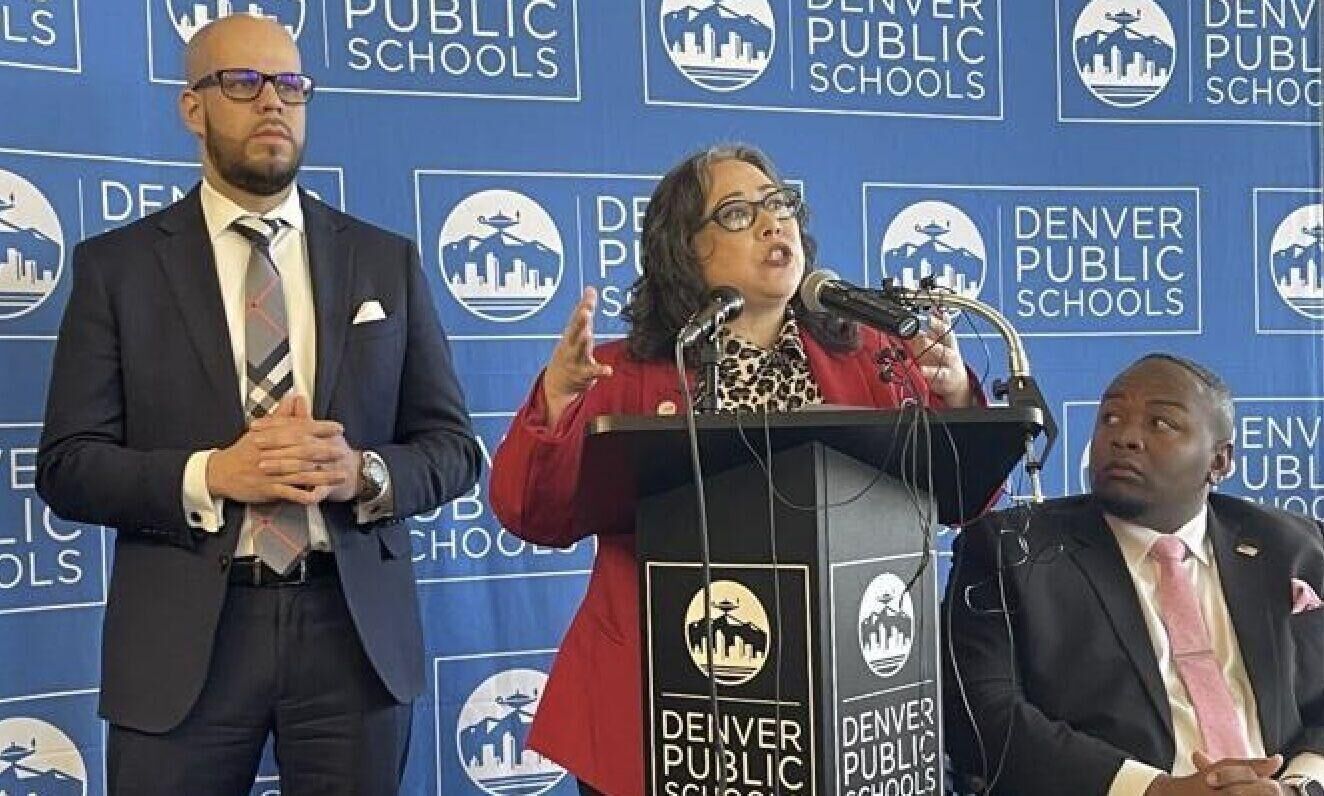
Denver Public Schools continues to defy parents and the rest of the public by refusing to release the recording of a five-hour school board meeting conducted behind closed doors in March following a shooting at East High School. Two administrators were seriously wounded.
DPS is holding out even after a Denver judge ordered the recording’s release last week given a clear-cut violation of Colorado’s Open Meeting Law. Rather than comply with the law, the district on Monday announced it was appealing the court’s ruling.
Among the grounds for appeal that DPS’ hired-gun attorneys claimed in their filing in Denver District Court: that the judge erred in reviewing and then revealing details from the recording, “frustrating DPS’ rights of appeal.” As reported by The Gazette, the district’s lawyers also said the court order did not resolve details about attorney fees and court costs.
Stay up to speed: Sign-up for daily opinion in your inbox Monday-Friday
It amounts to circular logic and grasping at technicalities – seemingly in search of any pretext to keep the recording from the parents and taxpayers to whom the school district is supposed to be answerable.
Which is to say, the district is thumbing its nose at the whole community, including at The Gazette and other news media that have sued for access to the recording in order to share it with the public.
At issue is a March 23 “executive session” convened by the DPS board to discuss returning Denver police to school campuses a day after the shooting at East High. In a spasm of hyper-political nonsense three years earlier, the board had voted to remove cops from campus and now was being forced to eat crow.
Bringing police back as school resource officers was the right thing to do. It’s a highly effective policy yielding many benefits, including of course enhanced school security.
But there was no need to shut out the press and public to mull the matter. Certainly not for five hours and 13 minutes. Too bad if the board was embarrassed to admit it had been dead wrong and that its anti-police policy may have led to near-deadly consequences. The priority should have been keeping concerned parents plugged into the decision-making process – not preserving the political viability and protecting the delicate egos of public officials.
And if the closed-door meeting wasn’t about damage control – a pointless pursuit in any event for a board that’s roundly dismissed as dysfunctional and inept over wide-ranging issues – then just what is the district trying to hide?
In any event, Colorado law is clear on the subject. State and local elected bodies like the DPS board may not discuss and develop policy, or vote on it, in secret. It must be done in public except in a few narrow circumstances that Denver District Court Judge Andrew J. Luxen ruled didn’t apply in this case. The judge found that the board had engaged in a “lengthy discussion of general security arrangements … including the return of school resource officers” behind closed doors before holding a public vote that, by that point, was a mere formality.
The public had been excluded from the substantive discussion, and a court now has ordered a recording of the discussion to be turned over to the public.
Yet, the district is digging in its heels. All the more reason for Denver voters to demand accountability – and new leadership – when filling three school board seats up for election on this November’s ballot.
Denver Gazette Editorial Board



Colorado is shrinking — time for our elected officials to take notice | Jon Caldara
Jon Caldara
jon-caldara@coloradopolitics.com
Updated 3 days ago
By Jon Caldara Something strange is happening in Colorado — strange enough that the political class should notice. People are leaving Colorado. After years of being one of the fastest-growing states in the nation, net in-migration has stopped and may...

Capitol M: Return to Gold Dome High, 2026 edition, and a salute to old IU
Marianne Goodland
marianne.goodland@coloradopolitics.com
Updated 3 days ago
Welcome back, campers! The 2026 legislative session is upon the good citizens of Colorado, and for a few, the first Monday of the session, Jan. 19, was pretty special. There are at least four folks in the Capitol who are...

The biggest accelerant of our political tribalism | SONDERMANN
Eric Sondermann
eric-sondermann@coloradopolitics.com
Updated 4 days ago
In years past, my go-to word in describing our political condition was “polarization.” I used it endlessly and still do on occasion. But as time has moved on, and the divide has only grown in depth and toxicity, polarization no...
The ramifications of President Trump’s pursuit of Greenland | Kelly Sloan
Kelly Sloan
kelly-sloan@coloradopolitics.com
Updated 3 days ago
President Donald Trump has evidently stepped back from his threatened fantasy of invading Greenland — the sovereign territory of a U.S. ally — to which many a sigh of relief has been expressed, including by the markets. There was next...
Let’s find out who’s up to the gubernatorial task post Polis | Paula Noonan
Paula Noonan
paula-noonan@coloradopolitics.com
Updated 3 days ago
Gov. Jared Polis is bold and his policies are bolder than bold. That’s the paraphrase of his State of the State speech to open the 2026 General Assembly and start off his last year in office. His sweeping review of...

We dream, we dare, we decouple — how Colorado turns values into policy | OPINION
Colorado Politics
colorado-politics@coloradopolitics.com
Updated 4 days ago
By Kathy White Gov. Jared Polis’ final State of the State address was a clear victory lap. After eight years as governor, he used the moment to highlight accomplishments, reflect on progress and remind Coloradans what his administration has delivered....

Volunteer homeowners’ associations to be hit with new lot-splitting law | Bob Loevy
Bob Loevy
bob-loevy@coloradopolitics.com
Updated 4 days ago
Volunteer homeowners’ associations in Colorado Springs, particularly those close to the downtown area, are preparing for another attack on single-family zoning from Gov. Jared Polis and the state legislature during the just underway 2026 legislative session. The new proposal is...

Comprehensive energy permitting reform benefits Colorado, the mountain west | PODIUM
Colorado Politics
colorado-politics@coloradopolitics.com
Updated 5 days ago
By Ron Dickson Thank you, U.S. Reps. Gabe Evans and Jeff Hurd, for your participation in the Congressional Problem Solvers Caucus and your support of comprehensive energy permitting reform. We also appreciate U.S. Sen. John Hickenlooper’s continued efforts to enhance...

Colorado kids will die with CDC’s recent changes to vaccine schedule | OPINION
Colorado Politics
colorado-politics@coloradopolitics.com
Updated 5 days ago
By Connie Ingram and Lesley Thompson No parent or grandparent should ever face the terror of watching a child fight for their life against a disease that could have been prevented. Yet more families could be put in exactly this...
Solutions right in front of us to solve political extremism crisis | OPINION
Colorado Politics
colorado-politics@coloradopolitics.com
Updated 5 days ago
By Landon Mascareñaz Everywhere I went these past two weeks, the sentiment was the same: “What are we going to do about political extremism and the conflict in this country?” I heard it from folks on the left, right and...
PREV
PREVIOUS
Time Colorado agricultural might gets respect it deserves | PODIUM
Byron Pelton Barbara Kirkmeyer Every now and then we all like to take a trip down memory lane. When you are a senator serving in the minority, those memories can be painful sometimes. But try being a senator from rural Colorado in the minority and recalling all the bad legislation, proclamations, executive orders or department […]
Work of Durango land acknowledgment in sincerity of words | Durango Herald
In the comedy series “Reservation Dogs” about four Native American teens growing up on a reservation in eastern Oklahoma, one scene parodies land acknowledgments. A visiting doctoral student offers a land acknowledgment to pay respects to the traditional caretakers of the land, recognizing the local tribes. Then she takes it further, acknowledging what came before […]