

Colorado Supreme Court expands prosecutors’ ability to introduce children’s hearsay testimony
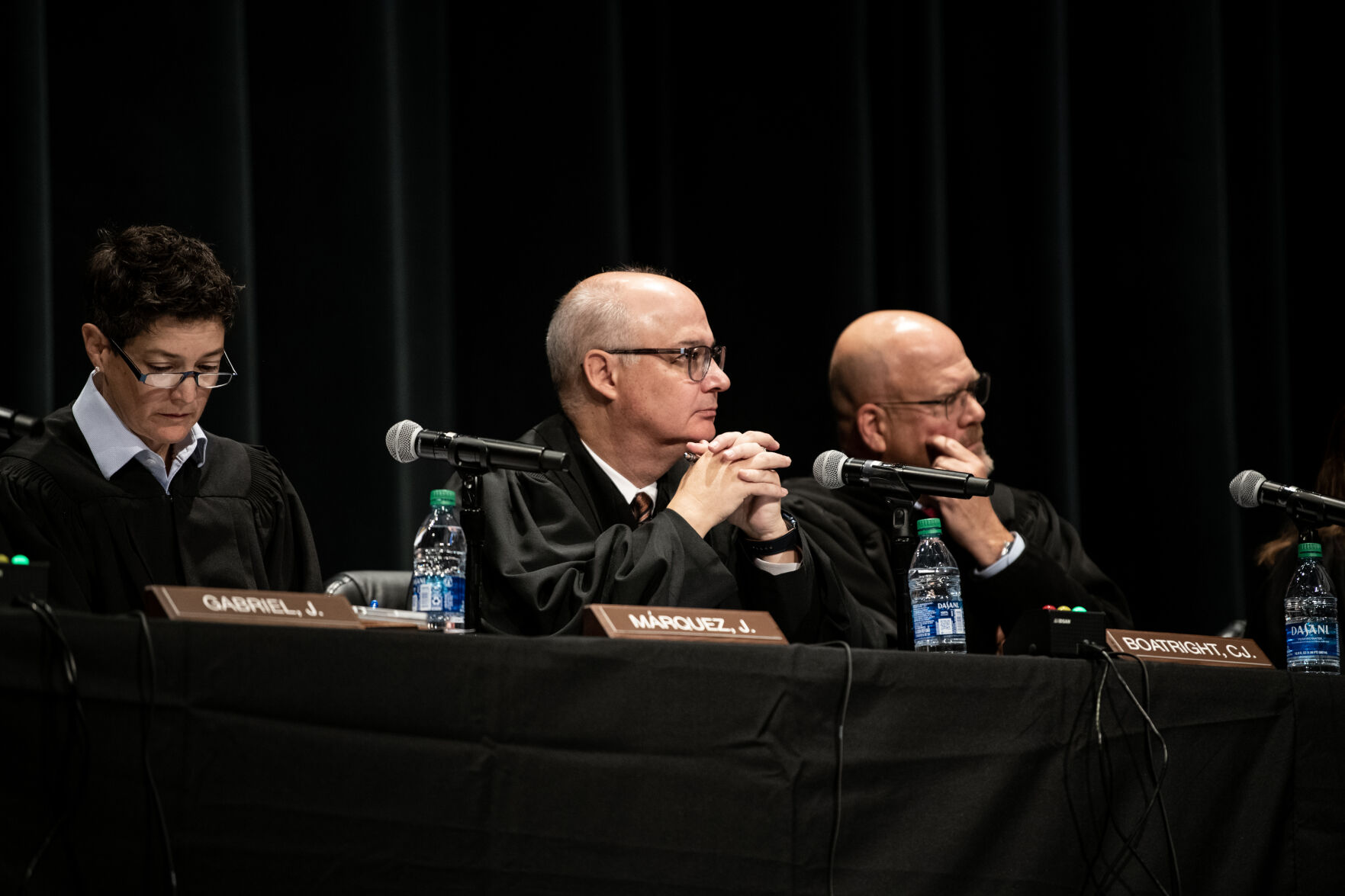
In a pair of rulings addressing out-of-court statements from child victims, the Colorado Supreme Court on Monday made it easier for prosecutors to introduce hearsay evidence against defendants accused of sexually assaulting minors.
Out-of-court testimony aimed at proving the truth is generally inadmissible at trial, as defendants cannot cross-examine the witness in front of jurors. However, Colorado law permits hearsay in instances where a child witness is testifying about a sex offense.
Unlike other states, which have a specific age cutoff for hearsay testimony, Colorado law pegs the threshold to whatever age is written in the “subject of the action.”
But what does that mean?
The court determined that prosecutors may use out-of-court testimony from older child victims, even if the defendant is accused of assaulting the victim when they were younger than the age cutoff.
Colorado’s law allowing for child hearsay ensures prosecutors can have the evidence they need in sex crimes, but also protects criminal defendants against out-of-court testimony they cannot challenge. A further goal of the law is to avoid retraumatizing younger victims by sparing them the ordeal of having to answer questions in front of a jury.
Two men, Dennis R. Chirinos-Raudales and Jose Leonel Orellana-Leon, were both convicted of sexual assault on a child in Denver and Boulder County, respectively. Both men’s victims reported their abuse at age 15, and forensic interviewers spoke to each one.
Colorado law deems sexual assault on a child by someone in a position of trust – the specific crime at issue – a class 4 felony. But it becomes a more serious offense if the victim is under 15. At Chirinos-Raudales and Orellana-Leon’s trials, the prosecution played videos of the victims’ forensic interviews in lieu of the children’s in-court testimony. On appeal, the men challenged that evidence.

The defendants pointed to Colorado’s child hearsay law that indexes the cutoff age to the number listed in the “subject of the action.” Because they were sentenced more severely for assaulting a child under 15, their victims’ interviews – recorded at age 15 – did not make the cutoff for use at trial, they argued.
The Colorado Criminal Defense Bar weighed in on their behalf, contending that even if the video evidence were barred, the prosecution would “merely have to prove its case like any other – without the use of inadmissible hearsay and by submitting it to cross-examination.”
The government countered that the defendants were charged with sexually assaulting a child, meaning someone under 18. The provision enhancing their sentences if their victims were younger than 15 was not the “subject of the action.” By choosing the lower age as the cutoff for hearsay, it could become harder to secure more serious sentences for offenses against younger children.
“I think we are also likely to get some cases where the prosecution makes the decision not to charge the sentence enhancers so they can get in this evidence,” warned Senior Assistant Attorney General Brock J. Swanson during oral arguments. “And we’re doing it for procedural reasons rather than for the defendant’s actual, substantive guilt.”
Alternatively, the government suggested that when multiple age cutoffs are listed, every age is fair game.
“It’s maximalist, right?” said Justice William W. Hood III. “You look at any opportunity to admit child hearsay under the statute and you go to the highest age.”
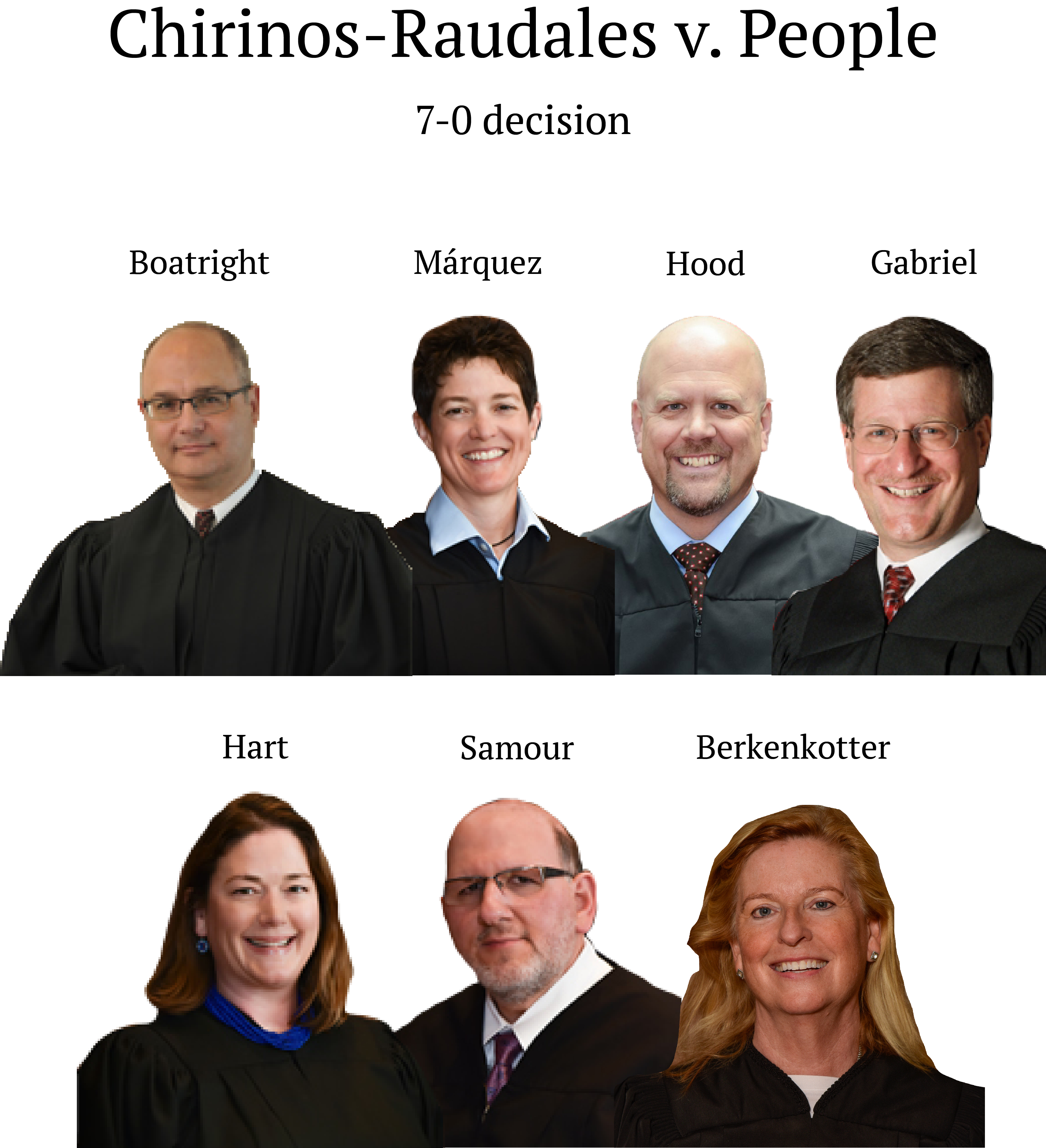
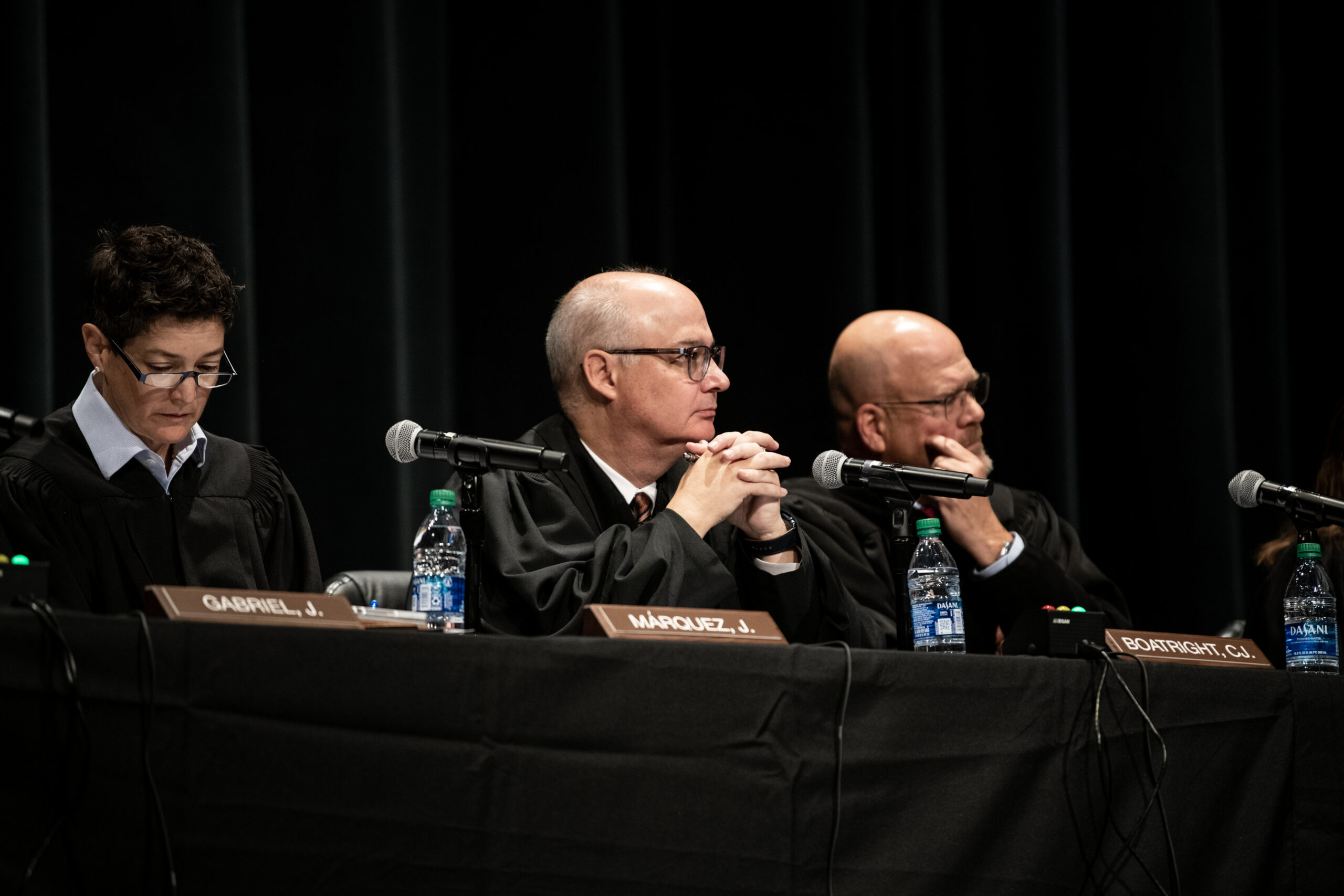
While the Supreme Court did not explicitly endorse the “maximalist” position, it ultimately agreed the victims in Chirinos-Raudales and Orellana-Leon’s cases were allowed to testify out of court. Chief Justice Brian D. Boatright, in the June 12 opinion, explained the men were charged with sexual assault on a child, which was the real “subject of the action.”
Without that charge, “there would be no judicial proceeding,” he wrote. Therefore, the higher age cutoff of 18 applied.
The cases are Chirinos-Raudales v. People and Orellana-Leon v. People.

Federal judge upholds constitutionality of Colorado campaign contribution limits
Michael Karlik
michael.karlik@coloradopolitics.com
Updated 1 day ago
A federal judge upheld Colorado’s individual campaign contribution limits as constitutional on Thursday, finding that three Republican plaintiffs failed to prove the campaign finance framework violates their First Amendment rights. U.S. District Court Senior Judge John L. Kane recognized that...
Appeals court rejects theory that existing tax revenue undermines need for new fees
Michael Karlik
michael.karlik@coloradopolitics.com
Updated 2 days ago
Colorado’s second-highest court rejected a plaintiff’s claim on Thursday that the tax revenue generated by an existing activity should prevent local governments from imposing new fees aimed at regulating the activity. The question stemmed from Colorado’s unique constraints on taxation...
Appeals court finds no illegal sentence when defendants forfeit time-served credit
Michael Karlik
michael.karlik@coloradopolitics.com
Updated 11 hours ago
Colorado’s second-highest court ruled on Thursday that criminal defendants may agree to relinquish the credits they earned while incarcerated pending trial, despite a state law guaranteeing that such time “shall be deducted” from a person’s sentence. Kerry Ellis Endsley pleaded...
Appeals court reinstates Garfield County arson charge
Michael Karlik
michael.karlik@coloradopolitics.com
Updated 3 days ago
Colorado’s second-highest court reinstated a Garfield County defendant’s arson charge on Thursday, concluding a trial judge improperly credited a witness’s claim that she alone was responsible for starting the fire. A sheriff’s deputy responded to a brush fire near Parachute...
Federal judges rebuke ex-Colorado judicial discipline director for conduct in lawsuit
Michael Karlik
michael.karlik@coloradopolitics.com
Updated 3 days ago
A pair of federal judges expressed a desire on Thursday to break the logjam on a lawsuit by Colorado’s former judicial discipline director against the state Supreme Court and related entities, while simultaneously showing little tolerance for the plaintiff’s scorched-earth...
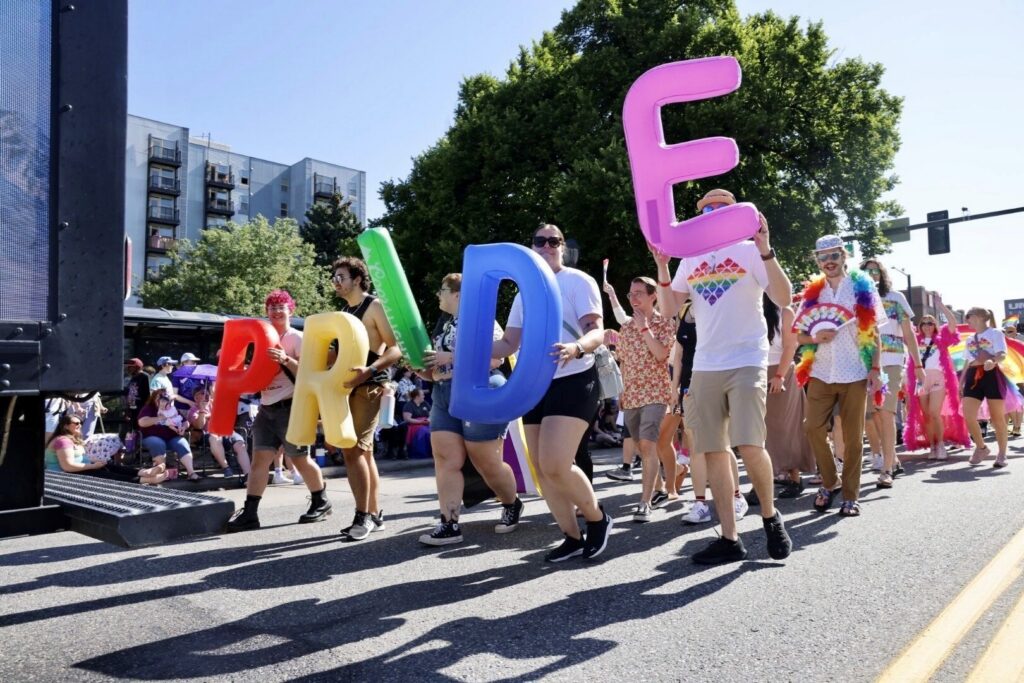
Democratic bill would let recipients of ‘conversion therapy’ sue Colorado providers with no statute of limitations
Marissa Ventrelli
marissa.ventrelli@coloradopolitics.com
Updated 3 days ago
Colorado lawmakers have advanced a proposal that would allow people who underwent conversion therapy to sue licensed providers for damages, moving the measure forward on a party-line vote in the House Judiciary Committee. House Bill 1322, proposed by Democratic Reps....
Federal judge refuses to authorize immediate appeal in World Cup trafficking lawsuit
Michael Karlik
michael.karlik@coloradopolitics.com
Updated 4 days ago
A federal judge declined to authorize an immediate appeal last week of a prior decision allowing companies operating out of Colorado to be sued for allegedly participating in a human trafficking venture involving Filipino laborers who constructed facilities for the...
Federal judge considers second round of sanctions against ex-Colorado judicial discipline director
Michael Karlik
michael.karlik@coloradopolitics.com
Updated 4 days ago
A federal judge ordered Colorado’s former judicial discipline director on Tuesday to explain why she should not sanction him a second time for filing documents for improper purposes, such as harassment or delay. U.S. District Court Senior Judge Kathryn H....
Colorado justices agree to review insurance question that has divided federal judges
Michael Karlik
michael.karlik@coloradopolitics.com
Updated 4 days ago
The Colorado Supreme Court granted a federal judge’s request on Friday to address an issue that has produced conflicting answers in policyholders’ lawsuits against insurance companies over unpaid benefits. “Parties (and judges) regularly spend undue time and money fighting in...
Federal judge dismisses background screeners’ challenge to Colorado law
Michael Karlik
michael.karlik@coloradopolitics.com
Updated 16 hours ago
A federal judge dismissed a challenge on Friday to a portion of Colorado law that prohibits certain information from being included in consumer reports, in what seemed to be a conflict with federal law. Congress originally enacted the Fair Credit...
PREV
PREVIOUS

Colorado Libertarians ink pact with state Republicans to stand down next year in crucial races
Colorado’s Libertarian Party has agreed with state Republicans to stay out of competitive races in next year’s election where a right-leaning, third-party candidate could be a spoiler, the chairs of both parties announced Tuesday. Colorado GOP Chairman Dave Williams said the agreement he negotiated with Hannah Goodman, his Libertarian counterpart, will boost the chances of […]
State Sen. Rachel Zenzinger won't run for Arvada mayor
After indicating she was initially interested in the job, state Sen. Rachel Zenzinger has decided not to run for Arvada mayor. The race would have returned the Arvada Democrat to her roots – her first elected office was on Arvada City Council in 2008. She served as mayor pro tem in 2011. Zenzinger is term-limited in […]