

A look at Biden’s first four judicial appointees, state Supreme Court answers lingering COVID question | COURT CRAWL

Welcome to Court Crawl, Colorado Politics’ roundup of news from the third branch of government.
A recent cover story examined the tenures to date of the four women the Biden administration has appointed to the federal bench in Colorado, plus the state Supreme Court rejected an attempt to use the pandemic to justify a wholesale reexamination of commercial property values.
The first four, a.k.a. the “four firsts”
? The first two years of President Joe Biden‘s administration were highly productive in addressing the turnover on Colorado’s federal courts. The White House filled four vacancies between 2021 and 2022 (and a fifth earlier this year). The appointees came in part from the types of underrepresented professional backgrounds – public defenders, civil rights attorneys – Biden said he wanted to draw upon. They also represented a collective “first,” in that no president had appointed as many women in Colorado before. Here is an excerpt from Colorado Politics’ cover story:
On the bench, the Biden appointees have begun to affect the administration of justice in small, but noteworthy ways.
In December, the three trial judges joined with Senior Judge Christine M. Arguello to issue uniform standards for handling civil cases across all four of their courtrooms.
“Overall, having this uniformity makes practice before the judges much more transparent and less onerous,” said Ariel DeFazio, a workers’ rights attorney who formerly worked alongside Judge Charlotte N. Sweeney in private practice.
In one set of guidelines, for example, the judges set an expectation “that the appropriate pronouns of counsel, litigants and witnesses be used, which reflects the judges’ concern about the dignity of others regardless of their role in the courtroom,” DeFazio elaborated.
State Supreme Court action
? Hundreds of commercial property owners were seeking a revaluation of their properties for 2020, the year when COVID-19 health orders forced many businesses to close entirely or limit their capacity, at least until officials had a better plan for curbing transmission. The state Supreme Court, however, ruled the plaintiffs were not entitled to challenge their property tax bill for 2020, thereby avoiding a potentially multimillion-dollar blow to counties statewide.
? The Supreme Court upheld an Arapahoe County judge’s order for food delivery platform DoorDash to provide crash data to a plaintiff who was seriously injured by a DoorDash driver.
? By 6-1, the Supreme Court ruled that someone can be convicted of a second drunk driving offense, even if the underlying incident was actually the first of two close-in-time drunk driving offenses.
? The Supreme Court has agreed to hear three cases involving 1.) whether a juror’s belief that police are racially biased is a legitimate reason for removing that person from a jury, 2.) the deadline for children injured in car accidents to sue after they turn 18 and 3.) when the Court of Appeals is able to review a “final” trial court order.
Remembering former Chief Justice Joe Quinn
? Joseph R. Quinn, the chief justice of the Colorado Supreme Court from 1985 to 1993, died last month at age 90. He was a 1980 appointee to the court and, prior to that, served as a Denver trial judge. Quinn was also one of the early public defenders hired in Colorado.
? “He was a great writer and took great care with his opinions,” recalled Marilyn Averill, a former Quinn clerk. “Several times I left a rough draft of an opinion on his desk before I left the office, usually around 6:00. When I returned the next morning, he would already have completely rewritten the draft.”

? Among his most consequential work, Quinn ruled as a trial judge that Colorado’s system of funding school districts through local taxation, resulting in disparities between poor and rich districts, violated the state and federal constitutions. The Supreme Court heard the appeal after Quinn’s appointment, and his colleagues sided against him 4-2.
Heard on appeal
? Although there is nothing stopping trial judges from collecting jurors’ racial demographics or cautioning them about implicit bias, Colorado law doesn’t require them to do so, the state’s Court of Appeals ruled. The appellate judges believed that the Supreme Court or the legislature could say otherwise, if they wanted.
? An Adams County judge was within his rights to dismiss one of the criminal charges against the defendant in a case where the government withheld key evidence until four days before trial, the Court of Appeals decided.
? The Court of Appeals determined Walmart is not liable for falsely imprisoning a customer who repeatedly – and with an eye toward suing – refused to show his receipt upon exiting.
? Two years after the state Supreme Court said trial judges and prosecutors were using a flawed process when awarding restitution to crime victims, the Court of Appeals was unable to agree on whether an El Paso County judge adhered to the high court’s vision.

? An El Paso County prosecutor told jurors that the victim didn’t testify because the defendant had successfully deterred him from taking the witness stand. But that wasn’t true. The Court of Appeals reversed the defendant’s conviction based on the prosecutor’s misconduct.
? The Supreme Court recently deemed sentences that combine prison and probation illegal. But the Court of Appeals now says that if a person already served the prison portion and a judge resentences him to just serve the probation portion, that’s perfectly legal.
? Once again, an Adams County judge used an analogy to an everyday activity when explaining reasonable doubt to jurors, and the illustration was legally problematic. The Court of Appeals ordered a new trial for the defendant.
In federal news
? Although rare, federal judges sometimes send questions of law to the Colorado Supreme Court for interpretation if it will help resolve an issue in a federal case. A magistrate judge asked the Supreme Court to answer one such question last month, involving the ability of workers injured in vehicle accidents to claim both workers’ compensation and benefits from their employers’ insurance.
? Even though an incarcerated man repeatedly put prison officials on notice that there were allegedly threats against his life, a federal judge determined they couldn’t be held liable for a physical assault on the man because they didn’t know there was a “substantial” risk of harm.
? Because there are questions surrounding Fort Collins’ termination of a software contract with a vendor, a federal judge is sending many of the multimillion-dollar claims between the parties to trial.
? A University of Colorado rheumatologist was two days away from having her contract non-renewed – because of her refusal to vaccinate against COVID-19 – when she asked a federal judge to keep her in her job. The judge turned down the last-minute plea.

? Two men incarcerated in Colorado are reportedly unable to access sex offender treatment because the state is using their housing assignment as an improper factor in determining their eligibility. A federal judge agreed such actions could be a constitutional violation, as prison officials are allegedly preventing them from fulfilling their sentence.
? Westminster officers entered a man’s home and, in a series of misunderstandings, wound up using force on him in front of his screaming wife and child. A federal judge said the police can’t be held liable for their conduct.
? A man committed to the state’s mental health facility alleged a wide-reaching conspiracy to keep him institutionalized despite his lack of dangerousness or mental illness. A judge tossed out the lawsuit, finding some of his claims were better suited for state court.
? Colorado Springs and two of its police officers appealed a judge’s decision to let jurors determine whether they should be held liable for a man’s death by tasing. Although the judge could have deemed the appeal frivolous and retained control of the litigation, she agreed to let the U.S. Court of Appeals for the 10th Circuit have its say before proceeding to trial.
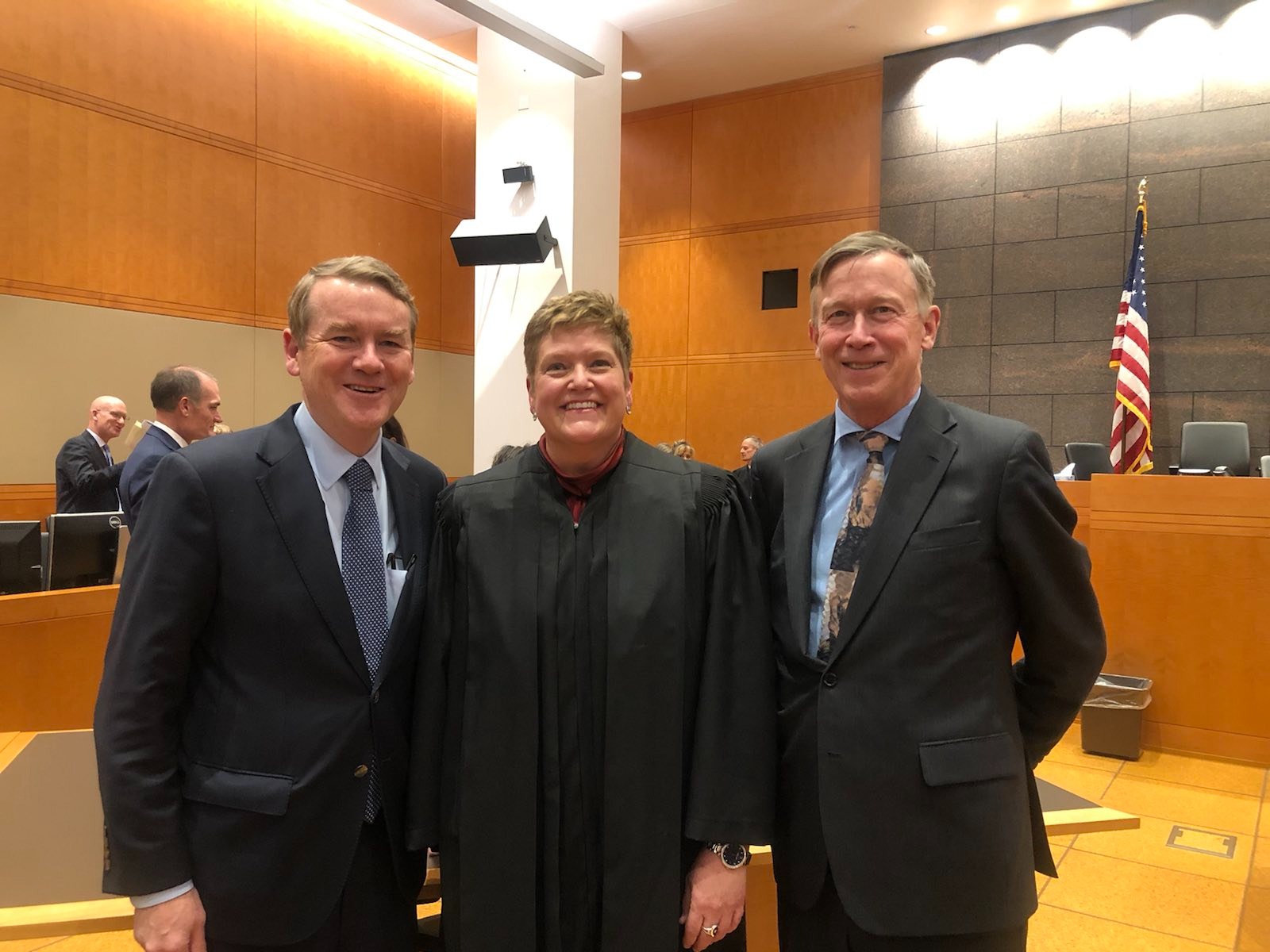
? U.S. Sens. Michael Bennet and John Hickenlooper and U.S. Rep. Joe Neguse have introduced a bill to give Colorado three more judges on its seven-member federal trial court. The men filed a similar bill last Congress, which went nowhere.

Vacancies and appointments
? The governor has appointed Senior Deputy Public Defender Tayler M. Thomas to the seat of retired Pueblo County District Court Judge Larry Schwartz.
? Denver’s mayor has appointed Senior Deputy District Attorney Isaam L. Shamsid-Deen to the Denver County Court, where he will succeed Judge Tanya Wheeler, who left to work at the state attorney general’s office.
? There are three finalists to succeed retiring District Court Judge Robert W. Kiesnowski Jr. in the 17th Judicial District (Adams and Broomfield counties): Jeffrey D. Ruff, Sarah Elizabeth Stout and Magistrate Bradley Varmo.
? Given the upcoming retirements of District Court Judges Jeffrey K. Holmes and Peter F. Michaelson in the 18th Judicial District (Arapahoe, Douglas, Elbert and Lincoln counties), there are six candidates vying for the seats: County Court Judge LaQunya Baker, Robert Caldwell, County Court Judge Chantel Contiguglia, Magistrate Jacob Edson, Magistrate Donna Stewart and Christine Washburn.
? Applications are due by June 16 to succeed retiring District Court Judge Cynthia Mares, also in the 18th Judicial District.
? Those who are interested in becoming a magistrate in Denver have until June 23 to submit their application.
Miscellaneous proceedings
? Lawyers for two Aurora police officers, who are facing homicide charges for the death of Elijah McClain, are asking an Adams County judge to push back the criminal trial scheduled for this summer.
? The state Supreme Court recently removed a question from the judgeship application that asked candidates if there was anything in their backgrounds that would negatively reflect on their ability to serve. Shortly afterward, a disgraced Arapahoe County judge admitted to giving an untruthful answer to that same question. The Supreme Court said they had no idea about the judge’s misconduct when they eliminated the question.

? Colorado leaders reacted to last month’s decision from the conservative-majority U.S. Supreme Court that made it more difficult for the government to regulate water pollution.
? On Friday, the Fourth Judicial District (El Paso and Teller counties) will hold a Family Law Day, offering meetings with attorneys and presentations from 9 a.m. to 2 p.m. at 270 S. Tejon Street in Colorado Springs. People can sign up by visiting https://www.justicecentercos.org/fldsignup or can email familylawday@gmail.com for more information.
On vacation
? The Court Crawl will take next Monday off and will return on June 19.


Colorado justices confirm lawyers may ‘borrow’ allegations from elsewhere
Michael Karlik
michael.karlik@coloradopolitics.com
Updated 12 hours ago
The Colorado Supreme Court ruled on Monday that plaintiffs’ lawyers can use allegations made elsewhere to bolster their own clients’ claims, so long as the attorney first performs some degree of investigation into the “borrowed” assertions. Under Colorado’s rules for...

Colorado justices restore RTD subcontractor’s award, reject ‘drastic’ view of public works law
Michael Karlik
michael.karlik@coloradopolitics.com
Updated 17 hours ago
The Colorado Supreme Court on Monday restored a $5.7 million award to a company that helped build a commuter rail line and, in doing so, rejected a view of state law that would nullify a subcontractor’s entitlement to any compensation...
El Paso County defendant’s speedy trial rights violated, Colorado justices find in overturning convictions
Michael Karlik
michael.karlik@coloradopolitics.com
Updated 12 hours ago
The Colorado Supreme Court concluded on Monday that an El Paso County prosecutor made an unjustified decision to file a mid-case appeal, pushing the trial beyond the legal deadline and requiring that the defendant’s convictions be overturned. In Colorado, the...

SCOTUS decides Colorado case, state’s newest justice authors first opinion | COURT CRAWL
Michael Karlik
michael.karlik@coloradopolitics.com
Updated 21 hours ago
Welcome to Court Crawl, Colorado Politics’ roundup of news from the third branch of government. The nation’s highest court decided a First Amendment case out of Colorado, plus the state’s newest justice issued her first opinion since joining the Colorado...
Federal judge sides with Mesa County school district in ex-student’s First Amendment claims
Michael Karlik
michael.karlik@coloradopolitics.com
Updated 3 days ago
A federal judge concluded last week that Mesa County Valley School District 51 and three of its administrators did not violate the First Amendment rights of a former student when they imposed minor discipline in response to disruptive behavior. In...

Colorado Supreme Court intervenes in 4 ongoing cases
Michael Karlik
michael.karlik@coloradopolitics.com
Updated 4 days ago
The Colorado Supreme Court recently moved to intervene in four ongoing cases, including two criminal prosecutions, a civil lawsuit, and a child welfare proceeding. At least four of the court’s seven members must agree to hear a case outside of...
Federal judge releases man immediately as consequence for immigration judge disobeying orders
Michael Karlik
michael.karlik@coloradopolitics.com
Updated 4 days ago
A federal judge ordered a man’s immediate release from immigration detention on Thursday after finding an immigration judge disregarded his prior orders requiring a bond hearing. For the past year, Colorado’s federal district court has faced a flood of “habeas corpus”...
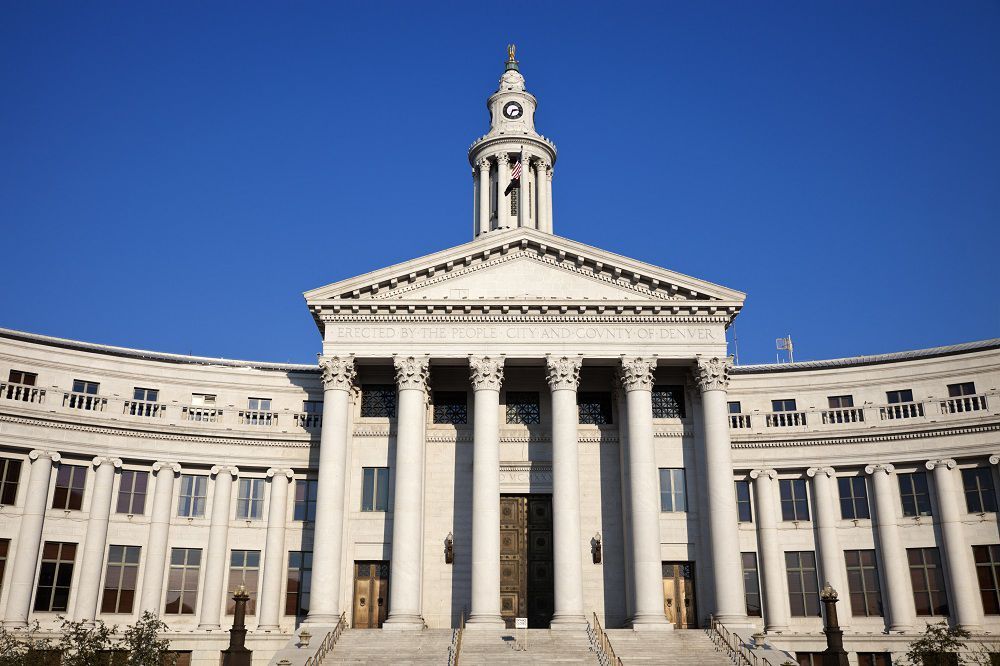
Denver judge denies Gov. Polis request to dismiss ICE-related records case
Marianne Goodland
marianne.goodland@coloradopolitics.com
Updated 3 days ago
A year after blocking the release of state records to federal immigration agents, a Denver judge has now denied Gov. Jared Polis’ effort to end the lawsuit at the center of the dispute. The lawsuit filed against the governor in...
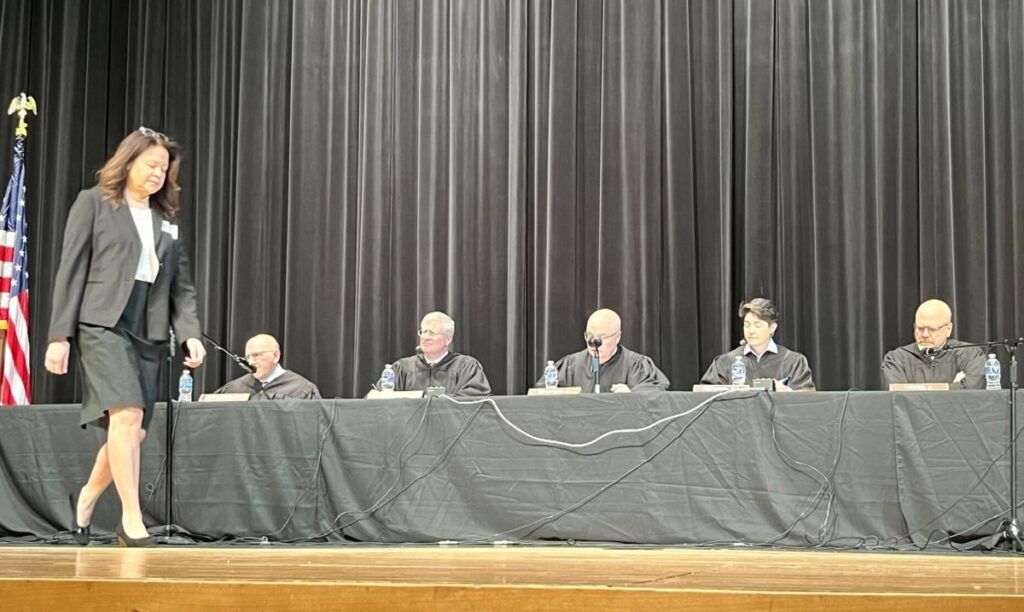
Colorado justices accept appeals on Netflix taxation, children pursuing neglect cases
Michael Karlik
michael.karlik@coloradopolitics.com
Updated 4 days ago
The Colorado Supreme Court announced on Monday that it will decide whether Netflix subscriptions are subject to the state’s sales tax as “tangible personal property.” At least three of the court’s seven members must agree to hear an appeal. The...
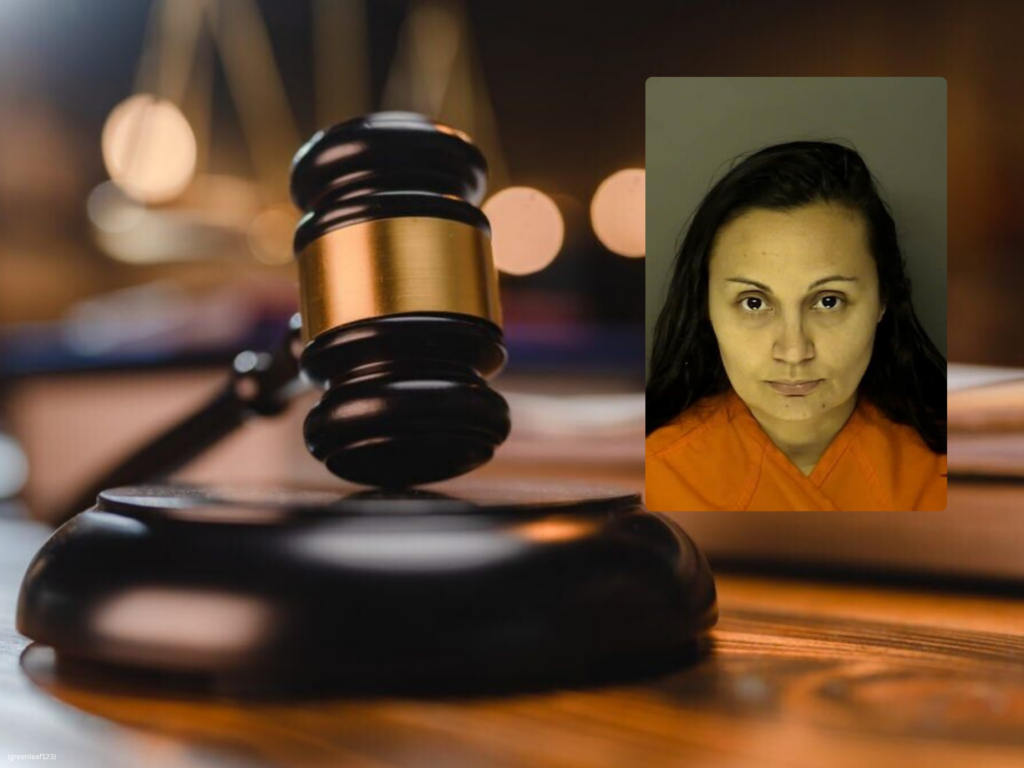
Letecia Stauch murder conviction in stepson Gannon’s death overturned by Colorado appeals court
Nick Smith
nick-smith@coloradopolitics.com
Updated 4 days ago
An El Paso County woman convicted of killing her stepson in 2020, shoving his body in a suitcase, then dumping it in Florida, is getting a new trial. The Colorado Court of Appeals published a 52-page ruling on Thursday, stating...
PREV
PREVIOUS

Colorado Supreme Court shuts door on man's challenge to private riverbed ownership
Private ownership of river and stream beds in Colorado will continue unchallenged for now, as the state Supreme Court on Monday ruled that a man lacks standing to declare Colorado – and, by extension, the public – the rightful owner of his preferred fishing spot. For several years, Roger Hill has contested the ability of Mark Warsewa and […]

Colorado Supreme Court rules prosecutors entitled to drunk driving suspect's medical records
Because a woman accused of driving drunk planned to argue that any intoxication she experienced was involuntary, the Colorado Supreme Court agreed on Monday that Arapahoe County prosecutors are entitled to see her post-accident medical records. Noelle Dawn Kelley appealed directly to the state’s highest court after a trial judge ruled Kelley had “injected her […]