

Federal judge says fire retardant drops pollute streams but can continue | OUT WEST ROUNDUP
MONTANA
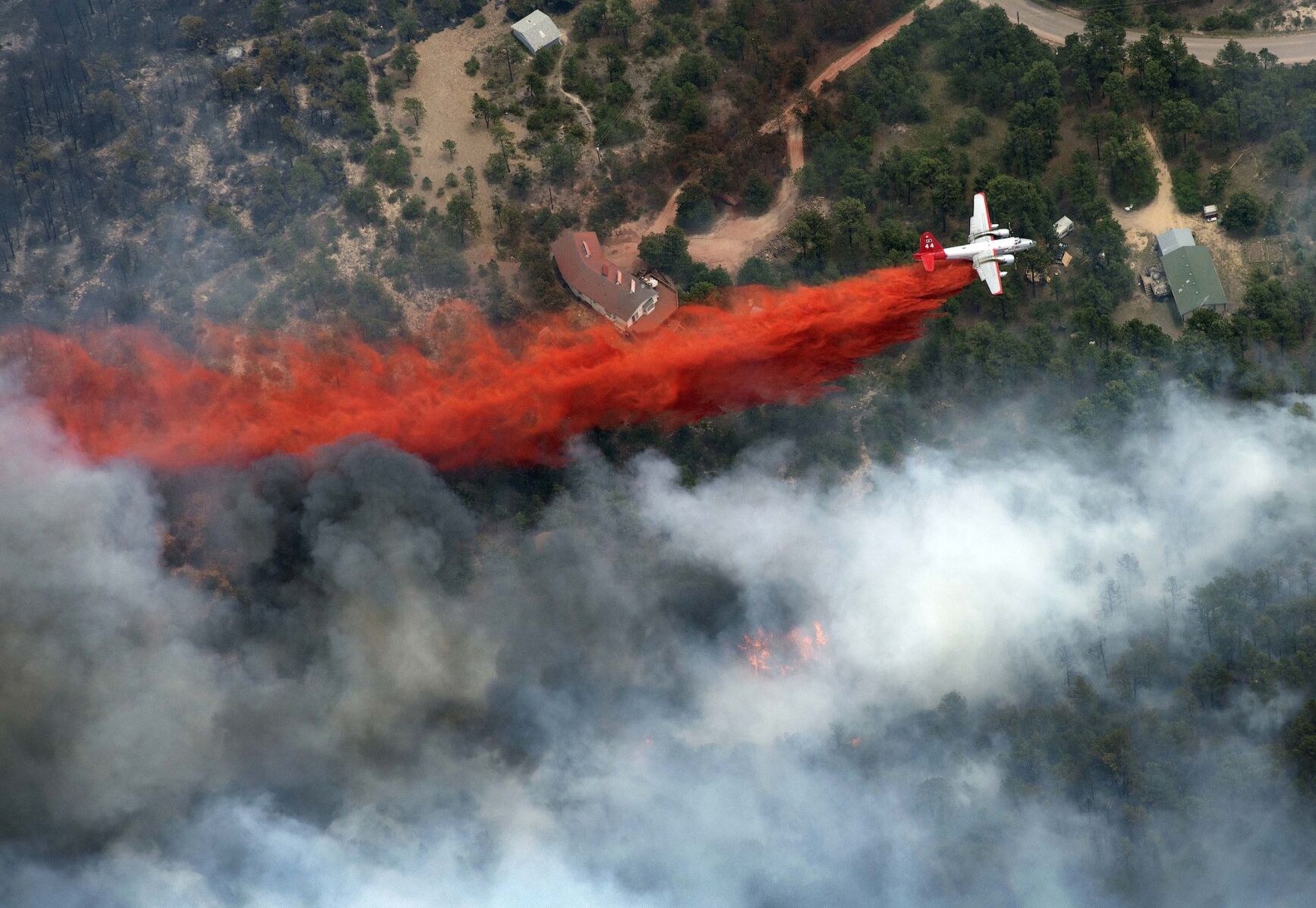
Judge says fire retardant drops are polluting streams, allows continued use
BILLINGS – The U.S. government can keep using chemical retardant dropped from aircraft to fight wildfires, despite finding that the practice pollutes streams in western states in violation of federal law, a judge ruled on May 26.
Halting the use of the red slurry material could have resulted in greater environmental damage from wildfires, said U.S. District Judge Dana Christensen in Missoula, Montana.
The judge agreed with U.S. Forest Service officials who said dropping retardant into areas with waterways was sometimes necessary to protect lives and property.
The ruling came after came after environmentalists sued following revelations that the Forest Service dropped retardant into waterways hundreds of times over the past decade.
More than 200 loads of retardant got into waterways over the past decade. Federal officials say those situations usually occurred by mistake and in less than 1% of the thousands of loads annually.
A coalition that includes Paradise, California – where a 2018 blaze killed 85 people and destroyed the town – had said a court ruling that stopped the use of retardant would have put lives, homes and forests at risk.
Fire retardant is a specialized mixture of water and chemicals including inorganic fertilizers or salts. It’s designed to alter the way fire burns, making blazes less intense and slowing their advance.
The Oregon-based group Forest Service Employees for Environmental Ethics argued in its lawsuit filed last year that the Forest Service was disregarding the Act by continuing to use retardant without taking adequate precautions to protect streams and rivers.
Christensen said stopping the use of fire retardant would “conceivably result in greater harm from wildfires – including to human life and property and to the environment.” The judge said his ruling was limited to 10 western states where members of the plaintiff’s group alleged harm from pollution into waterways that they use.
After the lawsuit was filed the Forest Service applied to the Environmental Protection Agency for a permit that would allow it to continue using retardant without breaking the law. The process could take several years.
OKLAHOMA
Legislature overrides governor’s veto of tribal regalia bill
OKLAHOMA CITY – The Oklahoma Legislature on May 25 overrode Gov. Kevin Stitt’s veto of a bill that would allow students to wear Native American regalia during high school and college graduations.
The state House and Senate easily cleared the two-thirds threshold needed to uphold the measure, which takes effect July 1 and had strong support from many Oklahoma-based tribes and Native American citizens.
It would allow any student at a public school, including colleges, universities and technology centers, to wear tribal regalia such as traditional garments, jewelry or other adornments during official graduation ceremonies. Weapons such as a bow and arrow, tomahawk or war hammer are specifically prohibited.
Stitt, a Cherokee Nation citizen who has feuded with many Oklahoma-based Native American tribes throughout his two terms in office, vetoed the bill earlier in May, saying at the time that the decision should be up to individual districts.
Stitt suggested the bill would allow other groups to “demand special favor to wear whatever they please at a formal ceremony.”
Kamryn Yanchick, a citizen of the Seminole Nation of Oklahoma, was denied the opportunity to wear a decorated cap with a beaded pattern when she graduated from her high school in 2018.
A Native American former student sued Broken Arrow Public Schools and two employees in May after she was forced to remove an eagle feather from her graduation cap prior to her high school commencement ceremony.
NEW MEXICO
State convenes commission to disrupt organized crime
SANTA FE – New Mexico’s governor announced a new effort to confront organized crime on May 24 by convening a specialized commission of local prosecutors and leading law enforcement officials.
Organized crime in New Mexico has recently spurred the adoption of criminal penalties for coordinated retail theft, federal raids on stash houses to rescue migrants and efforts to disrupt fentanyl rings.
Gov. Michelle Lujan Grisham is reviving the state’s Organized Crime Commission under provisions of a 1970s-era statute. A commission hasn’t been convened since the administration of former Gov. Bill Richardson, who served from 2003 until 2011.
Albuquerque-based District Attorney Sam Bregman will lead the eight-member group that will provide an annual report to the state Legislature and governor.
“New Mexico, like the rest of the country, has a crime problem, whether it’s guns, drugs or human trafficking,” Bregman said. “Much of it gets its origin, means and methods from criminal organizations. … The purpose of this commission is to forestall, check and prevent the infiltration and encroachment of organized crime.”
Commission members include Republican former state Supreme Court Justice Judith Nakamura, U.S. Marshal Sonya Chavez, state Public Safety Secretary Jason Bowie and Democratic Bernalillo County Sheriff John Allen.
WYOMING
Environmental groups prevail on plan to limit grizzly bear death
CHEYENNE – An appeals court is sending a plan to allow continued cattle grazing in a vast, mountainous area of western Wyoming back to federal forest and wildlife officials, telling them to consider limiting how many of the area’s female grizzly bears may be killed for preying on livestock.
The May 25 ruling by the 10th U.S. Circuit Court of Appeals in Denver sides largely with environmental groups who sued the U.S. Fish and Wildlife Service and U.S. Forest Service in 2020 over female grizzly deaths – a key factor in the species’ survival in and around Yellowstone National Park.
Many consider the Yellowstone region’s grizzlies a conservation success story. While they remain protected under the Endangered Species Act, their numbers have surged as much as tenfold, to as many as 1,000 animals, since the 1970s.
Hunters sometimes mistake grizzlies for legal-to-hunt black bears or kill grizzlies in self-defense – and wildlife managers often kill grizzlies that prey on cattle and sheep.
The plan said wildlife managers could kill up to 72 grizzlies – or about seven bears a year – over 10 years of grizzlies continuing to attack grazing livestock. The total would be double the number of grizzlies killed in the area over the previous 20 years.
Environmental groups sued, saying the plan should specify limits on killing female grizzlies, whose numbers are especially critical to the species’ success since they bear cubs.
Previous grazing plans for the area had put limits on killing female grizzlies, the three-judge appeals court panel pointed out, but the latest offered no explanation for not doing so again.
The judges upheld part of the plan that seeks to reduce deadly encounters between grizzlies and livestock, such as by requiring those tending to the cattle to carry bear-repellent spray.
Truck driver’s day turns sour after massive limes spill
Wyomingites might have had a harder time finding a key ingredient in many Memorial Day drinks after “thousands of limes” dumped onto Interstate 25 over the weekend, the Natrona County Sheriff’s Office said.
A semi-truck carrying 70,000 pounds of limes crashed on the night of May 20 in Natrona County, and the cargo went rolling everywhere, said spokesperson Kiera Grogan.
“I just know my guys were out there cleaning up limes,” she said.
Even some of the people who drove by the spill were attempting to stop and pick up limes off the road, said Grogan.
The crash happened between Casper and Midwest at milepost 204, and the northbound section of the interstate was forced to close at 6:26 p.m.
It took more than six hours to clean up the mess.
The Wyoming Highway Patrol was concentrating on the investigation, Grogan said.



Primary rival sues to prevent Democrat Eileen Laubacher from going through assembly in Colorado’s 4th CD
Ernest Luning
ernest.luning@coloradopolitics.com
Updated 1 hour ago
Democratic congressional candidate Trish Calvarese on Monday asked a judge to prevent one of her primary rivals, Eileen Laubacher, from participating in the caucus and assembly process to seek the nomination to challenge Republican U.S. Rep. Lauren Boebert in Colorado’s...
Colorado lawmakers tackle legislation on sexual assault
Jenny Deam
jenny-deam@coloradopolitics.com
Updated 4 hours ago
A panel of Colorado lawmakers on Monday unanimously approved a bill that supporters say will offer protections and support to victims of domestic violence, stalking, sex trafficking and sexual assault, including mandatory training for law enforcement on trauma. The measure,...
Denver adopts face mask ban for law enforcement
Deborah Grigsby
deborah.smith@denvergazette.com
Updated 60 minutes ago
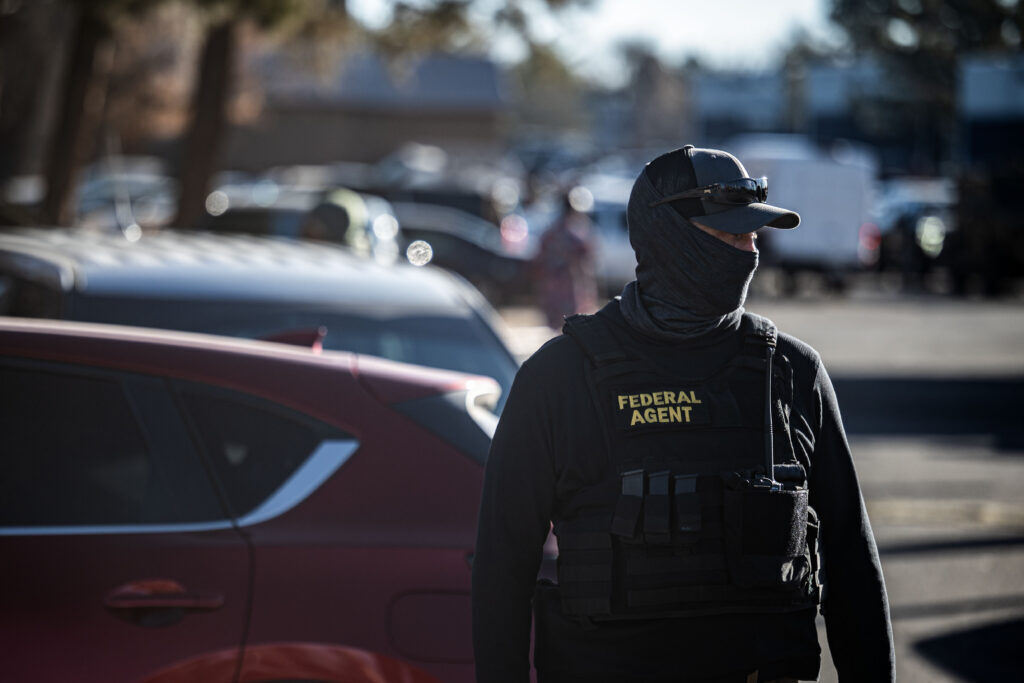
Members of the Denver City Council unanimously approved an ordinance Monday that prohibits law enforcement officers, including federal immigration agents, from wearing a mask or face covering while interrogating, detaining, or arresting an individual within Denver, including in city-owned buildings....

More than 20 Colorado counties receive grants to improve land record-keeping systems
Maren Prince
maren.prince@denvergazette.com
Updated 38 minutes ago
More than 20 Colorado counties received $2.5 million to improve their land record-keeping systems, according to a Monday news release. The State’s Electronic Recording Technology Board awarded 22 counties with grants ranging from $5,000 to $350,000, according to the release....

Denver among top 5 finalist cities for 2028 DNC
Deborah Grigsby
deborah.smith@denvergazette.com
Updated 57 minutes ago
Denver is among the five cities that could host the 2028 Democratic National Convention, the Democratic National Committee announced Monday. Along with Denver, Philadelphia, Atlanta, Boston and Chicago have advanced in the application process to host the next DNC, which...

Colorado bill would require employers to grant legislative leave to state lawmakers
Marissa Ventrelli
marissa.ventrelli@coloradopolitics.com
Updated 15 minutes ago
When she was elected to the legislature in 2022, Sen. Janice Marchman was hopeful she could bring real-world experience to the state’s education policy. Marchman, a Loveland Democrat, was the only actively-working teacher in the General Assembly for the past...

Colorado Supreme Court clarifies restraining order violations can always support burglary charge
Michael Karlik
michael.karlik@coloradopolitics.com
Updated 18 hours ago
The Colorado Supreme Court’s majority ruled on Monday that a violation of a restraining order can also serve as a basis for finding a defendant guilty of burglary. Under state law, a person commits second-degree burglary by unlawfully entering or...

Big week ahead for major legislation to address housing affordability woes
Zach Halaschak, Washington Examiner
zach.halaschak.washington.examiner@gazetteedit.wpenginepowered.com
Updated 20 hours ago
The Senate is pushing ahead with a bipartisan bill to improve housing affordability, teeing up a critical week for housing on Capitol Hill and raising major questions about what provisions will be included. Senate Majority Leader John Thune (R-SD) filed cloture on legislation from the...

Macron goes nuclear with increases to French warhead arsenal
Timothy Nerozzi, Washington Examiner
timothy.nerozzi.washington.examiner@gazetteedit.wpenginepowered.com
Updated 20 hours ago
French President Emmanuel Macron is channeling the atomic spirit of his predecessor Charles de Gaulle with orders for the French military to “increase the number of nuclear warheads” in the nation’s arsenal. Macron announced the seismic shift in France’s defensive...

Who has been killed so far during US-Israel mission in Iran?
David Zimmermann and Keely Bastow, Washington Examiner
david.zimmermann.and.keely.bastow.washington.examiner@gazetteedit.wpenginepowered.com
Updated 20 hours ago
There have been numerous casualties on all sides since the joint U.S.-Israel strikes against Iran commenced over the weekend, with more lives expected to be lost as the campaign continues. The Islamic regime’s leadership is currently bearing the brunt of...
PREV
PREVIOUS

Polis signs 68 more bills into law | CROSSING THE FINISH LINE
Four days out from the deadline, Gov. Jared Polis has signed 365 bills into law. After being signed, bills take effect in August, 90 days after the general assembly adjourns, unless otherwise specified in the bill. A full list of legislation signed this year can be found online by clicking here. Polis has until June 7 […]

The meaning of Yemi in Colorado Springs | SONDERMANN
Perhaps it’s a matter of Hertz versus Avis with the number-two entity always finding it necessary to “try harder.” In this case, the mayoral election in the state’s second largest city, Colorado Springs, was far more interesting and likely consequential than Denver’s Tweedledee and Tweedledum race at last now at its finish line. Blessing Yemi […]