

More accountability for Colorado’s judiciary | Denver Gazette

A much-needed overhaul of the procedures for investigating and disciplining Colorado’s judges is underway at the State Capitol. Thanks in part to extensive Gazette coverage exposing the system’s failings, the Legislature advanced key reforms last week enhancing accountability for a judiciary that has lacked adequate oversight.
A Senate committee approved three bills revising various aspects of the judicial discipline process – one of which would require statewide voter approval. All of the proposals follow allegations about judicial misconduct that went unpunished or were handled too leniently. Those allegations surfaced in 2021 in news accounts and prompted hearings by a special legislative committee.
The alleged incidents of judicial misconduct were at the core of threats by a former high-ranking Judicial Department official who had faced firing over financial irregularities. She threatened to make the allegations public in a sex-discrimination lawsuit – and allegedly received a multimillion-dollar consulting contract that later was canceled after it went public.
Stay up to speed: Sign-up for daily opinion in your inbox Monday-Friday
Although two investigations launched by the state Judicial Department weren’t able to prove the contract was the result of a quid pro quo, the probes revealed a number of shortcomings that included concerns with the process for filing misconduct complaints against judges and the overall experience by the victims who filed.
The reforms embodied in the package of pending legislation have the potential to make some meaningful improvements.
House Bill 23-1205 would create an independent ombudsman’s office for judicial discipline. The office’s duties would include creating and maintaining an anonymous reporting system for Judicial Department personnel to submit complaints as well as investigating and reporting on instances of misconduct the office receives.
House Bill 23-1019 would, among various provisions, require the state’s Commission on Judicial Discipline to disclose publicly more information about the allegations, investigations, and complaints it receives and the type of discipline it imposes. Importantly, the bill would repeal the requirement that records on a judicial investigation remain confidential when the the commission doesn’t seek the disciplined judge’s removal or retirement.
House Concurrent Resolution 1001 would create the Independent Judicial Discipline Adjudicative Board. It would conduct disciplinary hearings and hear appeals of informal orders from the Commission on Judicial Discipline – effectively serving as a check and balance on the Judicial Discipline Commission. Whenever the commission orders a formal hearing to discipline a judge or a state Supreme Court justice, or when a judge or justice wants to appeal an order for informal remedial action from the commission, a panel of the new board would run the hearing.
Taken all together, the reforms stand to pry open the closed doors behind which the state’s judiciary long was able to conceal its improprieties from the public. That’s a worthy end in itself, of course, because the public – which votes on the retention of judges and Supreme Court justices – at last will have more to go on in determining which incumbents no longer are worthy of serving on the bench.
Just as important is the public’s overall trust in the judiciary in general. Colorado’s justice system cannot afford a further erosion of confidence. Even after going through the legislative meat grinder – the current legislation already has been extensively amended – this endeavor only can shore up public confidence. It’s a welcome development.
Denver Gazette Editorial Board


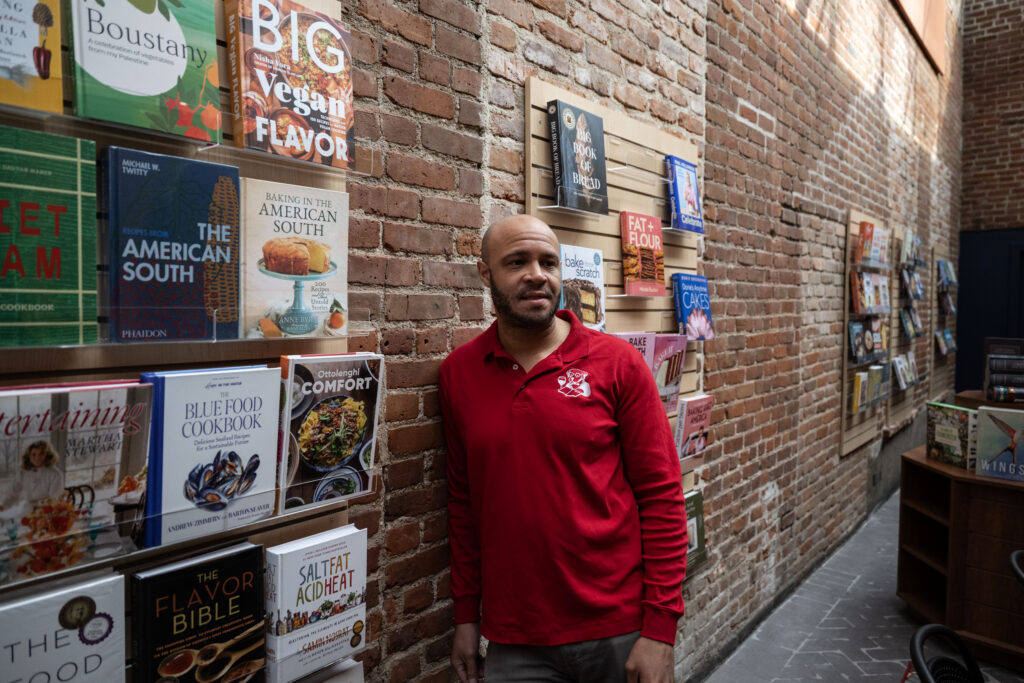
Kwame Spearman warrants plenty of criticism, not cancellation | SONDERMANN
By Eric Sondermann
by-eric-sondermann@coloradopolitics.com
Updated 2 days ago
All of us are flawed humans, some more so than others. This is the tale of Kwame Spearman who burst onto Denver’s business and political scene a handful of years back. His ride has taken a downhill trajectory. Within the...
From pause to progress — a better path on AI policy | OPINION
Colorado Politics
colorado-politics@coloradopolitics.com
Updated 2 days ago
By Brittany Morris Saunders and Loren Furman Last year, following the Special Legislative Session, we wrote in Colorado Politics that delaying Colorado’s AI Act was not a setback. It was an opportunity. We asked state leaders to pause, bring more...

Cutting Prop 123 would cost Colorado far more than it saves | OPINION
Colorado Politics
colorado-politics@coloradopolitics.com
Updated 1 day ago
By Luke Teater Colorado’s legislative budget writers are about to receive updated revenue forecasts and begin making final cuts to close a historic budget gap, and Proposition 123’s affordable housing financing tools are on the chopping block. But in their...
Colorado’s place in President Trump’s oil-and-gas approach | Paula Noonan
Paula Noonan
paula-noonan@coloradopolitics.com
Updated 2 days ago
Head spinning is the unwanted reality of today’s world. Let’s start at the international level. The wars in the Middle East since the 1950s have never ended. Though religion and ethnicity are factors, oil and gas access is always predominant...

Reject onerous ad limits in sports-betting bill | OPINION
Colorado Politics
colorado-politics@coloradopolitics.com
Updated 3 days ago
By Justin Sasso A dangerous precedent is potentially afoot in the Colorado state Senate right now, where a bill was recently introduced to restrict advertising for local broadcast media across Colorado. Senate Bill 26-131, seemingly designed to discourage Coloradans from participating...

Reform to Colorado’s grantmaking drives efficiency, strengthens state’s partnership with nonprofits | OPINION
Colorado Politics
colorado-politics@coloradopolitics.com
Updated 3 days ago
By Marco Dorado and Jack Murphy Colorado’s nonprofit sector is one of the most significant contributors to our state’s economic and civic life, with more than 14,000 registered nonprofit organizations supporting more than 262,000 jobs — approximately 10% of all...

Costly auto mandate amounts to needless overkill | FEEDBACK
Colorado Politics
colorado-politics@coloradopolitics.com
Updated 3 days ago
HB26-1199 is currently in the legislature, and let me explain how this affects you. Currently in the state of Colorado, your vehicle’s emissions have to meet California standards even though you do not live in California. Though we all can agree...
Congress needs to protect 340B for rural Colorado | PODIUM
Colorado Politics
colorado-politics@coloradopolitics.com
Updated 2 days ago
By Rod Pelton A lot of politicians talk about understanding what life is like for our rural communities, but not many really do. I’m a third-generation Cheyenne County farmer and rancher; I grew up on the eastern plains of Colorado, raised...
Caldara overlooked facts in slamming utilities | FEEDBACK
Colorado Politics
colorado-politics@coloradopolitics.com
Updated 4 days ago
Normally, I appreciate the variety of perspectives published on Colorado Politics. But regarding Jon Caldara’s recent column on Xcel, he irresponsibly neglects key facts to the point of annihilating credibility (“Are our overlords normalizing power outages?” March 15). He neglects...

Fix the process before reauthorizing state PUC | OPINION
Sara Blackhurst
sara-blackhurst@gazette.com
Updated 4 days ago
What needs to be fixed before reauthorizing the Public Utilities Commission? The answer is simple: the process. The last time the commission was reauthorized in 2021, lawmakers expanded its role in meaningful ways — particularly as Colorado accelerated its clean...
PREV
PREVIOUS

Dems stall justice while drugs kill Coloradans | OPINION
Byron Pelton I cannot fathom why Colorado Democrats are playing the kind of political games that they are playing, especially as they have a trifecta of power here in the state – the Senate, the House and the Governor’s Office. These political games are putting the party’s agenda over the lives of Coloradans – and […]

Standing up to a scourge | Grand Junction Daily Sentinel
The statistics are grim and seemingly getting worse. But explaining Colorado’s fentanyl crisis in terms of numbers will never be as powerful a personal story of the drug’s destructive nature. Sunday’s front-page column by the Sentinel’s Dale Shrull paints a picture of two lives ravaged by fentanyl intoxication. There’s the victim, 16-year-old Miah VanHouten, who […]