

Katharine Lum formally sworn in as newest appeals judge, reminds colleagues about plight of self-represented litigants
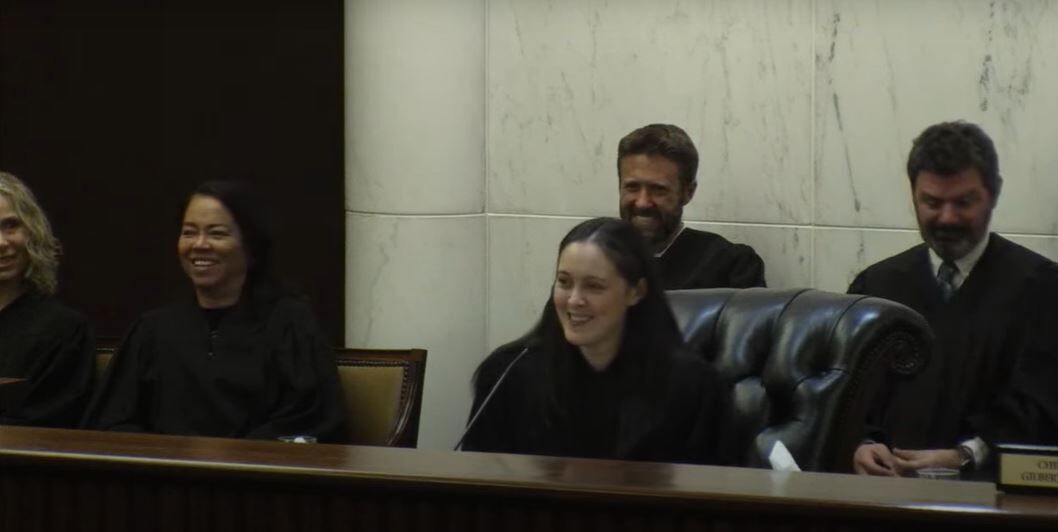
When Katharine E. Lum received a ticket for her car accident, she unexpectedly found herself anxious when she showed up to court representing herself, as litigants in legal matters routinely do.
“If I was this nervous as a trained attorney, how must they have felt? Especially folks for whom a traffic fine meant the difference between making rent this month or not,” Lum, a judge on Colorado’s Court of Appeals, said to her colleagues on Friday.
But, she continued, the judge in her traffic case treated the litigants with dignity and respect, explaining what was happening in plain English and ensuring each person could realistically pay off their fines. To her, that made all the difference.
“We can remember,” Lum said, “that what we are writing about is somebody’s worst day. Somebody’s last chance. Somebody’s life.”
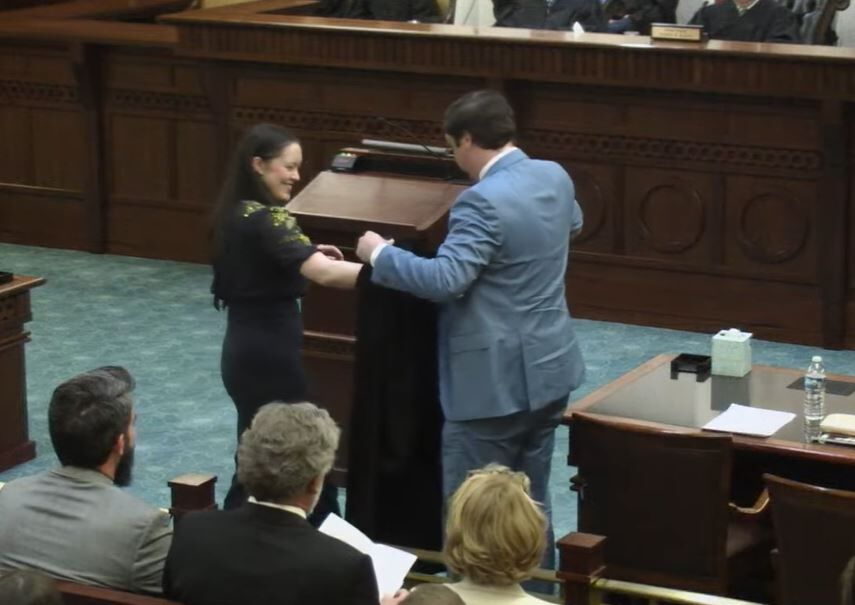
Lum, the newest member of the 22-judge Court of Appeals, took office in late November. On April 28, she held her formal swearing-in ceremony, known as an investiture, in the presence of friends, family and members of the legal profession at all levels.
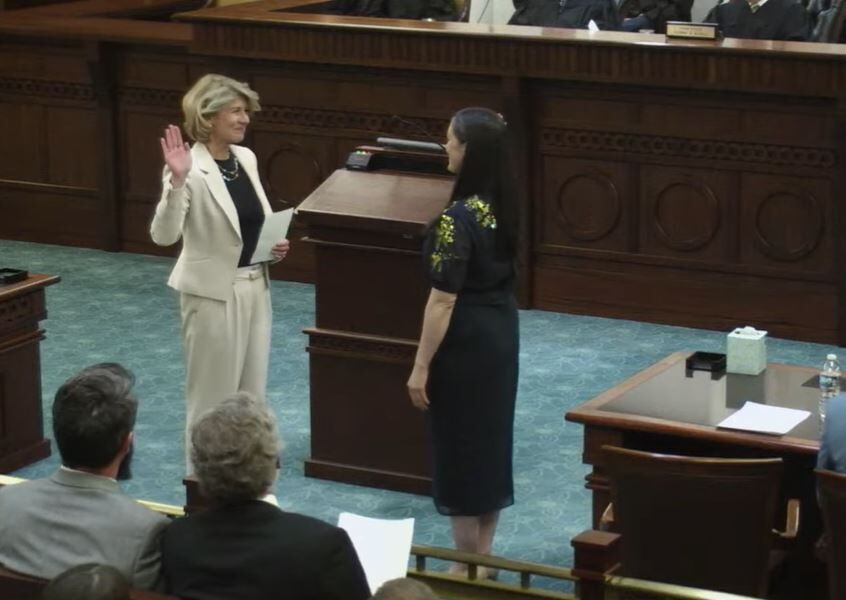
In applying to join the bench last year, Lum pointed out she would be in the small minority of Court of Appeals judges who have prior experience handling domestic relations cases, which make up approximately 10% of the court’s caseload. Her lengthy resume included pro bono legal work and mediation, criminal appeals, landlord-tenant disputes and expertise in other technical areas, such as forensic accounting and birth defects.
“The enjoyment I derive from learning new fields of study and my ability to absorb them relatively easily is a personality trait and skill that will translate well to a position as a judge on the Court of Appeals,” she wrote.
Chief Judge Gilbert M. Román noted that Colorado’s second-highest court made national news last month, as the U.S. Supreme Court heard oral arguments in the First Amendment case of Counterman v. Colorado. The justices reviewed a decision directly from the Court of Appeals. The judge who authored it, Craig R. Welling, traveled to Washington, D.C. to witness the arguments in person.
“We do serious and really important work,” Román said.
He also described one of Lum’s early experiences as a judge, in which she was set to hear oral arguments as part of a three-person panel. However, shortly before the parties were to arrive, one of the panel members called out unexpectedly and there was no time to get another judge up to speed on the cases. Instead, Román explained, there was a “policy decision” that – for apparently the first time ever – the Court of Appeals would hold arguments with two judges and allow the absent judge to review the video before deliberating.
The most senior judge on the panel, John Daniel Dailey, could have described the unusual logistics to the parties, Román said.
Instead, “he turned to our most junior judge and said, ‘Welcome to the court. Please explain to the attorneys what we’re doing and why,'” continued Román. “So she did, and she did an amazing job.”
Two of Lum’s former colleagues in private practice, Jerremy M. Ramp and Steven C. Lass, described her willingness to adapt to new tasks and to help people facing crisis and uncertainty. They spoke of Lum’s house visits to one elderly client, who was unable to use technology, in the early COVID-19 pandemic to ensure he understood legal documents.
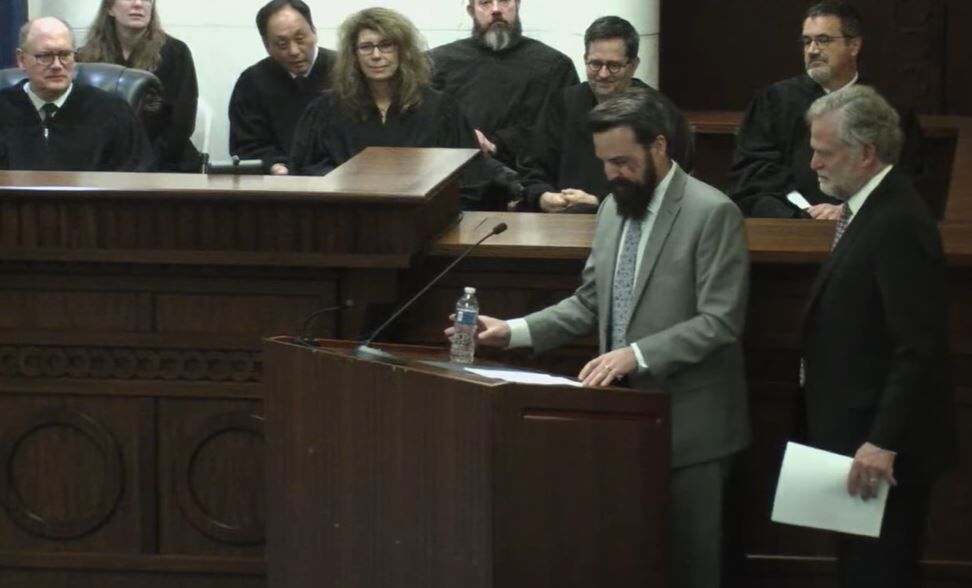
During her time leading one of the Colorado Bar Association’s diversity, equity and inclusivity committees, Lum helped revise domestic relations court forms to be more sensitive to LGBTQ and nonbinary litigants. Kara Veitch, who is involved in screening judicial applicants for Gov. Jared Polis, cited Lum’s volunteer work when describing how she “touched the lives of many” in family law.
Attendees at Lum’s investiture learned more intimate details about the judge, including that she is a rock climber, a talented doodler and someone whose sister holds a patent for an invention Lum described as “space rudders.”
Lum touched on her experience at the court to date, disclosing that, even when a panel of judges cannot agree on the outcome, judges on opposite sides of the decision will often alert their counterparts to precedent that supports the opposing argument.
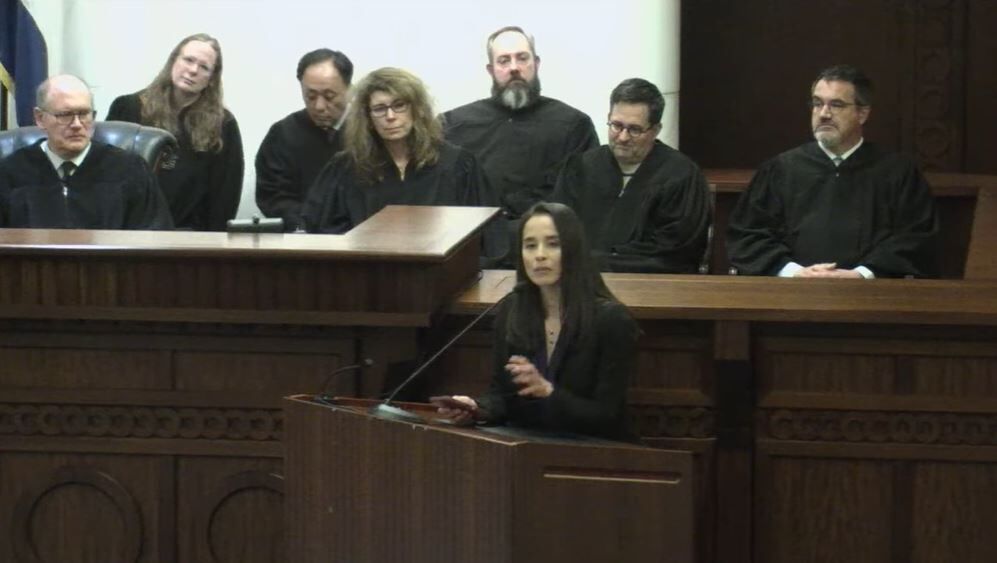
She also invoked her former boss, the late Supreme Court Justice Gregory J. Hobbs Jr., who taught her how to work with collegiality on the “group projects” of writing appellate opinions. She recalled an anecdote of Hobbs, after a difficult legal discussion with his colleagues, saying, “Isn’t this the greatest job?”
“I had one of those moments last week,” said Lum. “My clerk and I were talking through how we were gonna resolve a pretty complicated, novel issue and this smile came over my face and I thought, ‘Justice Hobbs was right.'”
She closed her remarks by describing her time in traffic court and reminding her colleagues that in domestic relations cases, which include matters of divorce and custody, around 75% of litigants do not have an attorney. Lum advocated for judges to be mindful of that imbalance in power and knowledge.
“Even though we can’t always address every argument, we can take care not to be dismissive in our tone,” she said. “Even though we cannot necessarily construct a winning argument for a self-represented litigant, nor can we reject their contention simply because they cannot articulate it like a lawyer.”

Is a pardon for Tina Peters coming? Colorado governor confirms he is weighing options
The Denver Gazette
the-denver-gazette@coloradopolitics.com
Updated 1 hour ago
Gov. Jared Polis on Friday strongly indicated he is considering clemency for Tina Peters, the former county clerk convicted of a security breach at her election office. When pressed about the matter, Polis didn’t offer an explicit answer, but he...
10th Circuit oral arguments to feature trial judges for first time in 12 years
Michael Karlik
michael.karlik@coloradopolitics.com
Updated 3 days ago
When the Denver-based federal appeals court convenes next week to hear oral arguments, six new faces will be staring down from the bench. No, the U.S. Court of Appeals for the 10th Circuit has not added six new members. It...
Federal judge says ICE cannot impose monitoring conditions beyond immigration judge’s order
Michael Karlik
michael.karlik@coloradopolitics.com
Updated 3 days ago
A federal judge told U.S. Immigration and Customs Enforcement on Thursday that it cannot impose additional restrictions or monitoring conditions beyond those ordered by an immigration judge when releasing a person on bond. In November, U.S. District Court Judge Gordon...
Colorado justices weigh constitutionality of student backpack search based on confidential tip
Michael Karlik
michael.karlik@coloradopolitics.com
Updated 2 days ago
The Colorado Supreme Court considered on Wednesday whether a tip submitted through the state’s confidential school safety system provided a Douglas County administrator with reasonable suspicion to search a student’s backpack for drugs. A trial judge blocked evidence from the...
10th Circuit rebuffs Jeffco’s attempt to expand immunity footprint
Michael Karlik
michael.karlik@coloradopolitics.com
Updated 3 days ago
The Denver-based federal appeals court confirmed on Wednesday that it would not treat a judge’s decision to move a civil case forward as the automatic equivalent of denying immunity to governmental officials. The order from the U.S. Court of Appeals...

Colorado Supreme Court to hear cases on witness retaliation, slip-and-fall
Michael Karlik
michael.karlik@coloradopolitics.com
Updated 18 hours ago
The Colorado Supreme Court announced on Monday that it will decide whether defendants can be convicted of retaliating against a victim or witness when that person has not yet testified and is not scheduled to testify. At least three of...
Colorado Supreme Court struggles with rubric for significant reductions in parenting time
Michael Karlik
michael.karlik@coloradopolitics.com
Updated 3 days ago
The Colorado Supreme Court attempted to identify on Wednesday the circumstances under which judges may reduce the number of days a parent spends with their child post-divorce without it rising to the level of a “restriction” that requires more rigorous...

Douglas County Sheriff, DA sue Polis administration over immigration policy
Marissa Ventrelli
marissa.ventrelli@coloradopolitics.com
Updated 4 days ago
Douglas County Sheriff Darren Weekly and District Attorney George Brauchler filed a lawsuit against Colorado Gov. Jared Polis, challenging the constitutionality of a state statute on immigration visas. Filed on Wednesday, the suit also named Colorado Attorney General Phil Weiser,...

Colorado justices wary of expanding rezoning by ballot initiative
Michael Karlik
michael.karlik@coloradopolitics.com
Updated 2 days ago
The Colorado Supreme Court appeared wary on Wednesday of allowing rezonings of planned-unit developments to occur through a vote at the ballot box, rather than a municipality’s detailed review process that accounts for specific factors. In contrast to traditional, or...
In Tina Peters appeal, judges telegraph some degree of reversal | ANALYSIS
Michael Karlik
michael.karlik@coloradopolitics.com
Updated 4 days ago
Former Mesa County clerk Tina Peters seems poised to walk away from the state’s Court of Appeals with her criminal convictions largely intact, even as a three-judge appellate panel raised concerns about her sentence and one specific conviction. Peters, a...
PREV
PREVIOUS

Q&A with Thomas Dybdahl | Author and ex-public defender talks about the Brady rule, wrongful convictions
In late March, a 60-year-old decision of the U.S. Supreme Court, Brady v. Maryland, surfaced in the news. A federal judicial nominee from Colorado, U.S. Magistrate Judge S. Kato Crews, blanked at his confirmation hearing when U.S. Sen. John Kennedy, R-La., quizzed him about the significance of the case. While those familiar with Crews were sympathetic to […]

Xcel iron-air grid battery project gets $10 million boost
A new, longer-duration, grid-scale battery storage technology under development is getting a big financial boost. Xcel Energy is partnering with Form Energy, an energy storage technology company, to build a 10-megawatt commercial iron-air battery demonstration project at the soon-to-be shuttered Comanche power plant site near Pueblo. A commitment of $10 million in grant funding from […]