

Colorado lawmakers to remove state control from Polis’ housing plan
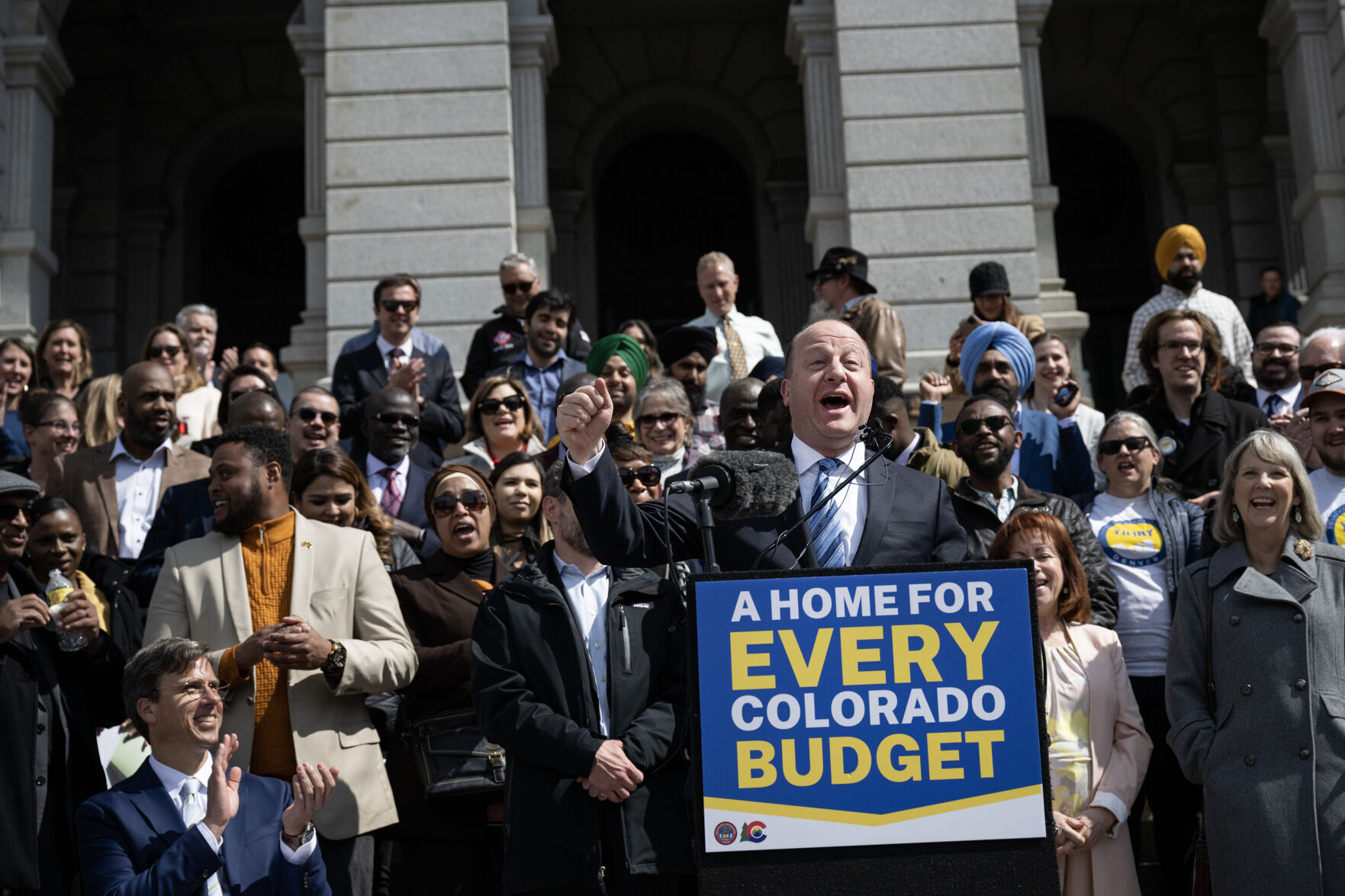
All attempts to put housing under state control – a key provision of Gov. Jared Polis’ proposal – are being dropped, according to a draft amendment obtained by Colorado Politics.
The 39-page strike-below amendment is on deck for Wednesday’s Senate Appropriations Committee, and it puts the Department of Local Affairs back into its role as a resource and partner to local governments, instead of making it a regulatory agency.
Those were two of the biggest issues that pitted local governments against the Polis administration.
Senate Bill 213 had been scheduled three times in the past week for the Senate Appropriations Committee, but it was pulled off the calendar twice because of expected opposition from the committee’s chair and vice-chair.
Sen. Rachel Zenzinger, D-Arvada, the vice-chair, has said on several occasions that state control of housing, which she called unconstitutional, is her “bright line” and that she would not vote for the bill as a result. On the 4-3 Democratic-led committee, even one “no” vote from a party mate of the governor would have doomed the bill.
The bill went through a lengthy amendment process last week in the Senate Transportation and Local Government Committee, with 18 amendments added, mostly backed by Democrats. But an amendment from Sen. Barbara Kirkmeyer, R-Brighton, that would have taken out state control failed to win committee support.
Kirkmeyer said the bill in its’ strike-below version remains a big disappointment, but it retains some ideas she supports, such as a statewide housing needs assessment.
Under the legislation, that housing needs assessment sets housing goals at the statewide, regional and local levels. Municipalities would identify how they meet their goals through local housing needs plans, and the bill encourages municipalities to utilize their existing housing plans. The plan will also include reports from municipalities on zoning, affordability and “anti-displacement” implementation and strategies.
The latter is a key requirement to get the support of Sen. Julie Gonzales, D-Denver.
The amendment also blocks local governments from enforcing residential occupancy limits based on familial relationships, a holdover from the original bill.
In addition, a section on strategic planning will outline growth objectives at the statewide, regional and local levels, including linking housing, transportation and land use planning – but without the statewide mandate that drew so much opposition from local governments.
The amendment also includes “new planning and streamlining efforts” for those three areas, as well as protecting water resources.
That remains a key requirement for Sen. Dylan Roberts, D-Avon, who told reporters this morning he still wants to see more guardrails around water planning for Front Range municipalities, as well as a definition of “affordability” that takes into account regional differences, particularly for mountain resort communities.
One aspect of the amendment that isn’t likely to win it any fans is a 13-member multi-agency committee with both an urban and rural resort subcommittees that would develop recommendations on housing, along with public hearings. That idea has drawn opposition from lawmakers, who raised concerns that the committees, made up of unelected officials, would omit public input on land use decisions that have been the hallmark of local governments.
The amendment also says that local governments covered under the measure cannot treat the development modular housing any differently than “site-built” units.
Sen. Dominick Moreno, D-Commerce City, will sponsor the strike-below proposal.
Zenzinger told Colorado Politics the new version still needs work.
“We had to push things to the brink. In that regard, [the amendment] is a positive step. Now, we can talk about the tenets of the bill and whether they will work or not,” Zenzinger said.
She also complimented bill sponsor Moreno for his efforts to find a path forward.
“This is now an opportunity for partnership with local governments,” Kirkmeyer added.
“I like it,” said Kevin Bommer, executive director of the Colorado Municipal, of the strike-below. He said there are technical issues to clean up, but CML has told Moreno and the governor’s office if the leaders commit to the strike-below, barring any other changes, CML will drop its opposition to the measure. That also requires a commitment from the bill’s House sponsors, Bommer said.
The governor’s office issued a statement, first reported by the Colorado Sun, lauding the original bill’s support but without addressing the strike-below.
Editor’s note: This is a developing story and will be updated.

More people are now leaving Colorado than moving here from other states
Vince Bzdek
vince.bzdek@gazette.com
Updated 6 hours ago
By Vince Bzdek It’s finally happened. Buried in all the self-congratulatory reports about Colorado reaching the 6 million mark in population last year was news that should be keeping our political leaders up at night. For the first time in...

Colorado state legislator plans introduction of victim compensation bill | A LOOK BACK
Rachael Wright, Special to Colorado Politics
rachael.wright@coloradopolitics.com
Updated 3 days ago
Forty-Five Years Ago This Week: “People to whom I’ve talked to say, ‘Yes’,” said Sen. Barbara Holme, D-Denver, “victims of crime should be compensated.” Holme said she would introduce a victim compensation bill in the upcoming legislative session, but the...
The governor and the inmate: Trying to make sense of Polis and Peters | SONDERMANN
By Eric Sondermann
by-eric-sondermann@coloradopolitics.com
Updated 3 days ago
Amidst the excess of news and outrage competing for our attention, much time and oxygen have been expended in trying to make sense of Jared Polis’s angst-ridden consideration of a sentence reduction for Tina Peters, former county clerk and now...

Colorado Politics Calendar Feb. 2-8
Rachael Wright, Special to Colorado Politics
rachael.wright@coloradopolitics.com
Updated 2 days ago
CoPo’s weekly political calendar will help you find political and public-policy events throughout Colorado. It includes candidate and issue campaign events, public policy meetings, court hearings, state and local party conventions, assemblies, debates, rallies, parades, speaking engagements, traveling dignitary appearances,...

Federal judge green-lights excessive force trial against Fort Collins officers
Michael Karlik
michael.karlik@coloradopolitics.com
Updated 21 hours ago
A federal judge concluded last week that a jury will need to resolve whether two Fort Collins police officers violated a man’s constitutional rights by using excessive force after he refused to accept a citation. In a Jan. 21 order,...
Colorado House launches ethics review of Rep. Ron Weinberg filed by fellow GOP legislator
Marianne Goodland
marianne.goodland@coloradopolitics.com
Updated 22 hours ago
The Colorado House will convene an ethics committee to review a complaint filed by Rep. Brandi Bradley, R-Roxborough Park, against fellow Republican Rep. Ron Weinberg, R-Loveland. It will be the first time since 2012 that the House has formed an...

Colorado lawmakers reverse course, OKs $2.4M funding for additional prison beds
Marissa Ventrelli
marissa.ventrelli@coloradopolitics.com
Updated 20 hours ago
The Colorado legislature’s budget panel changed course on Wednesday, reversing its previous decision to deny the Department of Corrections $2.4 million request to pay for additional prison beds. Last week, JBC members voted, 4-2, to deny the department’s request, with...

Trump allies urge Supreme Court to uphold his birthright citizenship order
Jack Birle, Washington Examiner
jack.birle.washington.examiner@gazetteedit.wpenginepowered.com
Updated 24 hours ago
The Supreme Court will soon hear a landmark challenge over precisely who can enjoy the birthright citizenship granted under the 14th amendment, and the Trump administration and its allies are urging the high court to side with the president’s view....

Trump sues IRS and Treasury for $10 billion over tax return leak
David Zimmermann Washington Examiner
davidzimmermannwashingtonexaminer@wpstage.coloradopolitics.com
Updated 22 hours ago
President Donald Trump filed a $10 billion lawsuit against the IRS and Treasury Department as one of the plaintiffs on Thursday, alleging a former IRS employee leaked his confidential tax records over six years ago. The federal lawsuit, filed in...

Party-line vote sends ‘red flag’ law expansion to Colorado Senate
Marissa Ventrelli
marissa.ventrelli@coloradopolitics.com
Updated 20 hours ago
A panel of Colorado state senators voted along party lines Tuesday to advance a bill that would further expand who can ask a judge to temporarily restrict a person’s access to firearms under Colorado’s extreme risk protection order law. The...
PREV
PREVIOUS

Colorado becomes first state to establish right to repair agricultural equipment
Colorado farmers will soon be guaranteed access to the resources needed to repair their own agricultural equipment, as the state on Tuesday became the first in the nation to sign a farmer’s right to repair bill. Modern agricultural equipment often runs on advanced computer software, and, currently, some manufacturers prohibit access to these systems or do […]

Colorado Springs takes major step toward cleaner energy with completion of $200 million natural gas units at Martin Drake
In a landmark moment in Colorado Springs’ move toward cleaner electricity generation, six new natural gas generating units now stand where coal once piled up near the closed Martin Drake Power Plant downtown. “The utilities industry is changing by the day – from market costs and technology to regulatory mandates and deadlines,” Colorado Springs Utilities Board […]