

Colorado’s emissions bill abandons trip reduction plan, expands ozone pollution regulations

A modified version of a sweeping emissions regulation proposal would let the state deny or revoke any construction permit over modifications that increases ozone pollution by any amount.
The bill’s sponsors argue the legislation is necessary because Coloradans, particularly people of color and residents of low-income communities, have long suffered from high levels of ozone pollution, which is connected to severe health effects and premature death.
Critics say the proposal would result in far-reaching repercussions that would handicap not just the oil and gas industry, but also other companies in Colorado.
Interestingly, the new version abandoned a provision that would have required any ozone plan for regions not meeting federal air quality standards to include a “vehicle miles traveled reduction rule.”
A coalition of businesses opposed to the underlying legislation described the original provision as reviving a proposal from two years ago that would have required large businesses to “increase parking charges” for gas-powered vehicles, appoint an “Employee Transportation Coordinator” to administer programs that reduce “single occupied vehicle” commutes and offer fully or partially subsidized public transportation passes, even if the business is nowhere near any – all aimed at reducing vehicle-sourced emissions, particularly during peak times.
In a legislative maneuver called a “strike below,” proponents of House Bill 23-1294 replaced the measure’s entire content with new language just as the first committee hearing began on Thursday.
The newly amended bill includes a section that allows denial or revocation of an air pollution or construction permit for any modification to any building, including minor sources, that “increases the amount of any air pollutant emitted by the source by any amount on an annual or hourly basis; or results in the emission of any air pollutant not previously emitted by the source.”
Critics say while the bulk of the bill is directed at the oil and gas industry, the change means that any building that requires a building permit for work that would increase emissions “by any amount” would require a complex analysis of the project.
The bill requires the use of a state air pollution modeling program to determine if the cumulative impacts of the project, when combined with existing emissions, would increase the total of emissions that contribute to the formation of ozone.
Critics say that would allow denial of a new permit and revocation of an existing permit for any increase in emissions from any building in the state, including buildings not in areas where ozone is a problem.
Referencing the original bill’s trip reduction provision, Paul Seby, a natural resources attorney who recently won a U.S. Supreme Court case against the EPA, told The Denver Gazette it “would have limited driving by anyone: citizens, people on their way to work, mothers taking their children to school, people shopping for food, going to obtain prescriptions; or otherwise going to work.”
Seby said the provision would have given the Colorado Air Quality Control Commission “an open check to remove the freedom of travel by people” within the nonattainment area.
The EPA’s nonattainment designation includes nine counties from Douglas County in the south to Weld and Larimer counties in the north, as well as Boulder, Denver, Arapahoe, Jefferson, Adams, and Broomfield counties.
The federal agency downgraded the area’s rating from serious to severe on Sept. 15.
The new language creates an interim legislative committee to examine how to get into ozone compliance. The first meeting would take place within 60 days of June 30 and up to five bills resulting from the deliberations could be presented in next year’s legislative session.
The revised bill also sets up processes for public complaints allowing anyone to file a complaint against any business the complainant alleges to be violating air pollution rules, which would necessitate mandatory investigations and hearings by the Air Quality Control Division – unless the agency deems the complaint to be clearly frivolous or trivial.
Under the bill, penalties for violations or noncompliance with permitting regulations cannot be less than economic benefit that the owner or operator derived from the violation.
The bill also requires the state to adopt rules that requires the electrification of all stationary engines, unless oil and gas operators can demonstrate that it’s not feasible.
Critics say this will tie up ordinary businesses in lawsuits and bring investment and upgrades to a grinding halt.
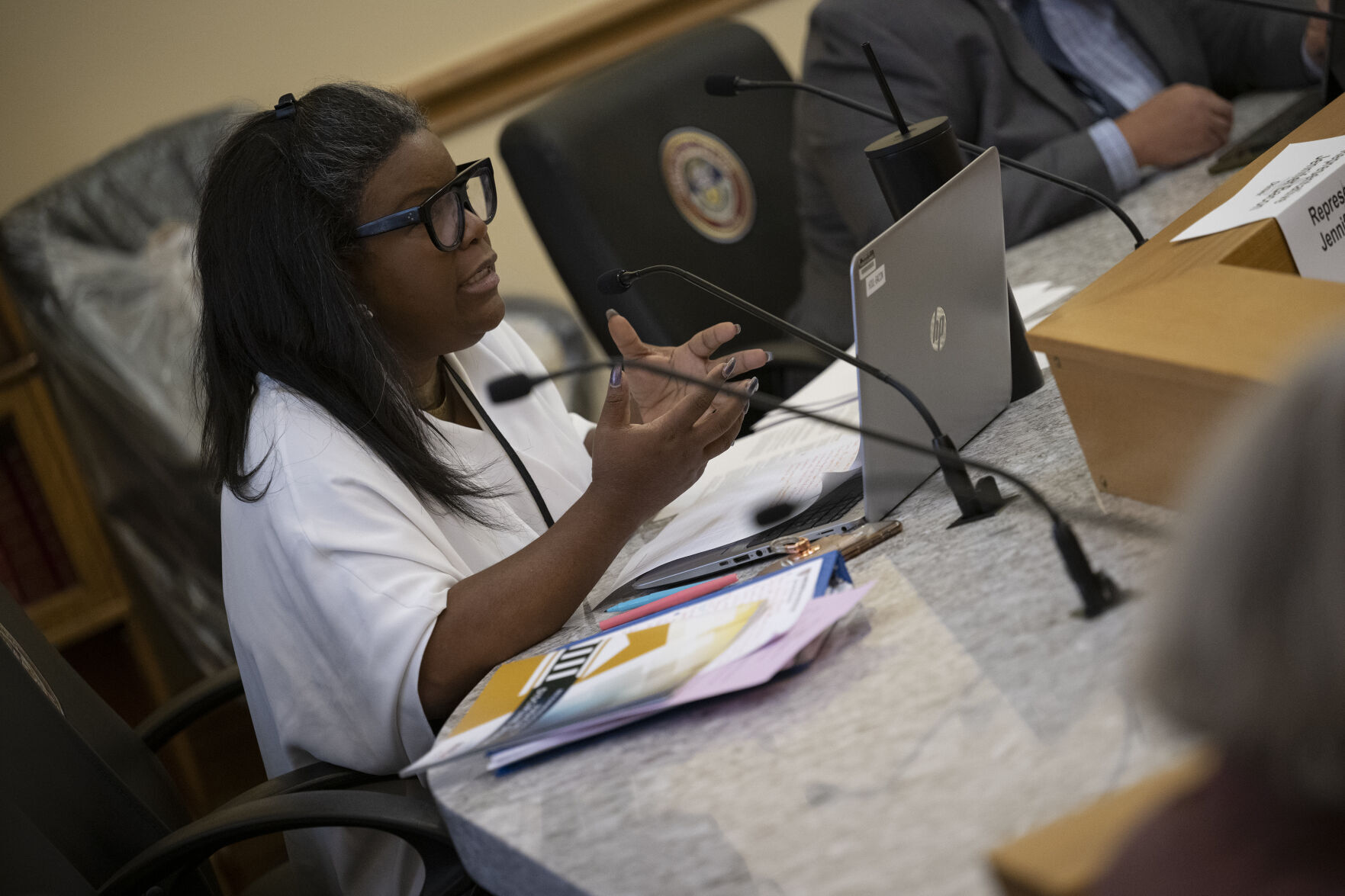
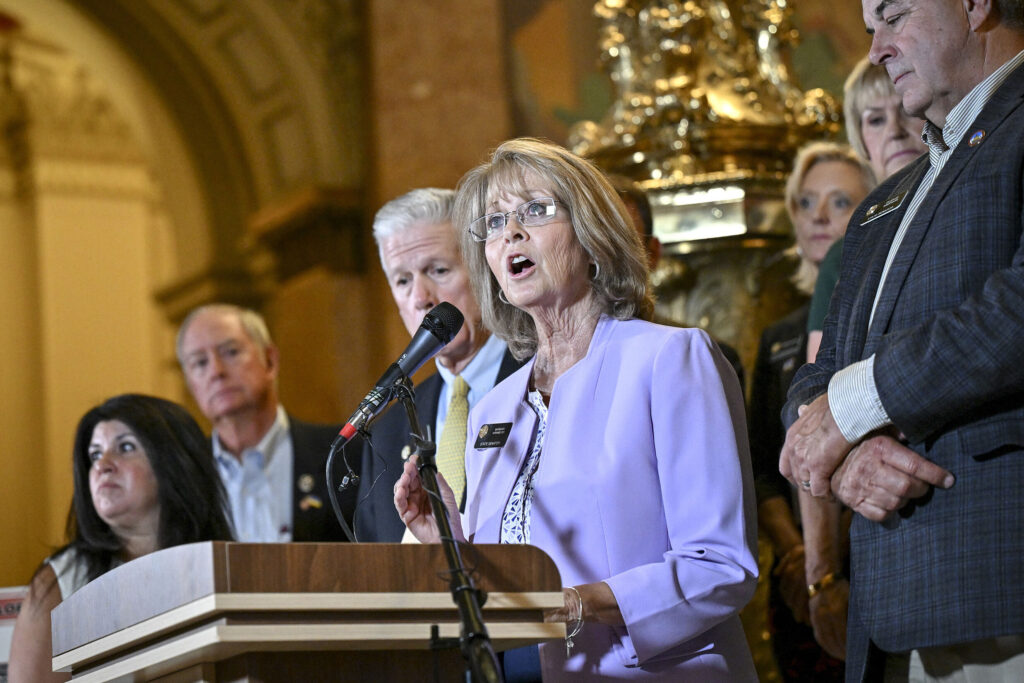
At the House Energy and Environment Committee hearing on HB 1294, Rep. Jenny Willford, who sponsored the bill, explained the need for the legislation by saying that minor sources are a significant driver of ozone pollution.
“Yet,” she added, “Colorado’s permitting largely processes largely ignore their air quality impacts.”
“Colorado has thousands of minor sources including many oil and gas wells, but because they’re deemed minor permitting of minor sources is fast-tracked and the state does virtually no air quality analysis before approving these permits,” Willford said.
Citing the Federal Clean Air Act, the bill says that the state has an obligation to “increase air quality analysis in its permitting processes and to assess the impacts of potential new sources” before building permits are issued to “avoid emission increases” that would contribute to ozone creation.
The bill also says that minor sources can cause a region to exceed federal standards, leading to a cumulative impact on “already overburdened, disproportionately impacted communities.”
Christy Woodward, senior director of regulatory affairs for the Colorado Oil and Gas Association, testified that half or more of ozone and ozone precursor chemicals come from natural sources, as well as from ozone and chemicals blown into the state from other states, including from forest fires in the west.
In the fall of 2021, during the COVID-19 pandemic, modeling data from the Regional Air Quality Council showed that of the seven air quality monitors that exceeded the federal ozone limit of 75 parts per billion, between 36 and 39 parts per billion were attributable to out of state sources, said Woodward.
Willford, the bill’s sponsor, countered that, in November, state analysis determined that 45% of oxides of nitrogen and 41% of volatile organic chemicals, both substances that create ozone when exposed to sunlight, came from the oil and gas industry.
Sarah Blackhurst, president of Action 22, a public policy chamber of commerce for 22 counties in southern Colorado, said the organization opposes the bill.
“Colorado businesses are already working hard and making sacrifices to comply with existing air quality standards,” Blackhurst said. “The bill requires new pollution modeling simulations for several categories of permits, including but not limited to dry cleaners, bakeries, warehouses, distribution centers, breweries, rail yards, oil and gas facilities, and any other indirect air pollution sources.”
The bill sponsors insist that “extraordinary air quality measures” are required to get into compliance with federal law.
“This bill is not about bakeries, they’re not going to meet that modeling threshold,” said bill sponsor Jennifer Bacon, D-Denver. “This bill is also not about putting on oil and gas out of business since we are simply asking that we come together share information, provide that transparency, and figure out how to move this state into compliance.
“Colorado has an ozone problem and it’s past time we take the needed steps to improve our laws to solve it,” added Willford. “Coloradans deserve clean air and my hope is that over the summer interim committee process that stakeholders will bring solutions that aren’t based in fear, false choices or ultimatums.”



Gov. Jared Polis is Rodney Dangerfield | Jon Caldara
Jon Caldara
jon-caldara@coloradopolitics.com
Updated 2 days ago
Hang onto your wallet, it’s a Colorado legislative session. And the loneliest person under the Gold Dome is Jared Polis, a governor without a nation. This will be the last regular session of his limited two terms, and he has...
Frozen funds, vetoes and lawsuits: Why Colorado says it’s in Trump’s crosshairs
Thelma Grimes
thelma.grimes@coloradopolitics.com
Updated 11 hours ago
Colorado Democrats have accused President Donald Trump of deliberately targeting their state, arguing his administration is using federal powers to punish it for its policies and resistance. But whether Colorado is being singled out — and why — depends largely...

Colorado ‘un santuario’ for drug activity, DEA chief says
The Denver Gazette
the-denver-gazette@coloradopolitics.com
Updated 11 hours ago
Colorado’s “sanctuary” laws, notably its prohibition against cooperating with federal authorities, are having a “chilling effect” on law enforcement’s ability to go after drug cartels operating in the state, an official of the U.S. Drug Enforcement Agency said. That situation...
Vince Bzdek: Coloradans are fed up with the high price of cars
Vince Bzdek
vince.bzdek@gazette.com
Updated 13 hours ago
Car buyers in Colorado – and America – are fed up. Cars are too damn expensive. The average price of a new car broke the $50,000 barrier last fall, according to Kelley Blue Book stats. The Wall Street Journal recently...
Colorado Politics Calendar Jan. 12-18
Rachael Wright
rachael.wright@coloradopolitics.com
Updated 3 days ago
CoPo’s weekly political calendar will help you find political and public-policy events throughout Colorado. It includes candidate and issue campaign events, public policy meetings, court hearings, state and local party conventions, assemblies, debates, rallies, parades, speaking engagements, traveling dignitary appearances,...
Unsolicited advice to both Republicans and Democrats | SONDERMANN
Eric Sondermann
eric-sondermann@coloradopolitics.com
Updated 3 days ago
This even-numbered year will be one of political turnover in Colorado with the governor’s chair opening up, along with the other state executive offices (attorney general, state treasurer, and secretary of state), all due to term limits. A U.S. Senate...

New Jersey signs legislation banning cellphones in schools
Molly Parks, Washington Examiner
molly.parks.washington.examiner@gazetteedit.wpenginepowered.com
Updated 1 day ago
K-12 students in New Jersey will no longer be allowed to use their cellphones in school starting in the fall of 2026. Gov. Phil Murphy (D-NJ) signed a bill into law on Thursday establishing “phone-free” schools in the Garden State....
Gov. Jared Polis ‘frustrated, surprised’ at efforts to revive vetoed union bill
Marissa Ventrelli
marissa.ventrelli@coloradopolitics.com
Updated 1 day ago
Gov. Jared Polis was surprised that Democratic lawmakers and labor groups are seeking to revive a union-backed legislation less than a year after he vetoed the bill due to concerns about its impact on businesses and mandatory dues. Elected officials...

Red Carpet Reception proves new home’s a winner for Coors Western Art Exhibit & Sale | NONPROFIT REGISTER
Joanne Davidson Special to Colorado Politics
joanne-davidson-special-to-colorado-politics@coloradopolitics.com
Updated 1 day ago
NATIONAL WESTERN STOCK SHOW News: It wasn’t just the art that people were talking about at Thursday night’s Red Carpet Reception for the 34th Coors Western Art Exhibit & Sale. A good number of the 1,000-plus guests were on their first visit to the show’s spacious new location on the...

US intercepts fifth sanctioned tanker as it exerts control over Venezuelan oil distribution
Aamer Madhani
aamer.madhani@associatedpress.com
Updated 2 days ago
WASHINGTON (AP) — U.S. forces boarded another oil tanker in the Caribbean Sea on Friday, the U.S. military said, as the Trump administration continues to target sanctioned tankers traveling to and from Venezuela. The pre-dawn action was carried out by...