

Air Force Secretary, Space Force Generals say U.S. needs to go faster, invest in Space Force training

A glimpse at the exhibit hall during the 38th annual Space Symposium, held at The Broadmoor in Colorado Springs, CO from April 17 – 20, 2023.
The U.S. needs to work faster to deter and detect threats in space, the secretary of the Air Force said Wednesday in Colorado Springs as he announced plans to speed up research and development efforts.
“Space isn’t just a warfighting domain, it is the warfighting domain,” said Secretary Frank Kendall to an international audience gathered at Space Symposium.
Kendall said he planned to back legislation that would allow the research and development of projects for space defense to start without waiting for Congressional budgetary approval. He noted the early phases of projects are not very expensive and could help the U.S. stay competitive as China invests heavily in space. For example, a Chinese satellite has successfully moved another satellite out of its orbit.
“We live in both dynamic and dangerous times,” Kendall said.
Space Force starts launches for constellations of hundreds of satellites
Space Force Gen. Chance Saltzman also called for speedy innovation and greater investment into training, saying he asked for $300 million in the 2024 Department of Defense budget to improve training and testing infrastructure, including better simulations. Some of that investment could be seen in Colorado Springs, home to Peterson and Schriever Space Force bases.
“Now is not the time to allow for any measure of complacency,” said Saltzman, who called on the Space Force, industry partners and allies to pivot to meet the new challenges.
A big part of change can be attracting and retaining new talent that will drive real change and innovation, he said. While the Space Force is almost four years old, one-third of the enlisted guardians have only served in Space Force.
To prepare them to counter potential attacks, Lt. Gen. Stephen Whiting said that guardians can complete some exercises in simulation mode on the systems they use every day, but rarely can those systems emulate current threats.
He would like them to have simulations that show them the indications of a satellite under attack, such as jamming that block necessarily communications, and allow them to respond.
Space Command supporting lunar missions, missile alerts in Europe | Space Symposium 2023
“We have struggled to do that. … We owe our guardians and airmen better training,” he said.
Saltzman said in the most recent large-scale space training exercise, 14 companies participated to help understand what the Space Force is looking to achieve.
The Space Force also needs to improve its ability to find and track objects in space, Saltzman said, noting that after a rocket broke up it took a couple of days to put information together about the event.
“There are some challenges with how long it takes to get the data and make sense of it,” he said.
The objects Space Force will need to manage is set to multiply as the U.S. sends up hundreds of new satellites as part of an effort to diversify U.S. missile warning and missile tracking, a focus for Buckley Space Force Base.
Colorado Springs gains high-paying jobs with arrival of Nooks
At the same time, The Washington Post reported earlier this month that China is planning to launch 13,000 new satellites.
Still, Kendall said the U.S. is not in a cold war with China because of the global economic ties that exist and while war is not impossible, deterrence can succeed.
“The economic consequences of aggression may not be worth the cost,” Kendall said.



Who has the power to declare war?
Tom Cronin Bob Loevy
tom-cronin-bob-loevy@coloradopolitics.com
Updated 12 hours ago
Our constitutional framers boldly and ambitiously granted Congress the power to declare war yet granted the executive the responsibility, after war is declared, to supervise war as the commander-in-chief. That worked well until the Cold War began. The U.S. has been...

The delicate, ever-changing dance between politics and religion | SONDERMANN
Eric Sondermann for Colorado Politics
eric_sondermann_for_colorado_politics@coloradopolitics.com
Updated 2 days ago
The dance, really a marathon that brings to mind the classic movie “They Shoot Horses, Don’t They?”, has been going on as long as there have been governments and organized religion. That is to say that this delicate tango has...
Roasts, get yer roasts, here: Capitol M | Week of March 14, 2026
Marianne Goodland
marianne.goodland@coloradopolitics.com
Updated 3 days ago
The lighter side of the Capitol, especially in the past week Apparently, the pending and eventual switch to daylight stupid time has put people in some pretty funny moods. And thank goodness! On March 4, the Senate approved the appointments...

Polly Baca elected to DNC | A LOOK BACK
Rachael Wright, Special to Colorado Politics
rachael.wright@coloradopolitics.com
Updated 3 days ago
Forty-Five Years Ago This Week: After her loss to Republican U.S. Rep. Hank Brown the previous year in the race for the 4th Congressional District, state. Sen Polly Baca-Barragan, D-Thortnon, was elected as one of the three vice-chairs of the...

Colorado Politics Calendar Mar. 16-22
Rachael Wright, Special to Colorado Politics
rachael.wright@coloradopolitics.com
Updated 3 days ago
CoPo’s weekly political calendar will help you find political and public-policy events throughout Colorado. It includes candidate and issue campaign events, public policy meetings, court hearings, state and local party conventions, assemblies, debates, rallies, parades, speaking engagements, traveling dignitary appearances,...

Boebert challenger Eileen Laubacher joins lawsuit aimed at blocking her from Democratic assembly
Ernest Luning
ernest.luning@coloradopolitics.com
Updated 11 hours ago
A Denver District Court judge on Thursday permitted Democratic congressional candidate Eileen Laubacher to join a lawsuit filed by one of her primary opponents seeking to prevent Laubacher from participating in the party’s assembly process in a bid to qualify...

House Ethics Committee to begin hearing on Weinberg complaint
Marianne Goodland
marianne.goodland@coloradopolitics.com
Updated 17 hours ago
The House Ethics Committee on Tuesday will begin a hearing requested by Rep. Ron Weinberg, R-Loveland, tied to an ethics complaint filed against him by Rep. Brandi Bradley, R-Roxborough Park. The ethics committee had found probable cause on two issues...

Iran war enters next phase of destroying entire missile supply chain: Hegseth
Brady Knox, Washington Examiner
brady.knox.washington.examiner@gazetteedit.wpenginepowered.com
Updated 18 hours ago
Secretary of War Pete Hegseth said the war with Iran was entering a new phase, as the United States was focusing on destroying Tehran’s defense industrial base. At a Friday Pentagon briefing, Hegseth and Gen. Dan Caine, chairman of the Joint...
Jeffco Public Schools found in violation of Title IX
Sage Kelley
sage.kelley@denvergazette.com
Updated 13 hours ago
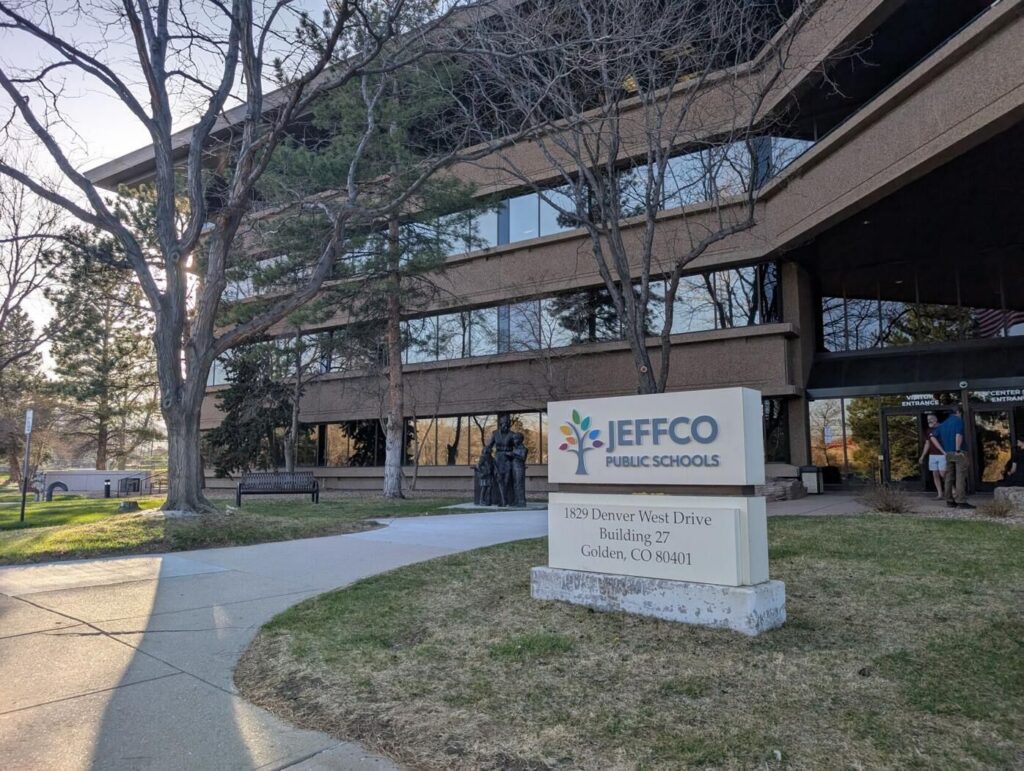
Civil rights office: Male students occupy 61 roster positions on girls’ sports teams The U.S. Department of Education announced Friday that the Jeffco Public Schools district violated Title IX by permitting male students to access female bathrooms and compete in...
Colorado plans to slash interim committee work amid budget woes
Marianne Goodland
marianne.goodland@coloradopolitics.com
Updated 10 hours ago
In a tight-budget year, the work of interim committees — those off-session groups that look at transportation, agriculture, water, healthcare, wildfires, pensions, and anything else lawmakers want to look at — is on the chopping block. And this year, no...
PREV
PREVIOUS

Colorado House panel kills 'assault weapons' ban
Legislation that sought to ban so-called “assault weapons” died early Thursday morning after three Democrats joined the Colorado House Judiciary Committee’s Republicans to kill the bill on a 7-6 vote. Shortly before 1 a.m. Thursday, Democratic Reps. Bob Marshall of Highlands Ranch, Said Sharbini of Westminster and Marc Snyder of Colorado Springs voted down the legislation […]

Colorado school finance act boosts K-12 spending, steers clear of formula changes
Colorado’s school finance act would boost K-12 funding next year to more than $9 billion – $150 million more than described in the recently finalized 2023-24 budget and a 7.5% increase from this year. “The change to school finance is historic,” said Joint Budget Committee Chair Rachel Zenzinger. Average per-pupil spending is proposed to reach $10,579, a 10% increase […]