

Who’s to blame for SVB? | SLOAN

Failure may be an orphan, as the aphorism goes, but it certainly spurs a lot of people to assign paternity. The failure of the Silicon Valley Bank earlier this year is no exception. Almost before the story broke, Bernie Sanders and Elizabeth Warren, along with a slew of pundits who vote for people like Bernie Sanders and Elizabeth Warren, breathlessly blamed a 2018 law loosening the Dodd-Frank regulations on mid-sized banks, which Warren derided as “dangerous bank deregulation” in a New York Times opinion piece. A few weeks later an op-ed appeared in the same paper, with the tantalizing headline of “I Was an S.V.B. Client. I Blame the Venture Capitalists.”
On the other end, many conservatives pointed to SVB’s aggravating “woke” policies and insistence on ESG investments and other such nonsense. I’d be hard-pressed to dispute the argument that those policies were less than helpful, and may have contributed to diverting the banker’s gaze from the things that mattered, but that was no more the reason for the banks failure than the 2018 Dodd-Frank reforms.
Certainly it is not, as many on the left like to chant, a failure of the free market or the private sector. The private sector? Please. Not much more clearly delineates something as part of the public sector than a government guarantee. Irving Kristol, father of the neoconservative movement, wrote some decades ago it is one thing to criticize public welfare laws abused by opportunists, quite another to suggest if money is offered to someone whom the law technically qualifies to receive it, that that person will refuse it. Applied to banking, the Kristol law instructs us no depositor is going to shy away from putting money in an institution if that deposit is guaranteed by the government. Likewise, no banker can be expected to not invest in securities that government policies make attractive.
So what happened with SVB? Well, first, they assumed the Fed’s interest rate would remain at zero until the last echoes of Gabriel’s horn faded into eternity. SVB cut its teeth on being the bank for tech start-ups. When money poured into those start-ups – aided and abetted by the Fed’s low-interest rate lunacy which inflated valuations – much of that cash was deposited into SVB, and all those deposits added up; eventually, by some estimates, more than 90% of SVB’s deposits were over the insurance limit. To compensate, the bank bought up long-term treasuries and mortgage-backed securities, which the ultra-low interest rates made attractive.
But other things were happening too. Those ludicrously low interest rates and quantitative easing policies spurred profligate government spending (not that Congress or the White House needed much spurring) which created not-so-transitory inflation. Eventually the Fed did its job and raised interest rates to cool down the inflationary juggernaut. But that dropped the value of all those long-term securities SVB had bought. Naturally, the first depositors to hear the chime of that tocsin headed for the hills and took their deposits with them, leading to the collapse.
So who’s to blame? Well, you can’t blame the Fed for raising rates. That, lest anyone forget, is the Fed’s primary job. What they CAN be blamed for is for missing the obvious signs of trouble, or seeing them, doing nothing.
Nor can the 2018 banking reforms be blamed. That law emancipated smaller-and-medium-sized banks from the “Too Big To Fail” regulations under Dodd-Frank. SVB is touted as the 16th-largest bank in the nation; but the graduations between 1st and 16th are not even. SVB is about 6.5% the size of JP Morgan Chase. That ought not make it a vital pillar of the American financial system. In any case, the 2018 law explicitly gave the Fed authority to step in and reapply those standards if it saw a problem. Banking supervisors from the San Francisco Fed office did indeed flag SVB’s liquidity issues in late 2021 and 2022, and yet took no action. Why? Now THAT is a good question for a congressman to ask.
So, again, who’s to blame? In order of progressive responsibility: 1) the Fed, for keeping interest rates too low for too long; 2) SVB’s management, for epically poor decision-making; 3) the Fed, again, for failing to intervene when all the signs were there; 4) the president who decreed to guarantee 100% of the deposits; and 5) congressmen and senators who howl for more regulators and increasing the deposit insurance limit, rather then meaningful reforms like requiring all securities held by these institutions to be marked to market. Oh, and those who voted for the spending spree which created the inflation which kicked off this whole mess.
Kelly Sloan is a political and public affairs consultant and a recovering journalist based in Denver.


Two front pages, one false choice for Colorado lawmakers | OPINION
Maya Wheeler
maya-wheeler@gazette.com
Updated 6 hours ago
Every day, the headlines remind us how fragile safety can be. Stories of violence, loss, and families searching for answers are becoming far too common — and they demand serious, thoughtful policymaking. Recent reporting on federal immigration enforcement has been...

Hardworking Coloradans deserve dignity, right to access wages they earned | OPINION
Colorado Politics
colorado-politics@coloradopolitics.com
Updated 5 hours ago
By Monica Duran and Sean Camacho Across Colorado, too many families are doing everything right, yet still cannot make ends meet every month. Inflation has driven up the cost of groceries, rent, childcare and gas, while wages remain unchanged. For...
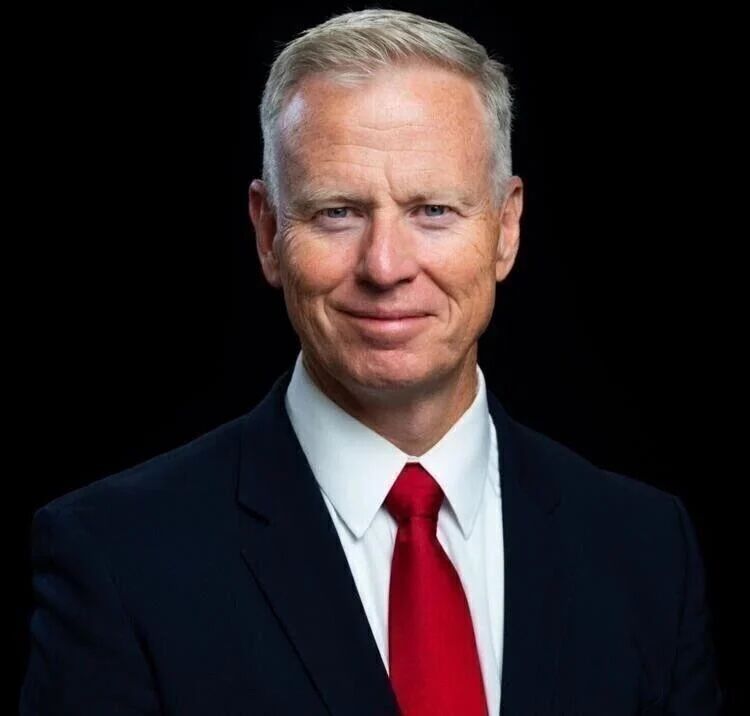
Colorado judges lean left — just look at the numbers | George Brauchler
George Brauchler
george-brauchler@gazette.com
Updated 17 hours ago
Colorado’s judicial selection system is heavily skewed toward Democrats and defendants. It is time to drop the pretense that our system adequately minimizes the impact of partisan political influences on the selection of the judicial branch. In less than two...
Colorado’s data centers should pay their own way | OPINION
Colorado Politics
colorado-politics@coloradopolitics.com
Updated 1 day ago
By Sara Schueneman As energy costs soar and corporations look for new places and sweetheart deals to build data centers, consumers risk being electrified by a bill before the Colorado General Assembly. If signed into law, the Data Center &...
Will Colorado’s Trump-and-Polis-approved education grift-gift continue? | Paula Noonan
Paula Noonan
paula-noonan@coloradopolitics.com
Updated 17 hours ago
If President Donald Trump says it’s free money and Gov. Jared Polis says it’s free money, is it really free money? Both the president and governor claim the Great Big Beautiful Bill’s voucher for education scholarships is “free money.” The...
Coaches can help improve Colorado kids’ mental health | OPINION
Colorado Politics
colorado-politics@coloradopolitics.com
Updated 17 hours ago
By Vincent Atchity and Mark Allen Colorado’s kids need help. Last summer, Children’s Hospital Colorado reported a 26% spike in emergency room visits for youth mental health concerns. Doctors told reporters it wasn’t just more overall hospital visits — kids’...
Freight rail is Pueblo County’s competitive advantage | PODIUM
Colorado Politics
colorado-politics@coloradopolitics.com
Updated 17 hours ago
By Miles Lucero Pueblo County is helping drive Colorado’s next era of economic expansion. From clean energy to steel production to advanced manufacturing, our region is earning recognition for the kind of long-term industrial investment that creates durable, future-ready communities. Rail access is central to...

SB 26-066 will make patient care harder, not safer | OPINION
Colorado Politics
colorado-politics@coloradopolitics.com
Updated 2 days ago
By Kristen Youngdahl As a pharmacist in Colorado, I am proud of the opportunity I have to work with patients consulting them on their specific medical situation and serving as a valuable partner to their overall health. As a trusted...

San Miguel County’s mining regs threaten Colorado’s uranium revival | OPINION
Colorado Politics
colorado-politics@coloradopolitics.com
Updated 2 days ago
By Marjorie Haun In southwestern Colorado’s historic mining town of Telluride — now a haven for the uber-rich, the San Miguel County Commission recently approved mining regulations that will effectively halt new uranium exploration and mining in the county’s mineral...
Farmers know a bad investment when we see one — forced coal is one of them | OPINION
Colorado Politics
colorado-politics@coloradopolitics.com
Updated 2 days ago
By Jan Kochis If you work in agriculture long enough, you learn to judge things by how they perform over time. Not by promises. Not by nostalgia. But by whether they keep working, keep costs predictable, and don’t create more...
PREV
PREVIOUS

Provide access to veterinary telemedicine | OPINION
Elise Gingrich Like many communities across the country, Colorado is facing a severe veterinary workforce crisis, and pet owners are struggling to access care for their pets. National estimates predict without an increase in veterinary resources, 75 million pets could be without healthcare by 2030. This means millions of animals will suffer due to distressing […]

A sensible path to electrifying everything | OPINION
Danny Katz The ability for Coloradans to switch to electric-powered vehicles, appliances and homes in 2023 has significantly advanced, thanks to technological advancements and big federal and state investments, helping us tackle our ozone pollution problem and the extreme weather fueled by climate change. Now, the state’s newly released 2023 Colorado Electric Vehicle (EV) Plan […]