

Colorado appeals court reverses conviction for spitting on officer in light of Supreme Court decision
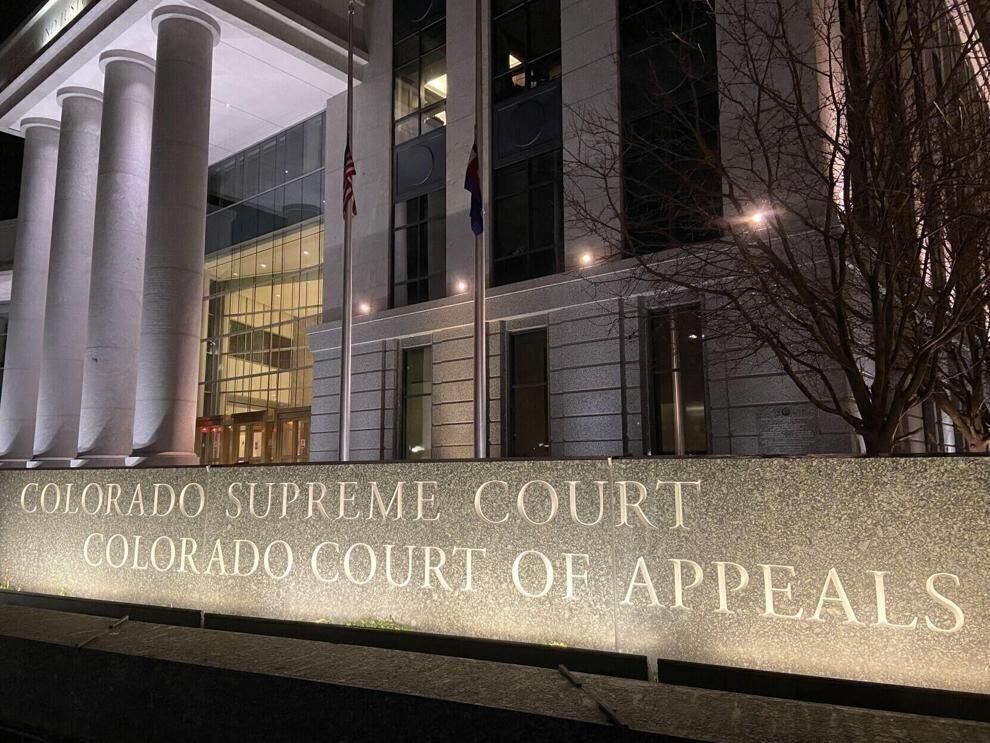
Following the Colorado Supreme Court’s recent decision clarifying when it is a felony offense to spit on police officers, the state’s Court of Appeals last week agreed a man’s Pitkin County conviction for his own act of spitting could not stand.
The legislature in 2015 split the offense of spitting on a first responder into two categories: a felony if there is an intent to “infect, injure, or harm” and a misdemeanor if the intent is to “harass, annoy, threaten, or alarm.” A jury, confused about the meaning of “harm,” convicted Aichardo Mandez-Ramirez in 2019 of a felony, after the trial judge declined to elaborate on what constituted harm.
Given the possibility that Mandez-Ramirez’s jury convicted him based on a faulty understanding of the term, a three-judge panel for the Court of Appeals reversed his conviction. Although the prosecution originally argued against a new trial, the Colorado Attorney General’s Office later conceded a reversal was necessary given the Supreme Court’s newly-issued guidance.
In September, the justices handed down a decision in Plemmons v. People, in which a defendant was convicted of assaulting a peace officer as a felony after she spat on a pair of sheriff’s deputies. The Supreme Court agreed the word “harm” was ambiguous, and jurors could have speculated about what it meant without a proper definition.
“We conclude that it is a defendant’s intent to cause prolonged damage – whether physical, psychological, emotional, or some combination of all three – rather than temporary shock or minor discomfort that elevates identical conduct from a misdemeanor to a felony in this context,” wrote Justice William W. Hood III for the court, while a minority of his colleagues suggested the cutoff should be physical harm only.
In Mandez-Ramirez’s case, he swore at a passing Basalt police sergeant, prompting the sergeant to contact dispatch. After learning that there was a “reason to detain” Mandez-Ramirez, the sergeant remained with Mandez-Ramirez until backup arrived. The two officers then grabbed Mandez-Ramirez and tried to handcuff him, while Mandez-Ramirez resisted.
Once the officers put Mandez-Ramirez in a patrol car, he screamed a sexist slur and spat at one of the officers. The spit landed on her shirt. The officer later testified there “wasn’t that much spit, honestly.” Dispatchers then informed the officers that Mandez-Ramirez was not actually wanted after all.
Still, prosecutors charged him with resisting arrest, a misdemeanor, and felony assault for spitting. Jurors convicted him after deliberating for six hours.
The jury indicated, however, that it was having trouble applying the law against spitting. It sent District Court Judge Christopher Seldin a note asking about the definition of “intent to harm.” After consulting with the parties, Seldin declined to provide a definition. The jury sent him another note asking whether spitting as an “insult” or as “disrespect,” without a physical injury, counted as harm.
Seldin again replied with no definition, but told jurors to “apply your understanding gained from your life experiences.”
When Mandez-Ramirez’s case reached the Court of Appeals, his attorney argued the Plemmons decision required a new trial using the Supreme Court’s clarification that harm requires an intent for “prolonged damage.”
“Especially considered in light of the jury’s question asking whether ‘disrespect’ and ‘insult(s)’ were sufficient to establish the required harm,” agreed Judge Stephanie Dunn in the court’s March 23 opinion, “we are not confident that the jury held the prosecution to its burden to prove beyond a reasonable doubt that Mandez-Ramirez intended to cause” such damage.
The appellate panel ordered a new trial solely for Mandez-Ramirez’s assault conviction. It upheld his second conviction for resisting arrest, even though the panel was concerned about comments the prosecutor made during closing argument. He told jurors that “in a lot of other jurisdictions” there were “places he would have ended up with a lot more than a scrape on his knee.”
Mandez-Ramirez contended the prosecutor was using a “dog whistle” to imply that Mandez-Ramirez, who is a person of color, should consider himself “lucky” for not being seriously or fatally injured. Dunn, in the panel’s opinion, did not endorse that argument, but she agreed the prosecutor was on thin ice.
“Indeed, even the veiled reference to police violence in other places potentially injected racial considerations into the trial,” she warned.
The case is People v. Mandez-Ramirez.

10th Circuit to address resentencing of probation violators in rare all-judges hearing
Michael Karlik
michael.karlik@coloradopolitics.com
Updated 9 hours ago
The Denver-based federal appeals court agreed on Thursday to hold a rare all-judges hearing to determine the proper procedure for resentencing a criminal defendant who has violated the terms of his probation. In the federal appellate courts, the vast majority...
Appeals court overturns Adams County sex offense convictions due to prosecutor’s misconduct
Michael Karlik
michael.karlik@coloradopolitics.com
Updated 13 hours ago
Colorado’s second-highest court reversed multiple child sex assault convictions on Thursday after concluding an Adams County prosecutor committed misconduct while cross-examining the defendant. A three-judge Court of Appeals panel observed the charges against Daniel Michael Boerner depended on the jury...

Fort Carson soldier’s wife could be deported
Carol McKinley
carol-mckinley@coloradopolitics.com
Updated 1 day ago
As the country’s largest immigration enforcement crackdown continues in Minnesota’s Twin Cities, a Fort Carson sergeant is fighting a personal immigration crisis — one that may implode his family. Sgt. Tyler Garza’s wife, Jennifer Maradiaga Baca, is not a legal...

Elizabeth School District dismisses challenge to book-ban injunction on eve of appellate arguments
Michael Karlik
michael.karlik@coloradopolitics.com
Updated 14 hours ago
An Elbert County school district has dismissed its challenge to a judge’s injunction ordering it to return banned books to library shelves, days before the Denver-based federal appeals court was set to hear oral arguments this week. Although a three-judge...

Colorado Supreme Court to hear cases on insurance coverage for COVID, witness credibility
Michael Karlik
michael.karlik@coloradopolitics.com
Updated 2 days ago
The Colorado Supreme Court announced on Tuesday that it will decide the degree to which a virus or other hazard must affect a commercial property before it can trigger loss-or-damage coverage under an insurance policy. At least three of the...
Federal judge says prisoner cannot sue for dog-bite injury
Michael Karlik
michael.karlik@coloradopolitics.com
Updated 3 days ago
A federal judge concluded last week that a man cannot sue the government for injuries he sustained when a dog allegedly attacked him while he participated in a prison program. Kenneth M. Chandler, representing himself, was participating in the “FIDOS”...

Federal judge recommends dismissing trans athletics lawsuit by area school districts
Eric Young
eric.young@gazette.com
Updated 3 days ago
A judge has recommended dismissing a federal lawsuit filed by multiple school districts against the Colorado Attorney General’s and Civil Rights Offices over their policies dictating students’ participation in athletics and activities based on their biological sex rather than gender...
Appeals judge asks Colorado Supreme Court to once again clarify magistrate rules
Michael Karlik
michael.karlik@coloradopolitics.com
Updated 3 days ago
A member of Colorado’s second-highest court urged the state Supreme Court last week to revise confusing language in the rules governing magistrates, less than two weeks after an attempted cleanup of the rules took effect. Magistrates are judicial employees who are...
10th Circuit dismisses paralyzed man’s claims against Colorado Springs, officer
Michael Karlik
michael.karlik@coloradopolitics.com
Updated 5 hours ago
The Denver-based federal appeals court upheld the dismissal last week of a man’s excessive force claims against the city of Colorado Springs and the officer who tased him, causing him to fall down a sloped surface and break his neck....
Colorado justices weigh overlap between child prostitution offenses
Michael Karlik
michael.karlik@coloradopolitics.com
Updated 3 days ago
Members of the Colorado Supreme Court last week appeared willing to uphold a man’s conviction for an attempted child prostitution offense, which the state’s second-highest court previously found to be a violation of his right to equal protection under the...
PREV
PREVIOUS

Aurora bans TikTok on city-owned devices
TikTok is now banned on devices owned by the City of Aurora and on personal devices that are used to access the city’s networks. But the city council’s decision also raised concerns that the recent furor surrounding TikTok could foster xenophobia, and that it does not address the full scope of potential cyber threats posed […]

Aurora police officers undergo new de-escalation, bias training
The Aurora Police Department said it has provided de-escalation training from nationally established programs to its officers, part of complying with its ongoing consent agreement with the state. The department is also developing new anti-bias training. All sworn officers have gotten instruction in constitutional policing, Integrating Communications, Assessment, and Tactics (ICAT) and Active Bystandership for […]