

‘Interesting times’ for American Jews | SONDERMANN
An ancient Chinese curse reads: “May you live in interesting times.”
These words are hardly a blessing or expression of well wishes. “Interesting times” are assumed to be ones of turmoil and trouble. Most people would pine for the peace and tranquility of duller periods of lesser intrigue.
But let’s jump around the globe here as the topic today is far removed from that of China. Rather, I wish to focus on the multiple pressures and mixed feelings of American Jews in this all too interesting moment.
My identity among these ranks has been uneven. I am the firstborn child of two German-Jewish Holocaust refugees. My father and his parents were literally on the last train across the Belgian border, 48 hours before Nazi Germany invaded Poland and little more than 72 hours prior to Britain and France declaring war to mark the onset of World War II.
My great-grandparents on both sides and other more distant relatives perished in the Nazi camps.
Born on the Fourth of July in the middle of the McCarthy era, as if my parents were trying to prove a point, I was raised in a reform Jewish household. Though a few years after my Bar Mitzvah, I began a long, pronounced drift away from religion in favor of what I then thought was the more enlightened view that it was all so much hocus-pocus and more trouble than it was worth.
For many years, my loving, non-Jewish wife did far more than me to connect our kids with their Jewish roots. It has only been in the last decade that I found my way back to Judaism and a spiritual dimension. I equate it to a homecoming and finding again that long lost childhood blanket.
To be Jewish in America in this instant is to be part of an ever-expanding, multicultural melting pot while simultaneously bearing witness to scarily growing antisemitism.
At the same time, it is to endeavor to strengthen our own democratic traditions under too much threat in recent years, while at the same time processing serious efforts to undermine the much younger democratic institutions of Israel.
Interesting times, indeed.
The venom of antisemitism is exceeded only by its staying power. Generations come and go, yet the hateful prejudice lasts. The tropes are all too well known: Jews as too powerful, too educated, too shrewd, too insular, somehow divided in their loyalties.
Kanye West or just Ye or whatever his name du jour may have done us all a favor a few months back by bringing the hate out into the open. His tweeted threat to go “death con 3” on “Jewish people” did more to raise awareness of this poison than an endless string of shadowy whispers and private screeds.
Of course, toxic rhetoric is one thing. Actual violence is something else completely. We have seen too much of it as well, from Pittsburgh to Poway to Jersey City to suburban Colleyville, Texas. And do not forget the failed 2019 plot to bomb a synagogue nearby in Pueblo, Colorado.
Hate is hate. Jews are far from alone in feeling its malignant spear. Though any trip through eastern Europe will remind you of the longevity and consequence of this particular prejudice.
Contemporary antisemitism in America also pales next to that virulent in many parts of Europe. The reasons for that are multiple. But high on that list has to be the relative nature of immigration to the respective continents along with our superior approach in assimilating those populations.
The Jewish response and the world’s solution to the Nazi’s “final solution” was the creation of the state of Israel. If you want to talk about pivot points in world history, that would be one.
In my years of religious alienation, my sentiment was more Zionist than Jewish, thinking that a rather tiny sliver of land could be set aside for a population small in number which had endured so much. Of necessity, that relegated the Palestinians with their own claims to this land.
The birthplace of three of the world’s major religions was never destined to be anything other than contentious and, yes, interesting.
For many years, too many, my attitude toward reports of Israeli excesses targeted at Palestinians was akin to the almost blind benefit of the doubt I gave American cops when confronted with stories of their misconduct. Experience has taught all of us to see abuses with less clouded eyes, even as I continue to believe in the idea of a Jewish homeland with the many burdens it imposes.
As Jan. 2021 brought events to the United States that led many to despair: “That can’t be happening here,” we are now seeing developments in Israel that elicit the shock of: “Is that really happening there?”
It is a mistake to analyze Israeli politics through purely an American lens. The two systems and cultures are notably different. Still, the gambits of Bibi Netanyahu, the embattled Israeli prime minister who won’t go away, bear all the hallmarks of a coalition with unsavory sorts, a desperate maneuver to hold onto power and an unprecedented assault on core tenets of democracy.
Calling on American Jews to come off the sidelines, Thomas Friedman, the New York Times columnist, described as a “putsch” Netanyahu’s plan to neuter Israel’s independent judiciary.
If that is overblown, it is not by much. The move constitutes a ploy, born of political and personal exposure, to throw out the established separation of powers with its essential checks and balances.
The path of Judaism has never been an easy one. In the beseeching words of Fiddler on the Roof’s Tevye, “I know, I know. We are Your chosen people. But once in a while, can’t You choose someone else?”
Passover is almost upon us with its chronicle of oppression. The tale may date to ancient times, but its lessons should be especially resonant in the present tense. Part of Judaism’s call is to be vigilant about oppression and name it when it rears its head.
Too often, we have been oppression’s victims. But there is no asterisk for the homegrown kind.


Read Michener’s ‘Centennial’ | Jon Caldara
Jon Caldara
jon-caldara@coloradopolitics.com
Updated 2 days ago
If you’ve been reading my columns, you’ve noticed I’m basically illiterate. I blame my dyslexia and public education, but my Olympic-level laziness could be the driving factor. Anyway, I basically can’t read (and, still, I graduated from CU Boulder, so...
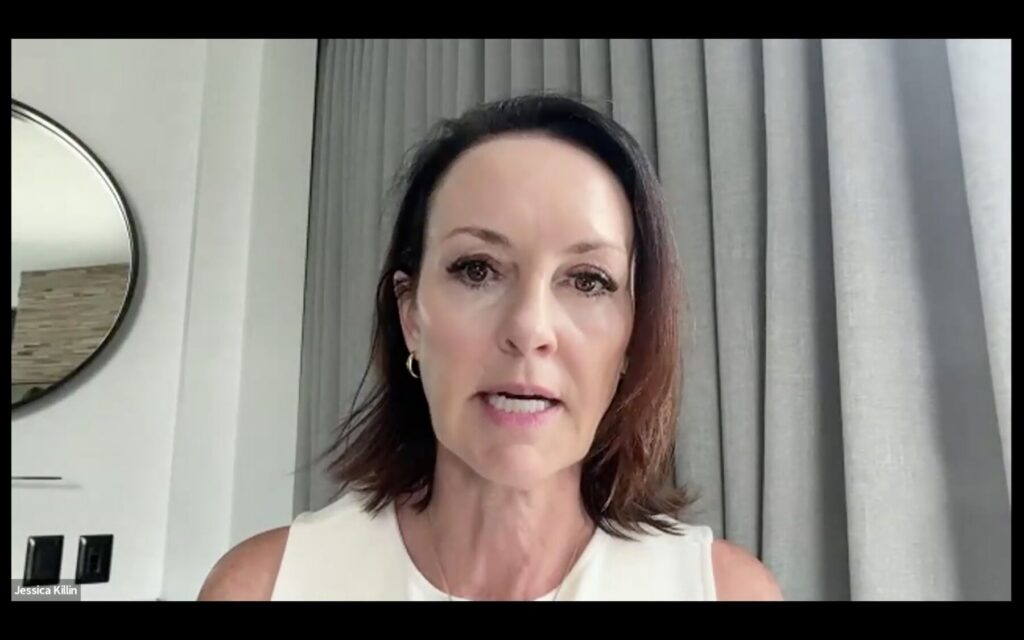
Crank challenger Jessica Killin signs on to new centrist Democratic group’s ‘Promise to America’
Ernest Luning
ernest.luning@coloradopolitics.com
Updated 8 hours ago
Jessica Killin, one of the Democrats running in Tuesday’s primary for the chance to challenge U.S. Rep. Jeff Crank in Colorado’s 5th Congressional District, joined with more than a dozen incumbent Democratic lawmakers and candidates this week signing on to...

Colorado Politics Calendar June 29-July 5
Rachael Wright, Special to Colorado Politics
rachael.wright@coloradopolitics.com
Updated 4 days ago
CoPo’s weekly political calendar will help you find political and public-policy events throughout Colorado. It includes candidate and issue campaign events, public policy meetings, court hearings, state and local party conventions, assemblies, debates, rallies, parades, speaking engagements, traveling dignitary appearances,...
Gov. Lamm’s GOP challenger gives insights into his campaign | A LOOK BACK
Rachael Wright, Special to Colorado Politics
rachael.wright@coloradopolitics.com
Updated 4 days ago
Forty-five years ago this week: “I see Gov. (Richard) Lamm is fairly popular in general,” said gubernatorial candidate and state Sen. Bill Hughes, R-Colorado Springs. “ … And he’ll be hard to beat.” Hughes was on a whirlwind campaign trail...

Giving credit to Polis where credit is due | SONDERMANN
Eric Sondermann
eric-sondermann@coloradopolitics.com
Updated 4 days ago
It is an understatement to suggest that Gov. Jared Polis has had a tough couple of months. The bloom was already off the rose and Coloradans were paying far more attention to the choice of his replacement than they were...

Bennet, Hickenlooper to vote against Trump’s 10th Circuit nominee from Colorado
Michael Karlik
michael.karlik@coloradopolitics.com
Updated 19 hours ago
Colorado’s two Democratic senators will not vote to confirm President Donald Trump’s nominee to a vacancy on the Denver-based federal appeals court. Trump has selected U.S. District Court Chief Judge Daniel D. Domenico, who he appointed as a federal trial...
Who’s spending in Colorado to get your vote?
Marianne Goodland
marianne.goodland@coloradopolitics.com
Updated 19 hours ago
Groups that raise unlimited amounts of money have spent about $20 million in May and June to try and influence Colorado voters’ choices in the upcoming June 30 primaries. By law, these groups cannot coordinate with the candidates they support....
U.S. government declines to oppose multiple challenges to immigration detention in Colorado
Michael Karlik
michael.karlik@coloradopolitics.com
Updated 1 day ago
Multiple federal judges in Colorado granted petitions from people challenging the lawfulness of their immigration detention this week after the government took the unusual step of declining to submit arguments in opposition. Colorado’s federal trial court is facing a flood of...

Tina Peters tells supporters to ‘stand up and fight back’ at Castle Rock event
Marissa Ventrelli
marissa.ventrelli@coloradopolitics.com
Updated 1 day ago
Tina Peters, the former Mesa County clerk recently released from prison, warned supporters that what happened to her could happen to them, too, if they did not “stand up and fight back” at an event at the Douglas County Fairgrounds....

Iran strikes cargo ship in Strait of Hormuz, endangering Trump’s peace
Christian Datoc
christian-datoc@coloradopolitics.com
Updated 2 days ago
Iran attacked a cargo ship traveling through the Strait of Hormuz on Thursday, possibly upending President Donald Trump‘s diplomatic end to the war with Iran. A U.S. official confirmed to the Washington Examiner that the Islamic Revolutionary Guard Corps “struck...