

Amazon not required to factor holiday ‘incentive pay’ into overtime calculation, federal judge rules

Amazon is not violating Colorado law by failing to include a specific category of employee labor – working on holidays for time-and-a-half pay – into its calculation of overtime, a federal judge ruled earlier this month.
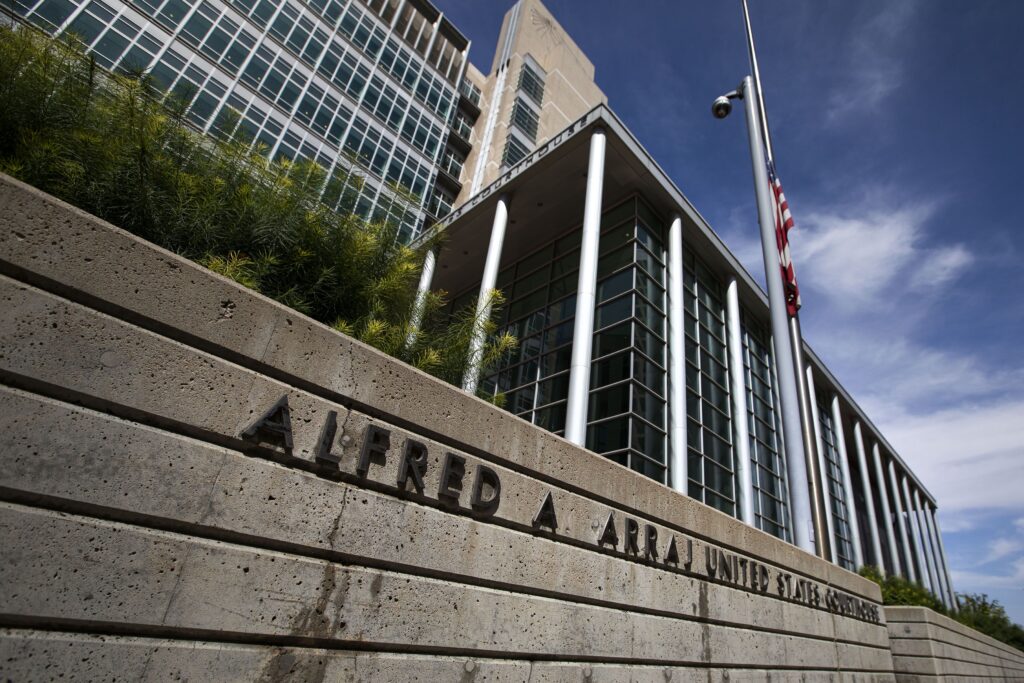
U.S. District Court Chief Judge Philip A. Brimmer dismissed a proposed class action lawsuit against the retail giant, brought by an employee of an Amazon warehouse in Aurora. The company calculated it would be liable for nearly $9.2 million in penalties alone if the judge were to find the company violated the Colorado Wage Act.
Instead, Brimmer determined Colorado law to be silent about how employers should treat “holiday incentive pay” when calculating overtime and, therefore, plaintiff Dan Hamilton had no claim to the $143.54 he alleged Amazon had personally shorted him.
“Mr. Hamilton’s response does not identify a Colorado statute or regulation requiring employers to include premiums for working on holidays when calculating an employee’s regular rate of pay and does not cite any caselaw in support of such a requirement,” Brimmer wrote in a March 3 order.
The lawsuit involved the calculation of overtime compensation using the “regular rate of pay.” If an employee works 40 hours in a week at $20 an hour plus an eight-hour shift that pays $25 per hour, the base compensation would be $1,000. The regular rate of pay would be the base compensation divided by total hours worked, or $20.83 per hour.
The employee would also receive overtime pay, amounting to time-and-a-half the regular rate, for every hour over 40 hours. Therefore, the eight-hour shift would result in an extra $83.32 in overtime.
Hamilton took issue with Amazon’s treatment of holiday incentive pay. Although the company paid time-and-a-half for employees who chose to work on holidays, he alleged Amazon did not include such shifts when calculating the regular rate of pay, thus lowering his overall compensation for overtime work.
He filed a lawsuit in Arapahoe County asserting Amazon violated the Colorado Wage Act, and named as a class of plaintiffs all hourly Amazon employees in Colorado who worked on a company holiday from January 2019 to the present. Hamilton sought back wages for the class and penalties under Colorado law.
Amazon transferred the lawsuit to federal court, estimating there were 10,006 employees who would fall into the class and that the penalties alone could amount to $9.19 million.
The state’s wage regulations, issued by the Colorado Department of Labor and Employment, note that “shift differentials” must be included in calculating an employee’s regular rate of pay. However, “holiday pay,” meaning compensation for holidays where an employee need not show up to work, may be excluded.
Holiday incentive pay is not explicitly called out in the state’s regulations as either a shift differential or holiday pay. Hamilton contended the holiday incentive pay should be treated like a shift differential and be included in the calculation.
Amazon seized upon the federal Fair Labor Standards Act in arguing that Colorado law does not require anything different than its federal counterpart, in which time-and-a-half pay for working holidays is not part of the regular rate calculation.
“If the Colorado legislature or the Colorado Department of Labor and Employment intended to make Colorado the only state in the country that requires employers to include holiday premium pay in its regular rate calculation, while exempting holiday pay, they would have said so,” Amazon’s lawyers wrote. “Instead, the CDLE published a series of regulations excluding holiday pay from the regular rate.”
Brimmer agreed with the company. Neither the Colorado Supreme Court nor the Court of Appeals has answered whether incentive payments for those who work on holidays are part of the regular rate calculation.
“Amazon’s exclusion of HIP from the regular rate of pay complies with the FLSA,” Brimmer wrote. “Because Colorado law is silent on the topic of holiday premium pay, Amazon’s practice of following the FLSA is not a violation of Colorado law.”
Brimmer declined Hamilton’s request to send the legal question to the state Supreme Court for a ruling. Hamilton has since appealed Brimmer’s dismissal to the U.S. Court of Appeals for the 10th Circuit.
The case is Hamilton v. Amazon.com Services, LLC.



Federal judge green-lights excessive force trial against Fort Collins officers
Michael Karlik
michael.karlik@coloradopolitics.com
Updated 19 hours ago
A federal judge concluded last week that a jury will need to resolve whether two Fort Collins police officers violated a man’s constitutional rights by using excessive force after he refused to accept a citation. In a Jan. 21 order,...
Federal judge declines to dismiss strike-breaking nurses’ lawsuit over wage violations
Michael Karlik
michael.karlik@coloradopolitics.com
Updated 19 hours ago
A federal judge last week declined to dismiss 39 nursing employees’ claims for compensation against a Greenwood Village-based company for its alleged violations of state and federal law. U.S. Nursing Corporation employs health care professionals to cross the picket lines...
Appeals judge argues prior decision on defendant’s ‘3-strikes’ sentence was wrong
Michael Karlik
michael.karlik@coloradopolitics.com
Updated 19 hours ago
A member of Colorado’s second-highest court argued on Thursday that a defendant stands wrongfully sentenced under the state’s “three-strikes” law, and an earlier appellate decision saying otherwise was incorrect. A three-judge Court of Appeals panel agreed that Kiki Lamount Douglas’...

DA touts accomplishments from first year in office but she also faced backlash
Kyla Pearce
kyla.pearce@gazette.com
Updated 1 day ago
District Attorney Amy Padden celebrated one year in office this week by touting her accomplishments, major convictions and “increased accountability” in a news release. Padden, who was elected in 2024 and took the helm of the 18th Judicial District office...

Appeals court overturns convictions after Douglas County judge let biased juror serve
Michael Karlik
michael.karlik@coloradopolitics.com
Updated 2 days ago
Colorado’s second-highest court reversed a defendant’s robbery-related convictions and 18-year prison sentence on Thursday because a Douglas County judge allowed a biased juror to serve. During Ahmarion Kaliel Shead’s trial in January 2023, one juror, identified as “J.H.,” indicated on...

Federal judge blocks USDA ‘pilot project’ affecting Colorado food assistance
Michael Karlik
michael.karlik@coloradopolitics.com
Updated 3 days ago
A federal judge blocked the U.S. Department of Agriculture on Wednesday from proceeding further with a “pilot project” that would require five Colorado counties to rapidly recertify more than 100,000 households for food assistance. In a brief ruling from the...
Colorado lawmakers hear about increased judicial discipline complaints, fallout from Missy Woods misconduct
Michael Karlik
michael.karlik@coloradopolitics.com
Updated 3 days ago
Members of the Colorado legislature’s judiciary committees heard about a large increase in complaints against judges and additional forensic misconduct that has come to light, during three days of oversight hearings last week. Leaders of several judicial-related agencies appeared between...
Federal judge warns DOJ against raising repeatedly rejected arguments in immigration detention cases
Michael Karlik
michael.karlik@coloradopolitics.com
Updated 3 days ago
A federal judge in Colorado warned the U.S. Department of Justice on Monday against raising arguments that she and other judges have repeatedly rejected in cases challenging the lawfulness of immigration detentions. In a Jan. 26 order finding the government...
Colorado Supreme Court to address child’s CCTV testimony
Michael Karlik
michael.karlik@coloradopolitics.com
Updated 4 days ago
The Colorado Supreme Court announced on Monday that it will review the impact of a victim’s closed-circuit testimony on the prosecution of a juvenile defendant. At least three of the court’s seven members must agree to hear an appeal. There...

10th Circuit to hold all-judges hearing, judicial committee turns down ‘civility code’ | COURT CRAWL
Michael Karlik
michael.karlik@coloradopolitics.com
Updated 5 days ago
Welcome to Court Crawl, Colorado Politics’ roundup of news from the third branch of government. The Denver-based federal appeals court agreed to hold a rare all-judges hearing in a criminal case, plus a state Supreme Court committee overwhelmingly rejected a...
PREV
PREVIOUS

Colorado lawmakers approve right to repair agricultural equipment
An effort to give Colorado farmers access to the resources needed to repair their own agricultural equipment passed its final legislative vote on Thursday. Modern agricultural equipment often runs on advanced computer software, and, currently, some manufacturers prohibit access to these systems or do not provide information on how they work. House Bill 1011 would require manufacturers […]

Colorado Democrats advance bill to ban evictions, lease terminations without ‘just cause’
Colorado landlords could soon be prohibited from evicting tenants or declining to renew leases without “just cause,” if a bill passed by the state House becomes law. Under House Bill 1171, landlords could only evict or terminate residential leases if the tenant does something wrong, such as failing to pay rent, violating lease agreements, committing illegal activity, […]