

The daily grind that is democracy | BIDLACK
These days, those loudest in the public square often get the most attention. The bold, the extreme, and well, really-extreme tend to get reported on in our print and electronic media. But as I’ve mentioned before, the most important and impactful work done in governance is often by workhorse folks, who care about getting the job done more than they care about getting attention.
Sure, the splashy stuff tends to get the most eyeballs looking at it. For example, Colorado Politics readers likely read the recent report on the new state GOP party chair, a guy named Dave Williams, who is one of the cult that continues to claim Trump won in 2020. He also ran against Doug Lamborn for Congress down here in Colorado Springs (as did I in 2008, albeit from the other side of the aisle), and Williams briefly made the news when he wanted the ballot to show his middle name as “Let’s Go Brandon,” a crude and all-too-common GOP obscenity against that Joe Biden guy, who actually won in 2020. Spoiler: the court said no.
So, the Colorado GOP picked a leader for the next two years that is disconnected with reality and appears entirely too comfortable with extreme and, frankly, dangerous views on where this country should be headed and how. Fellow CoPo columnist and former GOP state chair Dick Wadhams, with whom I often disagree but whom I respect as honorable and insightful, said it better than me: the state GOP has shot itself in the foot yet again. And, of course, I’m not unhappy to see that.
But I’m not going to talk about the shiny and flashy bits of Colorado politics.
Rather, I’d like to draw your attention to a story whose very title might have caused some of my dear readers to nap off there for a moment: “Polis signs 10 more bills into law.” The business of legislatures is to legislate, first and foremost. Certainly there are important oversight roles to play, as well as other functions, but ask most elected officials what they are proud of, it will likely be a bill or two they got signed into law, be it at the local, state, or federal level, even though that process is only slightly more interesting than watching paint dry.
Back when I was working for U.S. Sen. Michael Bennet I went to quite a few bill signing events. The governor signs the bills into law, pens are passed around, and there are usually remarks about moving the state forward. But when you look at the 10 bills noted in the article, you can’t help but notice that most of them seem minor and technical, and that, dear readers, is a good thing.
In general, for most issues, incremental change is the best way forward. Certainly there are some issues that demand new and bold legislation, but most of the work our elected folks tackle are tweaks to improve existing statues, either by updating them or fixing them in other ways. For example, Polis signed House Bill 1064, the Interstate Teacher Mobility Compact. This new law will make it easier, once an additional nine states have signed on, for teachers to move from state to state while keeping their teacher’s licenses intact and up to date. This is part of a larger effort to make various state licenses more easily transferred, and this has particular relevance for military families. My late first wife was a licensed physical therapist in Wyoming, the state of my first military assignment, but when I was assigned to the Air Force Academy, her license did not automatically transfer. She had to essentially restart her license process, including a big test, to be able to practice her craft in Colorado. One of the projects I worked on in the Bennet office at the federal level was to allow military spouses to carry their various licenses to new assignments without undo burden. But absent a federal law, and given the current teacher shortages around the nation, Polis’s signature on HB1064 will be a good thing for Colorado, but it is unlikely to make too much of a splash on your local news, and that’s a shame.
Another bill related to military service is House Bill 1045. Signed by Polis, it is now law employers of Colorado National Guard members must give their employees up to three weeks of leave, when those individuals are called to military service or training. Prior to this bill, being in the Guard could create some significant complications for members whose bosses were not particularly cooperative.
Those bills are just two of the 10 signed last Friday, and are only a fraction of the total output of the legislature by the time the term ends 120 days after it began. And you will likely never hear the names of most of those new laws. Though a handful may be sweeping in their impact, most will trim away around the edges of the law, fixing issues, expanding opportunities, or a whole host of other legislative tasks.
We are fortunate to have such workhorses in the legislature and as governor. And it’s nice to see an efficient (and Democratically-led) state legislature continue to quietly do the work of democracy.
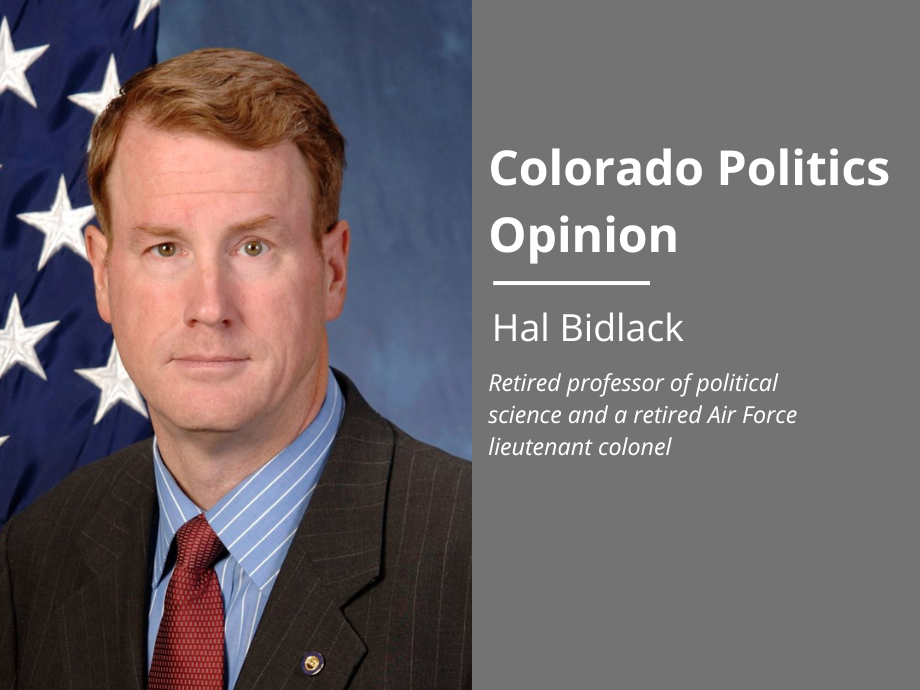
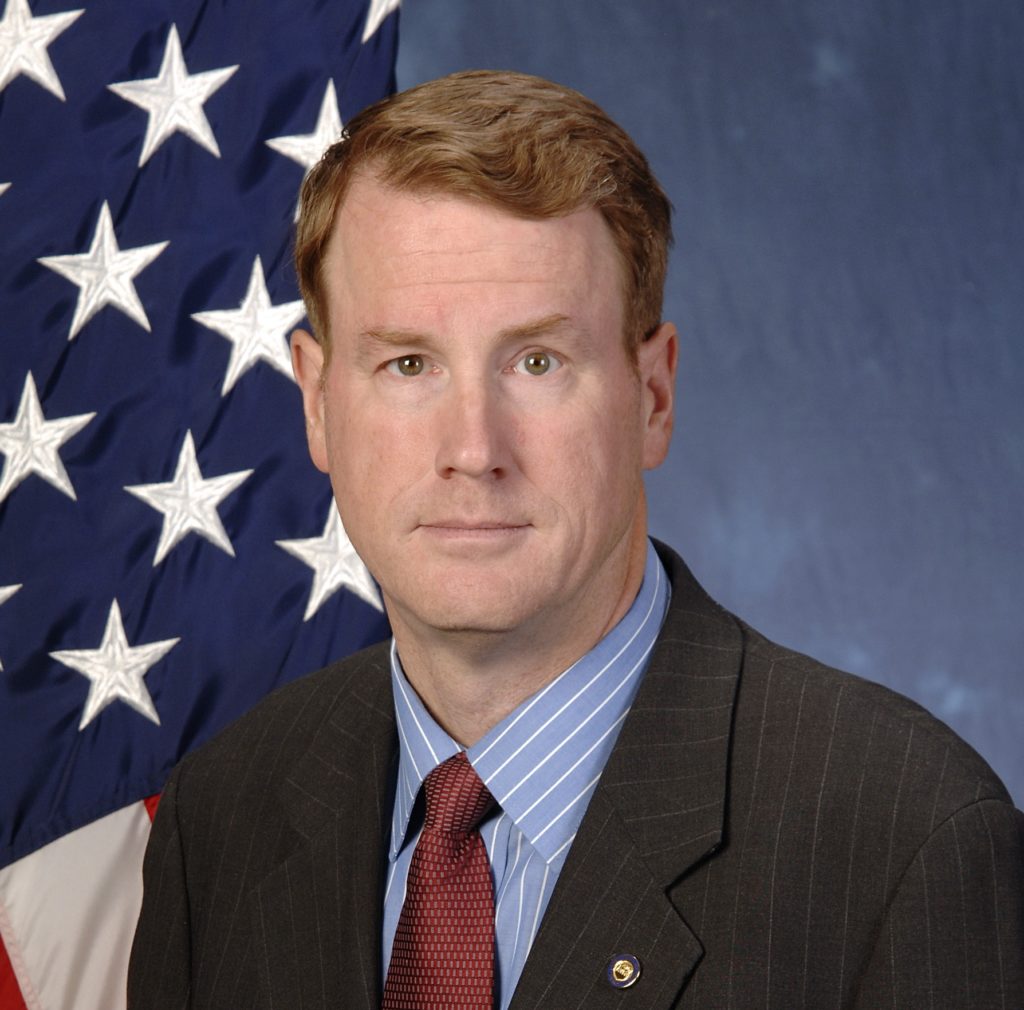
Hal Bidlack is a retired professor of political science and a retired Air Force lieutenant colonel who taught more than 17 years at the U.S. Air Force Academy in Colorado Springs.

Colorado’s precarious position protecting from wildfires | Paula Noonan
Paula Noonan
paula-noonan@coloradopolitics.com
Updated 6 hours ago
Fourteen firefighters died in the Storm King Mountain fire west of Glenwood Springs in 1994 when 2,115 acres burned. In August 2020, the Grizzly Creek fire burned 32,631 acres along the Interstate 70 corridor east of Glenwood causing mudslides from flooding...

We must deliver on cost of living | GUEST COLUMN
Colorado Politics
colorado-politics@coloradopolitics.com
Updated 6 hours ago
By Ryan Gonzalez Insurance premiums are on the rise. Property taxes are increasing. Groceries are becoming more expensive. Gas prices are reaching record levels. Housing costs are becoming unsustainable. These are the concerns I hear from people in my district....

Dan Haley on the role of oil and gas in Colorado’s energy future | The OpEdge Podcast
Tony Olivero
tony.olivero@gazette.com
Updated 15 hours ago
Dan Haley, executive director of Coloradans for Responsible Energy Development, joins The OpEdge to discuss the role of oil and natural gas in Colorado’s energy future amid the state’s aggressive push toward “net zero.” Haley tells host and investigative columnist...

Rural hospitals don’t want special treatment, just a chance to care for locals | PODIUM
Colorado Politics
colorado-politics@coloradopolitics.com
Updated 2 days ago
By Kevin Stansbury As chief executive of Lincoln Health, my responsibility is simple: ensure the people of eastern Colorado have access to high-quality healthcare close to home when they need it most. That mission has never been easy. Rural hospitals...
Blue states should avoid disasters | Hal Bidlack
Hal Bidlack
hal-bidlack@coloradopolitics.com
Updated 2 days ago
Back when I was teaching political science at the U.S. Air Force Academy (and amazingly to me, a week from this column’s publication will mark 20 years since my retirement from active duty. Where the heck did that time go?)...
Right-to-hunt ballot measure’s a cruel, anti-wildlife solution to a nonexistent problem | GUEST COLUMN
Colorado Politics
colorado-politics@coloradopolitics.com
Updated 2 days ago
By Eric Washburn I love to hunt. Every year I try to hunt big game in Colorado and waterfowl in Louisiana. This year, I applied for five Colorado big game licenses — elk, deer, pronghorn, moose and bighorn sheep. I...
Jena Griswold’s record: corruption, incompetence | Dick Wadhams
Dick Wadhams
dick-wadhams@coloradopolitics.com
Updated 5 days ago
There is no statewide elected official going back decades who is as breathtakingly corrupt and incompetent as Secretary of State Jena Griswold, who is now running for attorney general of all things. And compliant ruling Democrats know it. Their silence...

Kiros exudes why Colorado’s political times are a-changin’ at annual Denver Dems gala | Miller Hudson
Miller Hudson
miller-hudson@coloradopolitics.com
Updated 5 days ago
Among Colorado’s few remaining bipartisan rituals are county and state party dinners. I was particularly intrigued by last week’s Denver Democratic Party’s 2026 Annual Gala, a “New Deal for a New Era.” Their glossy program featured an artist’s Technicolor rendering...

Livestock grazing regulations need flexible updates | Rachel Gabel
Rachel Gabel
rachel-gabel@coloradopolitics.com
Updated 5 days ago
The Bureau of Land Management last updated their livestock grazing regulations the year I graduated from high school. I am 49. Assessing rangeland health can’t be done once and not revisited. This year is a prime example that managers must...

Taxpayers donate to tax increase campaign | Jon Caldara
Jon Caldara
jon-caldara@coloradopolitics.com
Updated 6 days ago
Give the man his due. President Donald Trump has undeniable talents. Colorado politicians are learning. Chief among The Don’s skills is taking the self-serving, ethically dubious behavior of previous politicians and putting it on steroids. Or, to borrow from the...
PREV
PREVIOUS
Bridge the gap that divides Colorado | OPINION
Dan Williams I am a county commissioner in one of Colorado’s 47 rural counties. Today, 77% of Colorado is still rural or frontier. For those who come to our state, it is often the beauty, recreation and freedom these spaces and our lifestyle offer that turns our visitors into residents. There has always been a […]
Mexico’s president mocks; Ken Salazar tweets | Denver Gazette
There’s no question where Mexican President Andrés Manuel López Obrador stands on his country’s instrumental role in flooding the United States with deadly fentanyl. “Here, we do not produce fentanyl, and we do not have consumption of fentanyl,” López Obrador said in an Associated Press report last week in The Gazette. “Why don’t they (the […]